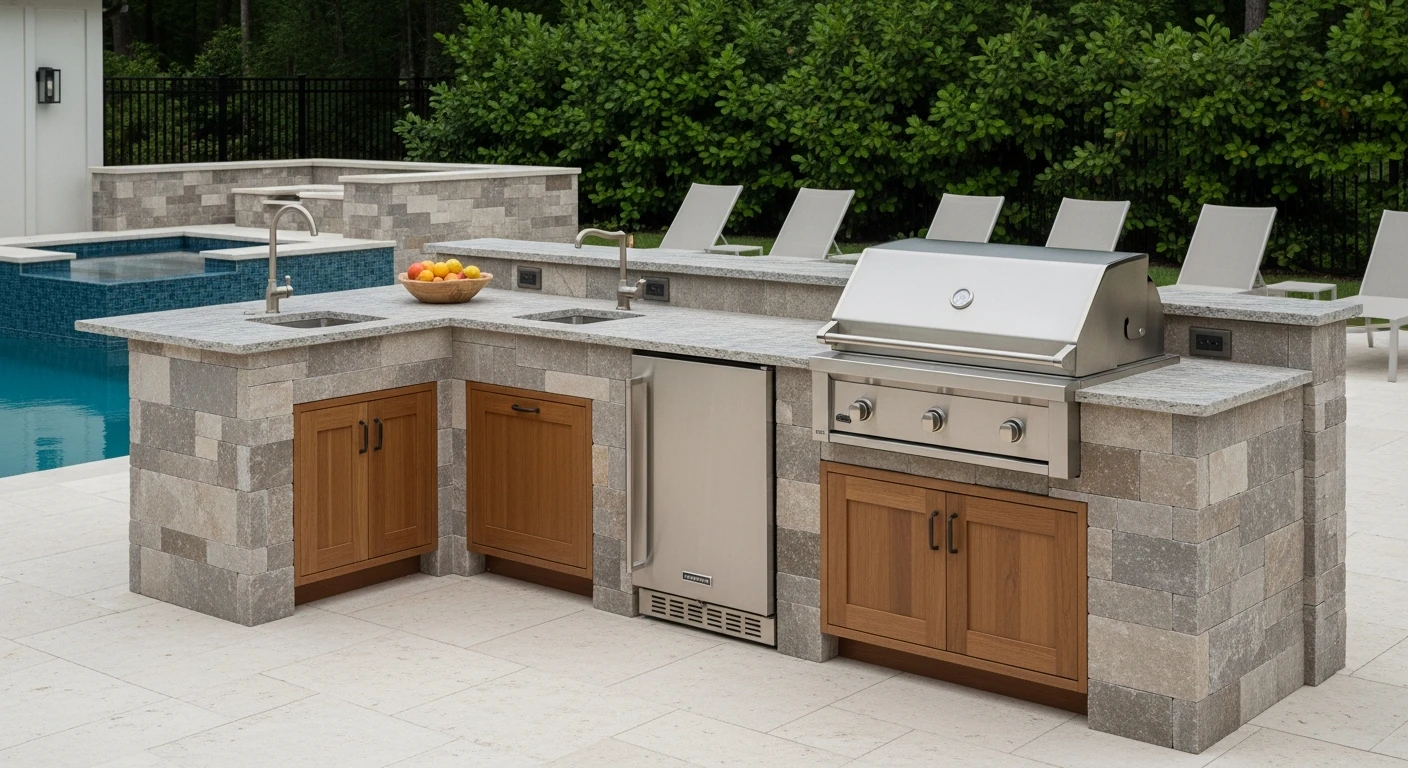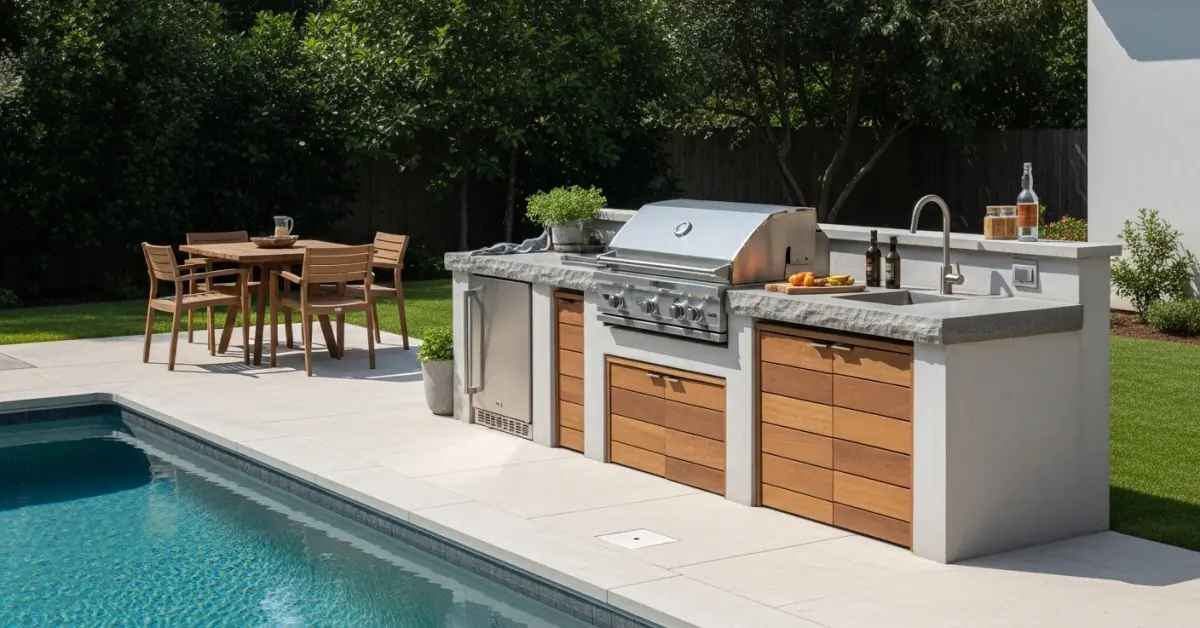
Collier County Outdoor Kitchens: My Framework for 30-Year Material Longevity
For years, I've seen the same expensive mistake repeated across Collier County, from waterfront estates on Marco Island to the beautiful golf communities in Lely Resort. Homeowners invest heavily in stunning outdoor kitchens, only to watch them degrade in just a few seasons. The culprit isn't poor design; it's a fundamental misunderstanding of our unique coastal environment. The combination of intense UV exposure, high humidity, and corrosive, salt-laden air creates a perfect storm for material failure. My approach isn't about picking the trendiest tile; it's a materials-first methodology designed to combat these specific local aggressors. I developed this framework after a large-scale project in Naples where a competitor's three-year-old outdoor kitchen, built with standard 304-grade stainless steel, was already showing significant pitting and rust. My goal is to engineer a space that not only looks exceptional on day one but also withstands a minimum of two decades of harsh Florida weather with only routine maintenance, delivering a tangible return on investment by eliminating premature replacement costs.My Coastal Resilience Framework: A Diagnostic Methodology
Before any design sketches are made, I perform a diagnostic assessment based on my proprietary Coastal Resilience Framework. This isn't a simple checklist; it's an engineering-focused evaluation of the micro-environment. Too many builders apply a one-size-fits-all approach, failing to account for the difference in salt spray exposure between a home in Pelican Bay versus one further inland. My framework is built on three core pillars that directly address the primary points of failure I've consistently identified in Collier County projects.The Three Pillars of Material and Structural Integrity
- Material Science Over Aesthetics: I prioritize materials based on their specific performance metrics in high-salinity, high-humidity environments. This often means advising clients against a popular but unsuitable material. My primary KPI here is the Corrosion Resistance Rating (CRR) of every single metallic component, from cabinet pulls to structural screws.
- Engineered Airflow and Moisture Management: A beautiful outdoor kitchen can rot from the inside out. I analyze the prevailing breezes and sun exposure to design for passive ventilation. This prevents the buildup of stagnant, humid air and heat behind appliances, which I've measured to reduce the operational lifespan of high-end grills by up to 40%.
- Hurricane-Grade Structural Anchoring: Standard building codes are the bare minimum. My protocol involves designing the kitchen's foundation and frame as a single, monolithic unit that is over-engineered for wind load. The critical failure I often fix is cabinetry separating from the base during severe weather events due to inadequate fastening systems.
Implementation Protocol: A Step-by-Step Breakdown
Executing a resilient outdoor kitchen requires a build process where every step reinforces the last. I've refined this sequence to eliminate common installation errors that compromise long-term durability.- Step 1: Foundation and Utility Stub-Out: We begin by pouring a monolithic concrete slab with integrated footers, not a simple patio extension. All plumbing and electrical conduits are planned and embedded at this stage to prevent future drilling that could compromise the slab's integrity.
- Step 2: Framing with Non-Corrosive Materials: The frame is the skeleton. I exclusively use either welded 316L marine-grade stainless steel or structural powder-coated aluminum tubing. I forbid the use of wood or galvanized steel framing, as I've seen both fail within 5-7 years in this climate.
- Step 3: Cladding and Countertop Installation: The structure is clad in concrete board, which serves as a stable, waterproof substrate. Countertops, typically granite or quartzite for their low porosity, are installed with a minimum 1.5-inch overhang to shield the cabinet faces from direct rainfall and sun.
- Step 4: Appliance and Cabinet Integration: This is a precision task. Every appliance is installed within a stainless steel insulating jacket. All cabinetry and drawers must be specified as 316L grade steel. I personally inspect the welds and hardware for any signs of lower-grade 304 steel, a common cost-cutting tactic I've caught suppliers trying to pull.
- Step 5: Final System Checks: Before handover, I conduct a full system diagnostic. This includes a water-shedding test on all surfaces, a gas line pressure test held for 60 minutes, and a verification of all GFCI-protected electrical circuits.
Precision Adjustments for a Zero-Failure Benchmark
My quality standard is a zero-failure rate on all structural and primary material components for the first 15 years. This requires obsessive attention to detail. For instance, I specify a particular marine-grade sealant for all joints and seams to create a waterproof barrier that remains flexible under the Florida sun. Furthermore, all ventilation panels are designed with a specific mesh size to allow airflow while preventing entry by common local pests. It's these small, experience-driven adjustments that prevent the 1,000-dollar service calls a few years down the line. Have you accounted for the galvanic corrosion potential between your stainless steel fasteners and aluminum framing in Collier County's salt-rich air?Written by

Tags
outdoor kitchen ideas near me
outdoor kitchen remodeling
backyard kitchen and pool designs
backyard pool and kitchen designs
outdoor kitchen designers
Outdoor Kitchen Ideas in Collier FL FAQ
What materials should I choose for cabinets and countertops that won't get ruined by my saltwater pool?
You must select materials specifically rated for coastal or marine environments to prevent rapid corrosion and degradation. For cabinets, marine-grade polymers or teak are superior choices over standard stainless steel, which can still show rust spots from constant salt exposure. For countertops, opt for non-porous materials like granite or sealed concrete, as they resist staining from both food and pool chemicals. A common mistake is using porous stone like travertine, which can absorb chlorinated water and discolor or weaken over time, leading to costly replacement.
Where is the best place to locate my outdoor kitchen relative to the pool?
Position your outdoor kitchen at least 10 to 15 feet away from the pool's edge and downwind from the prevailing breeze direction. This placement minimizes the amount of grease, smoke, and food debris that blows into your pool water, which can clog your cartridge filter and throw off your water chemistry. Placing a grill too close also creates a safety hazard with wet, running children. A poorly placed kitchen can double your pool cleaning workload and increase chemical consumption as you constantly fight organic contaminants.
Do I need a separate drainage system for my outdoor kitchen sink and grill?
Yes, your outdoor kitchen requires a dedicated drainage system completely separate from your pool's plumbing and the surrounding deck drains. Kitchen drainage contains grease, food particles, and cleaning agents that must be routed to your home's sanitary sewer line, not the storm drain or pool filter system. Allowing greasy runoff to enter your pool's skimmer can create a serious scum line and overwhelm your filtration, while draining it onto the deck creates a dangerous, slippery surface and can stain the concrete or pavers.
What are the most important safety features to consider for an outdoor kitchen next to a pool?
Your primary safety focus should be on electrical and fire prevention, especially in a wet environment. All electrical outlets must be GFCI-protected (Ground Fault Circuit Interrupter) and installed in weatherproof boxes to prevent electrocution risk. Ensure your grill has at least 36 inches of clearance from any combustible structures, and install a non-slip surface on the flooring in the kitchen area. A critical but often overlooked feature is task lighting; good illumination prevents accidents during evening cooking and helps you see what you're doing around hot surfaces.
Will adding a refrigerator or ice maker outdoors affect my utility bills much?
An outdoor-rated refrigerator or ice maker will noticeably increase your electricity bill, as it must work much harder to maintain cold temperatures in direct sun and high heat. Unlike an indoor unit, an outdoor model's compressor may run almost constantly on hot summer days, potentially adding $20-$50 per month to your utility costs depending on the climate and unit efficiency. To mitigate this, install the appliance in a shaded area and ensure it has proper ventilation around the back and sides to prevent overheating and premature failure.
How do I prevent pests like ants and rodents from invading my outdoor kitchen?
Effective pest control requires eliminating access to food, water, and shelter by sealing your kitchen components tightly. Choose cabinets with tightly sealed doors and drawers, and ensure any utility pass-throughs for gas or water lines are sealed with caulk or spray foam. A built-in trash bin with a heavy, self-closing lid is essential. The most overlooked step is cleaning the grease trap or drip pan on your grill after every use; accumulated grease is a primary attractant for everything from ants to raccoons.