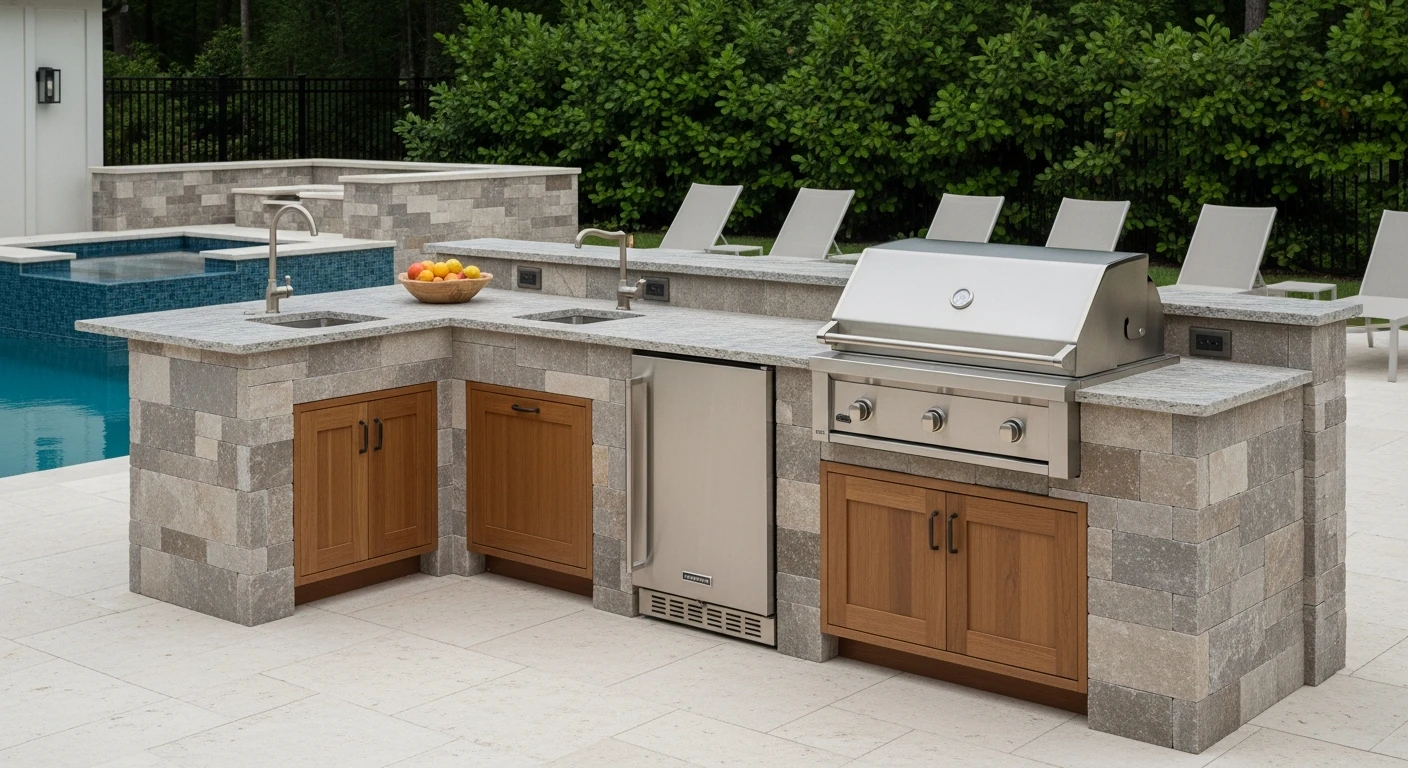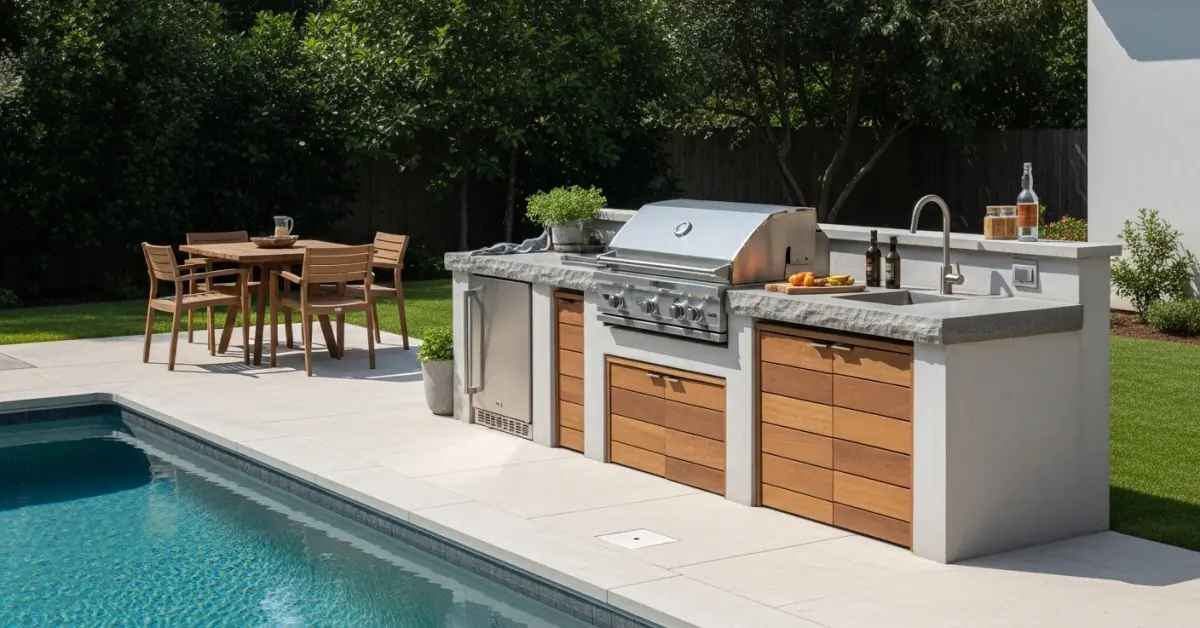
Outdoor Kitchen Ideas Hillsborough County: Protocols for 30-Year Material Longevity & Weatherproofing
Designing an outdoor kitchen in Hillsborough County isn't about picking a nice grill and some stone veneer. I've seen far too many projects in South Tampa and FishHawk fail within five years because they were treated like indoor projects moved outside. The combination of intense UV radiation, torrential summer rain, and high salinity in the air, especially near Bayshore, creates a uniquely corrosive environment that demands a specific engineering-first approach. The goal isn't just aesthetics; it's creating a functional asset that resists mold, warping, and electrical failure for decades. My entire design philosophy is built around mitigating these local environmental stressors from day one. I've had to gut and rebuild beautiful but fundamentally flawed outdoor kitchens that couldn't handle a single hurricane season. My proprietary methodology focuses on material science and functional zoning, ensuring your investment doesn't become a liability. We're not just building a kitchen; we're engineering a permanent outdoor structure tailored to the specific microclimate of your Hillsborough property, whether it's a compact space in Hyde Park or an expansive lanai in Lithia.My Zonal Efficiency Triad: A Framework for Florida's Climate
Over the years, I've refined a system I call the Zonal Efficiency Triad. It’s a planning framework that moves beyond the simple "work triangle" of an indoor kitchen. In an outdoor setting, managing heat, water, and cold storage is a battle against the elements. This method segments the space into three distinct, purpose-built zones to maximize functionality and longevity.- The Hot Zone: This is more than just the grill. It includes side burners, pizza ovens, or smokers. The critical failure point I often see is improper ventilation, especially under a lanai roof. This leads to soot staining, premature ceiling degradation, and a serious fire hazard. The Hot Zone must be engineered with non-combustible materials and a vent hood with a specific CFM (Cubic Feet per Minute) rating calculated for the appliance's BTU output.
- The Wet Zone: This encompasses the sink, ice bin, and dishwasher. In Hillsborough County, this is ground zero for mold and mildew. The key is specifying materials that are non-porous and ensuring impeccable drainage. Every plumbing penetration must be perfectly sealed to prevent moisture from entering the cabinet structure.
- The Cold Zone: This is your refrigerator and freezer storage. A common, costly error is using an indoor-rated mini-fridge outside. It will fail. The compressor can't handle the ambient heat and humidity. This zone requires UL-rated outdoor appliances designed to maintain temperature in 95°F+ weather, which is a standard summer afternoon in New Tampa.
Material Forensics: Selecting Components That Defy Hillsborough Humidity
The single biggest factor dictating the lifespan of an outdoor kitchen here is material selection. I’ve seen beautiful granite countertops develop mildew stains because the stone is too porous and retains moisture from our humid air. My material specification process is uncompromising and based on performance data, not just looks. For cabinetry and structure, I exclusively use a welded aluminum frame or marine-grade polymer (HDPE). A common mistake I had to correct on a large Davis Islands project was a builder using pressure-treated wood for the framing. Within two years, it had begun to rot and was infested with termites. Non-combustible, non-organic framing is non-negotiable. For countertops, I steer clients away from porous natural stones. My preferred materials are ultra-compact surfaces like Dekton or Neolith. They are non-porous, meaning they won't stain or harbor mold, and have a near-zero thermal expansion rate, so they won't crack under the intense Florida sun. For appliances and hardware like handles and hinges, the only acceptable standard is 316 marine-grade stainless steel. It has superior corrosion resistance to the more common 304 grade, which will inevitably show rust spots from the salty, humid air.From Concept to Cookout: A Phased Implementation Protocol
A successful build follows a rigid, documented process. Skipping steps is how you get misaligned countertops and failed inspections. This is the exact phased protocol I use for every project.- Phase 1: Site & Utility Mapping. Before any design, I map all existing gas, water, and electrical lines. We must plan for dedicated GFCI-protected outlets for safety and ensure gas lines are sized appropriately for the total BTU load of all appliances. This prevents performance issues and is a critical safety checkpoint.
- Phase 2: Structural Framing & Substrate Installation. This is the skeleton. We build the frame using welded aluminum, ensuring it is perfectly level and square. We then clad it with a cement board substrate, using specialized fasteners that won't corrode. All seams are taped and waterproofed.
- Phase 3: Veneer & Countertop Templating. The stone or brick veneer is applied. Only after the veneer is complete do I have the countertop fabricator create a digital template. This ensures a perfect, tight fit with minimal seams. Templating before veneer is a rookie mistake that leads to ugly gaps.
- Phase 4: Appliance & Fixture Installation. Appliances are installed last to prevent damage. Each unit is tested for functionality—gas pressure for the grill, water flow for the sink, and temperature calibration for the refrigerator. This is my final quality control gate before handover.
Performance Tuning for the Gulf Coast Environment
The final 10% of the project involves fine-tuning for our specific environment. This is what separates a standard build from a high-performance one. Proper drainage is paramount. I engineer a subtle slope in the countertop and surrounding patio to ensure our heavy summer downpours sheet away from the kitchen, not into it. Integrated lighting is also crucial for year-round usability. I use low-voltage LED systems with marine-grade wiring and waterproof connectors. We focus on task lighting over the grill and prep surfaces, and ambient lighting under the countertop for safety and atmosphere. Finally, I always advise on the integration of a high-velocity outdoor fan or a mosquito misting system, a practical necessity for enjoying an evening outdoors anywhere in Hillsborough County. Have you calculated the galvanic corrosion potential between your stainless steel fasteners and the aluminum frame in a high-salinity environment?Written by

Tags
outdoor kitchen ideas near me
outdoor kitchen remodeling
backyard kitchen and pool designs
backyard pool and kitchen designs
outdoor kitchen designers
Outdoor Kitchen Ideas in Hillsborough FL FAQ
What materials should I choose for cabinets and countertops that won't get ruined by my saltwater pool?
You must select materials specifically rated for coastal or marine environments to prevent rapid corrosion and degradation. For cabinets, marine-grade polymers or teak are superior choices over standard stainless steel, which can still show rust spots from constant salt exposure. For countertops, opt for non-porous materials like granite or sealed concrete, as they resist staining from both food and pool chemicals. A common mistake is using porous stone like travertine, which can absorb chlorinated water and discolor or weaken over time, leading to costly replacement.
Where is the best place to locate my outdoor kitchen relative to the pool?
Position your outdoor kitchen at least 10 to 15 feet away from the pool's edge and downwind from the prevailing breeze direction. This placement minimizes the amount of grease, smoke, and food debris that blows into your pool water, which can clog your cartridge filter and throw off your water chemistry. Placing a grill too close also creates a safety hazard with wet, running children. A poorly placed kitchen can double your pool cleaning workload and increase chemical consumption as you constantly fight organic contaminants.
Do I need a separate drainage system for my outdoor kitchen sink and grill?
Yes, your outdoor kitchen requires a dedicated drainage system completely separate from your pool's plumbing and the surrounding deck drains. Kitchen drainage contains grease, food particles, and cleaning agents that must be routed to your home's sanitary sewer line, not the storm drain or pool filter system. Allowing greasy runoff to enter your pool's skimmer can create a serious scum line and overwhelm your filtration, while draining it onto the deck creates a dangerous, slippery surface and can stain the concrete or pavers.
What are the most important safety features to consider for an outdoor kitchen next to a pool?
Your primary safety focus should be on electrical and fire prevention, especially in a wet environment. All electrical outlets must be GFCI-protected (Ground Fault Circuit Interrupter) and installed in weatherproof boxes to prevent electrocution risk. Ensure your grill has at least 36 inches of clearance from any combustible structures, and install a non-slip surface on the flooring in the kitchen area. A critical but often overlooked feature is task lighting; good illumination prevents accidents during evening cooking and helps you see what you're doing around hot surfaces.
Will adding a refrigerator or ice maker outdoors affect my utility bills much?
An outdoor-rated refrigerator or ice maker will noticeably increase your electricity bill, as it must work much harder to maintain cold temperatures in direct sun and high heat. Unlike an indoor unit, an outdoor model's compressor may run almost constantly on hot summer days, potentially adding $20-$50 per month to your utility costs depending on the climate and unit efficiency. To mitigate this, install the appliance in a shaded area and ensure it has proper ventilation around the back and sides to prevent overheating and premature failure.
How do I prevent pests like ants and rodents from invading my outdoor kitchen?
Effective pest control requires eliminating access to food, water, and shelter by sealing your kitchen components tightly. Choose cabinets with tightly sealed doors and drawers, and ensure any utility pass-throughs for gas or water lines are sealed with caulk or spray foam. A built-in trash bin with a heavy, self-closing lid is essential. The most overlooked step is cleaning the grease trap or drip pan on your grill after every use; accumulated grease is a primary attractant for everything from ants to raccoons.