Lee County Outdoor Kitchen Design: My Framework for Mitigating Coastal Corrosion and Sun Damage
Most outdoor kitchen advice I see online is dangerously generic, and for a homeowner in Lee County, it's a recipe for a 5-year tear-down. Standard "outdoor-rated" materials simply don't survive our unique combination of salty air, intense UV exposure, and oppressive humidity. I’ve seen beautiful projects in Cape Coral waterfront homes begin to show pitting and rust within 24 months because the wrong grade of stainless steel was specified. My entire approach is built on a material-first, climate-specific methodology. It's not about the trendiest layout; it’s about creating a functional, beautiful space that resists the specific environmental stressors from Fort Myers Beach to Bonita Springs. The goal is a 20-year+ lifespan with minimal maintenance, not a constant battle against decay.My Coastal Durability Matrix: A Pre-Construction Diagnostic
Before a single drawing is made, I run every project through what I call the Coastal Durability Matrix. I developed this after seeing a high-end installation on Sanibel Island fail prematurely due to corrosion that started on the fastener heads—a detail the original designer completely overlooked. The matrix analyzes three critical local variables that dictate every material choice. My proprietary methodology forces a focus on the non-negotiable elements of a build in our climate. I’ve found that most design failures stem from prioritizing aesthetics over material science. A common mistake I often correct is the use of porous travertine for countertops under a lanai; it looks great for the first six months, then the humidity encourages mildew growth deep within the stone, which becomes a permanent problem.Material Science Breakdown: Why Standard 'Outdoor-Rated' Fails in SWFL
The term "outdoor-rated" is too broad for Southwest Florida. The specifications that work in a dry climate like Arizona will disintegrate here. Here's the technical reality I operate on:- Stainless Steel Specification: I mandate 316L marine-grade stainless steel for all appliances, doors, and hardware. Standard 304 stainless steel, which is common in many "high-end" outdoor kitchens, lacks the molybdenum content needed to resist chloride corrosion from our salt air. The "L" signifies low carbon content, which further prevents corrosion at the weld points.
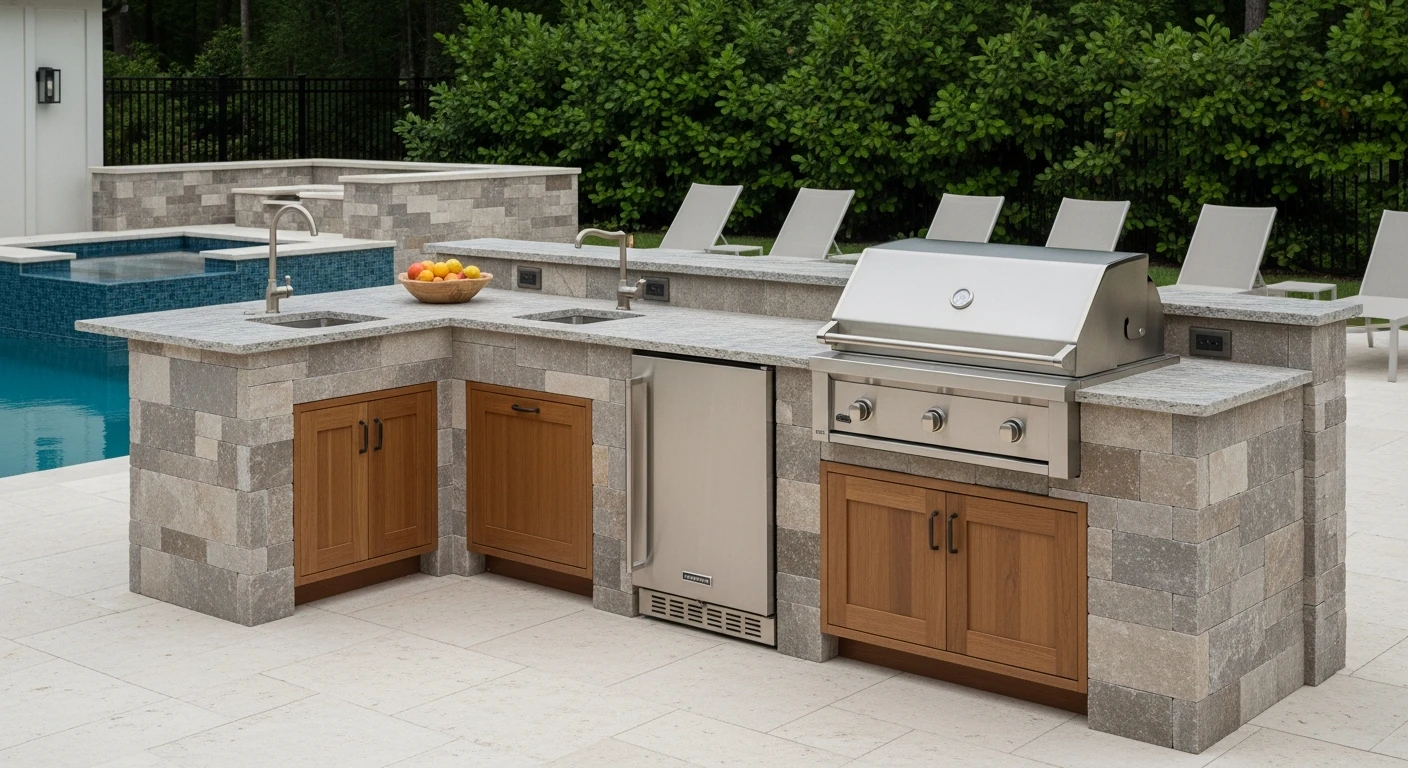
- Countertop Surfaces: Natural stone like granite is a popular but flawed choice here. It's porous and requires constant sealing to prevent staining and moisture penetration. I almost exclusively specify ultra-compact, non-porous surfaces like Dekton or Neolith. They are completely UV-stable (so the color won't fade in the intense sun over a Fort Myers pool) and impervious to moisture.
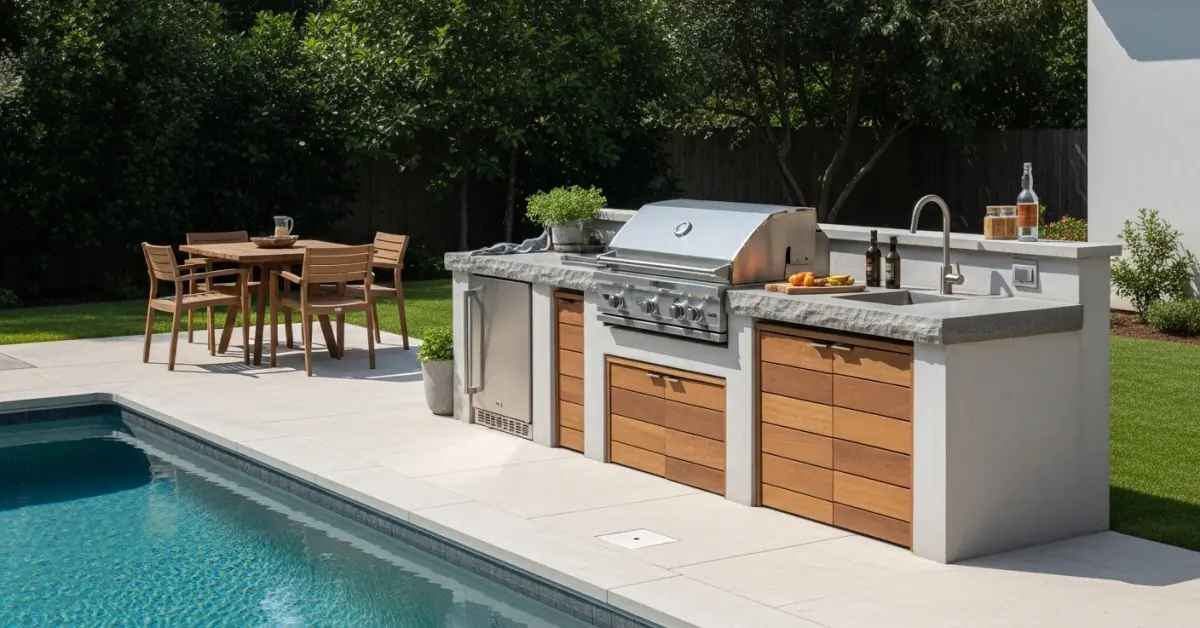
- Cabinetry & Structure: Forget wood or powder-coated steel. I’ve seen powder coatings chip, allowing moisture to create rust from the inside out. My go-to is a structural frame using marine-grade high-density polyethylene (HDPE) or, for maximum rigidity, a concrete block structure finished with a specialized stucco system designed for coastal applications.
The Phased Implementation Plan for a Hurricane-Resistant Build
Execution is just as critical as material selection. A flawless design with poor implementation is a failed project. My process is rigid and follows a clear, phased approach to eliminate common points of failure I've had to fix on other contractors' jobs. This isn't just a checklist; it's a quality control protocol. A frequent error I’ve identified in Lee County is improper utility placement, particularly electrical outlets. They must be GFCI-protected and housed in "in-use" weatherproof covers, not just standard outdoor boxes that fail to protect connections during our torrential summer downpours.Precision Tuning & Quality Standards
The job isn't finished when the last appliance is installed. I perform a series of post-installation audits to guarantee the build meets my durability standards. These are the small details that determine whether a kitchen thrives or just survives.- Ventilation Flow Test: For kitchens under a lanai, I conduct a smoke test to ensure the ventilation hood has the proper CFM rating and is drawing smoke and grease effectively, preventing buildup on the ceiling.
- Water Intrusion Audit: I meticulously inspect every seal around sinks, ice makers, and access doors. Water intrusion is the silent killer of outdoor kitchens, leading to hidden mold and electrical hazards.
- Fastener Verification: I personally check that all visible and structural fasteners are also 316L stainless steel. Using a cheaper fastener is the quickest way to undermine the entire material strategy, as rust streaks will inevitably appear. My benchmark is clear: a correctly built kitchen should show zero signs of atmospheric corrosion after its first full summer rainy season.
Written by

Tags
outdoor kitchen ideas near me
outdoor kitchen remodeling
backyard kitchen and pool designs
backyard pool and kitchen designs
outdoor kitchen designers
Outdoor Kitchen Ideas in Lee FL FAQ
What materials should I choose for cabinets and countertops that won't get ruined by my saltwater pool?
You must select materials specifically rated for coastal or marine environments to prevent rapid corrosion and degradation. For cabinets, marine-grade polymers or teak are superior choices over standard stainless steel, which can still show rust spots from constant salt exposure. For countertops, opt for non-porous materials like granite or sealed concrete, as they resist staining from both food and pool chemicals. A common mistake is using porous stone like travertine, which can absorb chlorinated water and discolor or weaken over time, leading to costly replacement.
Where is the best place to locate my outdoor kitchen relative to the pool?
Position your outdoor kitchen at least 10 to 15 feet away from the pool's edge and downwind from the prevailing breeze direction. This placement minimizes the amount of grease, smoke, and food debris that blows into your pool water, which can clog your cartridge filter and throw off your water chemistry. Placing a grill too close also creates a safety hazard with wet, running children. A poorly placed kitchen can double your pool cleaning workload and increase chemical consumption as you constantly fight organic contaminants.
Do I need a separate drainage system for my outdoor kitchen sink and grill?
Yes, your outdoor kitchen requires a dedicated drainage system completely separate from your pool's plumbing and the surrounding deck drains. Kitchen drainage contains grease, food particles, and cleaning agents that must be routed to your home's sanitary sewer line, not the storm drain or pool filter system. Allowing greasy runoff to enter your pool's skimmer can create a serious scum line and overwhelm your filtration, while draining it onto the deck creates a dangerous, slippery surface and can stain the concrete or pavers.
What are the most important safety features to consider for an outdoor kitchen next to a pool?
Your primary safety focus should be on electrical and fire prevention, especially in a wet environment. All electrical outlets must be GFCI-protected (Ground Fault Circuit Interrupter) and installed in weatherproof boxes to prevent electrocution risk. Ensure your grill has at least 36 inches of clearance from any combustible structures, and install a non-slip surface on the flooring in the kitchen area. A critical but often overlooked feature is task lighting; good illumination prevents accidents during evening cooking and helps you see what you're doing around hot surfaces.
Will adding a refrigerator or ice maker outdoors affect my utility bills much?
An outdoor-rated refrigerator or ice maker will noticeably increase your electricity bill, as it must work much harder to maintain cold temperatures in direct sun and high heat. Unlike an indoor unit, an outdoor model's compressor may run almost constantly on hot summer days, potentially adding $20-$50 per month to your utility costs depending on the climate and unit efficiency. To mitigate this, install the appliance in a shaded area and ensure it has proper ventilation around the back and sides to prevent overheating and premature failure.
How do I prevent pests like ants and rodents from invading my outdoor kitchen?
Effective pest control requires eliminating access to food, water, and shelter by sealing your kitchen components tightly. Choose cabinets with tightly sealed doors and drawers, and ensure any utility pass-throughs for gas or water lines are sealed with caulk or spray foam. A built-in trash bin with a heavy, self-closing lid is essential. The most overlooked step is cleaning the grease trap or drip pan on your grill after every use; accumulated grease is a primary attractant for everything from ants to raccoons.