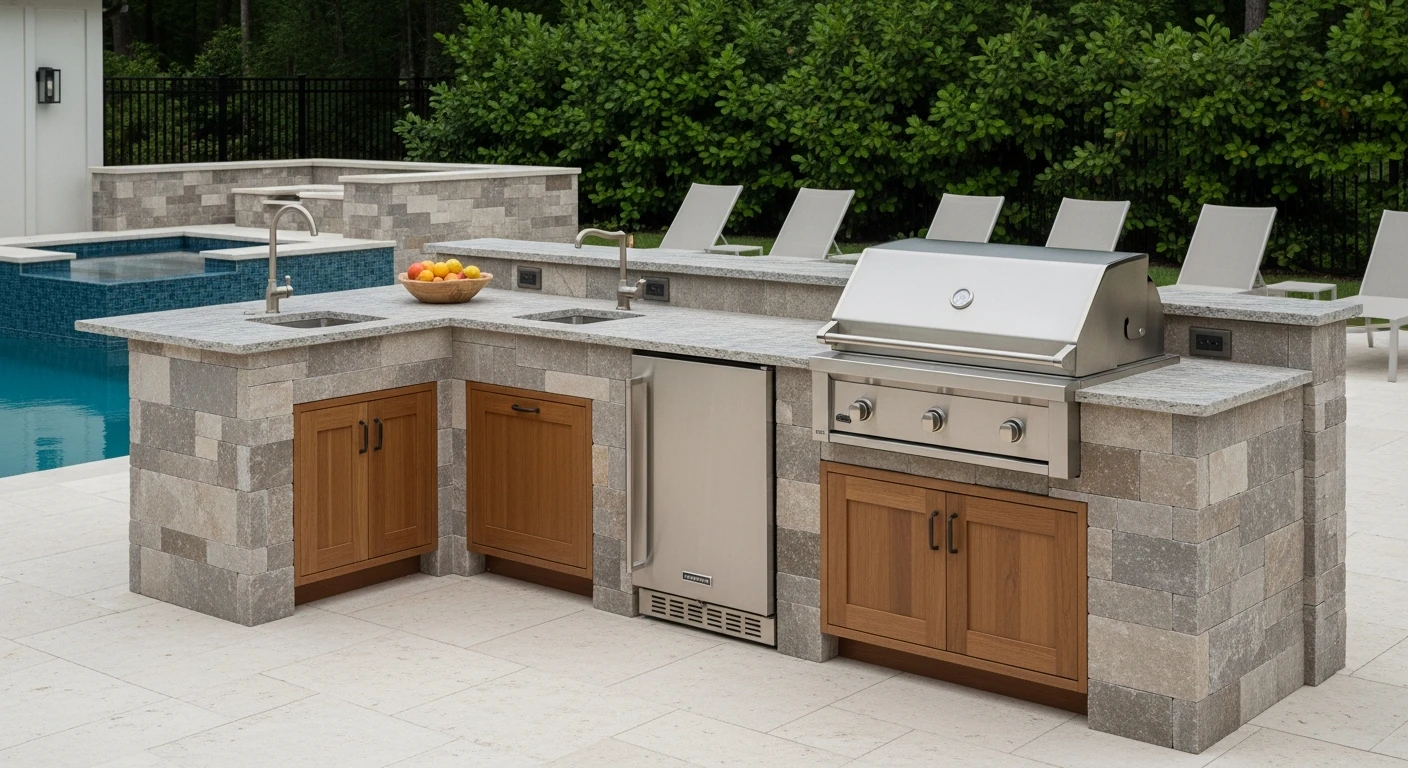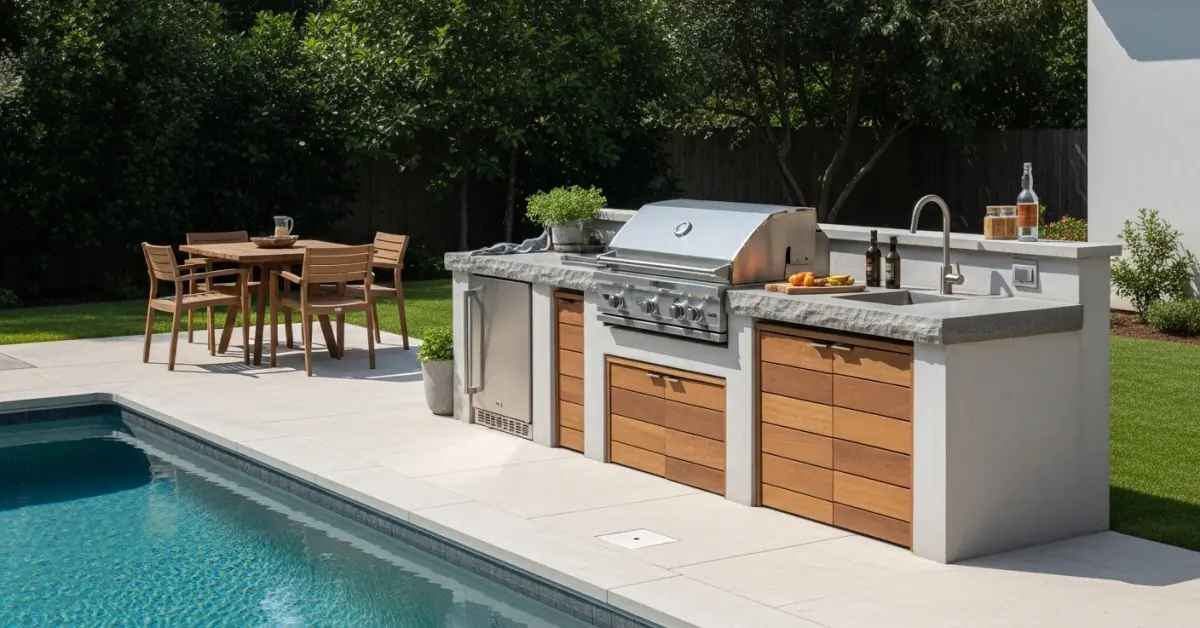
Pasco County Outdoor Kitchen Design: My Framework for 30-Year Material Longevity
For years, I've seen the same expensive mistake repeated across Pasco County homes, from the newer developments in Trinity to the waterfront properties in New Port Richey. A homeowner invests in a beautiful outdoor kitchen, only to see it degrade in under five years. The culprit isn't poor craftsmanship; it's a fundamental misunderstanding of our unique coastal climate. Standard "weather-resistant" materials simply don't withstand the trifecta of Pasco's intense humidity, high UV index, and salt-laced air. My approach isn't about picking trendy finishes. It’s about a material science-first methodology I developed after deconstructing multiple premature failures. I call it the Coastal Durability Matrix, a diagnostic framework that ensures every component selected is engineered not just to survive, but to thrive in our specific environment. This system directly counters the humidity that causes mildew in porous stones and the salinity that corrodes even some grades of stainless steel.The Coastal Durability Matrix: My Diagnostic Protocol for Pasco County
Before a single design sketch is made, I run every project through a three-point environmental analysis. This isn't a generic checklist; it's a specific assessment of the property's micro-environment within Pasco. A home in a dense Land O' Lakes subdivision has different challenges than one exposed to the Gulf breezes. The matrix assesses:- Humidity & Salinity Saturation: I measure the ambient humidity and consider the proximity to the coast. This dictates the required grade of all metals and the necessary porosity rating for every surface. A common error is using 304-grade stainless steel, which I've seen show pitting corrosion within 24 months near the coast.
- Direct UV Exposure & Thermal Stress: I map the sun's path across the proposed location throughout the day. This data informs the selection of materials that won't fade, warp, or crack under relentless Florida sun and the extreme temperature swings between a sun-baked surface and a sudden summer downpour.
- Wind & Water Ingress Profile: Especially critical during hurricane season, I analyze how wind and driving rain will impact the structure. This influences the need for reinforced framing, specialized sealants, and designs that eliminate water pooling.
Material Specification: Beyond Granite and Stainless Steel
The results from the matrix dictate a very specific material palette. I've learned the hard way that popular choices often lead to costly replacements. For instance, a major project I was called in to fix had used a beautiful porous travertine countertop that became permanently stained with mildew from trapped moisture within three years. My non-negotiable standards for Pasco County are:- Countertops: I exclusively specify sintered stone (like Dekton) or non-porous quartzite. These materials have near-zero water absorption, preventing mildew and staining from humidity and decaying foliage. They also offer superior UV resistance, guaranteeing no color degradation.
- Cabinetry & Structure: Forget wood or metal-framed stucco, which traps moisture. My go-to is marine-grade high-density polyethylene (HDPE) or, for a premium finish, powder-coated aluminum. These materials are inert, waterproof, and will not warp, rot, or delaminate.
- Appliances & Hardware: This is my biggest sticking point. For any property within 10 miles of the coast, 316-grade stainless steel is the only acceptable option for grills, doors, and fasteners. Its molybdenum content provides superior resistance to chloride and salt corrosion, a factor that is almost always overlooked.
My 4-Phase Buildout for a Hurricane-Resistant Lanai Kitchen
With the right materials selected, the implementation phase must be just as rigorous. A flawless material can fail if installed incorrectly. My process is built around moisture management and structural integrity.Phase 1: Foundation and Drainage Engineering
A solid, properly sloped concrete foundation is critical. I mandate a slope of at least 1/4 inch per foot away from the house to prevent water from ever pooling near the structure, a common issue in our flat Pasco landscapes.Phase 2: Utility and Ventilation Mapping
All electrical outlets must be in-use, weather-rated GFCI receptacles. For grills installed under a covered lanai, I insist on a commercial-grade ventilation hood with a CFM (cubic feet per minute) rating calculated based on the grill's BTU output, preventing dangerous smoke buildup and grease stains.Phase 3: Component Assembly with Marine-Grade Sealants
Every joint, seam, and connection point is sealed with marine-grade silicone or polyurethane sealant. I use stainless steel fasteners exclusively, even in hidden areas, to prevent a single point of rust from compromising the entire structure over time.Phase 4: Appliance Integration & Performance Calibration
The final step involves setting and calibrating all appliances. This includes a gas line leak test and ensuring all gaskets on refrigerators and storage units create an airtight seal against the humid air, which significantly improves efficiency and prevents mold.Post-Installation Audit: The 5% That Guarantees Performance
Once the kitchen is built, I perform a final audit. This is where I catch the small details that extend the lifespan from 15 years to 30. I check for proper airflow behind and beneath cabinets to eliminate any possibility of trapped moisture. I also perform what I call the "Gasket Pressure Test" on all sealed doors by closing them on a thin piece of paper; if the paper can be pulled out without resistance, the seal is inadequate and must be adjusted. This simple check has saved clients thousands in potential moisture damage to expensive components. Before you finalize your outdoor kitchen design, have you specified the exact grade of stainless steel for every screw and hinge, or are you leaving that critical detail to chance?Written by

Tags
outdoor kitchen ideas near me
outdoor kitchen remodeling
backyard kitchen and pool designs
backyard pool and kitchen designs
outdoor kitchen designers
Outdoor Kitchen Ideas in Pasco FL FAQ
What materials should I choose for cabinets and countertops that won't get ruined by my saltwater pool?
You must select materials specifically rated for coastal or marine environments to prevent rapid corrosion and degradation. For cabinets, marine-grade polymers or teak are superior choices over standard stainless steel, which can still show rust spots from constant salt exposure. For countertops, opt for non-porous materials like granite or sealed concrete, as they resist staining from both food and pool chemicals. A common mistake is using porous stone like travertine, which can absorb chlorinated water and discolor or weaken over time, leading to costly replacement.
Where is the best place to locate my outdoor kitchen relative to the pool?
Position your outdoor kitchen at least 10 to 15 feet away from the pool's edge and downwind from the prevailing breeze direction. This placement minimizes the amount of grease, smoke, and food debris that blows into your pool water, which can clog your cartridge filter and throw off your water chemistry. Placing a grill too close also creates a safety hazard with wet, running children. A poorly placed kitchen can double your pool cleaning workload and increase chemical consumption as you constantly fight organic contaminants.
Do I need a separate drainage system for my outdoor kitchen sink and grill?
Yes, your outdoor kitchen requires a dedicated drainage system completely separate from your pool's plumbing and the surrounding deck drains. Kitchen drainage contains grease, food particles, and cleaning agents that must be routed to your home's sanitary sewer line, not the storm drain or pool filter system. Allowing greasy runoff to enter your pool's skimmer can create a serious scum line and overwhelm your filtration, while draining it onto the deck creates a dangerous, slippery surface and can stain the concrete or pavers.
What are the most important safety features to consider for an outdoor kitchen next to a pool?
Your primary safety focus should be on electrical and fire prevention, especially in a wet environment. All electrical outlets must be GFCI-protected (Ground Fault Circuit Interrupter) and installed in weatherproof boxes to prevent electrocution risk. Ensure your grill has at least 36 inches of clearance from any combustible structures, and install a non-slip surface on the flooring in the kitchen area. A critical but often overlooked feature is task lighting; good illumination prevents accidents during evening cooking and helps you see what you're doing around hot surfaces.
Will adding a refrigerator or ice maker outdoors affect my utility bills much?
An outdoor-rated refrigerator or ice maker will noticeably increase your electricity bill, as it must work much harder to maintain cold temperatures in direct sun and high heat. Unlike an indoor unit, an outdoor model's compressor may run almost constantly on hot summer days, potentially adding $20-$50 per month to your utility costs depending on the climate and unit efficiency. To mitigate this, install the appliance in a shaded area and ensure it has proper ventilation around the back and sides to prevent overheating and premature failure.
How do I prevent pests like ants and rodents from invading my outdoor kitchen?
Effective pest control requires eliminating access to food, water, and shelter by sealing your kitchen components tightly. Choose cabinets with tightly sealed doors and drawers, and ensure any utility pass-throughs for gas or water lines are sealed with caulk or spray foam. A built-in trash bin with a heavy, self-closing lid is essential. The most overlooked step is cleaning the grease trap or drip pan on your grill after every use; accumulated grease is a primary attractant for everything from ants to raccoons.