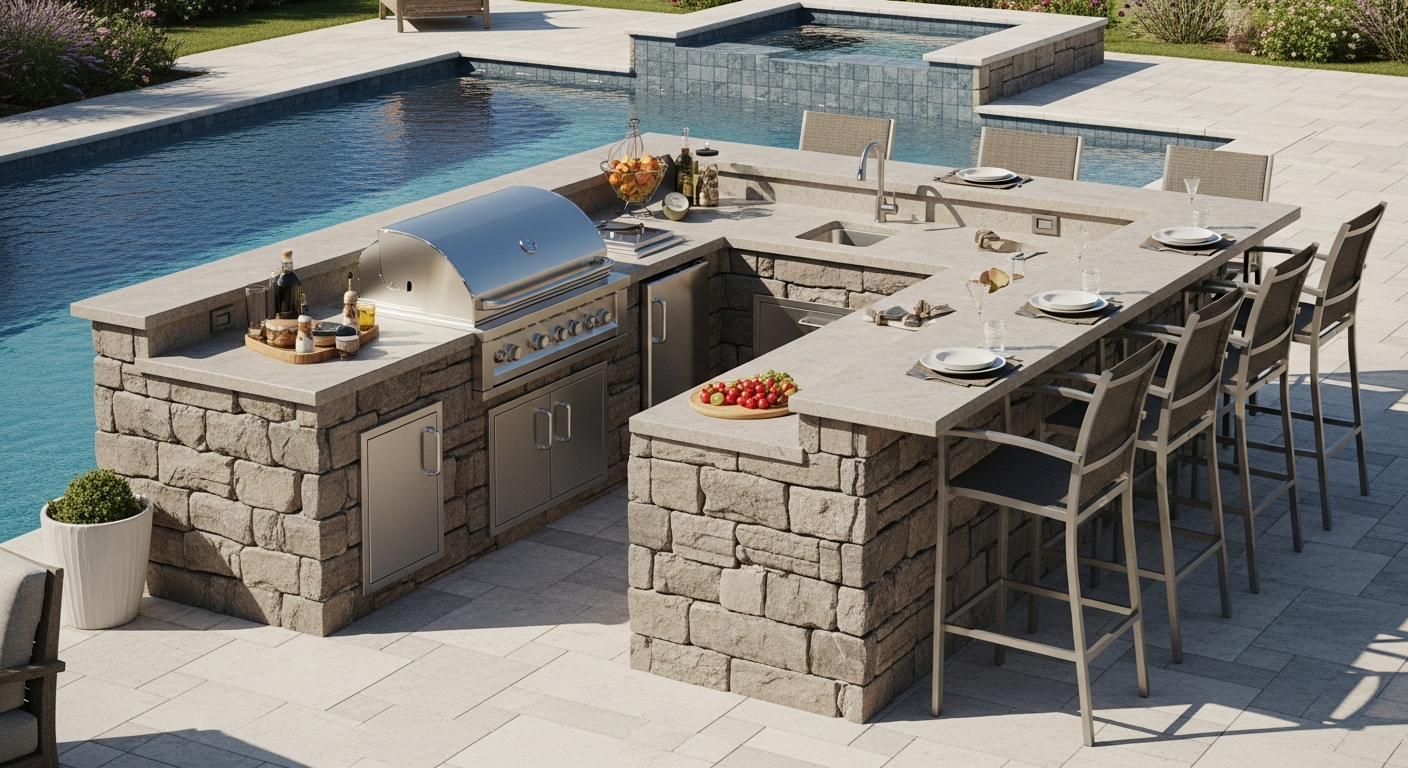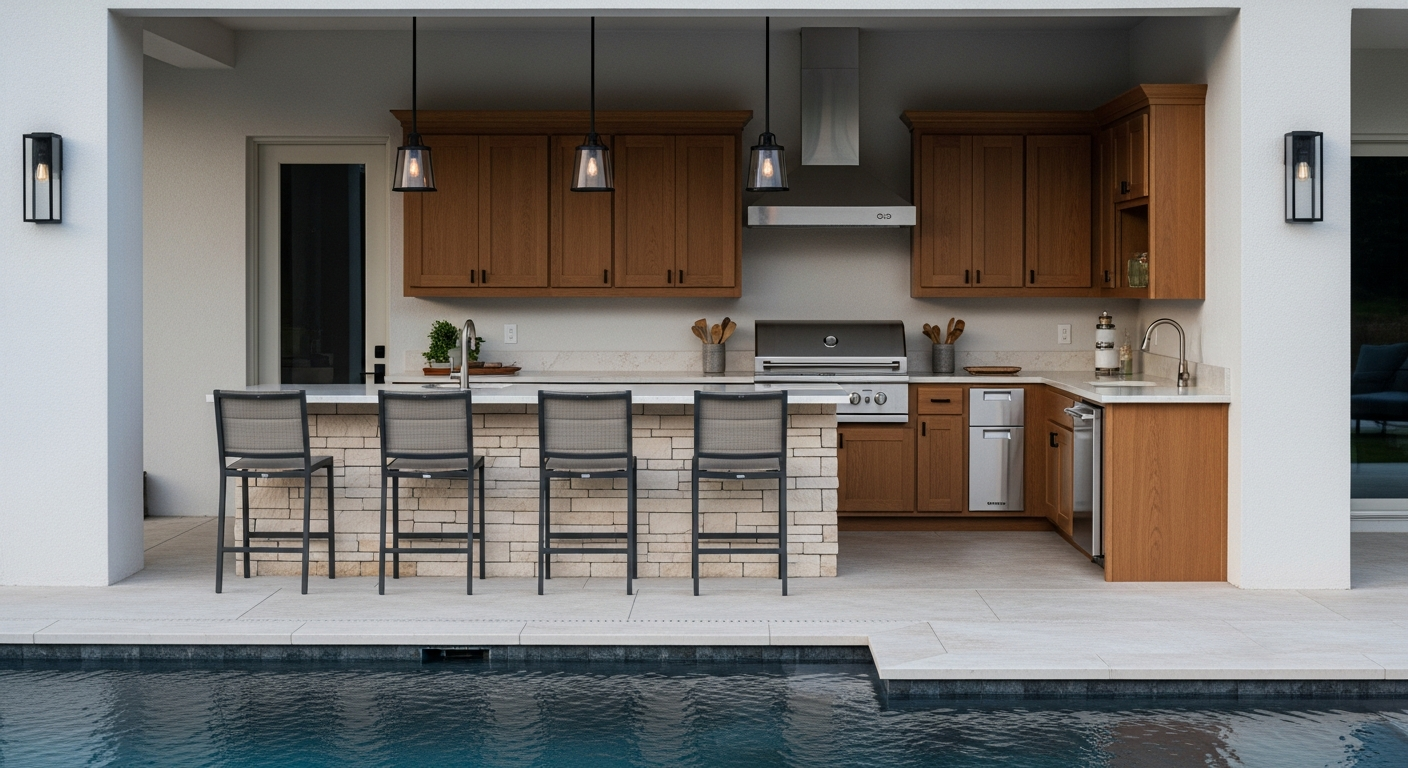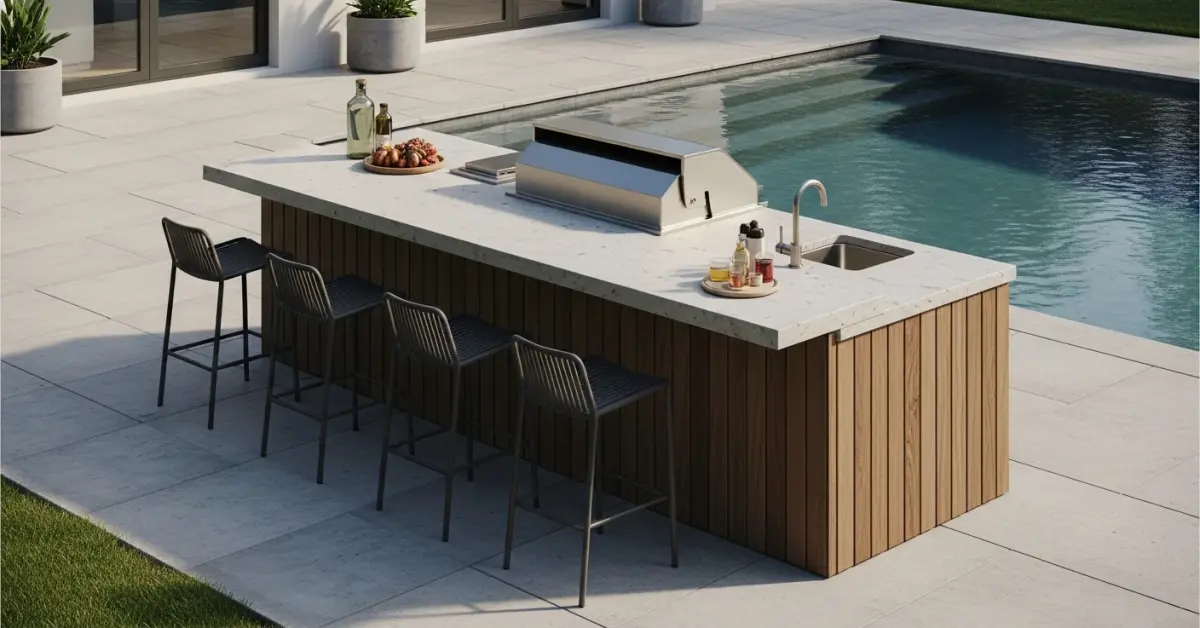
Outdoor Kitchen Island with Bar in Charlotte County: My Framework for 30-Year Durability Against Salt Air
After designing and overseeing dozens of outdoor kitchen projects from Punta Gorda to Port Charlotte, I can tell you the single point of failure isn't the grill or the countertop—it's the unseen internal frame. A standard galvanized steel frame, often sold as "durable," will start to show catastrophic rust bleed-through on your beautiful stucco finish in as little as three years, especially in waterfront properties along the Peace River. The constant humidity and salt spray create a perfect storm for corrosion that most builders simply ignore. My entire approach is built around preventing this specific, costly failure. I developed what I call the **Coastal Core Framework**, a material and assembly methodology that moves beyond surface-level aesthetics to guarantee the structural integrity of your investment. It’s not about choosing the prettiest stone; it's about building an island that won't be silently destroyed from the inside out by our unique Charlotte County climate.Diagnosing Premature Failure: The Coastal Corrosion Audit
Before I even sketch a design, I perform what I term a **Coastal Corrosion Audit**. This isn't a simple site visit. I assess the property's specific microclimate, paying close attention to proximity to saltwater and prevailing wind direction. A home in Punta Gorda Isles with direct exposure to Charlotte Harbor has a fundamentally different set of material requirements than a property further inland in Murdock. The common mistake I see is a one-size-fits-all approach, which is a recipe for disaster here. My audit focuses on identifying the three primary aggressors: saline aerosolization, humidity saturation, and UV degradation.The Technical Flaws in Standard Outdoor Kitchen Construction
The typical build process in this area has a fatal flaw: it prioritizes speed and cosmetic finish over material science. Installers often use a standard galvanized steel stud frame and attach a cement board with generic fasteners. They then apply a veneer—stucco, stone, or tile. The problem is that moisture inevitably penetrates the veneer's grout or hairline cracks. Once it reaches the galvanized frame, electrolysis begins, and the frame rusts from within. I’ve been called to repair 5-year-old islands that were little more than a beautiful shell filled with corroded metal dust. My methodology directly addresses this by specifying a non-corrosive structural system from the start.Implementation: My 4-Step Coastal Core Framework
Executing a project that will last requires a militant adherence to process. Deviating on even one of these steps compromises the entire structure. This is the exact sequence I use to ensure a minimum 25% increase in functional lifespan compared to standard construction methods.- Foundation and Utility Mapping: We never build on floating pavers. I mandate a monolithic concrete footer, properly tied into the existing patio slab with rebar. Before the pour, all plumbing and electrical conduits (using water-tight Schedule 80 PVC) are precisely placed. This prevents future slab cracking and ensures utilities are protected.
- Frame Assembly: This is the most critical stage. I exclusively use either 304-grade stainless steel tubing with TIG welds or a structural, high-density PVC polymer frame. I forbid the use of galvanized steel. All fasteners used for assembly must be 316-grade stainless steel to prevent any galvanic reaction.
- Cladding Substrate and Waterproofing: Instead of standard cement board, I specify a foam-core tile backer board that is inherently waterproof. Over this, a liquid-applied waterproofing and crack-isolation membrane is applied to all surfaces and seams. This creates a monolithic, impenetrable box, ensuring no moisture ever reaches the structural frame.
- Appliance and Countertop Integration: All outdoor-rated appliances are installed with a proper air gap for ventilation, as specified by the manufacturer—a step I see skipped constantly. For countertops, I recommend a non-porous material like high-grade quartzite or specially sealed granite. The key is applying a silicone-based impregnating sealer with a high solids content, reapplied annually.
Precision Adjustments for Lanai and Waterfront Installations
When installing an island under an existing lanai roof, grill ventilation becomes a primary safety and performance concern. I have a proprietary calculation for determining the required CFM (Cubic Feet per Minute) for a ventilation hood based on the grill's BTU output and the lanai's air volume. For waterfront builds, every single screw, hinge, and drawer slide is upgraded to marine-grade 316 stainless steel. It's a non-negotiable standard in my projects. This small material upgrade alone prevents the common "rust tear" stains you see on so many outdoor kitchens in our area. So, when you evaluate your builder, are you asking about the grade of their fasteners or the waterproofing method used behind the stone?Written by

Tags
grill island with bar
outdoor kitchen island bar
outdoor kitchen bar island
outdoor bar islands
outdoor kitchen white
Outdoor Kitchen Island with Bar in Charlotte FL FAQ
What kind of foundation do I need for an outdoor kitchen island with a bar?
Your outdoor kitchen island requires a solid, level concrete slab at least 10 centimeters thick to prevent shifting and cracking over time. Simply placing a heavy island on pavers or a wooden deck is a common mistake that leads to structural failure, as these surfaces can settle unevenly under the concentrated weight. A proper reinforced concrete footing, especially in regions with freeze-thaw cycles, is non-negotiable for supporting heavy granite countertops and masonry, ensuring your investment remains stable for decades. Neglecting this step can cause dangerous gas line stress and costly countertop fractures.
Do I need special appliances for an outdoor kitchen, or can I use indoor ones?
You must use appliances specifically rated for outdoor use, which are typically constructed from 304-grade stainless steel or higher. Indoor appliances will quickly fail due to rust, corrosion from humidity, and damage to electrical components not designed to withstand temperature swings and moisture. Using an indoor-rated refrigerator or cooktop outside is not only a safety hazard due to potential electrical shorts but will also void any manufacturer's warranty. The investment in outdoor-rated appliances is critical for both longevity and safe operation in an exposed environment.
How far should my outdoor kitchen island be from my house and pool?
Your island's grill must be at least 3 meters away from any combustible siding on your house to comply with fire codes and prevent heat damage. For poolside placement, position the island to minimize the risk of smoke blowing over the water and seating areas, considering prevailing wind directions. It's also critical to maintain a clear, safe pathway of at least 1.2 meters around the island to avoid creating a bottleneck, especially between the hot cooking surfaces and the high-traffic area of a pool deck.
What are the best countertop materials for an outdoor bar that will last?
Granite and quartzite are the top choices for outdoor countertops due to their high resistance to heat, stains, and UV fading. While popular indoors, materials like quartz are a poor choice for outdoor use as the resins that bind the stone together can yellow and degrade in direct sunlight. A common oversight is choosing a very dark-colored stone, which can become dangerously hot to the touch in the summer sun, reaching temperatures well over 65 degrees Celsius. A lighter-colored, sealed natural stone offers the best balance of durability and practicality.
What kind of plumbing and electrical work is required for an island with a sink and fridge?
An outdoor island with a sink and refrigerator requires dedicated plumbing lines for hot and cold water, plus a proper drainage system tied into your home's sanitary sewer. You will also need at least one dedicated 20-amp GFCI-protected circuit to safely power the refrigerator and any outlets. A frequent DIY error is attempting to use a simple garden hose for water supply, which doesn't provide adequate pressure and is not a permanent, code-compliant solution. In cold climates, all water lines must be installed with winterization shut-offs and drainage points to prevent freeze-burst damage.
How do I protect my outdoor kitchen island and bar during the winter?
Proper winterization involves more than just throwing a tarp over the island; you must shut off and drain all water lines to the sink and ice maker to prevent pipes from bursting. Clean the grill grates thoroughly to prevent corrosion and rodent nesting, and disconnect the propane tank for separate storage. Use a custom-fitted, waterproof, and breathable marine-grade canvas cover designed for outdoor kitchens. A cheap plastic tarp will trap moisture, which can lead to mildew growth and damage to stainless steel finishes and electronic igniters.