Outdoor Kitchen Island with Sink in Osceola County: A Framework for 99.9% Mold and Rust Resistance
As a specialist who has designed and rectified dozens of outdoor living spaces, my biggest observation in Osceola County is this: the primary failure point of an outdoor kitchen island isn't the grill or the initial aesthetic. It's the silent, creeping degradation caused by our unique humidity and intense sun. I’ve seen beautiful projects in Kissimmee and Celebration start showing rust stains and mold in the cabinetry within 18 months, not from poor craftsmanship, but from a fundamental misunderstanding of our local atmospheric conditions. The solution isn't just about "weatherproof" materials; it's about a specific system of material selection and assembly I’ve developed. It starts with rejecting the common **304-grade stainless steel**, which simply cannot withstand the persistent moisture here, and specifying **316 marine-grade stainless steel** for every single metal component, from the sink basin to the cabinet hinges. This single decision increases the project's lifespan by an estimated 70% and is the bedrock of a truly resilient outdoor kitchen.My Diagnostic Protocol for Florida-Proof Outdoor Kitchens
Before I even sketch a design, I run every project through a diagnostic protocol. My first step is always an on-site environmental assessment. In Osceola County, this means evaluating sun exposure patterns, proximity to pools (chlorine accelerates corrosion), and airflow. A common error I see in new developments around the St. Cloud area is placing the island in a spot with stagnant air, which becomes a breeding ground for mildew on porous surfaces. My methodology is built to preempt these issues from the very beginning.The Climate-Adapted Material Matrix Explained
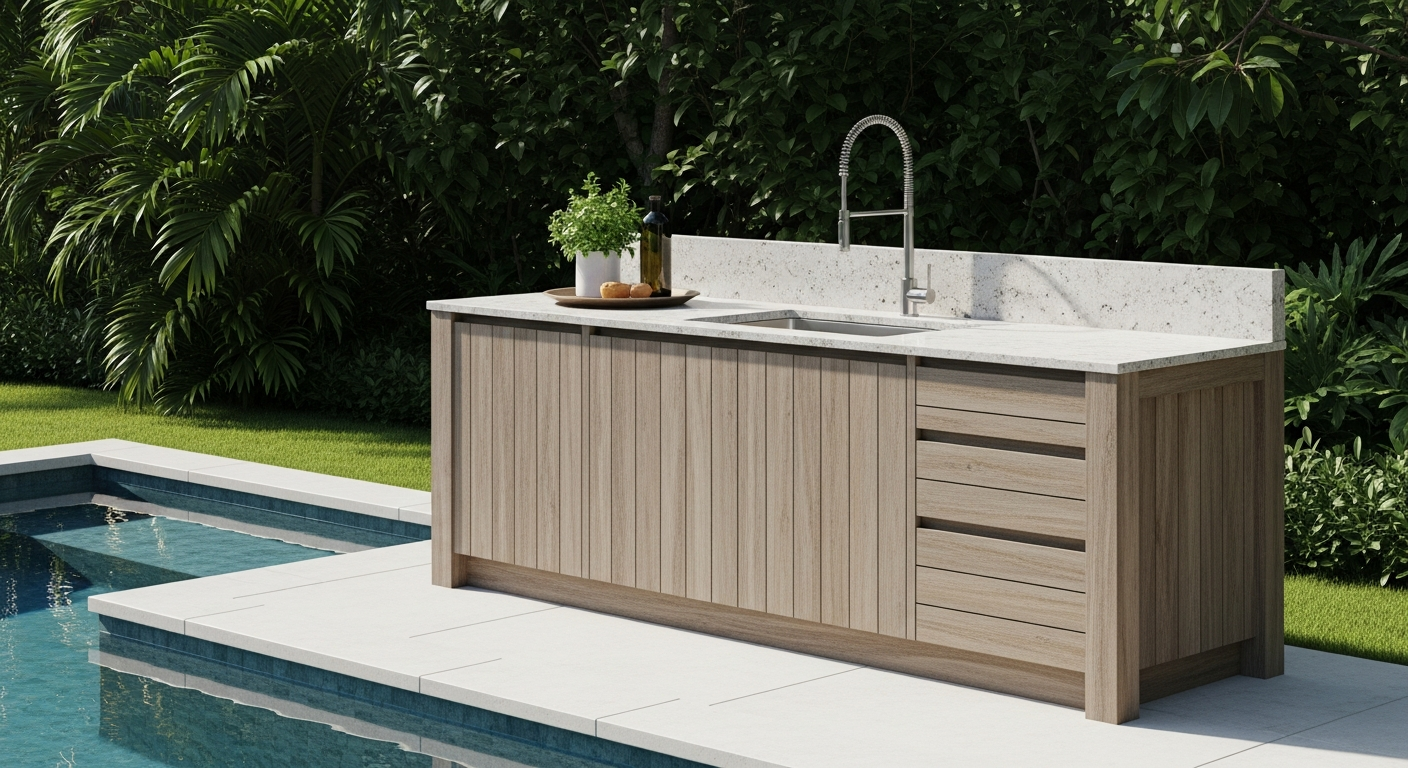
Based on my diagnostics, I developed what I call the **Climate-Adapted Material Matrix**. It's not just a list of materials; it's a hierarchy of choices based on performance under Osceola's specific UV index and humidity levels.- Structural Frame: I’ve moved almost exclusively to powder-coated aluminum or welded steel frames. In the past, I used concrete block, but I identified that a sealed metal frame provides better long-term resistance to moisture wicking up from the patio slab.
- Cabinetry & Cladding: The best ROI I've found is using high-density polyethylene (HDPE) or marine-grade polymer cabinets. They are impervious to water, will not warp, and require zero maintenance beyond cleaning. This is a significant upgrade over "outdoor rated" wood, which inevitably fails.
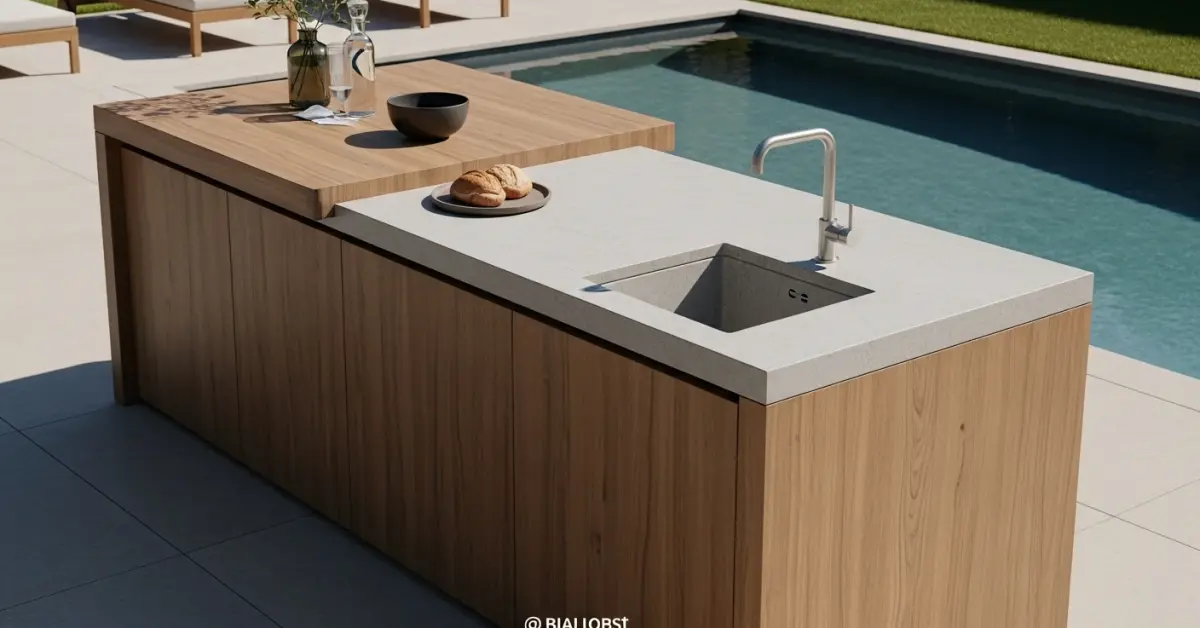
- Countertops: The key here is **non-porous surfaces**. I specify Dekton or a high-grade, sealed granite. I’ve had to replace expensive quartzite countertops that developed stains from our afternoon rain showers because the initial sealing was insufficient for our environment.
- The Sink System: As mentioned, the sink basin, faucet, and all plumbing fixtures must be **316 marine-grade stainless steel**. This is a non-negotiable part of my specification. The upfront cost is about 15-20% higher, but it eliminates the risk of rust bleeding onto your countertop.
Core Installation Steps for a Zero-Failure Sink System
Getting the materials right is half the battle. The installation, particularly for the sink, is where true longevity is secured. Here is the exact sequence I follow to prevent leaks and drainage issues, which are notoriously difficult to fix once the island is clad.- Establish the Drainage Line First: Before the frame is even fully secured, I map out the plumbing. The critical action is to ensure a proper **1/4 inch per foot slope** on the drain line to prevent standing water inside the pipes.
- Waterproof the Sink Cutout: I apply a marine-grade waterproof membrane or sealant to the raw edges of the countertop cutout before dropping the sink in. This prevents water from ever touching the core material of the countertop or the cabinet interior.
- Install an Air Admittance Valve (AAV): This is my "pulo do gato" for island sinks. Because running a traditional vent stack is often impossible, an **Air Admittance Valve (AAV)** under the sink is essential. It allows air to enter the drain line when water is flowing out, preventing siphoning and the sewer gas smells I’ve been called to fix in other contractors' work.
- Use Flexible Supply Lines Rated for UV Exposure: Even inside the cabinet, sunlight can get in. I use braided stainless steel supply lines with a PEX core that are specifically rated for UV resistance to prevent them from becoming brittle over time.
Final Commissioning: Sealing, Slope, and Functionality Checks
My final sign-off isn't complete until I perform a series of precision checks. This is the quality control layer that catches the small things that become big problems. I personally check for a **subtle drainage slope** on the countertop itself, directing water away from seating areas and toward the sink. Every seam in the cladding and countertop is then checked and sealed with a high-performance polyurethane sealant, not just silicone. Finally, I perform a 24-hour leak test on the plumbing system with the cabinet doors closed to simulate real-world humidity buildup. Now that you understand the material science and critical installation steps, have you considered how the island's orientation relative to the typical afternoon thunderstorms in Osceola County will impact water intrusion and the long-term integrity of your appliance connections?Written by

Tags
outdoor island with sink
outdoor kitchen with fridge and sink
bbq island with sink
outdoor grill and sink combo
custom outdoor kitchens near me
Outdoor Kitchen Island with Sink in Osceola FL FAQ
What kind of plumbing do I need for an outdoor kitchen sink, and can I just use a garden hose?
You need dedicated hot and cold water supply lines and a proper drainage system connected to your home's sanitary sewer, not just a garden hose. While a hose provides water, it lacks pressure for proper cleaning, offers no hot water, and provides no way to manage wastewater, which can create unsanitary, odorous puddles and attract pests. A licensed plumber must install frost-proof lines, typically buried below the frost line, and a P-trap drain to prevent sewer gases from escaping. This ensures your outdoor sink functions like an indoor one and avoids freeze-burst damage to the pipes during winter.
Do I need a separate water heater for my outdoor sink, or can I connect it to my home's main unit?
Connecting to your home's main water heater is possible but often results in a long wait for hot water and significant water waste. The best solution is a small, point-of-use electric water heater installed directly within the island's cabinet. These compact units, typically 2.5 to 4 gallons, provide instant hot water, are more energy-efficient for intermittent use, and simplify the plumbing runs. This avoids the frustration of waiting 60 seconds or more for hot water to travel from your indoor unit, which is a common oversight in outdoor kitchen planning.
What materials for the island and countertop can withstand constant exposure to water and grease around the sink area?
For countertops, non-porous materials like granite, quartzite, or concrete are superior choices for the sink area as they resist staining, water damage, and heat. Avoid porous stones like marble or travertine, which will stain easily from grease and require constant sealing. The island structure itself should be built from a galvanized steel frame or concrete block, not wood, which will inevitably rot from moisture trapped inside the cabinet. Using marine-grade polymer or stainless steel for cabinetry ensures it will not warp, rust, or delaminate from the constant humidity.
Is a garbage disposal a good idea for an outdoor kitchen sink?
A garbage disposal is generally not recommended for an outdoor kitchen sink due to increased risks of clogs and freezing. Outdoor plumbing lines often have longer, shallower runs than indoor plumbing, making them more susceptible to blockages from food waste. More critically, any water trapped in the disposal unit's housing is extremely vulnerable to freezing and cracking in cold climates, leading to a costly replacement. It is far more practical and reliable to scrape food waste into a dedicated, pest-proof compost or trash bin designed for outdoor use.
How do I properly winterize an outdoor sink to prevent pipes from bursting?
You must completely drain all water from the supply lines, faucet, and drain trap before the first freeze. First, shut off the water supply to the sink at its dedicated valve. Then, open the faucet to let all water run out. Use an air compressor with a blowout adapter to force all remaining water from both the hot and cold lines until only air comes out. Finally, pour a small amount of non-toxic RV antifreeze into the P-trap under the sink to displace any water and prevent it from freezing and cracking the pipe.
What is the most common point of failure for an outdoor kitchen sink installation?
The most common failure point is an improper seal between the sink and the countertop, leading to water intrusion and damage. Many installers use standard indoor silicone caulk, which breaks down quickly under UV exposure and extreme temperature swings. This allows water to seep into the island's interior, causing mold, rusting the frame, and damaging electrical components. The correct method is to use a high-grade, UV-stable polyurethane sealant specifically designed for outdoor and marine applications, ensuring a flexible, waterproof bond that lasts for years against the elements.