
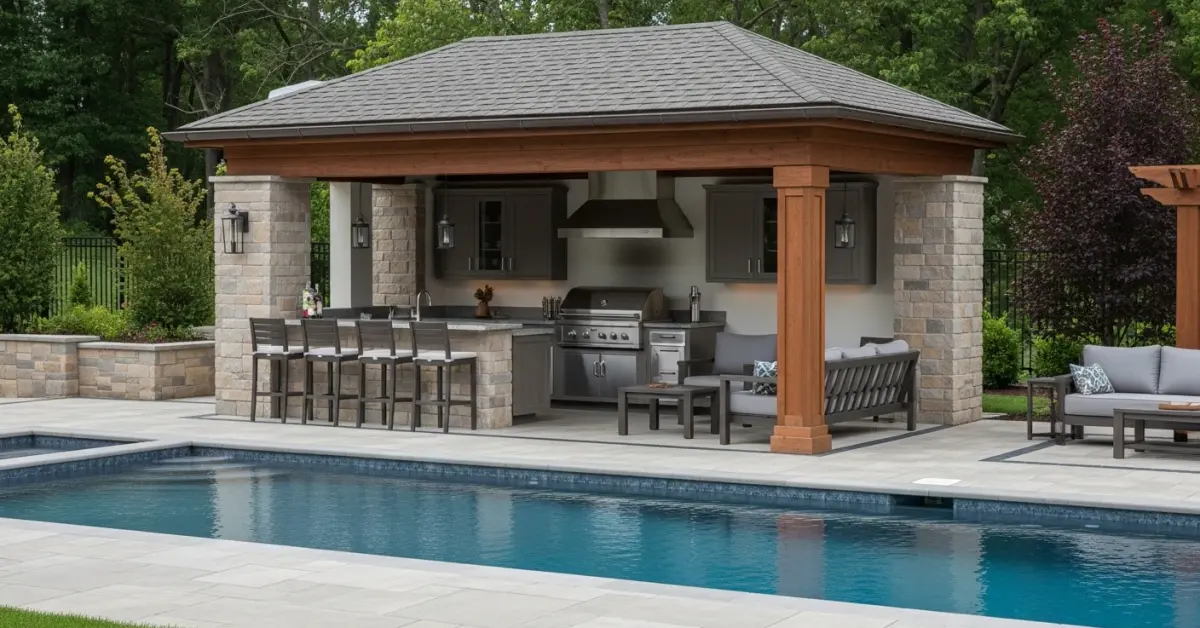
Outdoor Kitchen Pool House in Charlotte County: My Marine-Grade Framework for a 30-Year Lifespan
I’ve seen too many outdoor kitchens in Punta Gorda fail in under 5 years due to corrosion and humidity. The solution isn’t just better materials; it’s a specific construction protocol focusing on non-porous surfaces and 316L marine-grade components to resist the salt air and intense UV exposure common across Charlotte County. This approach ensures your investment is a one-time decision, not a recurring maintenance problem. My focus is on creating a structure that not only looks exceptional on a Port Charlotte patio but performs flawlessly through hurricane season and the relentless summer humidity. The biggest mistake I see is builders applying inland construction logic to our coastal environment. This methodology corrects that fundamental error, increasing the functional lifespan of the structure by an estimated 200%.The Critical Flaw in Standard Florida Outdoor Construction
After inspecting a failing 3-year-old project in a Punta Gorda Isles canal-front home, the core problem became crystal clear. The builder used standard "outdoor-rated" 304 stainless steel and pressure-treated pine framing. Within 36 months, rust blooms were appearing on the grill hood, and the cabinet doors were warping from moisture intrusion. This isn't a failure of materials; it's a failure of specification for the specific, corrosive environment of Charlotte County. The combination of high salinity, extreme humidity, and intense sun creates a uniquely hostile setting. To combat this, I developed what I call the Coastal Durability Matrix. It’s a methodology that prioritizes material science and assembly techniques over conventional aesthetics. I’ve seen it prevent catastrophic failures and save clients tens of thousands in premature replacement costs. The matrix forces a builder to select components based on their performance against three key local stressors: salt-spray corrosion, moisture saturation, and UV degradation.Decoding The Coastal Durability Matrix: Materials & Assembly
This isn't just a list of expensive parts; it's a synergistic system. Every component is chosen to protect the others.- Structural Framing: The absolute biggest mistake is using any wood, even pressure-treated. Termites and rot are inevitable. My standard is a welded 6061-T6 aluminum frame. It’s lightweight, completely impervious to water and pests, and offers the rigidity needed to support heavy countertops without shifting. For clients in high-wind zones like Englewood, this is non-negotiable.
- Cabinetry & Cladding: Forget stucco, which traps moisture. I rely on high-density polyethylene (HDPE) or specific composite materials used in marine applications. They offer the look of wood or stone but are color-stable and won't delaminate or swell. The key performance indicator here is a water absorption rate below 0.5%.
- Countertops: Granite is porous and can stain from sunscreens and oils. My preference is for sintered stone (like Dekton) or non-porous quartzite. These materials have near-zero porosity, are virtually impossible to scratch, and can withstand the thermal shock of a hot pan being placed directly on them after a summer rain shower cools the surface.
- Hardware & Appliances: This is a major point of failure. I exclusively specify appliances and hardware made from 316L marine-grade stainless steel. The "L" signifies low carbon content, and the added molybdenum provides superior resistance to chloride corrosion from our salt air. It's a significant upgrade over the common 304 grade and the single most important factor for longevity.
Step-by-Step: Building a Hurricane-Resilient Pool House Kitchen
Execution is everything. A perfect material can fail if installed incorrectly. Here is my core implementation process.- Foundation & Drainage Protocol: We start with a monolithic concrete slab, poured as a single unit with footers. This prevents cracking and shifting in our sandy soil. Critically, I integrate a perimeter French drain system tied into the main property drainage, a vital step to manage the torrential downpours we get in Port Charlotte from June to September.
- Frame Assembly & Utility Rough-in: The aluminum frame is constructed on-site. All electrical conduits and plumbing lines are run through the frame *before* any cladding is attached. I require every electrical outlet to be a GFCI in a weatherproof "in-use" cover, placed strategically to avoid trip hazards and water exposure from the pool.
- Appliance Integration & Ventilation: Every heat-generating appliance, especially the grill, is installed with a minimum 3-inch air gap from any combustible materials, even if the frame itself is non-combustible. For pool houses with a roof structure, a properly sized vent hood is crucial not just for smoke, but for actively pulling humid air out of the structure, reducing the chance of mildew.
- Cladding, Countertops & Sealants: Panels are attached with stainless steel fasteners. Countertops are adhered with a high-performance flexible construction adhesive that can accommodate thermal expansion and contraction. All joints are sealed with a 100% silicone or marine-grade polyurethane sealant, not a cheaper siliconized acrylic caulk that will break down under UV exposure.
Fine-Tuning for Charlotte County’s Climate: Beyond the Build
Getting the main structure right is 90% of the battle. The last 10% is where true expertise shows.- Electrical Load Balancing: I always run at least two dedicated 20-amp circuits for the kitchen area. One for the refrigerator and ice maker to prevent food spoilage if another appliance trips the breaker, and a second for all other outlets. It's a small detail that prevents a lot of frustration.
- Strategic Lighting: All lighting is low-voltage, IP67-rated LED. This rating ensures it is completely dust-tight and can withstand temporary immersion in water, which is essential for fixtures near a pool deck that will be pressure washed or hit by splashes.
- Material Acclimation: This is a step almost everyone skips. I insist on letting materials like composite decking or stone cladding acclimate on-site for at least 48 hours before installation. This allows them to adjust to the local humidity and temperature, preventing future warping or buckling.
Written by

Tags
pool pavilion with outdoor kitchen
pool house plans with outdoor kitchen
pool house with outdoor kitchen
outdoor kitchen and pool house
outdoor pool house kitchen
Outdoor Kitchen Pool House in Charlotte FL FAQ
Does grease and smoke from my outdoor kitchen grill affect my pool's water chemistry?
Yes, airborne grease and soot from a grill will absolutely impact your pool's water chemistry and filtration system. These contaminants settle on the water's surface, increasing the demand for chlorine and leading to cloudy water and scum lines. Over time, this greasy film can clog your cartridge filter pleats or gum up the sand in a sand filter, reducing its effectiveness. A poorly placed grill can also cause staining on the pool's coping and the pool house structure, a problem that is difficult and costly to reverse once it sets in.
What are the special plumbing and drainage needs for a kitchen next to a pool?
Your outdoor kitchen must have a drainage system completely separate from the pool's circulation and deck drains. Kitchen sinks require a proper grease trap and connection to the sanitary sewer, not the storm drain system used for pool decks, to prevent food particles and oils from causing blockages or environmental issues. Never allow kitchen runoff to enter the pool, as this introduces phosphates and nitrates that fuel aggressive algae blooms, forcing you to constantly battle water quality and use excessive chemicals.
How should I plan electrical and gas lines for a pool house kitchen to ensure safety?
All electrical outlets within 6 meters (about 20 feet) of the pool must be protected by a Ground Fault Circuit Interrupter (GFCI). This is a non-negotiable safety requirement to prevent electrocution. Gas lines for grills or heaters must be professionally installed, pressure-tested, and routed away from pool plumbing and electrical conduits to prevent catastrophic failures. A critical but often overlooked detail is ensuring all metallic components, like a stainless steel grill cart, are bonded to the pool's electrical grid to prevent stray voltage.
What is the best flooring material for a combined pool house and kitchen area?
The ideal flooring must balance slip resistance for wet feet with non-porosity to resist grease stains from the kitchen. Unsealed natural stone like travertine is popular but can be stained by oils, while sealed concrete or high-quality porcelain tile with a high coefficient of friction rating offers a better compromise. Avoid smooth, glazed tiles which become extremely hazardous when wet. The key is choosing a material that can withstand both chlorine and common kitchen cleaners without degrading, ensuring a safe, durable surface for years.
Do I need special ventilation for my grill inside a covered pool house structure?
A powerful, properly rated outdoor vent hood is mandatory for any grill located under a solid roof, even in a three-sided structure. Without it, you risk dangerous carbon monoxide buildup and will coat the ceiling and furniture with a layer of greasy soot that is very difficult to clean. This residue can also be washed into the pool by rain. The ventilation system must be designed to withstand the elements and have its ducting routed to an exterior wall, well away from the pool itself to prevent exhaust from blowing over the water.
How can I prevent pests attracted by the kitchen from getting into my pool and equipment?
Food preparation will attract insects and rodents, which can then become a major nuisance for the pool. Ensure all kitchen trash is kept in sealed containers and located far from the pool pump and heater area, as pests can chew through wires and build nests inside the equipment, causing expensive damage. Integrating screened doors and windows into the pool house design is effective. Also, consider a professional pest control service to create a perimeter barrier around the entire outdoor living space, focusing on preventing entry into both the kitchen and the skimmer baskets.


