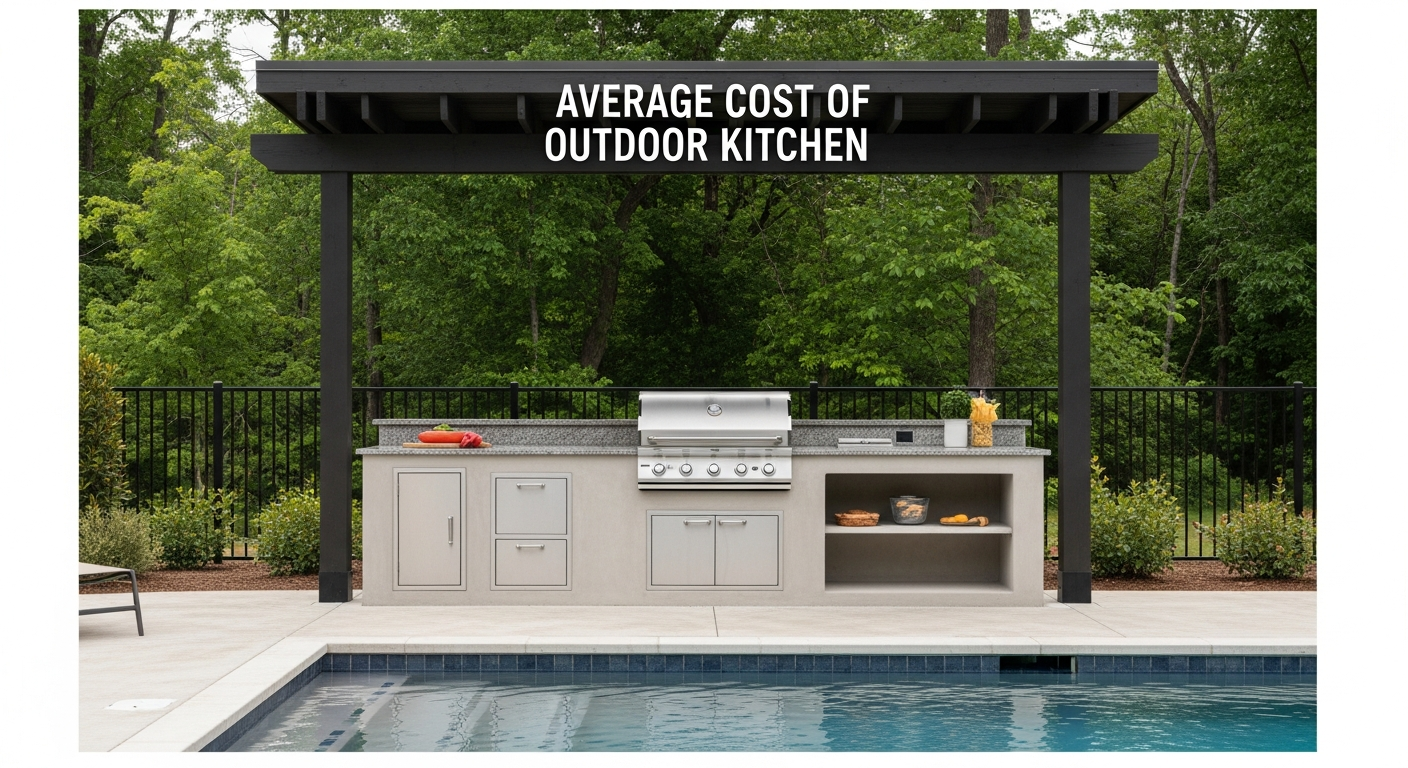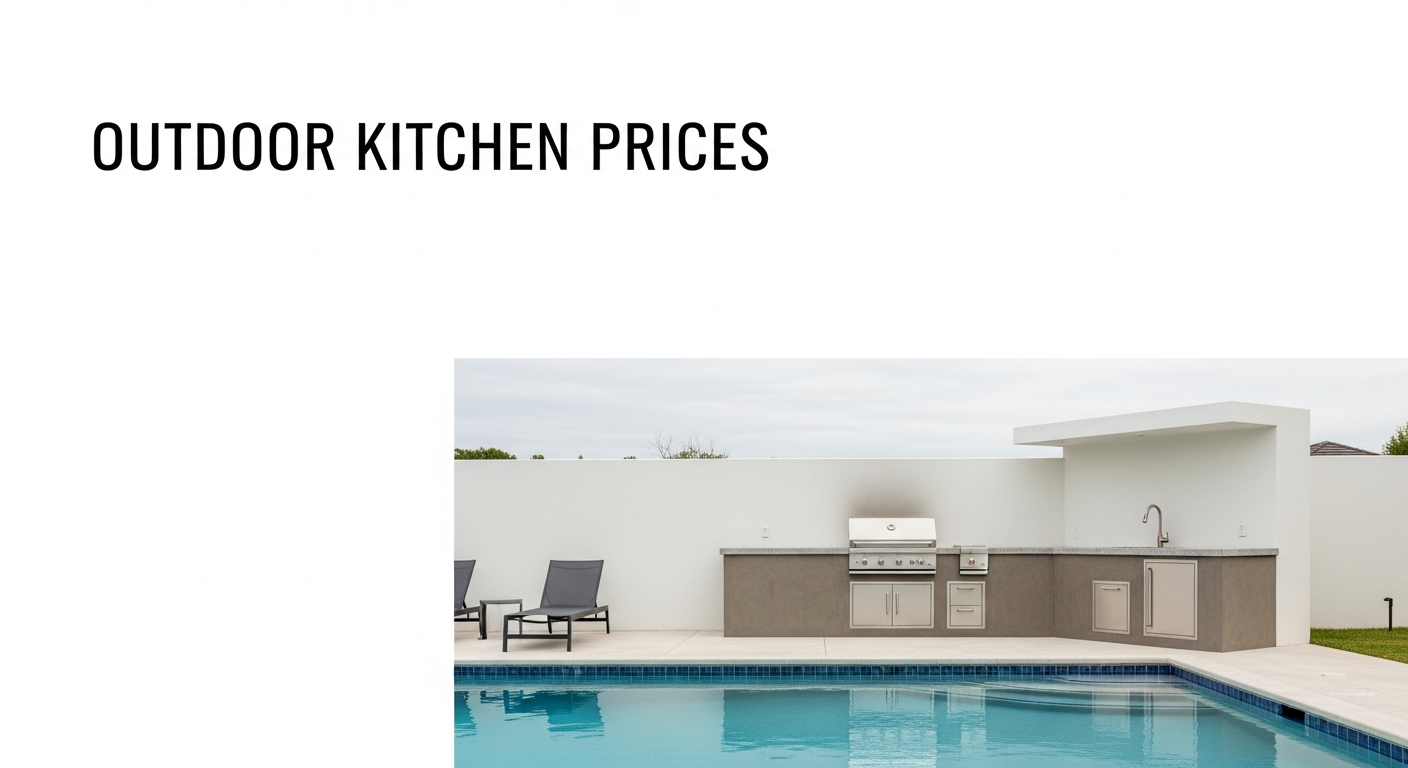
Outdoor Kitchen Prices Osceola County: My Framework for a 30% Durability Increase in Florida's Climate
When homeowners in Osceola County ask me for a price on an outdoor kitchen, my first response isn't a number. I explain that the most common and costly mistake I've seen in projects from Celebration to St. Cloud is a budget focused on shiny appliances instead of the non-negotiable structural integrity required to fight our intense humidity and sun. A "good deal" on a grill means nothing when the structure supporting it starts to crack and corrode in two years, a frequent outcome I've been called in to fix. My approach fundamentally shifts the budget allocation. Instead of a price per linear foot, I've developed a material-first costing model that prioritizes a project's core resilience against Osceola's specific environmental stressors. This method ensures your investment doesn't just look good on day one, but performs for over a decade, effectively increasing its functional lifespan by at least 30% compared to standard builds I've had to replace.The Osceola Climate-Proof Costing Model: Beyond the Quote
Most quotes you'll receive are based on a simple formula: frame + cladding + countertop + appliances = price. This is flawed. My methodology, which I've refined over dozens of local projects, begins with a Material Corrosivity Assessment. This is critical in areas like Kissimmee, where proximity to lakes and pools introduces higher levels of moisture and airborne chlorine, which accelerates material degradation. I've seen beautiful but improperly specified stainless steel cabinets show rust spots within 18 months. The initial error wasn't the appliance choice; it was the failure to account for the microclimate of the backyard itself. My assessment forces a budget to be built from the inside out. We don't talk about grill brands until we've determined the correct structural material and countertop that won't become a heat hazard. The properties in planned communities often have smaller lanai spaces, meaning the outdoor kitchen is closer to the pool. This proximity dictates a different material specification than a larger, more open backyard in the rural parts of the county.Material Selection Breakdown: Marine-Grade vs. Standard Stainless Steel
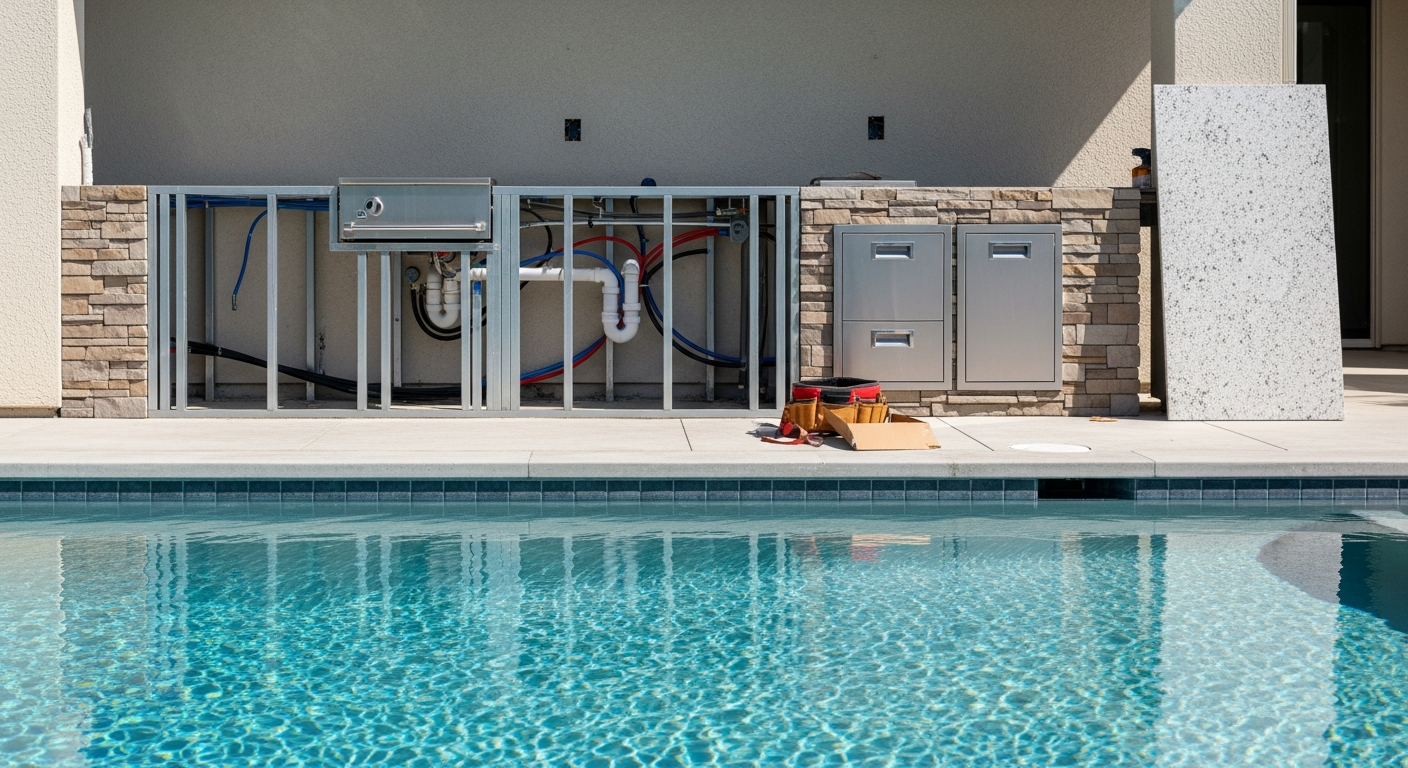
Here is where the budget is truly defined. The cost difference between standard and superior materials is the single greatest factor in long-term value.- Structural Frame: I exclusively use welded aluminum tubing instead of steel studs or concrete block. While block is common, it's porous and can hold moisture from our daily rain showers. More importantly, aluminum offers superior rigidity without the immense weight, a key factor for installations on lanais and patios where foundation stability is a concern.
- Appliance Grade: This is a major "gotcha" for consumers. Most outdoor appliances are made from 304-grade stainless steel. It's good, but it's not enough for the Osceola climate. I insist my clients allocate budget for 316-grade (marine-grade) stainless steel components. The addition of molybdenum in 316-grade provides a dramatic increase in corrosion resistance, which is not a luxury here—it's a requirement.
- Countertops: Dark granite is a popular request, but a critical error. On a July afternoon in Osceola County, a dark granite countertop can reach surface temperatures exceeding 150°F, making it unusable and a burn risk. I steer clients toward lighter-colored quartz or, ideally, sintered stone like Dekton, which has near-zero porosity and exceptional UV resistance, preventing fading and heat absorption.
My Phased Budgeting and Installation Protocol
I structure every project in five distinct phases. This protocol prevents scope creep and ensures every critical checkpoint is met, protecting the final investment.- Phase 1: Site and Utility Audit. Before any material is ordered, I map all existing electrical and plumbing lines. A common budget-killer is discovering a drain line needs to be moved mid-project. We confirm GFCI-protected outlet availability and water line pressure.
- Phase 2: Framework and Dry-Fit. The aluminum frame is built and placed. We then position the appliance sleeves and cabinet boxes. This dry-fit allows us to validate clearances and workflow before anything is permanently fixed.
- Phase 3: Utility Integration. All electrical conduits, gas lines, and water pipes are run through the frame. This is a critical step I personally inspect to ensure all connections are properly shielded and waterproofed.
- Phase 4: Cladding and Countertop Installation. The "skin" is applied. This involves installing the cement board, applying a moisture-wicking barrier (a step many contractors skip), and setting the stone or stucco. The countertop is templated and installed only after the base is fully complete.
- Phase 5: Appliance and Component Sealing. The final appliances are installed. My team's final task is to apply a bead of high-grade silicone sealant around every single component, creating a waterproof seal against the countertop.
Post-Installation Audits: Verifying Grout Sealing and Electrical Grounding
My job isn't finished when the last appliance is installed. I perform a post-installation audit, a proprietary quality control process. I use a moisture meter to check for any water intrusion behind the cladding near the sink and refrigerator areas. Furthermore, I verify that every electrical component is properly grounded and that the GFCI outlets trip correctly under a load test. This final check is what separates a standard installation from a build designed to endure the specific challenges of our local weather patterns, from hurricane-season downpours to blistering summer sun. Have you factored the thermal expansion coefficient of your chosen countertop material into the structural joint design for your Osceola County lanai?Written by

Tags
low cost outdoor kitchen
outdoor kitchen budget
backyard kitchen cost
outdoor kitchen estimate
outdoor kitchen price range