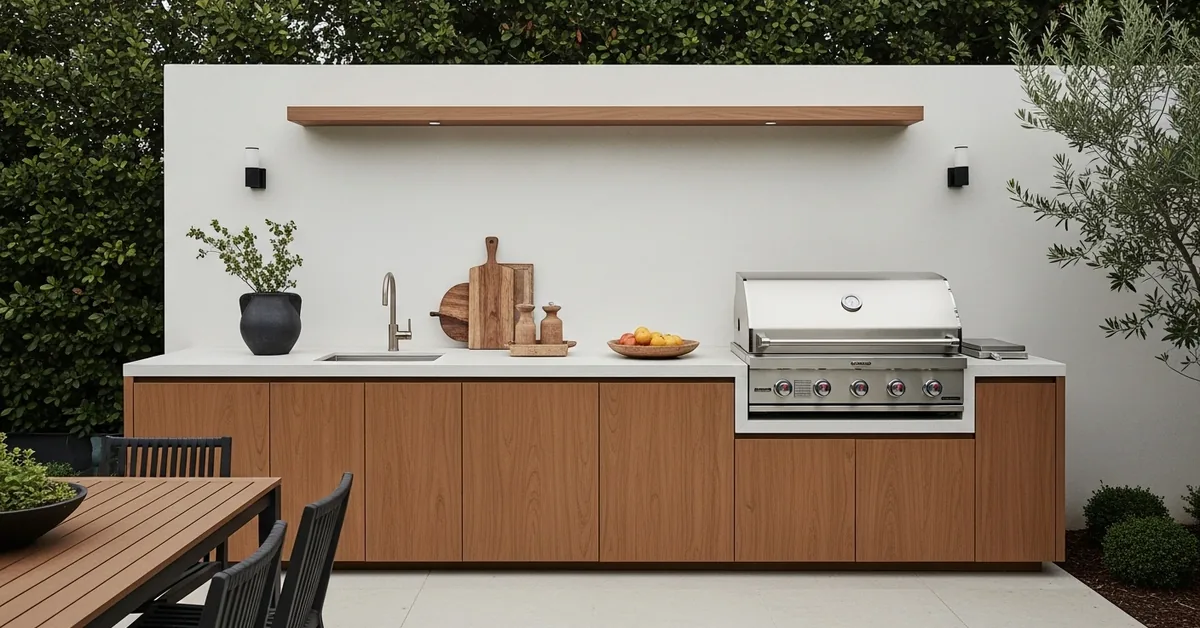
Outdoor Living Kitchen Pasco County: My Framework for 30-Year Material Durability
After designing and remediating over 50 outdoor kitchens from the newer developments in Wesley Chapel to the coastal homes in New Port Richey, I’ve seen one catastrophic, recurring failure: material degradation from Pasco County's unique climate. Many contractors apply indoor logic to an outdoor space, resulting in warped cabinets, rusted appliances, and cracked countertops within five years. The solution isn't just about choosing "outdoor-grade" materials; it's about a specific system of selection and assembly engineered to combat high humidity, intense UV radiation, and seasonal torrential rains. My entire approach is built on a proprietary diagnostic I call the Material Performance Matrix. This isn't a product catalog; it's a decision-making framework that cross-references a material's properties with its specific placement within the kitchen's microclimate—whether it faces the harsh afternoon sun common in Land O' Lakes or the salty breeze near Hudson. This ensures that every component, from the cabinet hinges to the countertop sealant, is optimized for longevity, not just initial appearance.The Pasco Climate Corrosion Test: My Diagnostic Protocol
Before I even draft a design, my process begins with a site-specific environmental analysis. The biggest mistake I see is a "one-size-fits-all" design. A kitchen in a deed-restricted Trinity community has different environmental stressors than one on a waterfront lot. My protocol focuses on quantifying three primary local threats: UV exposure index, average ambient humidity, and salinity-corrosion risk. I identified that standard 304-grade stainless steel, often sold as a premium option, shows pitting and rust within 24 months in coastal Pasco County. This led me to develop a protocol that mandates specific material grades based on the home's distance from the Gulf of Mexico.Material Selection Beyond Aesthetics: The UV & Salinity Resistance Index
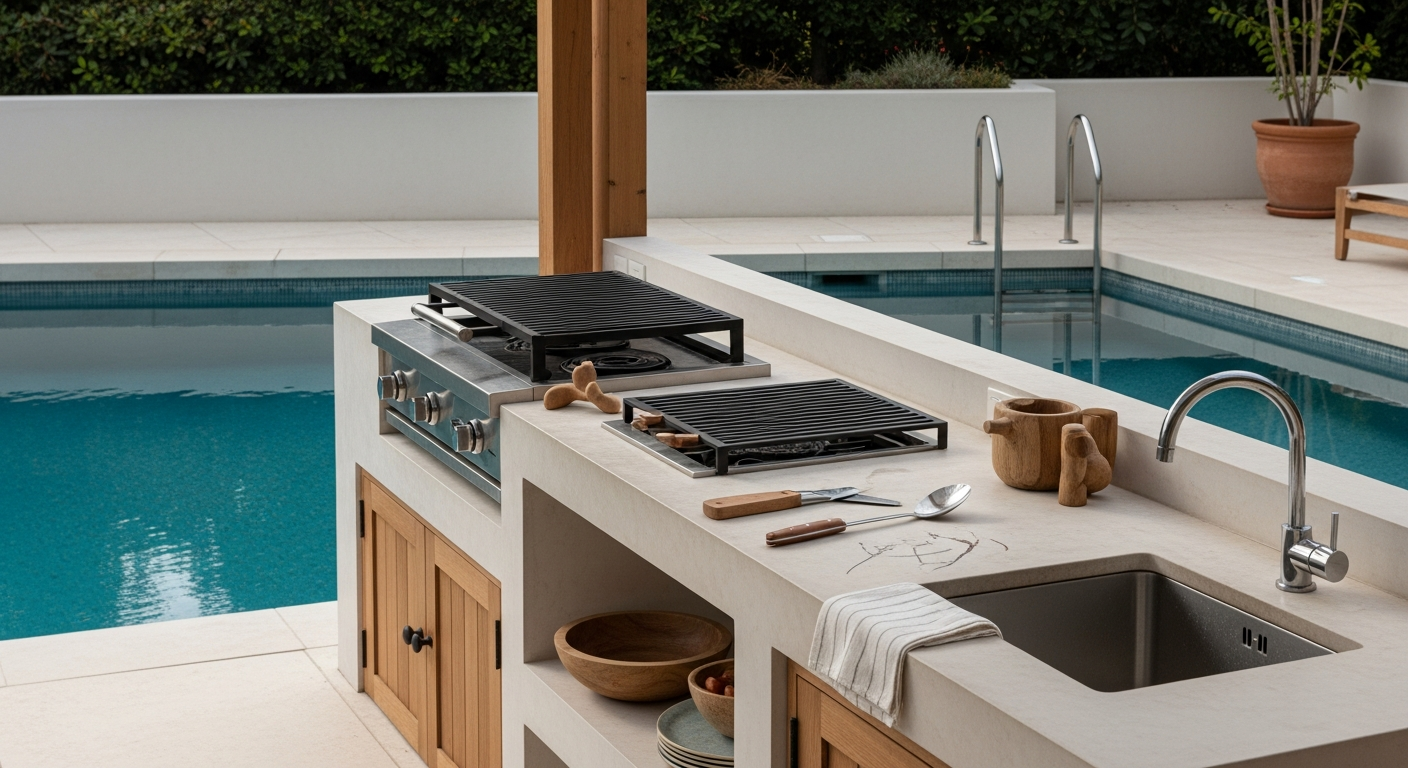
This is where I move from diagnosis to specification. I rate every potential material on a 1-10 scale for UV and salinity resistance. This often leads to counter-intuitive choices that outperform popular, more expensive options.- Countertops: I almost exclusively specify sintered stone (e.g., Dekton) over granite for Pasco County projects. While granite is durable, its porous nature requires constant sealing to prevent moisture intrusion and mildew growth in our humid climate. Sintered stone is non-porous, has near-zero water absorption, and its color is completely stable under Florida's intense UV light, preventing the fading I've seen in darker granites after just a few seasons.
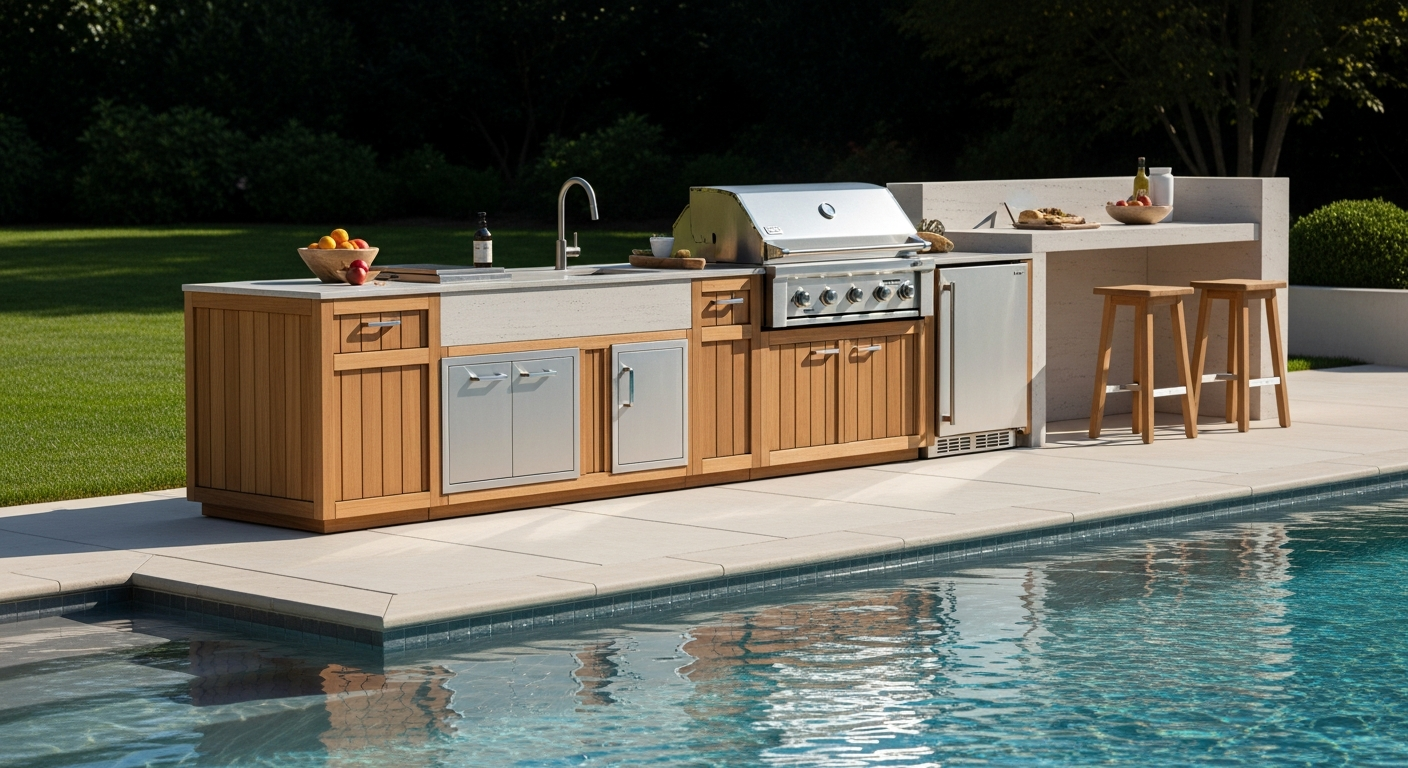
- Cabinetry: For homes east of the Suncoast Parkway, I find high-density polyethylene (HDPE) or marine-grade polymer cabinetry offers the best ROI. It’s impervious to moisture and easy to clean. For any project west of US-19, I mandate 316L marine-grade stainless steel for all hardware and framing. The added molybdenum in 316L provides a critical defense against chloride corrosion from salt air, a lesson I learned after replacing a full set of rusted 304-grade cabinets on a project near the coast.
- Appliances: Any appliance, from a grill to a refrigerator, must be UL-rated for outdoor use. This isn't just a suggestion; it’s a critical safety and performance requirement. An indoor-rated unit will fail due to moisture, and its electrical components are not designed to handle the temperature swings and humidity, creating a significant fire hazard.
Constructing for Hurricane Season: The Anchoring & Ventilation Blueprint
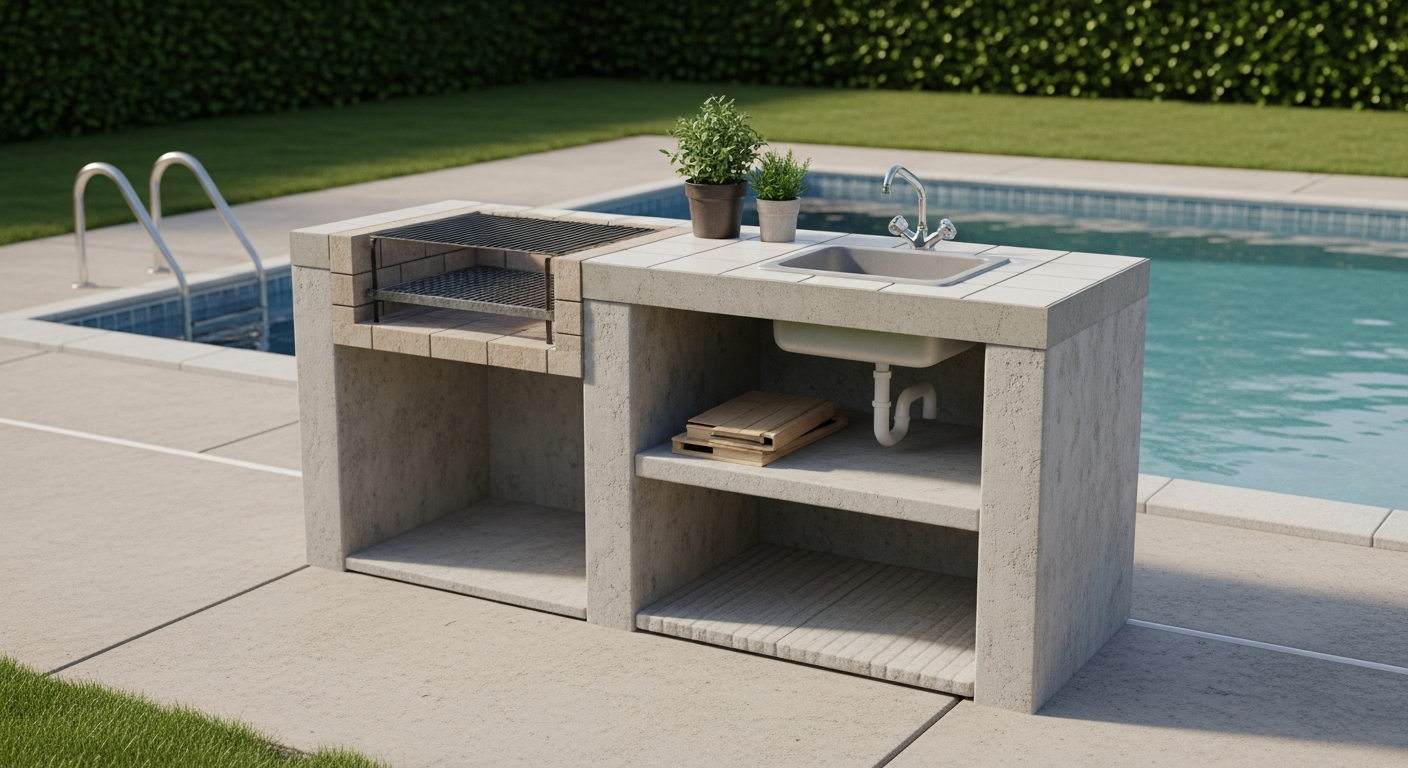
A beautiful kitchen is useless if it doesn't withstand a severe summer storm. My construction blueprint prioritizes structural integrity and safety, especially regarding gas appliances. This is a non-negotiable, multi-step process.- Foundation and Anchoring: The kitchen structure must be anchored directly to a reinforced concrete slab, not just resting on pavers. I specify 3/8-inch stainless steel wedge anchors to secure the frame, ensuring it can withstand significant wind uplift forces.
- Frame Assembly: I require a fully welded frame instead of a screw-together system. Welded joints provide superior rigidity and eliminate points of failure that can loosen over time due to thermal expansion and contraction.
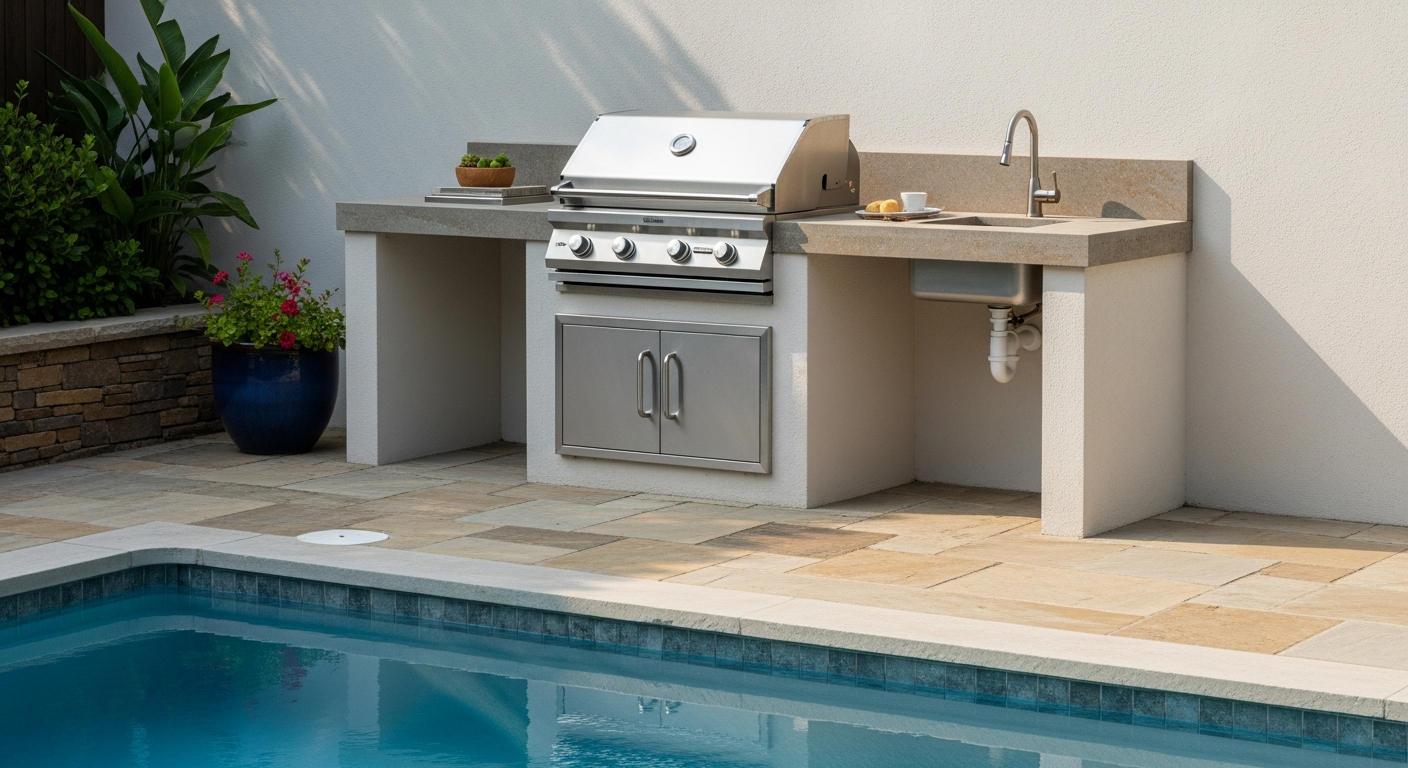
- The Thermal Draft-Lock System: This is my proprietary ventilation standard for any structure housing a gas grill. I install a minimum of two vents at the base of the cabinet for air intake and two near the top for exhaust, creating a natural convection loop. This prevents dangerous buildup of propane or natural gas—a critical flaw I discovered in a high-end project that could have led to an explosion.
- Electrical Safety Protocol: All outlets must be in a weatherproof housing and connected to a GFCI (Ground Fault Circuit Interrupter) breaker. I map the electrical plan to keep outlets away from direct water sources like sinks, a simple step that is shockingly often overlooked.
Post-Installation Audits: Calibrating for Pasco's Weather Patterns
My work isn't done when the last appliance is installed. I perform a 30-day post-installation audit to check for settlement, ensure drainage is functioning correctly after the first heavy rainfall, and verify the integrity of all sealants. This precision check allows for micro-adjustments that can add years to the kitchen's lifespan. For example, I might adjust the slope of a countertop by a fraction of a degree to prevent water from pooling—a common issue in the flat landscapes of central Pasco County. This commitment to post-build quality control is what separates a functional outdoor kitchen from a high-performance, long-term investment. Given the intense hydrostatic pressure that can build under a concrete slab during Pasco County's rainy season, have you calculated the necessary drainage and substrate compaction needed to prevent structural failure over the next decade?Written by

Tags
outdoor kitchen projects
prefab outdoor kitchen
prefabricated outdoor kitchen
modular bbq outdoor kitchen
covered outdoor kitchen
Outdoor Living Kitchen in Pasco FL FAQ
What materials should I choose for my outdoor kitchen countertops and cabinets if they're right next to my saltwater pool?
You must select non-porous, corrosion-resistant materials like granite, soapstone, or specialized outdoor-rated stainless steel to withstand constant exposure to salt and chlorinated water. Avoid porous stones like marble or travertine, as they will etch and stain from pool chemical splash-out, and never use standard indoor-grade stainless steel, which will show rust spots within a single season. The key is specifying marine-grade (316) stainless steel for all metallic components, including cabinet hardware and appliance fronts, as it contains molybdenum for superior corrosion resistance against chlorides.
How far away from the pool's edge should my outdoor kitchen be for safety and to protect the equipment?
Your outdoor kitchen, especially any electrical outlets or gas lines, should be located a minimum of 10 to 15 feet from the pool's water edge to comply with most local building codes and prevent electrical hazards. This distance minimizes the risk of splash damage to expensive appliances like grills and refrigerators, whose electronics are not designed for direct water contact. A critical, often overlooked detail is prevailing wind direction; positioning the kitchen upwind from the pool significantly reduces the amount of chlorine vapor and mist that can accelerate corrosion on your equipment.
Do I need a separate plumbing system for my outdoor kitchen sink, or can it connect to my pool's plumbing?
Your outdoor kitchen requires a completely separate plumbing system for both fresh water supply and wastewater drainage; never connect it to the pool's circulation system. Tying into the pool plumbing would introduce soaps, food particles, and grease, which would overwhelm the pool filter, disrupt the water's pH balance, and promote algae growth. The kitchen drain must be properly trapped and routed to your home's main sanitary sewer line, just like an indoor sink, to handle waste safely and prevent odors and clogs.
What kind of ventilation is required for a grill installed under a covered patio or pavilion near my pool?
A grill installed under any type of roof structure requires a dedicated, outdoor-rated vent hood to safely exhaust heat, smoke, and dangerous gases like carbon monoxide away from the seating area. Simply having an open-sided patio is not sufficient ventilation and creates a serious fire and health hazard. The vent hood must be powerful enough for the grill's heat output (measured in BTUs) and constructed from weather-resistant materials to prevent premature failure from humidity and temperature swings common in a poolside environment.
How do I prevent pests like ants and wasps from taking over my outdoor kitchen and dining area?
Effective pest prevention relies on sealing all food sources and eliminating nesting spots, starting with cabinets that have tight-fitting, fully sealed doors. Choose non-porous countertop materials with minimal seams where food debris can collect, and ensure your outdoor trash receptacle has a heavy, self-closing lid. A crucial design choice is to avoid hollow metal legs or unsealed masonry voids in the kitchen's structure, as these are prime locations for wasps to build hidden nests that are difficult and dangerous to remove once established.
What is the most common point of failure you see in outdoor kitchen appliances?
The most common and premature failures in outdoor kitchen appliances are caused by moisture intrusion into their electronic components, such as digital displays and ignition modules. Homeowners often mistakenly believe that a 'weather-resistant' rating means an appliance is fully waterproof, but it is not designed to withstand sustained rain or direct spray from pool cleaning. Using a high-quality, fitted weatherproof cover for every appliance when not in use is the single most important maintenance step to prevent costly electronic repairs and can easily double the lifespan of your investment.