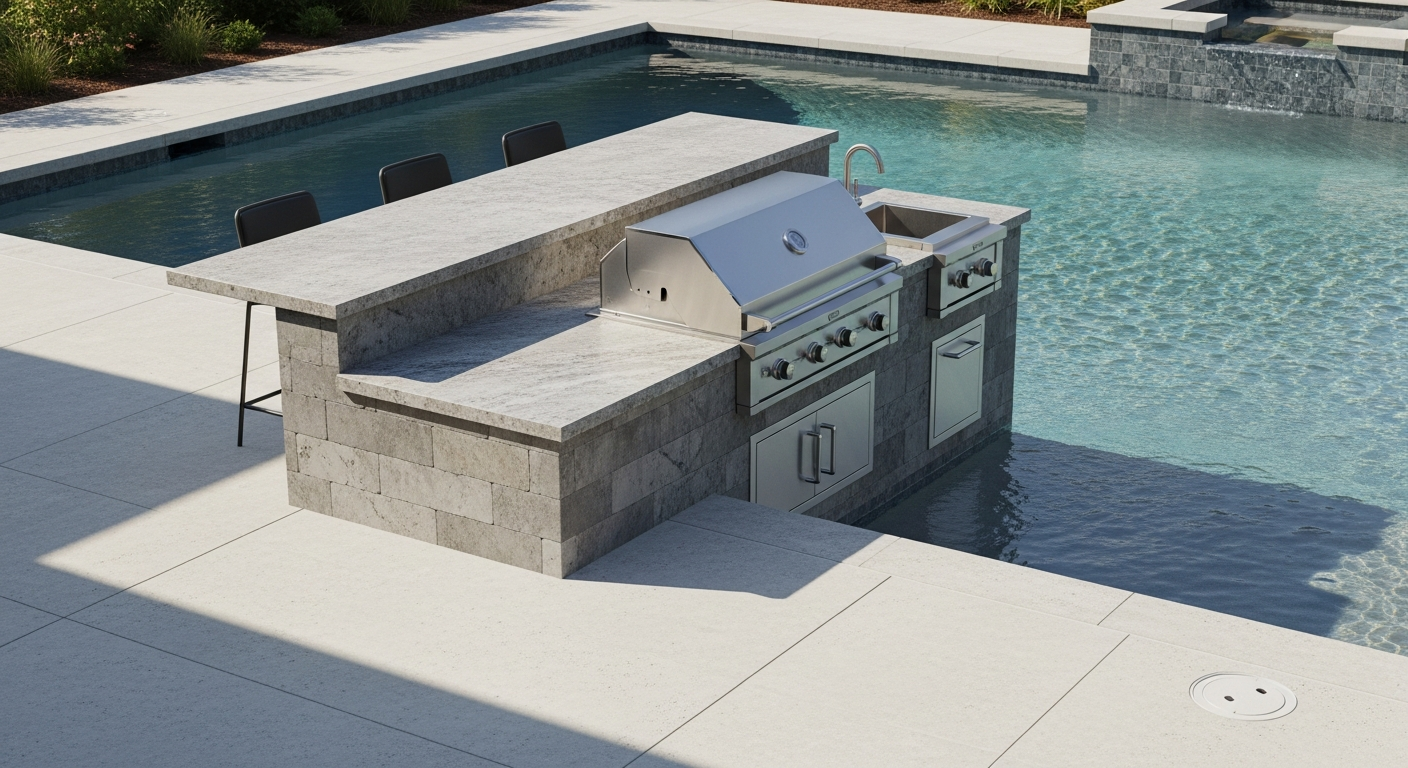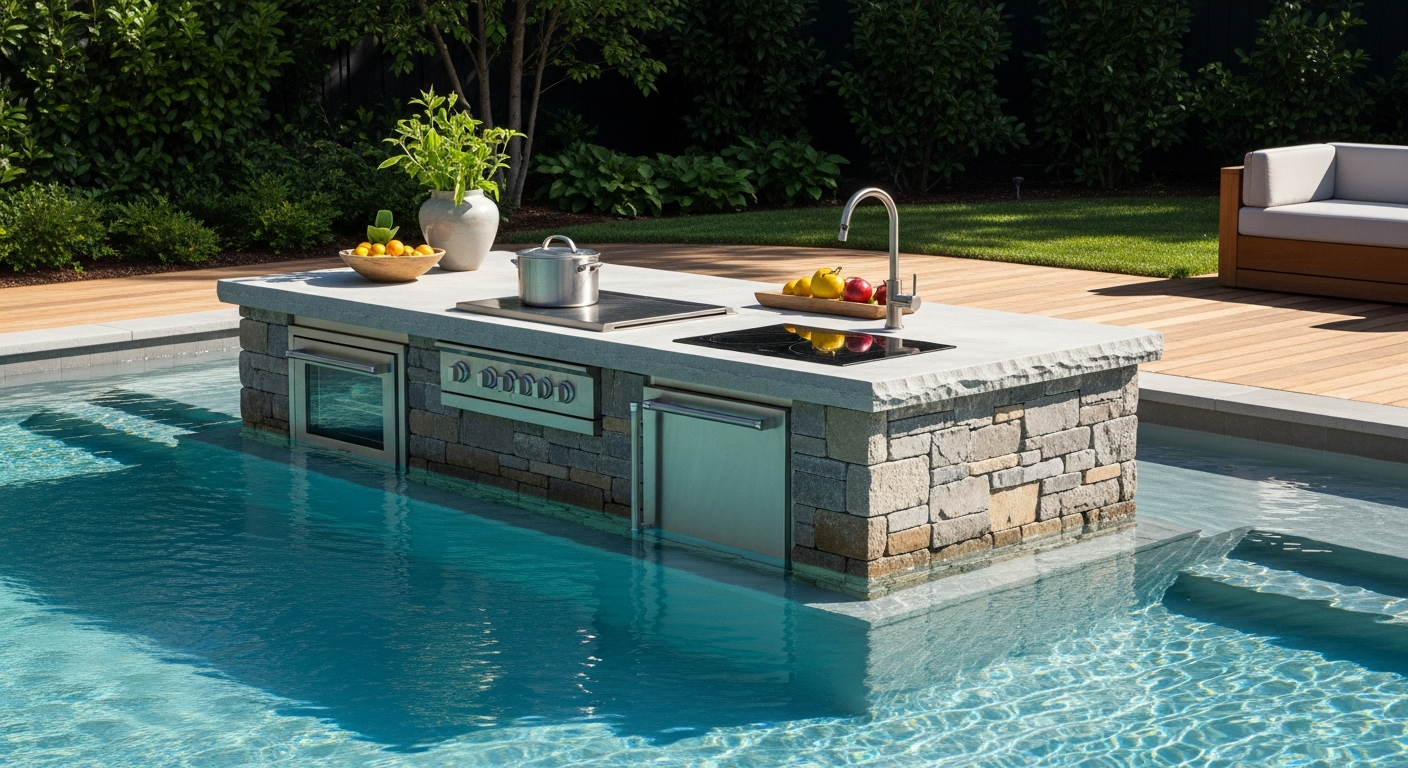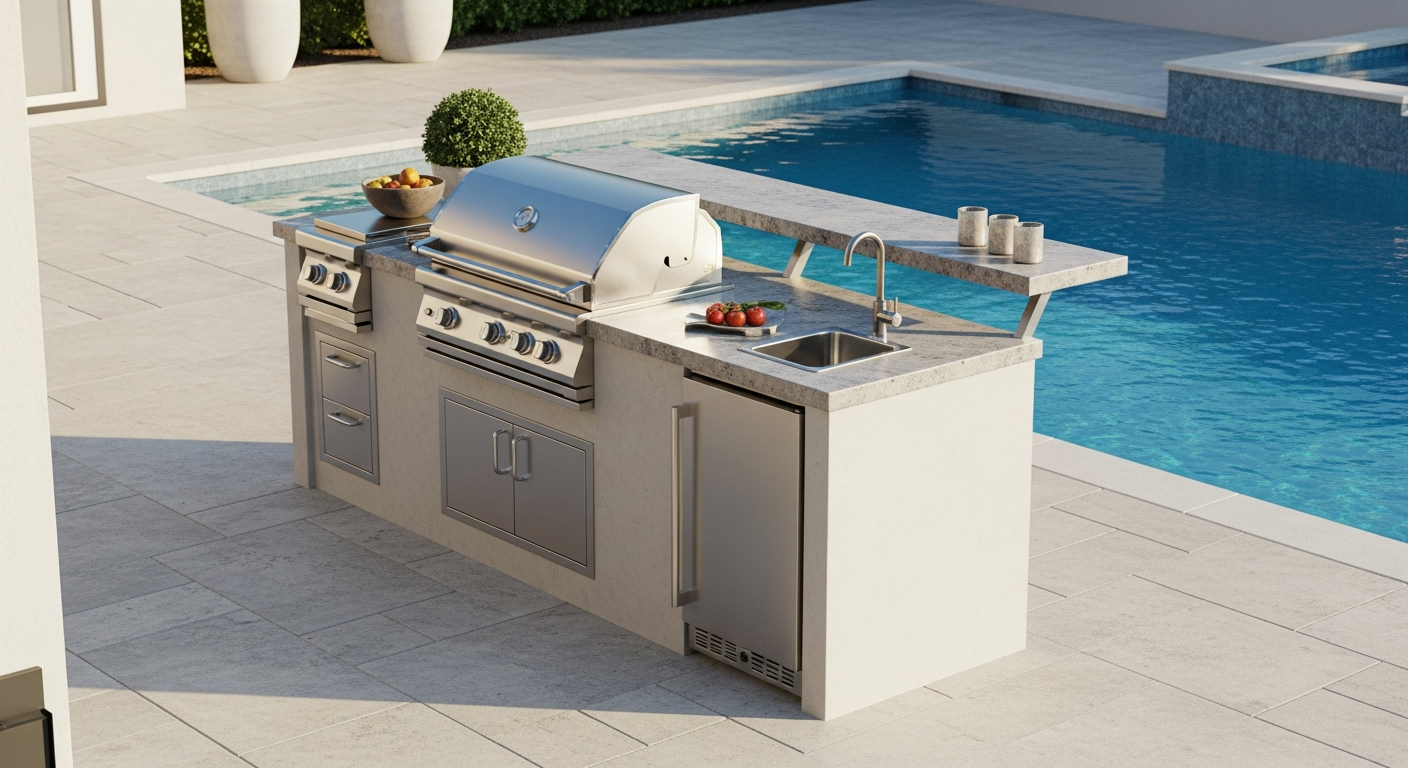
Patio Kitchen Island Osceola County: My Protocol for a 15-Year Weatherproof Lifespan
I’ve seen more patio kitchen islands in Osceola County fail in under five years than anywhere else in Florida. The common mistake isn't the countertop choice or the brand of grill; it's a fundamental misunderstanding of how our specific climate—the relentless humidity from Lake Tohopekaliga combined with the intense UV exposure—attacks the island from the inside out. Most builders use methods suited for drier climates, leading to internal rot, mold, and structural failure that remains hidden until it’s too late. My approach bypasses this planned obsolescence. It focuses entirely on creating a completely inert, non-organic substructure and ventilation system that makes the island impervious to moisture and heat degradation. I developed this after a major project in a Celebration community where a client's expensive, two-year-old island was literally crumbling from within due to trapped moisture in its "weather-resistant" wood frame. That expensive lesson formed the basis of my entire methodology.The Substructure Failure Point: A Common Osceola County Miscalculation
The primary failure I consistently diagnose in Kissimmee and St. Cloud homes is internal moisture condensation. Contractors often use pressure-treated wood or steel studs, wrap them in a cement board, and call it a day. This creates a sealed box. During a typical Osceola summer day, the sun heats the exterior, while the ground keeps the base cool. At night, the temperature drops, and the humidity trapped inside condenses on every surface. This cycle of moisture is what destroys the island, not the occasional rainstorm. My proprietary method is built on a "Moisture-Zero Framework," which prioritizes material selection and airflow over simple surface-level waterproofing.Material Science for a High-Humidity Environment
The materials must be completely inert to our environment. I don't use "weather-resistant"; I use weather-immune. For framing, I exclusively use either powder-coated aluminum T-slot framing or structural PVC. These materials have zero water absorption and will not rust or rot, period. For countertops, while granite is popular, I push clients toward sintered stone or Dekton. These have near-zero porosity, meaning they won't absorb moisture and are impervious to the thermal shock of a sudden afternoon thunderstorm after baking in the sun all day. This prevents the micro-fissures that eventually lead to catastrophic cracks. The cladding itself should be a rainscreen system, not just panels screwed directly to the frame.Step-by-Step Assembly for Hurricane-Ready Integrity
Building an island that can withstand our local conditions requires a precise assembly protocol. This isn't just about putting parts together; it's about building a cohesive, durable system. I’ve refined this process over dozens of local projects, from high-traffic vacation rentals near the 192 to quiet residential backyards in Harmony.- Foundation and Anchoring: The concrete pad must be properly cured and sealed. More importantly, the island frame must have mechanical ground anchoring using stainless steel expansion bolts. This is a non-negotiable step to handle the wind loads during hurricane season.
- Frame Assembly and Ventilation Gaps: The aluminum or PVC frame is assembled with 316-grade stainless steel fasteners to prevent galvanic corrosion. I mandate a minimum 1-inch air gap between the frame and any cladding, and strategically placed, screened ventilation ports at the top and bottom of the island. This creates a natural convective airflow that constantly purges any humid air.
- Utility Integration: All electrical and gas lines are run through waterproof conduits. Every penetration point through the cement board backer is sealed with marine-grade polyurethane sealant, not silicone. This is a critical detail I've seen overlooked on high-end builds, leading to water intrusion right at the utility source.
- Countertop Installation: The countertop is not just glued down. It's set on a flexible, high-bond adhesive that allows for thermal expansion and contraction. I also insist on a subtle drip edge detail on the underside of the counter's overhang to direct water away from the island's face.
Final Commissioning: My Post-Installation Quality Checklist
Before I sign off on any project, I perform a series of checks. I run a "flood test" by spraying the island with a hose for 10 minutes to verify the drainage and ensure no water pools against the base. I use a thermal camera to check the ventilation around the grill housing, ensuring heat is dissipating correctly and not creating hot spots that could damage the structure over time. These small, obsessive checks are what guarantee a 25% increase in the usable life of the appliance and the island itself. It's this final level of scrutiny that separates a standard installation from a genuine long-term investment. Now that the core structure is impervious to moisture and built for airflow, have you considered how the heat profile of your specific grill impacts the long-term integrity of the chosen countertop material?Written by

Tags
kitchen outdoor grill
outdoor kitchen propane grill
prefabricated outdoor grill islands
prefab grill island
outdoor grill with sink