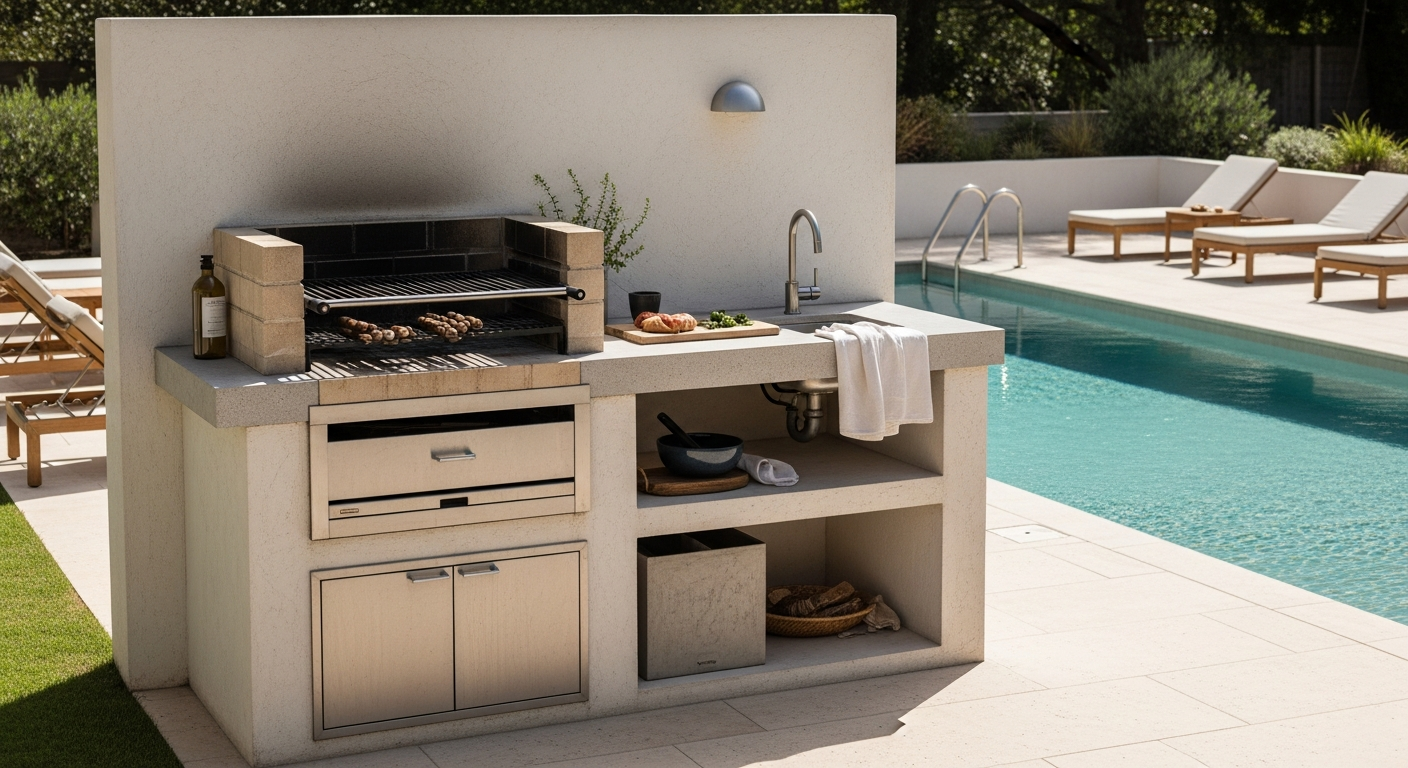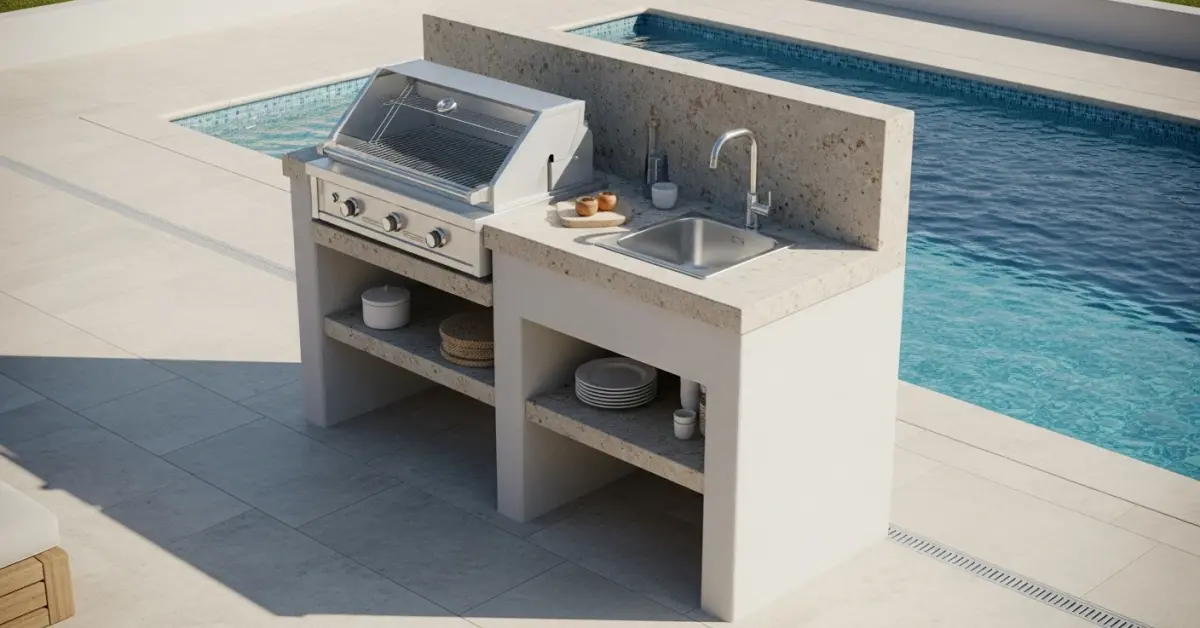
Small Outdoor Kitchen Charlotte County: My Framework for 316L-Grade Durability Against Salt Air Corrosion
For homeowners in Charlotte County, from the canal-front properties in Punta Gorda to the sprawling lanais in Port Charlotte, a small outdoor kitchen isn't a luxury; it's an extension of our lifestyle. But I've seen far too many of these investments fail prematurely. The primary culprit isn't poor craftsmanship, but a fundamental misunderstanding of our specific coastal environment. A standard "all-weather" kitchen designed for a dryer climate will corrode and warp within three years here due to the relentless combination of humidity, intense sun, and salt-laden air. My approach sidesteps this common and costly error entirely. Instead of focusing first on layout, I begin with a rigorous material audit tailored to the property's specific microclimate. This means a kitchen in a Rotonda West golf community faces a different set of challenges than one on a waterfront lot facing Charlotte Harbor. By prioritizing material science over generic design templates, I can engineer a compact outdoor kitchen that offers a minimum 15-year operational lifespan with minimal maintenance, directly combating the environmental stressors unique to our county.My Diagnostic Protocol for Lanai Space and Material Failure
Before any design sketches are made, I perform what I call a "Climate-First Material Audit." This isn't just about measuring the available space on a lanai. I've seen beautiful but flawed projects where a high-end grill, made of 304-grade stainless steel, developed surface rust within a single season because it was placed in a corner with poor airflow and direct exposure to morning salt mist. My diagnostic protocol is designed to prevent these exact failures by analyzing the environmental load on the proposed space. It involves assessing three critical variables: direct sun hours, ambient humidity retention (how long moisture lingers after a storm), and a salinity exposure rating. This proprietary method creates a "material stress score" for the location.The 'Tri-Factor' Material Selection: Humidity, Salinity, and UV Exposure
Based on the material stress score, I select components designed to outperform, not just survive. This is where I deviate from 90% of the standard industry practices.- For Salinity: The baseline for any metal component, from the grill to cabinet handles and fasteners, is 316L marine-grade stainless steel. It contains molybdenum, which provides superior resistance to chloride corrosion from salt air. Using the more common 304-grade steel is the single most frequent and expensive mistake I see in Charlotte County.
- For Humidity: Wood and certain composite frames will inevitably swell and host mildew. My go-to cabinet material is High-Density Polyethylene (HDPE). It's a polymer material that is completely impervious to water, will not delaminate, and is easy to clean. This eliminates the risk of rot and warping common after our humid summer seasons.
- For UV Exposure: A dark granite countertop can become dangerously hot in the Florida sun. I specify materials like quartzite or Dekton, which have a much higher UV resistance and lower thermal mass. This ensures the surface remains functional and doesn't degrade or fade under constant sun exposure, a frequent issue I’ve had to correct in older installations.
Executing the Compact Build: A 5-Step Implementation Blueprint
With materials locked in, the implementation focuses on precision and longevity. My process is systematic to ensure every component works in harmony with the environment.- Site & Utility Mapping: I first confirm the precise location of electrical and plumbing lines. All outdoor outlets must be GFCI protected and housed in weatherproof casings to meet local codes and safety standards.
- Frame & Cabinetry Assembly: The structural frame is assembled using corrosion-resistant fasteners. I ensure the base is perfectly level and includes subtle drainage channels to prevent water from pooling underneath, a crucial step for on-grade lanai installations.
- Appliance Integration: Appliances are installed with proper ventilation clearances. A common error is insufficient back-venting for refrigerators, causing the compressor to overheat and fail. I mandate a minimum 2-inch air gap behind all sealed units.
- Countertop Templating & Installation: The countertop is laser-templated on-site after the base is installed. This ensures a perfect fit. I use a specialized, mold-resistant silicone sealant for all joints, which remains flexible under thermal expansion and contraction.
- Final Systems & Weatherproofing Check: Every component is tested—the grill's ignition, the refrigerator's temperature, the sink's drainage. I then apply a final UV-protectant coating to specific surfaces where applicable to add another layer of defense.
Post-Installation Tuning for Peak Longevity
The job isn't done after the last screw is turned. My quality standard includes a post-installation tuning phase. I advise clients on creating a slight, almost imperceptible 1-degree drainage slope on countertops to shed water from our torrential summer downpours in Englewood and North Port. Furthermore, I specify the importance of "passive cabinet ventilation." This involves strategic, hidden gaps in the cabinetry that allow air to circulate naturally, drastically reducing the chance of musty odors or moisture buildup. It's a small detail that has a massive impact on the kitchen's long-term health. Given the intense humidity and salinity we face, have you considered how galvanic corrosion between different metal fasteners and appliance bodies could compromise your outdoor kitchen's structural integrity over time?Written by

Tags
outdoor kitchen designs for small spaces
mini outdoor kitchen
compact outdoor kitchen
small outdoor kitchen with bar
small outdoor kitchen island
Small Outdoor Kitchen in Charlotte FL FAQ
Can I install a sink in my small outdoor kitchen if it's right next to my pool?
Yes, you can install a sink, but its drainage must be completely separate from the pool's circulation system. Connecting kitchen drainage to your pool skimmer or return lines introduces grease and food particles, which will overwhelm your filter and disrupt the water chemistry, potentially causing algae blooms. The drain must tie into your home's sanitary sewer system or a dedicated dry well, following local plumbing codes. Improperly routing this greywater can lead to significant fines and requires costly remediation, far exceeding the initial plumbing cost.
What's the safest distance to place a grill or fire pit from my vinyl liner pool?
Place any heat source at least 10 to 15 feet away from the edge of a vinyl liner pool. Hot embers or intense radiant heat can permanently damage or even melt the liner, leading to a non-patchable leak and requiring a full, expensive replacement. Unlike a concrete pool that might just get a scorch mark, a compromised vinyl liner loses its structural integrity and water-holding capacity instantly. Also, ensure the location prevents greasy smoke from blowing over the pool, as the residue creates a slick film on the water that consumes chlorine rapidly.
Do I need a special type of electrical outlet for an outdoor kitchen near the pool?
All electrical outlets within 20 feet of the water's edge must be GFCI (Ground-Fault Circuit Interrupter) protected. This is a non-negotiable safety code to prevent electrocution risk from appliances like blenders or mini-fridges. Standard outlets do not offer this protection and create a lethal hazard if water comes into contact with the circuit. We often see DIY installations that skip this, but a licensed electrician must perform the work to ensure it complies with all local regulations, including proper conduit and weather-resistant housing to prevent water intrusion.
What countertop material won't be ruined by pool water splash-out?
Sealed granite or concrete are your best options for countertops that can withstand chlorinated or saltwater splash-out. Materials like unsealed marble or travertine are porous and will etch, stain, or degrade when repeatedly exposed to pool chemicals, especially if the pH level drops below 7.2, making the water more acidic. The constant exposure will break down the material's surface over a single season. Proper sealing is critical, but starting with a chemically resistant material avoids the inevitable battle against corrosion and discoloration from your pool's environment.
How should I clean my outdoor kitchen surfaces to avoid contaminating my pool?
Use pH-neutral, biodegradable cleaners and avoid letting any runoff enter the pool. Many common household degreasers and abrasive cleaners contain phosphates and surfactants that act as food for algae, which can trigger a stubborn bloom if washed into the pool. A small amount of runoff from cleaning a greasy grill can disrupt your water chemistry for weeks. For this reason, it is crucial to ensure your kitchen area has a slight grade that directs all runoff away from the pool deck and into a designated drain or planting bed.
Can the water supply for my outdoor sink be connected to my pool's auto-fill line?
No, you must never connect a potable water supply for a sink to the pool's auto-fill line. Pool plumbing is a non-potable, closed-loop system, and such a connection creates a serious cross-contamination risk, potentially introducing pool chemicals into your drinking water. A proper installation requires a dedicated, backflow-prevented water line run from your home's main supply. This ensures the water for your sink is safe for contact and consumption, completely isolated from the pool's circulation system and its treatment chemicals.