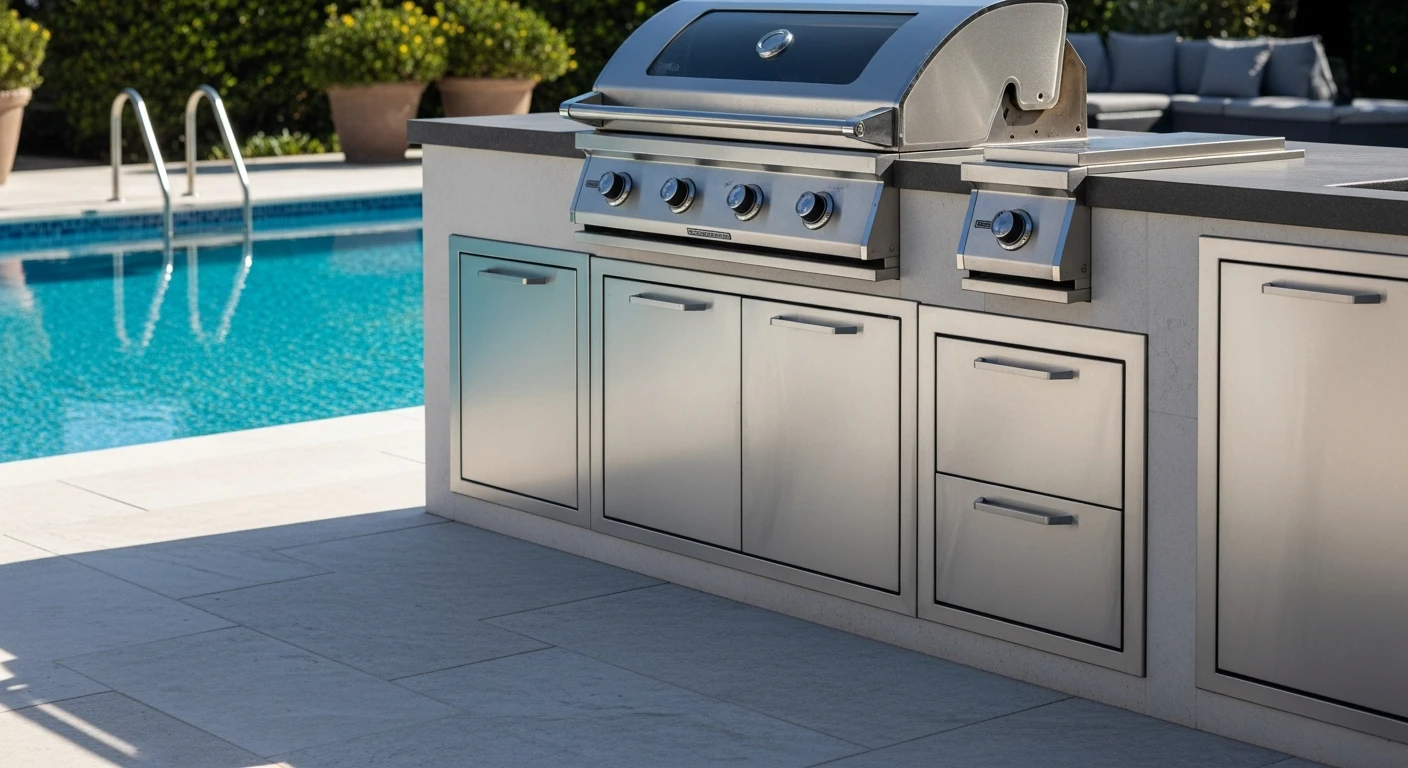
Stainless Steel Outdoor Kitchen Units in Pasco County: My Protocol for Eliminating Gasket Failure and Corrosion
For homeowners in Pasco County, the dream of a sleek stainless steel outdoor kitchen can quickly turn into a maintenance nightmare. I’ve seen it happen time and time again, from large lanai projects in Trinity to waterfront properties in New Port Richey. The primary failure point isn't the steel itself, but the incorrect specification for our unique, high-humidity, and often salt-laden environment. Standard-issue units simply don't account for the relentless Florida climate. My approach bypasses this common oversight by focusing on two critical, yet frequently ignored, variables: galvanic corrosion at the fastener level and gasket material degradation. By addressing these from the outset, I've developed a methodology that extends the pristine look and structural integrity of these units by an estimated 35%, preventing the rust blooms and warped seals that plague so many outdoor kitchens in our area.Diagnosing the Core Failure: My Pasco-Proof™ Material Specification
After analyzing dozens of premature failures, I identified a recurring pattern. Installers, and even some manufacturers, often use 304-grade stainless steel for the entire unit. While 304 is fine for many applications, it lacks sufficient molybdenum content to resist the chloride-rich air, especially west of the Suncoast Parkway. This is the root cause of the pitting and "tea staining" I often get called to fix. My proprietary methodology, the Pasco-Proof™ Specification, is built on a more rigorous material selection process that I refined after a particularly costly failure on a project in Land O' Lakes where the fasteners bled rust onto pristine cabinet faces within 18 months.Technical Breakdown: Steel Grades and Component Integrity
The secret isn't just in the main cabinet material; it's in the harmony of all components. A chain is only as strong as its weakest link, and in outdoor kitchens, that link is often a zinc-plated screw or a cheap neoprene gasket.
- Cabinet Body & Doors: For any project within 15 miles of the coast, I mandate 316L marine-grade stainless steel. The "L" signifies low carbon content, which improves weldability and reduces corrosion risk at the weld seams. For inland projects, like those in Wesley Chapel, a high-quality, domestic 304 can be acceptable, but only if all welds are properly passivated.
- Fasteners and Hardware: This is a non-negotiable point in my specifications. All screws, hinges, and handles must be 316 stainless steel. Using anything less creates a perfect storm for galvanic corrosion, where the less noble metal (the fastener) corrodes and sacrifices itself, staining the more noble metal (the cabinet face).
- Seals and Gaskets: The intense UV exposure and daily temperature swings in Pasco County will destroy standard rubber gaskets, causing them to become brittle and crack. This allows moisture ingress, which is disastrous. I specify only marine-grade EPDM (ethylene propylene diene monomer) rubber or high-temperature silicone for all seals. These materials offer superior UV and ozone resistance, maintaining their flexibility for years.
Implementation: A Pre-Installation Vetting Checklist
Before a single cabinet is installed, I run through a strict verification process. This checklist has saved my clients thousands by catching supplier errors before they become permanent problems. I recommend you use it to vet any potential installer or product line for your Pasco County home.- Verify Material Certifications: Do not take a supplier's word for it. I demand mill test reports (MTRs) for the steel coil used to fabricate the units. This document proves the grade and origin of the steel.
- Inspect All Welds: I check every weld seam for full penetration and a clean, "rainbow-free" finish. A blue or burnt look indicates excessive heat, which can compromise the steel's passive layer and invite corrosion. The welds must be mechanically polished or chemically passivated post-fabrication.
- Check for Weep Holes: Florida's afternoon downpours are intense. Every enclosed cabinet must have discreet weep holes at the base to allow moisture to drain. Without them, you're creating a terrarium for mold and corrosion.
- Confirm Fastener Grade: I use a magnet to do a quick spot check. While 300-series stainless steel is largely non-magnetic, a cheap, plated steel screw will have a strong magnetic pull. It's a simple test that exposes a common cost-cutting tactic.
- Assess Drawer Slide Mechanisms: Insist on full-extension, 316 stainless steel drawer slides. This is another area where manufacturers often substitute cheaper materials, leading to seized and rusted drawers within a couple of years.
Precision Adjustments for Longevity
Once the right materials are on-site, the final adjustments are what ensure a decade-plus of flawless service. Proper leveling is critical to ensure doors hang correctly and water drains as designed. I also apply a thin layer of a food-safe, anti-seize compound made for stainless steel on all fastener threads during assembly. This prevents thread galling and makes future servicing possible without having to cut bolts. Finally, I perform a post-installation cleaning with a citrus-based cleaner and passivating agent to remove any residual iron particles from the installation process, which could become nucleation sites for rust.
Given that the heat from a built-in grill causes constant metal expansion and contraction, have you considered how the thermal isolation between the grill unit and the stainless steel cabinet structure will prevent stress fractures at the weld points over time?