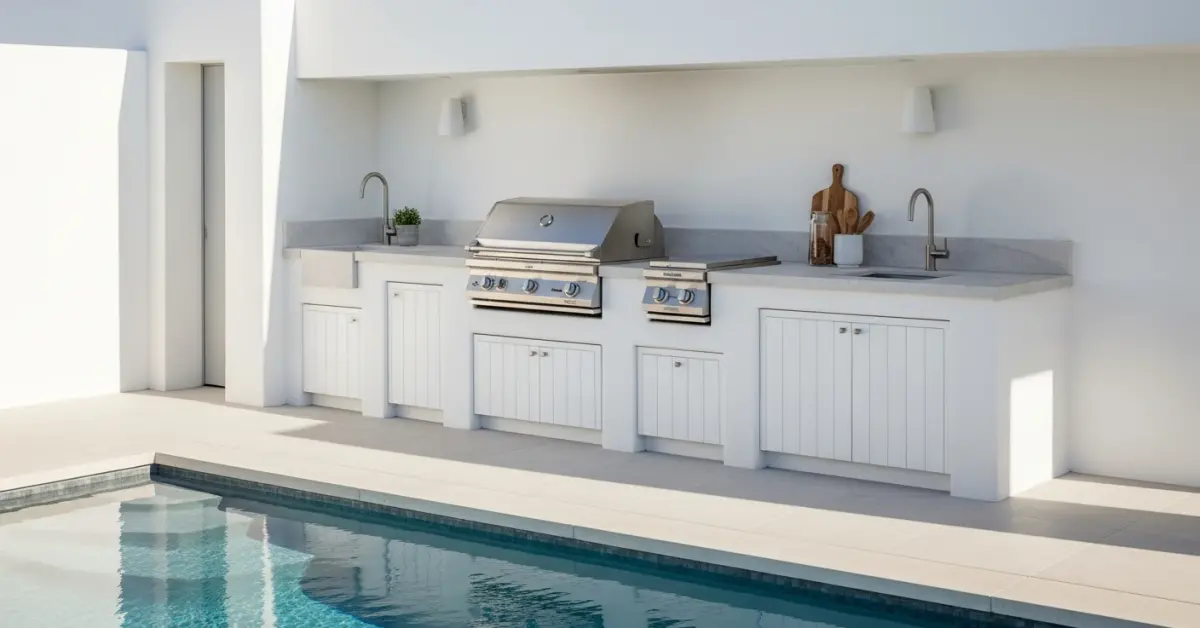
White Outdoor Kitchen Design: My Protocol for 20-Year Color Stability in Charlotte County
I've seen it too many times on projects from Punta Gorda to the newer developments in Port Charlotte: a stunning white outdoor kitchen, gleaming on day one, becomes a yellowed, mildew-streaked disappointment within two seasons. The primary failure isn't maintenance; it's the initial material specification. Most designers fail to account for the trifecta of Charlotte County's climate: intense, prolonged UV exposure, high humidity, and in coastal areas like Englewood, corrosive salt spray. My approach isn't about finding better cleaning products; it's about engineering a kitchen that actively repels the elements from day one. I've developed a material and installation protocol that focuses on non-porous, UV-stable components, ensuring that "white" stays brilliant white, dramatically reducing maintenance overhead and preserving the property's value. This isn't theoretical; it's a field-tested system born from correcting costly failures.Diagnosing Material Failure: My CoastalGuard Selection Matrix
The most common error I encounter is a "one-size-fits-all" approach to materials. A material that works in a dry climate will fail catastrophically here. My proprietary methodology, the CoastalGuard Material Selection Matrix, was developed after I had to completely replace a two-year-old outdoor kitchen on a beautiful waterfront property in Punta Gorda Isles. The client's quartz countertops had yellowed unevenly, and the grout lines were permanently stained with black mold. The core issue was porosity and UV instability. The CoastalGuard matrix prioritizes materials based on their performance against local environmental stressors, not just their initial appearance.Technical Deep-Dive: Material Science for a Florida Lanai
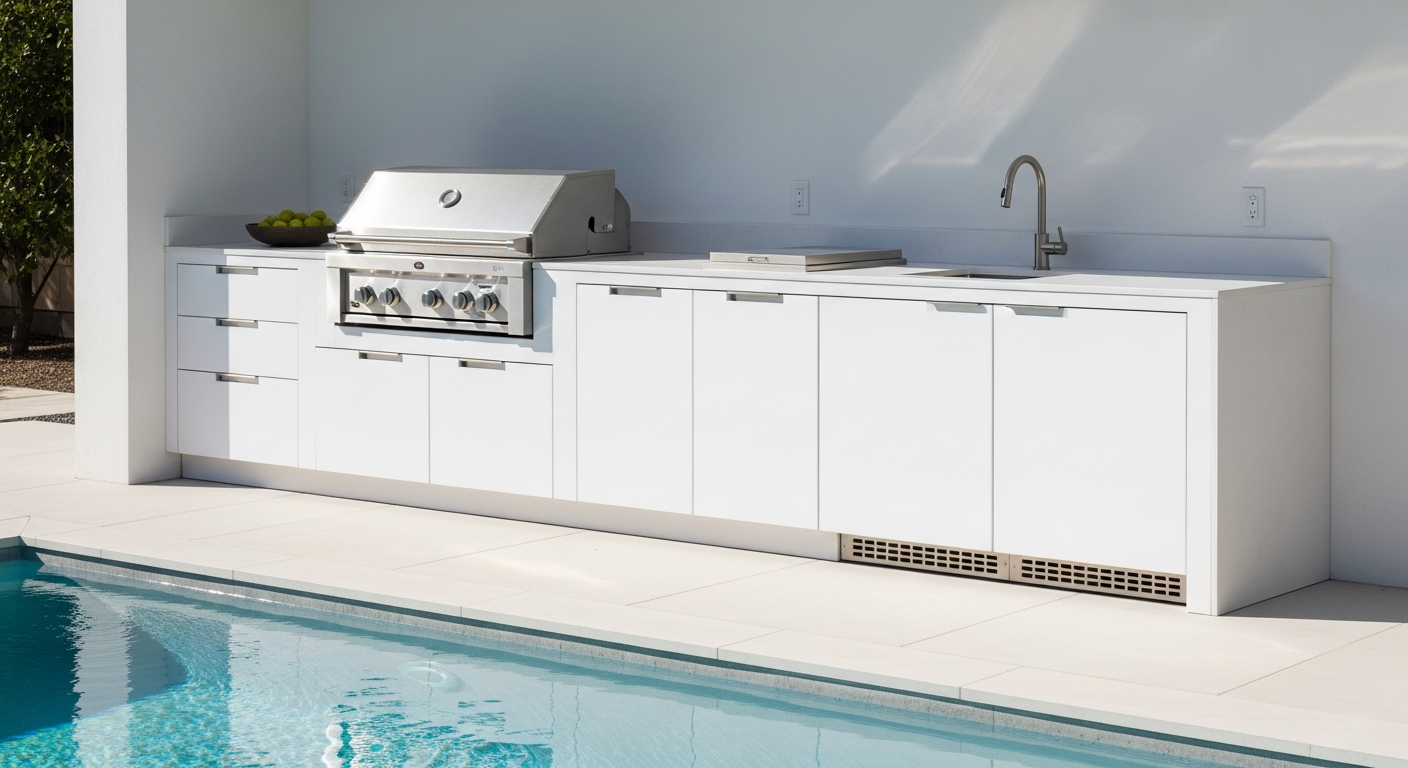
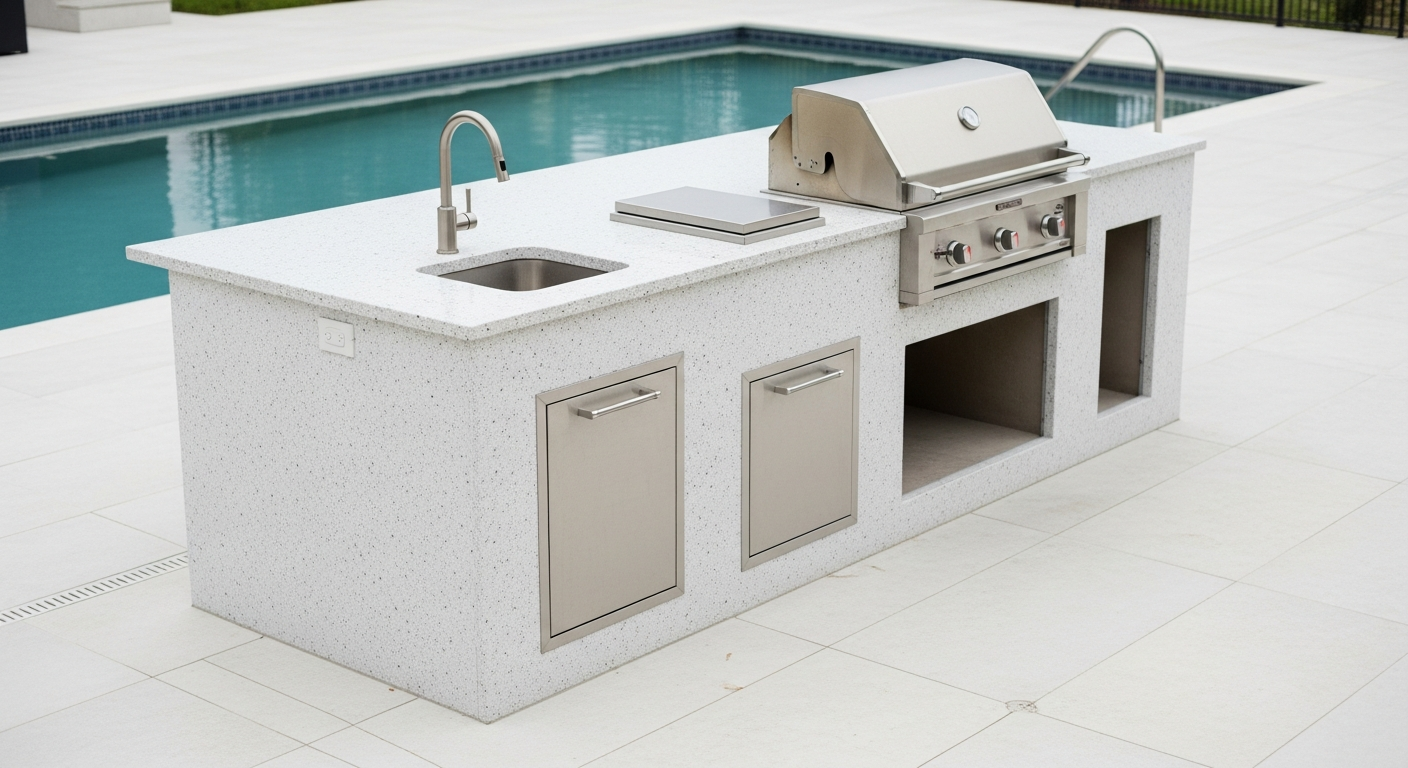
The matrix forces a critical evaluation of each component. For a white outdoor kitchen in this region, my non-negotiable specifications are:- Countertops: I immediately disqualify most quartz products due to the resins used in their manufacturing, which can yellow under our intense sun. The superior choice is a sintered stone, like Dekton. Its manufacturing process involves extreme heat and pressure, creating a zero-porosity surface that is completely UV-stable and impervious to staining from things like red wine or grill grease.
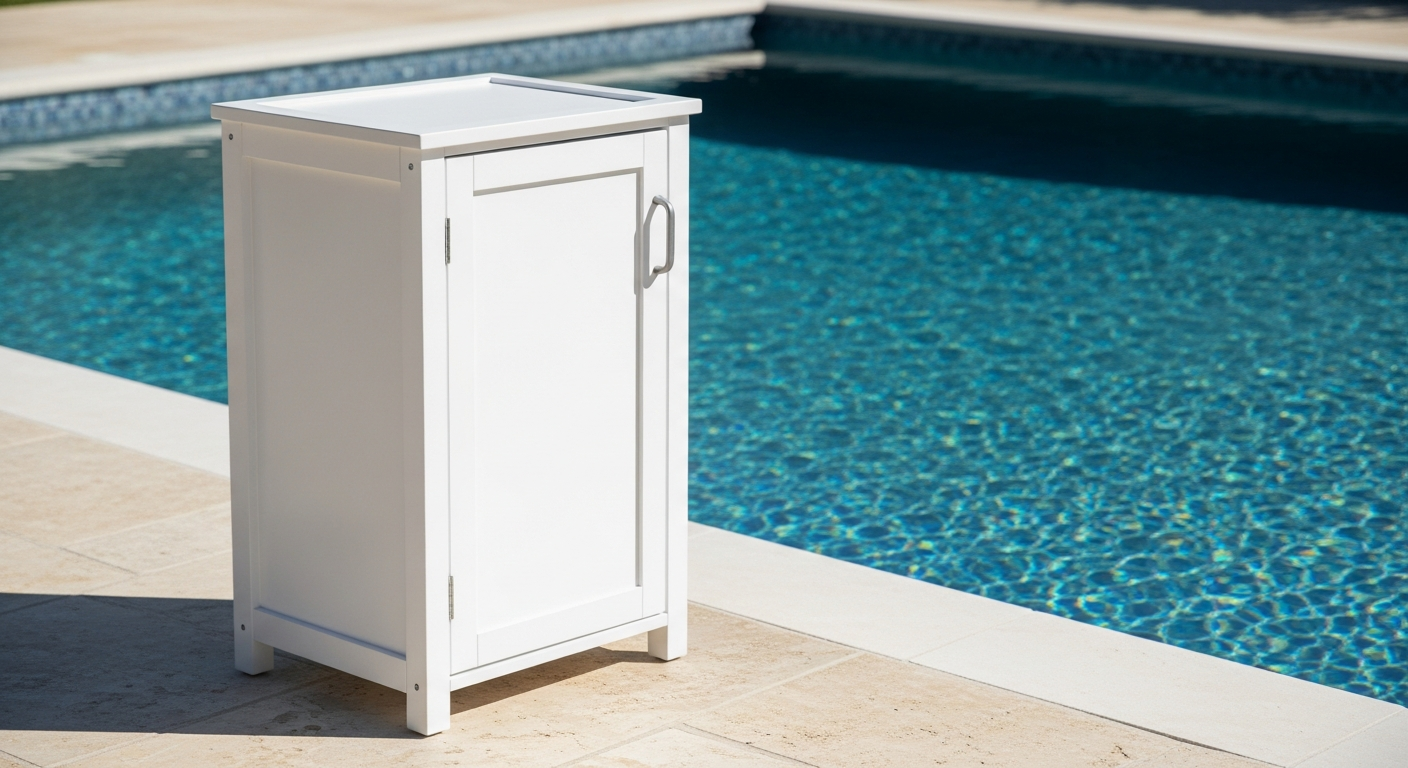
- Cabinetry: Forget wood or standard PVC. I exclusively specify UV-inhibited marine-grade HDPE (High-Density Polyethylene). It's a dense polymer with color saturation through the entire material, meaning a scratch won't reveal a different color. More importantly, the UV inhibitors prevent the chalking and yellowing I've seen in lower-grade polymers after just one summer.
- Hardware and Fixtures: This is a point of frequent failure. Any hardware—handles, hinges, screws, faucets—must be 316 marine-grade stainless steel. Standard 304 stainless steel will develop surface rust (tea staining) when exposed to the salt air, a constant in any home near Charlotte Harbor. This is a small detail that makes a 25% difference in long-term aesthetic integrity.
My On-Site Implementation Protocol
A successful project hinges on execution that's as precise as the material selection. My process is rigid because every step mitigates a specific, known risk associated with our local environment.- Site Climate Assessment: Before a single drawing is finalized, I analyze the specific microclimate of the property. I map the lanai's daily sun path to determine which surfaces will receive the most direct UV radiation. I also assess proximity to the water to determine the level of salt spray exposure, which dictates the grade of sealants and fasteners required.
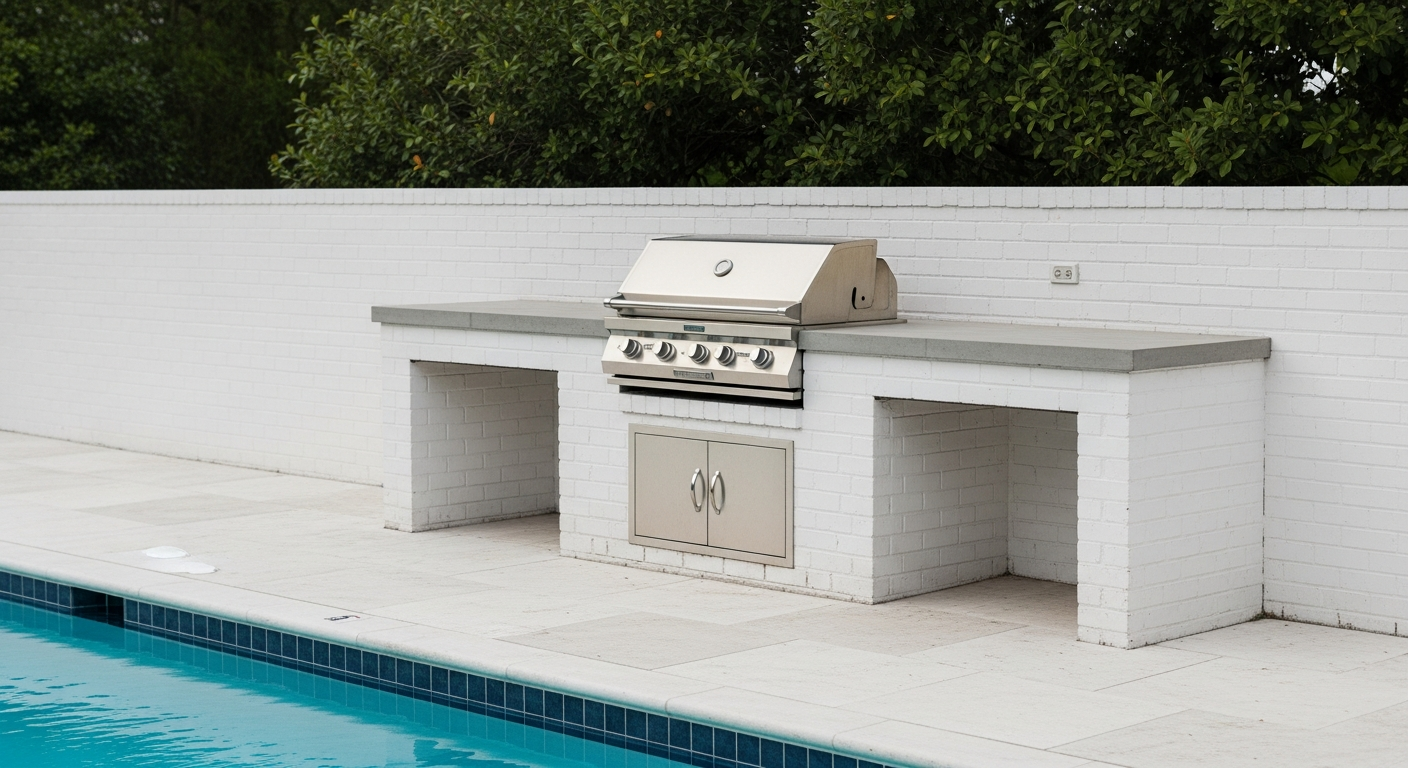
- Substrate and Ventilation Engineering: A beautiful kitchen on a failing foundation is useless. I mandate a non-porous concrete substrate treated with a penetrating silicate sealer. For the cabinetry, I design subtle ventilation channels at the base and rear of the units to prevent humid, stagnant air from fostering mildew growth inside—a common problem I find in enclosed grill cabinets.
- Installation and Sealing: Assembly isn't just about screwing boxes together. It's about sealing every penetration. Every screw hole, every joint between cabinet and countertop, is sealed with a high-performance, elastomeric sealant that can handle the thermal expansion and contraction of materials during our dramatic temperature swings, preventing water intrusion.
Precision Adjustments and Quality Benchmarks
The difference between a good project and an exceptional one is in the final 5%. These are my personal quality benchmarks that I insist on. For backsplashes, if tile is an absolute must for the client, I veto cementitious grout. Instead, I specify a 100% solids epoxy-based grout. It's more difficult to install, but it's non-porous, stain-proof, and will never support mold growth. I also conduct a final water intrusion test, simulating a wind-driven rain event to ensure every seal and joint is perfectly watertight before handing the project over. This single test has saved my clients from thousands in future repairs. Now that you understand the material science, have you audited your project's plan for the specific grade of stainless steel fasteners used and their galvanic compatibility with the surrounding materials?Written by

Tags
modular outdoor kitchen
outdoor bbq kitchen
outdoor kitchens near me
custom outdoor kitchen
stainless steel outdoor kitchen
White Outdoor Kitchen in Charlotte FL FAQ
Will my white outdoor kitchen cabinets turn yellow in the sun?
High-quality white outdoor kitchens use materials with UV inhibitors to prevent yellowing for many years. Lower-cost options like standard PVC or certain white paints can start to discolor in as little as 2 to 3 years of direct sun exposure. When selecting materials, specifically ask for a high-density polyethylene (HDPE) or a powder-coated stainless steel with a marine-grade finish, as these offer superior resistance to UV degradation. Always check the manufacturer's warranty, as it often specifies the level of color-fastness you can expect.
What's the best countertop material for a white kitchen that won't stain?
The most stain-resistant countertop for a white outdoor kitchen is a non-porous engineered material like Dekton or Neolith. These ultra-compact surfaces are nearly impervious to stains from wine, grease, or acidic foods and can withstand high heat without scorching. While natural stones like white granite are beautiful, they are porous and require diligent sealing at least once a year to prevent permanent staining. Without proper sealing, a single spilled glass of red wine can create a ghost stain that is impossible to fully remove.
How do I clean grease and food stains off white outdoor kitchen surfaces?
For routine cleaning, use a simple solution of mild dish soap and warm water with a soft microfiber cloth. For tougher grease or BBQ sauce stains, create a paste of baking soda and water, apply it to the spot, let it sit for 15 minutes, and then gently scrub with a non-abrasive sponge. Avoid using harsh chemical cleaners or bleach, which can damage the finish and cause yellowing over time. A common mistake is using a pressure washer, which can force grime into the material's micro-pores and strip protective coatings, making future stains even worse.
Are white outdoor kitchens harder to keep clean than darker colors?
White surfaces show dirt and spills more readily, but they are not necessarily harder to clean if you choose the right materials. A smooth, non-porous white surface like powder-coated metal or a high-gloss polymer is often easier to wipe clean than a dark, textured material that can trap dirt and grease. The key trade-off is visibility versus maintenance; white forces immediate cleanup, which prevents stains from setting. This can actually be an advantage, as it prevents the long-term buildup of grime that often goes unnoticed on darker, more forgiving colors.
What should I look for in a white grill to match my kitchen and prevent rust?
To match your kitchen and ensure longevity, select a grill constructed from 304-grade stainless steel with a white powder-coated exterior. The 304-grade steel provides excellent corrosion resistance, which is critical for outdoor appliances exposed to rain and humidity. Be wary of grills with just a painted steel body, as the paint can easily chip, exposing the metal underneath to rust within a single season. Also, verify that all hardware, including handles and knobs, are made from stainless steel, as these are common failure points where rust first appears.
Can I install a white sink in my outdoor kitchen, and will it stain?
Yes, you can install a white sink, but material choice is critical to prevent staining and damage. A white fireclay or a high-quality composite granite sink offers the best resistance to stains, scratches, and thermal shock from hot pans. Avoid acrylic or solid surface sinks, as they are softer and can be easily stained by things like coffee grounds or berry juice, and may develop fine scratches that trap dirt. A hidden issue with outdoor sinks is freeze damage; ensure your sink has a proper winterization drain to prevent water from freezing and cracking the basin during winter.