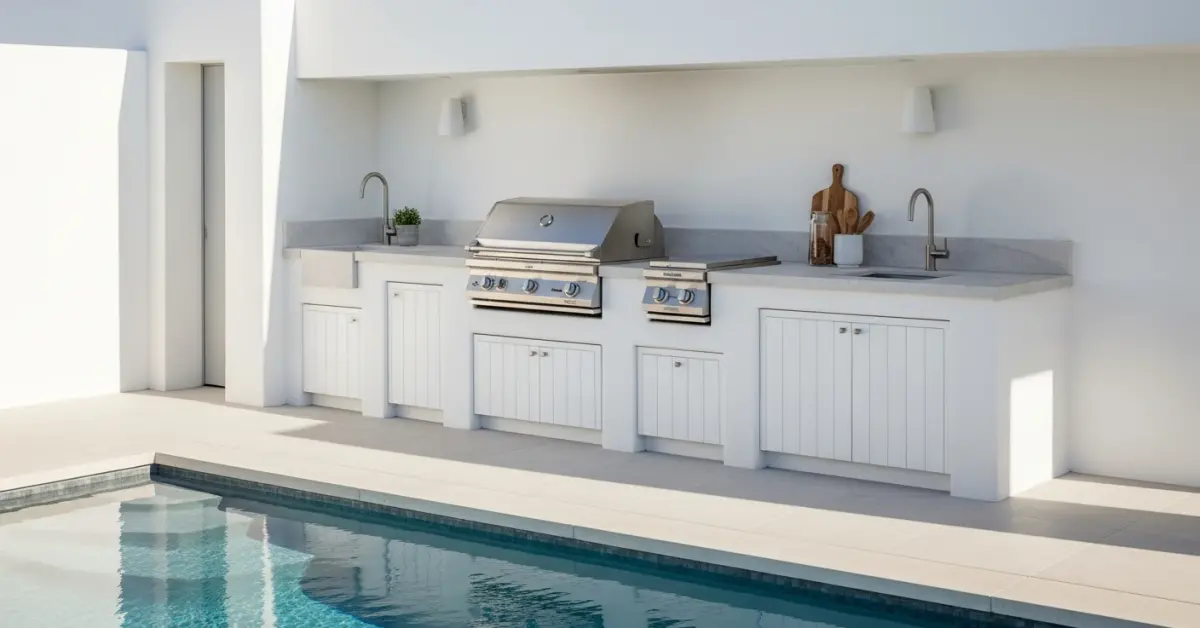
White Outdoor Kitchen Design: My Protocol for Preventing UV Yellowing and Salt-Air Corrosion in Lee County
I’ve seen more pristine white outdoor kitchens fail in Lee County than in any other region. The allure of a bright, clean aesthetic clashes directly with our environment's harshest realities: unrelenting sun, corrosive salt air, and high humidity. The primary failure I consistently diagnose isn't a poor installation, but a fundamental misunderstanding of material science. Homeowners in places like Cape Coral or Fort Myers often select materials based on indoor standards, leading to yellowing, rust stains, and delamination within 24 months. My approach fixes this by focusing on a material's non-porosity and UV-stabilizer composition from the very start. The common mistake is assuming "outdoor-rated" is a universal standard. It's not. A product rated for a dry, temperate climate will degrade rapidly here. My proprietary methodology is built on specifying materials not just for water resistance, but for their performance against a specific combination of **high solar radiation (UV index)** and **salt-spray concentration**. This prevents the slow, costly decay I'm often called in to remedy on beautiful waterfront properties from Sanibel to Bonita Springs.The Common Failure Point: Why Most White Finishes Degrade in Southwest Florida's Climate
My first step on any project consultation is what I call a "Material Autopsy" of existing outdoor structures. Nine times out of ten, the problem with a stained or yellowed white outdoor kitchen is the resin. Specifically, the epoxy or polyester resins used as binders in many common countertop materials, like standard quartz, are not UV-stable. Under the intense Lee County sun, these resins undergo photo-oxidation, which fractures the polymer chains and causes that dreaded yellow tint. It’s an irreversible chemical change. This issue is compounded by our proximity to the Gulf. Salt air is insidious. It doesn't just cause rust on cheap hardware; it deposits a fine saline layer on surfaces. When moisture from our high humidity or a rain shower is added, it creates a saline solution that attacks porous materials. I once inspected a two-year-old outdoor kitchen in a Fort Myers Beach home where the beautiful white travertine countertops were permanently etched and stained because the salt had penetrated the inadequate sealant and reacted with the stone's mineral deposits. My methodology, the **Coastal Durability Matrix**, was developed specifically to counteract these two aggressors simultaneously.Material Selection Beyond the Brochure: The Coastal Durability Matrix Explained
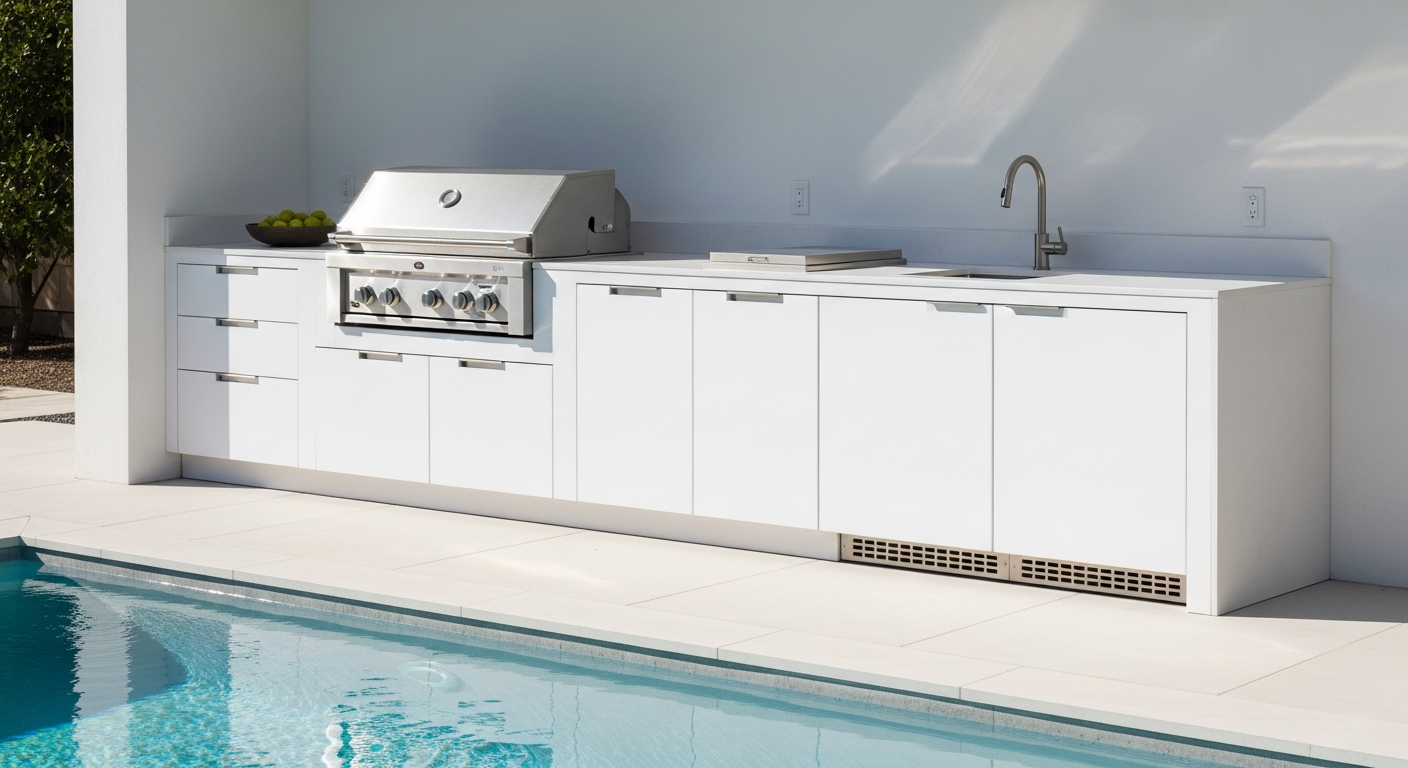
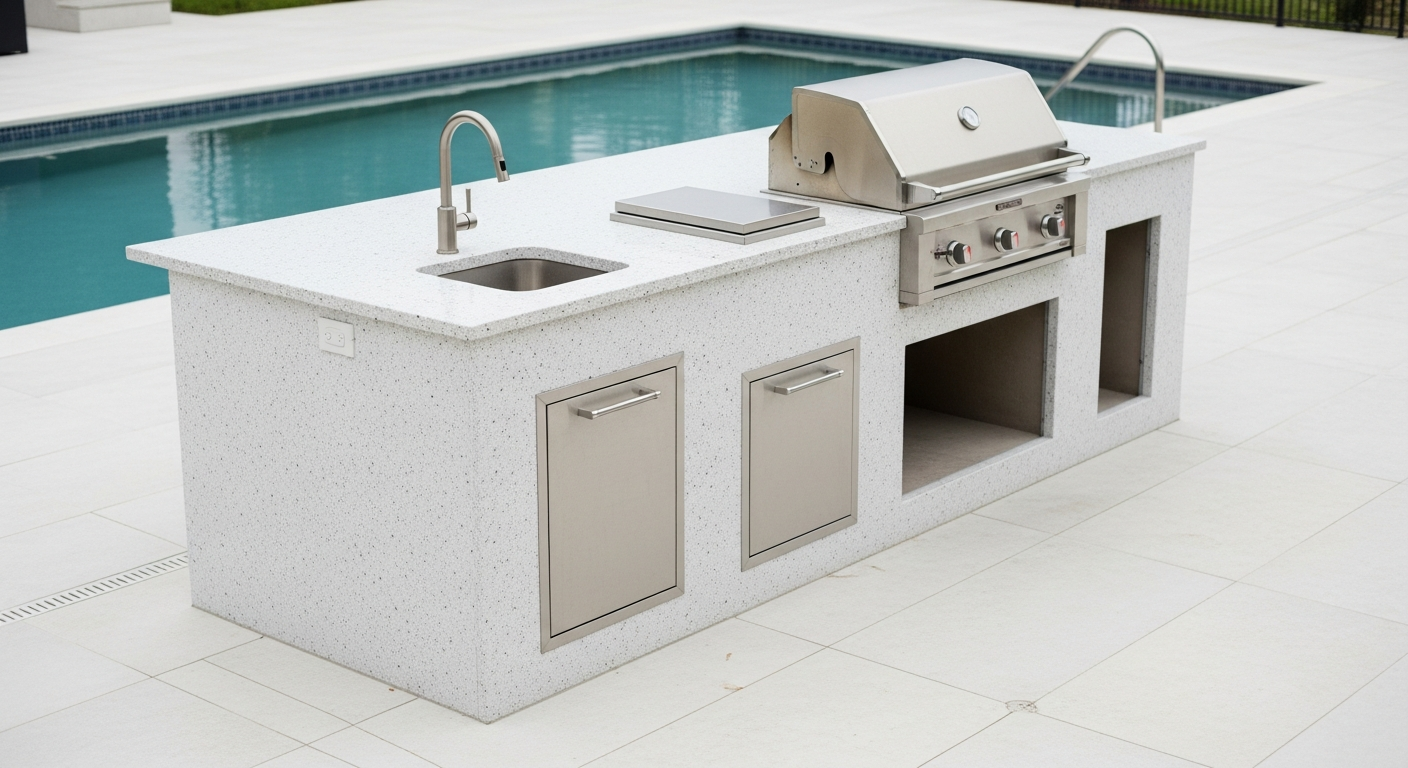
The Coastal Durability Matrix isn't just a list of products; it's a framework for evaluating material composites. I prioritize chemical stability over simple hardness or aesthetics, ensuring a pristine white finish for 15 years or more, not just two.- Countertops: Sintered Stone over Quartz. While some new-generation quartz products have improved UV inhibitors, I specify **sintered stone** (like Dekton or Neolith) for white applications. The manufacturing process uses extreme heat and pressure without the resins that cause yellowing. It has near-zero porosity, meaning salt and staining agents like red wine can't penetrate. This is a non-negotiable for my projects.
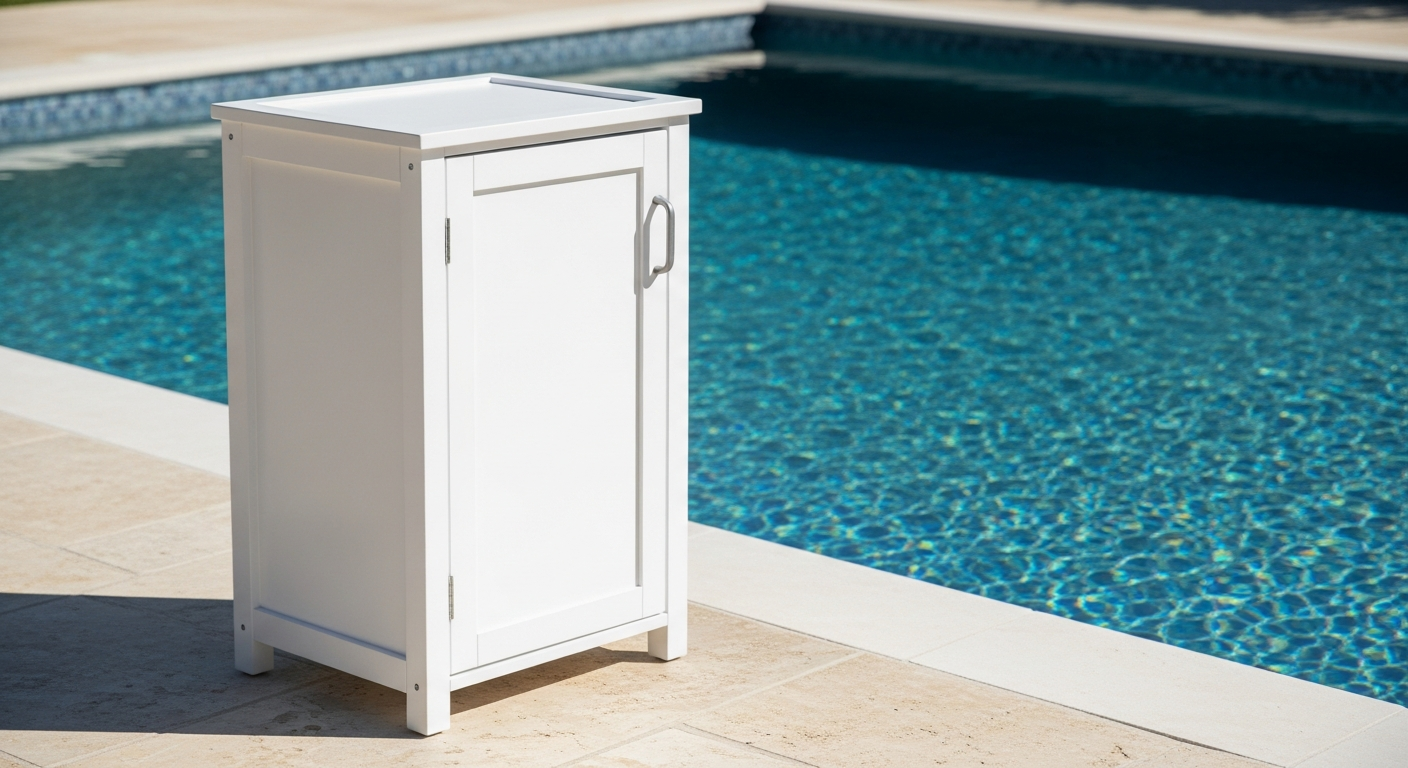
- Cabinetry: Polymer and Marine-Grade Steel. Wood, even treated teak, will eventually lose the battle here. My go-to is **high-density polyethylene (HDPE)** cabinetry. It's a solid polymer, so the color is integral, not a coating that can peel. For clients wanting a sleeker look, I only use **powder-coated 316L stainless steel**. Many competitors use 304 grade, but the "L" in 316L signifies low carbon content, and it contains molybdenum, offering vastly superior resistance to chloride and salt corrosion. This is a critical distinction for our coastal homes.
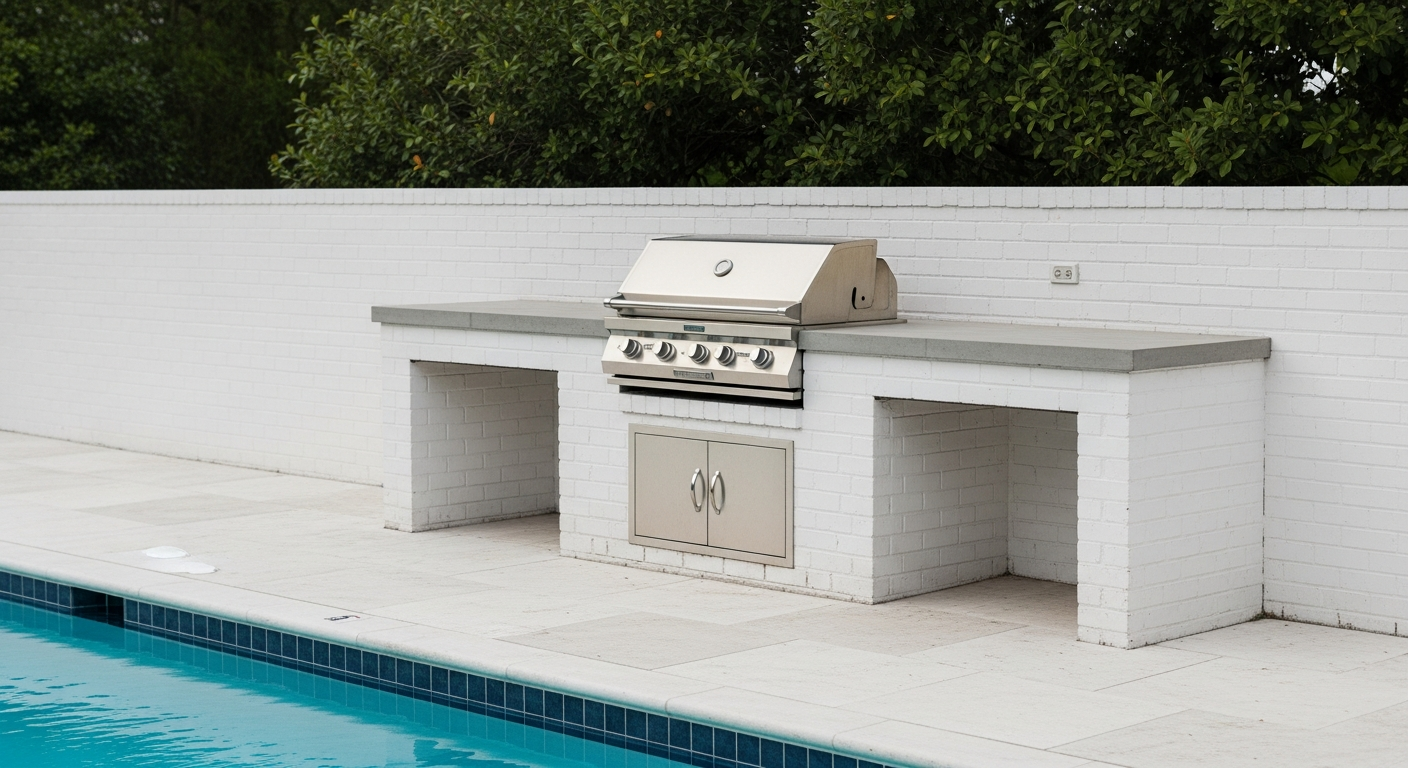
- Grout and Sealants: The Unseen Defenders. This is a detail where many projects fail. I mandate **epoxy-based grout** instead of traditional cementitious grout for all tile and stone work. It’s non-porous and chemically inert, preventing mold and stains. For any natural stone accents, I use a **silane-based penetrating sealer**, which creates a chemical bond within the stone's pores instead of just a surface film, offering a 75% increase in protection against salt-water ingress compared to standard acrylic sealers.
My Phased Implementation for a Flawless White Outdoor Kitchen Build
A successful project is about more than just materials; it's about a build process that anticipates environmental stress. I’ve refined my installation protocol to address Lee County's specific challenges from the ground up.- Site & Solar Path Analysis: Before a single drawing is finalized, I analyze the specific property's sun exposure. A kitchen on the west-facing lanai of a Cape Coral canal home has a different UV load than one with a northern exposure. This analysis informs material placement and can influence the need for structural shade.
- Substrate & Drainage Engineering: Our rainy season is no joke. The concrete slab must have a **minimum 2% grade** away from the home and cabinetry. I also specify a **capillary break** using a waterproof membrane between the slab and the cabinets to prevent moisture from wicking up.
- Assembly with Marine-Grade Hardware: Every screw, hinge, and drawer slide must be **316L stainless steel**. Using anything less is a guaranteed failure point, leading to rust streaks that permanently stain white polymer or stone surfaces. This is a non-negotiable I enforce with all my installers.
- Multi-Layer Sealing Protocol: For any applicable surfaces, the sealing process isn't a single application. It's a timed, multi-layer process. **Apply the first coat, wait for penetration, remove excess, and re-apply a second coat within 60 minutes**. This ensures maximum absorption before the surface cures.
The Post-Installation Details That Guarantee a 15-Year+ Lifespan
The job isn't done when the last appliance is installed. My quality assurance process focuses on the small details that prevent long-term issues and ensure the homeowner's investment is protected. One of my key checks is an **appliance ventilation audit**. I've seen high-end grills create soot stains on white backsplashes because of improper airflow, a mistake that often voids the appliance warranty. Ensuring the ventilation is correctly sized for the grill's BTU output is critical. Furthermore, I perform a meticulous **caulking and gasket inspection**. I use only **UV-stable, mildew-resistant silicone sealant** at all joints where the kitchen meets the house or other structures. This flexible seal accommodates thermal expansion and prevents water intrusion, which is the number one cause of hidden mold growth in our humid climate. This final check adds, in my estimation, at least 5 years to the functional life of the installation. Now that you understand the material science, have you considered how the thermal expansion coefficient of your chosen countertop will interact with the cabinetry substrate during a Fort Myers summer heatwave?Written by

Tags
modular outdoor kitchen
outdoor bbq kitchen
outdoor kitchens near me
custom outdoor kitchen
stainless steel outdoor kitchen
White Outdoor Kitchen in Lee FL FAQ
Will my white outdoor kitchen cabinets turn yellow in the sun?
High-quality white outdoor kitchens use materials with UV inhibitors to prevent yellowing for many years. Lower-cost options like standard PVC or certain white paints can start to discolor in as little as 2 to 3 years of direct sun exposure. When selecting materials, specifically ask for a high-density polyethylene (HDPE) or a powder-coated stainless steel with a marine-grade finish, as these offer superior resistance to UV degradation. Always check the manufacturer's warranty, as it often specifies the level of color-fastness you can expect.
What's the best countertop material for a white kitchen that won't stain?
The most stain-resistant countertop for a white outdoor kitchen is a non-porous engineered material like Dekton or Neolith. These ultra-compact surfaces are nearly impervious to stains from wine, grease, or acidic foods and can withstand high heat without scorching. While natural stones like white granite are beautiful, they are porous and require diligent sealing at least once a year to prevent permanent staining. Without proper sealing, a single spilled glass of red wine can create a ghost stain that is impossible to fully remove.
How do I clean grease and food stains off white outdoor kitchen surfaces?
For routine cleaning, use a simple solution of mild dish soap and warm water with a soft microfiber cloth. For tougher grease or BBQ sauce stains, create a paste of baking soda and water, apply it to the spot, let it sit for 15 minutes, and then gently scrub with a non-abrasive sponge. Avoid using harsh chemical cleaners or bleach, which can damage the finish and cause yellowing over time. A common mistake is using a pressure washer, which can force grime into the material's micro-pores and strip protective coatings, making future stains even worse.
Are white outdoor kitchens harder to keep clean than darker colors?
White surfaces show dirt and spills more readily, but they are not necessarily harder to clean if you choose the right materials. A smooth, non-porous white surface like powder-coated metal or a high-gloss polymer is often easier to wipe clean than a dark, textured material that can trap dirt and grease. The key trade-off is visibility versus maintenance; white forces immediate cleanup, which prevents stains from setting. This can actually be an advantage, as it prevents the long-term buildup of grime that often goes unnoticed on darker, more forgiving colors.
What should I look for in a white grill to match my kitchen and prevent rust?
To match your kitchen and ensure longevity, select a grill constructed from 304-grade stainless steel with a white powder-coated exterior. The 304-grade steel provides excellent corrosion resistance, which is critical for outdoor appliances exposed to rain and humidity. Be wary of grills with just a painted steel body, as the paint can easily chip, exposing the metal underneath to rust within a single season. Also, verify that all hardware, including handles and knobs, are made from stainless steel, as these are common failure points where rust first appears.
Can I install a white sink in my outdoor kitchen, and will it stain?
Yes, you can install a white sink, but material choice is critical to prevent staining and damage. A white fireclay or a high-quality composite granite sink offers the best resistance to stains, scratches, and thermal shock from hot pans. Avoid acrylic or solid surface sinks, as they are softer and can be easily stained by things like coffee grounds or berry juice, and may develop fine scratches that trap dirt. A hidden issue with outdoor sinks is freeze damage; ensure your sink has a proper winterization drain to prevent water from freezing and cracking the basin during winter.