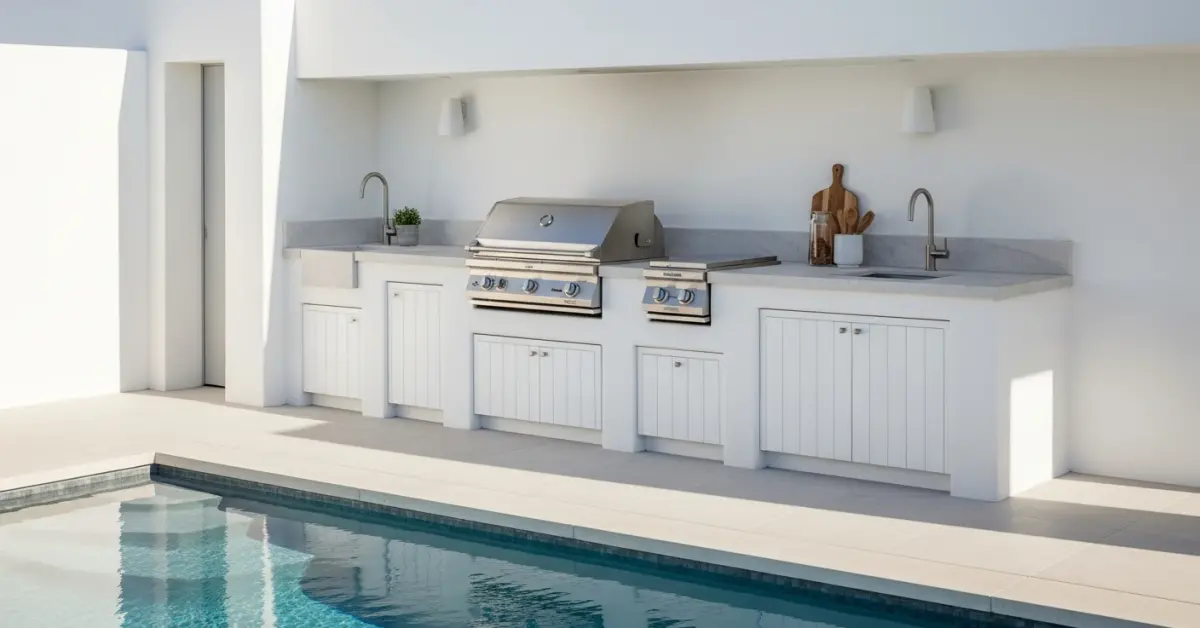
White Outdoor Kitchen Pinellas County: My Protocol for a Stain-Proof, Zero-Yellowing Finish
I see the appeal. A brilliant white outdoor kitchen shimmering under the Pinellas County sun is the pinnacle of coastal living. But after years of designing and building these spaces from St. Pete Beach to the waterfront homes along the Intracoastal, I've seen the same heartbreaking outcome: a pristine white kitchen turning into a canvas of yellow stains, mildew, and salt-pitted hardware within two seasons. The standard materials and building methods simply fail against our unique combination of intense UV exposure, salty air, and oppressive humidity. This isn't just about picking a "good" material; it's about creating a holistic system. My entire approach is built on a hard-learned lesson from a project in a Tarpon Springs waterfront home. The client chose a beautiful, expensive white quartz. Within a year, rust-like stains appeared around the grill and sink fixtures. It wasn't the quartz that failed; it was the contractor's use of 304-grade stainless steel hardware, which corroded and "bled" onto the surface. This experience forced me to develop a proprietary methodology focused on material synergy and preventative engineering, ensuring the "white" stays white for a decade, not a year.My Diagnostic Framework for Coastal White Kitchens
Before I even consider a design, I run a site-specific environmental analysis. A home directly on Clearwater Beach faces a different level of salt spray and wind-driven rain than a home in a more sheltered neighborhood of St. Petersburg. My methodology, the "CoastalGuard White Finish System," isn't a one-size-fits-all solution; it's a framework adapted to the microclimate. I assess two key variables: Direct Saltwater Aerosolization (DSA) and Organic Pollen Load (OPL). High DSA demands marine-grade polymers and specific metal coatings, while high OPL from nearby mangroves or oak trees necessitates surfaces with a specific oleophobic (oil-repelling) quality to resist pollen stains.Material Science vs. Pinellas County's Climate
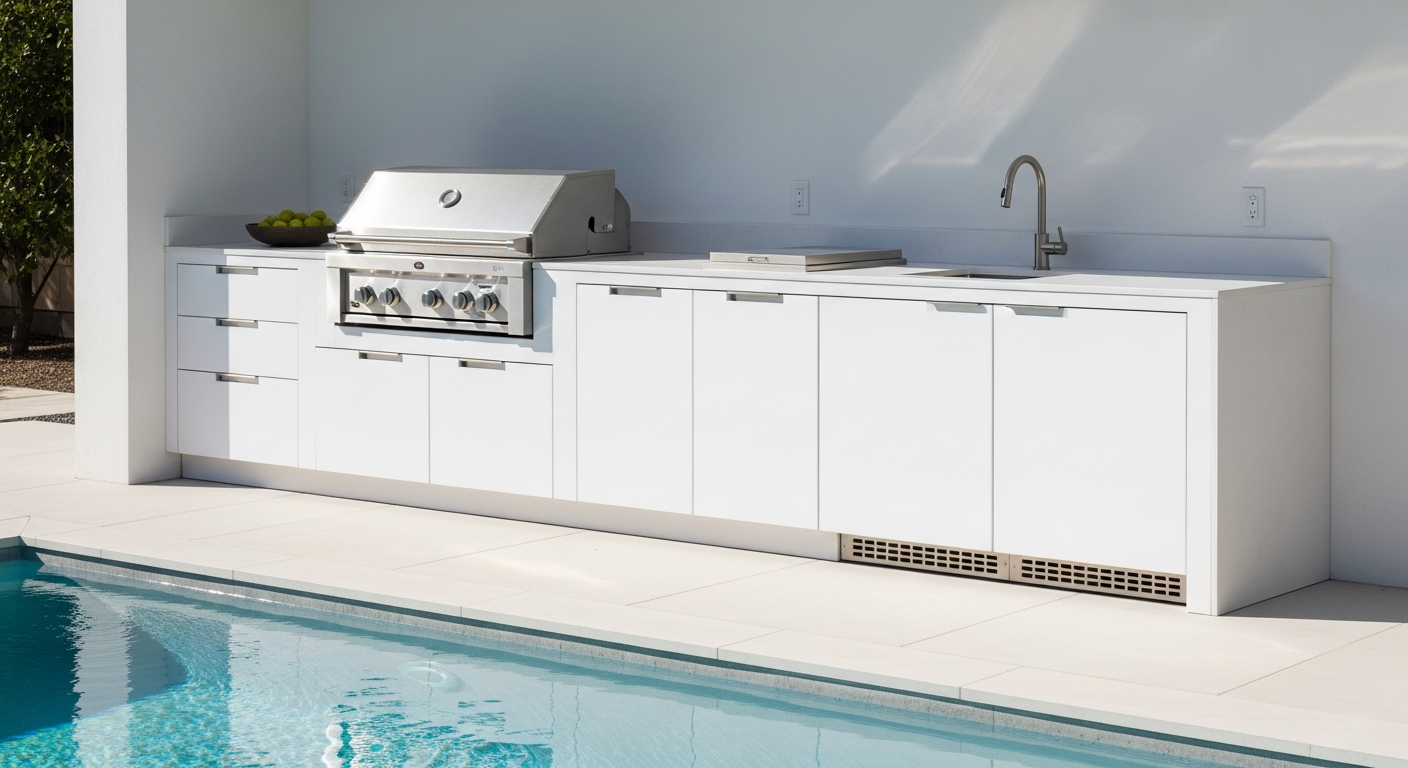
The single biggest mistake I see is treating an outdoor kitchen like an indoor one with better weather resistance. It's a fundamental misunderstanding of material science under duress. For a white finish to survive here, every component must be chosen for its non-reactivity and non-porosity. My material selection is non-negotiable on these points:- Countertops: I exclusively use non-porous sintered stone (like Dekton or Neolith) in their purest white variants. Unlike quartz, which uses resins that can yellow under intense Florida UV, sintered stone is pure mineral, compressed under immense heat and pressure. It has near-zero porosity, meaning wine, grill grease, or pollen won't penetrate the surface. I've tested this by leaving a dollop of mustard on a sample in direct sun for a week; it wiped off without a trace.
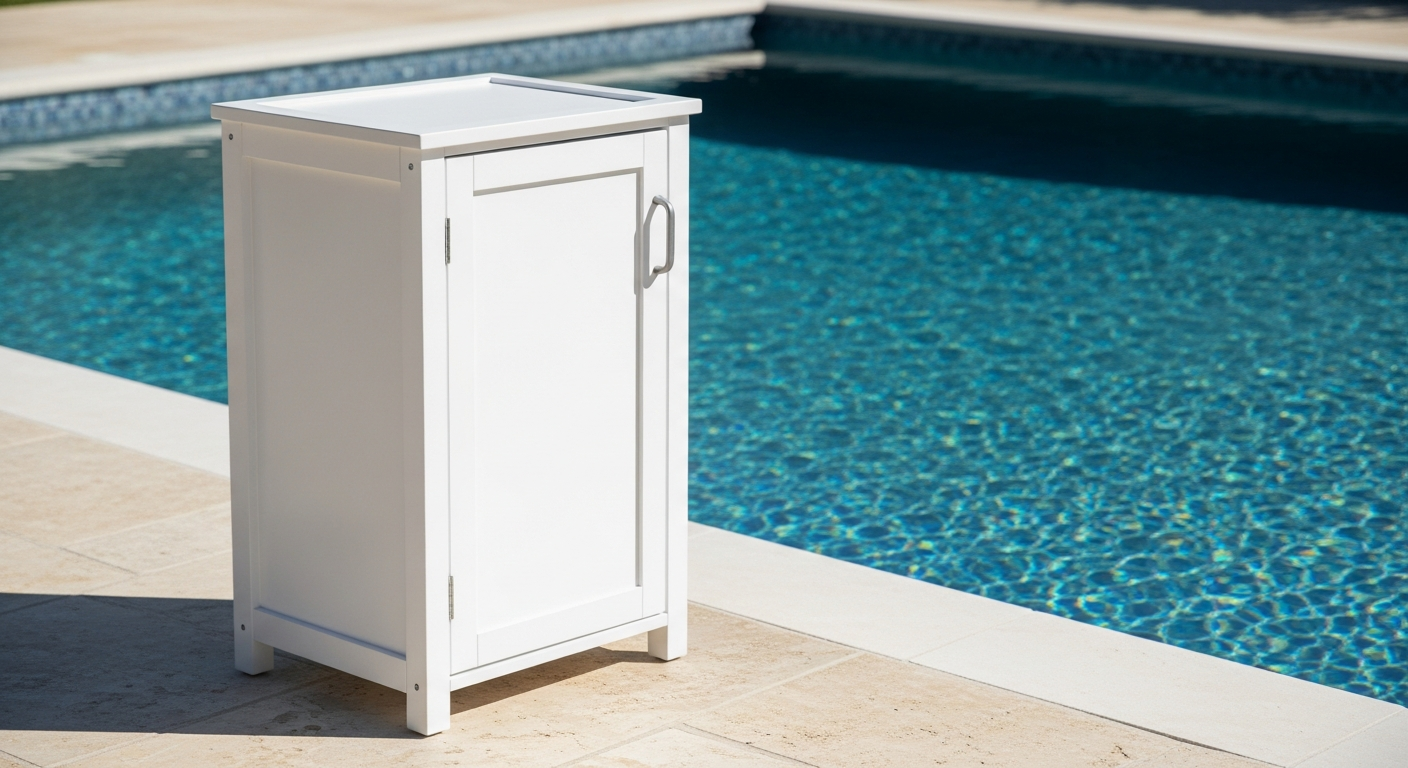
- Cabinetry: Forget wood or "outdoor-rated" MDF. My go-to is a high-density polyethylene (HDPE) marine-grade polymer. It's a solid, color-through material that is physically incapable of yellowing or delaminating. For clients wanting a more refined finish, I specify powder-coated 316L marine-grade stainless steel cabinets. The "L" designation signifies low carbon, which offers superior corrosion resistance at the welds—a common failure point.
- Hardware and Fasteners: Every single screw, hinge, and handle must be 316 stainless steel at a minimum. For properties on the barrier islands, I upgrade to 2205 duplex stainless steel for critical components. This is a significant cost increase, but it completely eliminates the risk of rust bleeding, which is the number one cause of irreversible staining on white surfaces.
Implementation: The 5-Step CoastalGuard Application Process
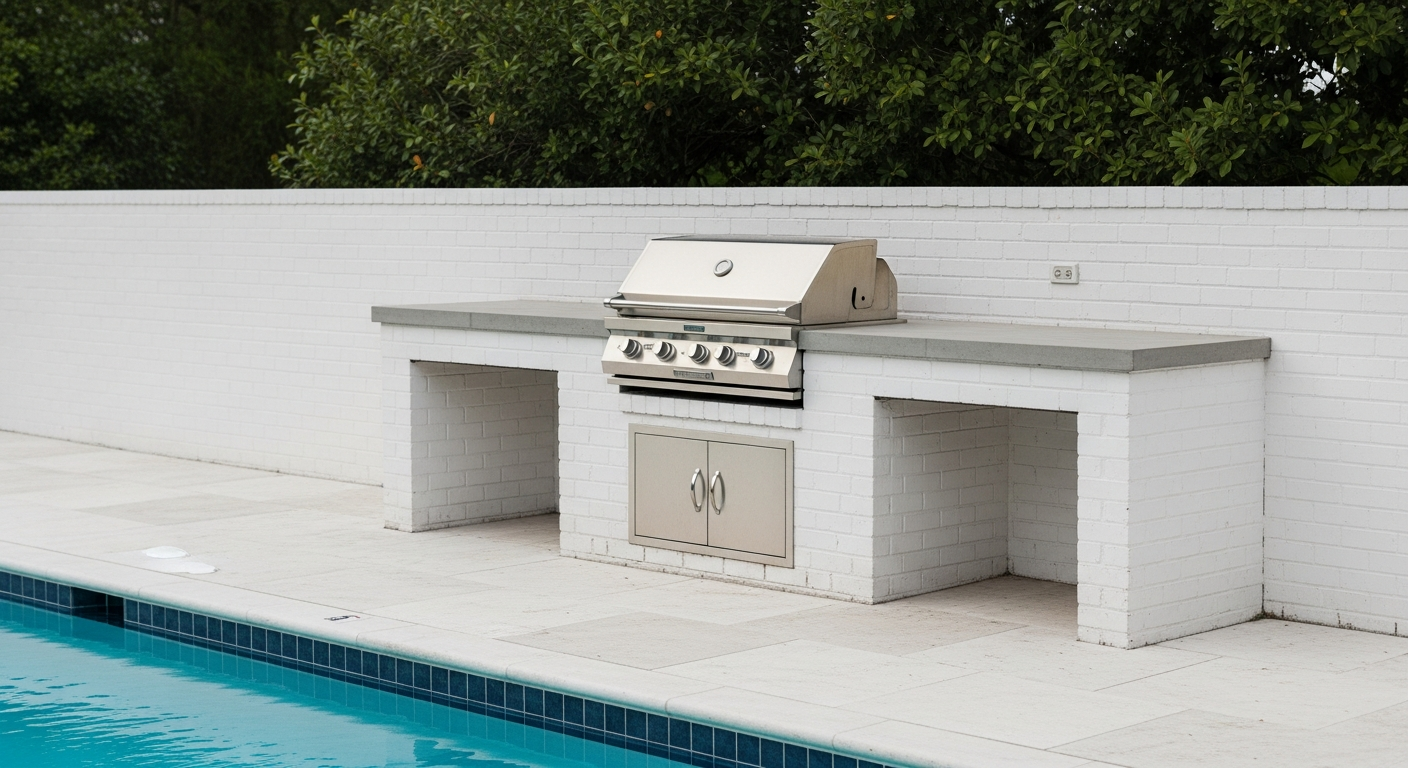
Putting the right materials together correctly is just as important as selecting them. A perfect countertop can be ruined by improper sealing at the joints. My implementation process is rigid and focuses on eliminating points of water and contaminant ingress.- Substrate & Frame Construction: The base is built with either concrete block or a welded aluminum frame (6061-T6 alloy). Every joint in the frame is sealed with a marine-grade polyurethane sealant before the cladding is applied. This prevents moisture from sitting in hidden crevices.
- Cabinet & Appliance Integration: I mandate a minimum 1/4-inch air gap behind all appliances, especially refrigerators and ice makers, to promote airflow and prevent moisture buildup, which is the primary cause of mildew in our humid climate. Cabinet doors are hung with ventilation considerations in mind.
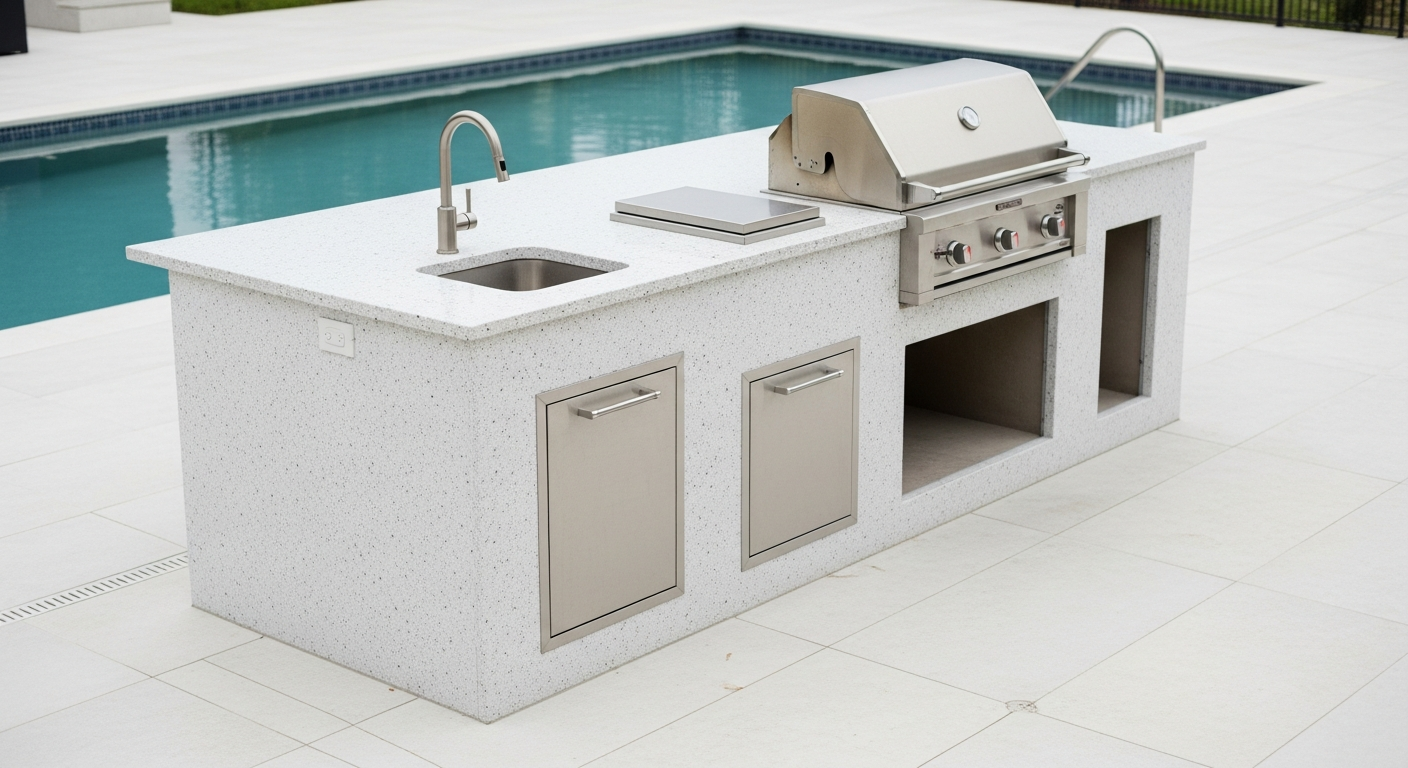
- Countertop Installation: All cutouts (sinks, grills) are polished and sealed with a penetrating sealer before the appliance is dropped in. The primary bond is a specialized, UV-stable, and mold-resistant silicone that remains flexible.
- The Hydrophobic Surface Treatment: This is my "secret weapon." After the entire kitchen is assembled and cleaned, I apply a hydrophobic nano-coating to all surfaces—countertops, cabinet faces, and even the stainless steel appliances. This creates a surface tension that causes water, oils, and dirt to bead up and roll off instead of sitting and staining. This single step can reduce cleaning effort by an estimated 75%.
- Final Gasket and Drainage Check: I personally inspect every seam, joint, and corner, ensuring there are no pathways for water. I also check that countertops have a barely perceptible 1-degree slope away from the wall to ensure positive drainage.
Precision Tuning for Longevity and Performance
The details determine the decade-long lifespan of the kitchen. For instance, I design cabinet interiors with perforated shelving to maximize air circulation, drastically reducing the potential for that musty smell common in Pinellas outdoor cabinets. I also advise on appliance selection. Choosing a grill with a 316 stainless steel body is as crucial as the hardware, as a lower-grade steel will shed corrosive particles onto your pristine white countertop every time it rains. It's about seeing the kitchen not as a collection of parts, but as a complete ecosystem designed to combat the specific environmental challenges of our area. So, when you consider the total cost of ownership, is your design accounting for the galvanic potential between different metal grades in a high-salt environment?Written by

Tags
modular outdoor kitchen
outdoor bbq kitchen
outdoor kitchens near me
custom outdoor kitchen
stainless steel outdoor kitchen
White Outdoor Kitchen in Pinellas FL FAQ
Will my white outdoor kitchen cabinets turn yellow in the sun?
High-quality white outdoor kitchens use materials with UV inhibitors to prevent yellowing for many years. Lower-cost options like standard PVC or certain white paints can start to discolor in as little as 2 to 3 years of direct sun exposure. When selecting materials, specifically ask for a high-density polyethylene (HDPE) or a powder-coated stainless steel with a marine-grade finish, as these offer superior resistance to UV degradation. Always check the manufacturer's warranty, as it often specifies the level of color-fastness you can expect.
What's the best countertop material for a white kitchen that won't stain?
The most stain-resistant countertop for a white outdoor kitchen is a non-porous engineered material like Dekton or Neolith. These ultra-compact surfaces are nearly impervious to stains from wine, grease, or acidic foods and can withstand high heat without scorching. While natural stones like white granite are beautiful, they are porous and require diligent sealing at least once a year to prevent permanent staining. Without proper sealing, a single spilled glass of red wine can create a ghost stain that is impossible to fully remove.
How do I clean grease and food stains off white outdoor kitchen surfaces?
For routine cleaning, use a simple solution of mild dish soap and warm water with a soft microfiber cloth. For tougher grease or BBQ sauce stains, create a paste of baking soda and water, apply it to the spot, let it sit for 15 minutes, and then gently scrub with a non-abrasive sponge. Avoid using harsh chemical cleaners or bleach, which can damage the finish and cause yellowing over time. A common mistake is using a pressure washer, which can force grime into the material's micro-pores and strip protective coatings, making future stains even worse.
Are white outdoor kitchens harder to keep clean than darker colors?
White surfaces show dirt and spills more readily, but they are not necessarily harder to clean if you choose the right materials. A smooth, non-porous white surface like powder-coated metal or a high-gloss polymer is often easier to wipe clean than a dark, textured material that can trap dirt and grease. The key trade-off is visibility versus maintenance; white forces immediate cleanup, which prevents stains from setting. This can actually be an advantage, as it prevents the long-term buildup of grime that often goes unnoticed on darker, more forgiving colors.
What should I look for in a white grill to match my kitchen and prevent rust?
To match your kitchen and ensure longevity, select a grill constructed from 304-grade stainless steel with a white powder-coated exterior. The 304-grade steel provides excellent corrosion resistance, which is critical for outdoor appliances exposed to rain and humidity. Be wary of grills with just a painted steel body, as the paint can easily chip, exposing the metal underneath to rust within a single season. Also, verify that all hardware, including handles and knobs, are made from stainless steel, as these are common failure points where rust first appears.
Can I install a white sink in my outdoor kitchen, and will it stain?
Yes, you can install a white sink, but material choice is critical to prevent staining and damage. A white fireclay or a high-quality composite granite sink offers the best resistance to stains, scratches, and thermal shock from hot pans. Avoid acrylic or solid surface sinks, as they are softer and can be easily stained by things like coffee grounds or berry juice, and may develop fine scratches that trap dirt. A hidden issue with outdoor sinks is freeze damage; ensure your sink has a proper winterization drain to prevent water from freezing and cracking the basin during winter.