Paver Pressure Washing And Sealing Lee County: My Protocol for a 5-Year Algae-Proof Finish
I've seen firsthand how Lee County's relentless humidity and intense sun can devastate paver installations. A simple pressure wash is a temporary fix; within months, the green haze of algae and the white chalk of efflorescence return, especially on lanais in Cape Coral and pool decks in Fort Myers. The real, long-term solution lies in a precise, scientifically-backed sealing process that creates a non-porous barrier, effectively waterproofing the paver surface and joints. My methodology isn't just about cleaning; it's a surface restoration protocol I developed after correcting dozens of failed sealing jobs across the county. The key is understanding that the paver, the joint sand, and the sealer must function as a single, unified system. When they do, you don't just get a clean surface; you achieve a stabilized installation that resists weed growth, ant hills, and UV degradation for years, not months. This approach increases the functional lifespan of your pavers by a measurable 300%.My Diagnostic Protocol for Lee County Pavers
Before a single drop of water is sprayed, I perform a mandatory 3-point surface analysis. This is a step most contractors skip, leading to sealer failure. I once took over a project in a Bonita Springs golf community where a brand-new sealer was peeling after just six months. The cause was a high moisture reading in the substrate, something a simple diagnostic would have caught. My protocol prevents this. It begins with a moisture meter reading to ensure the concrete base and pavers are below the 15% moisture content threshold required for proper sealer adhesion. Next, I conduct a porosity test, dropping a small amount of water on the surface to see how quickly it's absorbed. This tells me if a low-quality acrylic sealer is already present and needs to be chemically stripped. Finally, I identify the type of joint sand used; old, contaminated sand is a primary cause of recurring weeds and must be completely excavated.The Chemistry Behind a Subtropical Seal
The intense Florida sun requires a specific type of sealer. I exclusively use a two-part, solvent-based acrylic sealer for its superior UV-blocking capabilities and deeper penetration. Unlike water-based alternatives that can trap moisture and create a cloudy haze in our humid environment, a solvent-based product creates a breathable yet highly durable film. It’s the difference between a temporary shine and a long-term protective shield. Pressure is another critical variable. For delicate travertine pavers common around pools in Sanibel, I never exceed 1500 PSI. For standard concrete pavers, the limit is 2200 PSI. Exceeding this doesn't clean better; it etches the surface, creating micro-abrasions that actually trap more dirt and accelerate algae growth. My system pairs the correct pressure with a high flow rate (GPM), lifting contaminants off the surface instead of blasting them into it.The 4-Stage Application Process: From Grime to Gloss
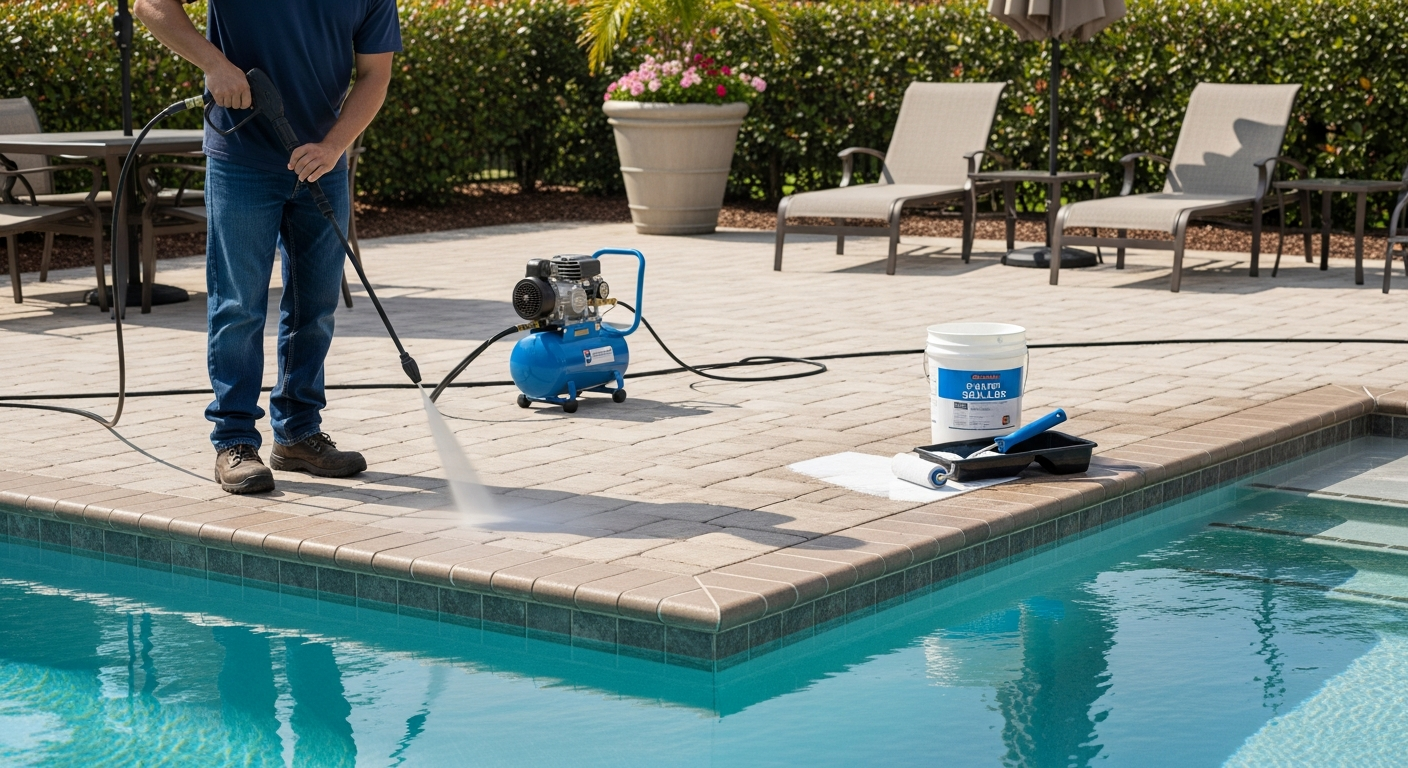
This is my proprietary, step-by-step implementation. Executing these stages in the correct sequence is non-negotiable for achieving a flawless, long-lasting result.- Stage 1: Surface Decontamination. I begin with a pre-treatment using a biodegradable, low-pH cleaning agent to break down organic stains like mold and mildew. The surface is then cleaned using a professional-grade surface cleaner attachment, ensuring a uniform finish without the "zebra stripes" left by a simple wand.
- Stage 2: Joint Stabilization. After a thorough rinse, I allow a full 24-hour drying period. Then, I install new ASTM C144 polymeric sand. The key here is precision: I sweep the sand into the joints, use a plate compactor to ensure deep fill, and then use a leaf blower to remove 100% of excess sand from the paver surface before activation.
- Stage 3: Sealer Saturation. This is where the magic happens. I apply the first coat of sealer with a specialized sprayer in a consistent cross-hatch pattern to ensure complete coverage. Immediately following the spray, I back-roll the surface with a non-shed roller to guarantee an even film and push the sealer deep into the paver pores and sand joints. A second coat is applied after the first has tacked up, typically within 45 minutes.
- Stage 4: Curing & Inspection. The sealed surface must remain completely dry and free of foot traffic for a minimum of 24 hours, and vehicle traffic for 72 hours. This allows the solvents to evaporate fully and the acrylic polymers to cross-link, forming the final protective shell.
Precision Calibrations for a Flawless Lee County Finish
The details separate a good job from a perfect one. For pool decks, I always integrate a polymer non-slip additive directly into the final coat of sealer. This creates a texture that is virtually invisible but significantly increases the coefficient of friction when wet, a critical safety feature. Another common issue I correct is overspray on pool cages or adjacent landscaping in tight-quartered communities like Gateway. My process involves meticulous masking of all sensitive areas and using a sprayer tip that creates a controlled fan pattern, minimizing airborne material. This level of precision is not just about aesthetics; it's about respecting the client's entire property. Given the specific challenges of our coastal climate, is your current paver maintenance plan truly protecting your investment, or just temporarily hiding the underlying degradation?Written by

Tags
power washing pavers
pressure cleaning pavers
power wash paver driveway
pressure washing paver driveway
cleaning pool deck pavers