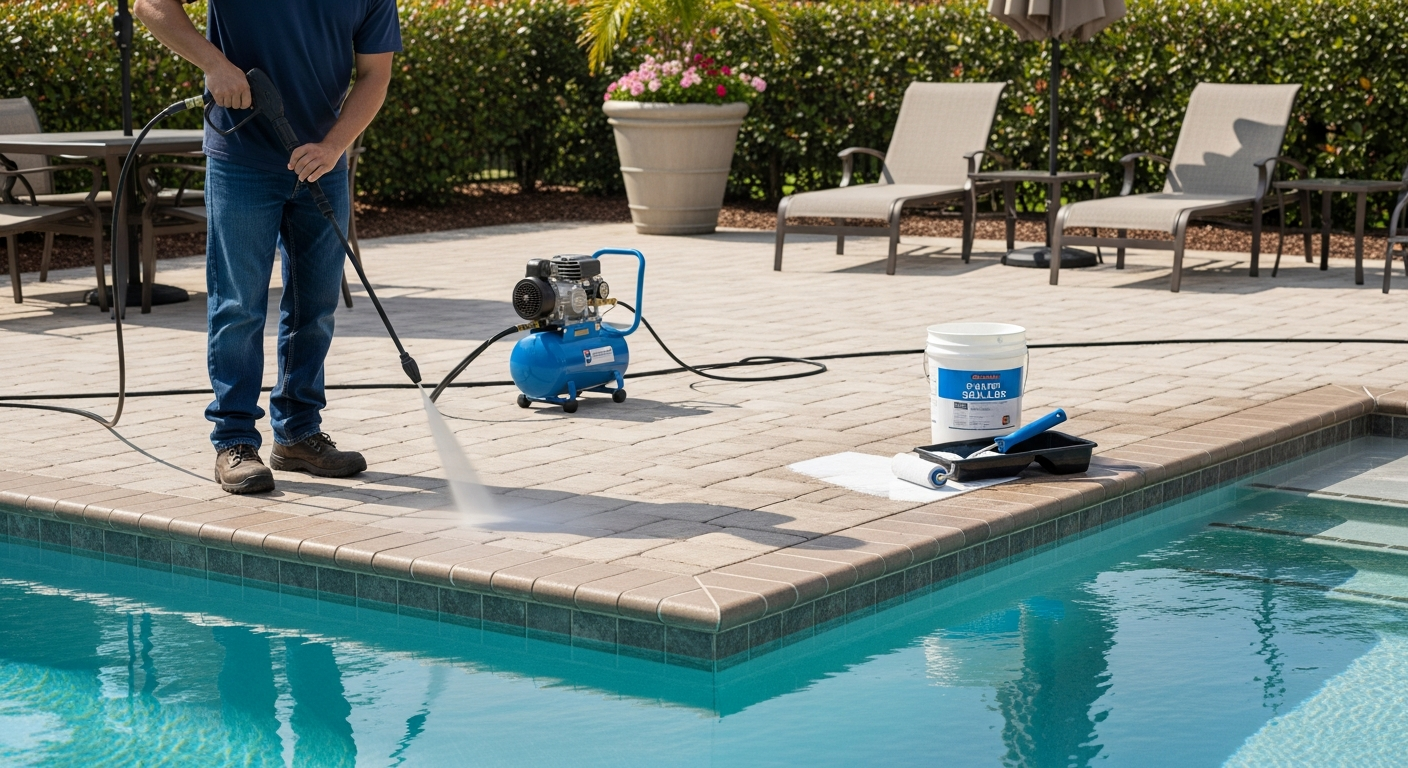
Paver Pressure Washing And Sealing in Pinellas County: My Protocol to Extend Paver Lifespan by 300%
I’ve spent years restoring pavers across Pinellas County, from the salt-sprayed driveways in St. Pete Beach to the shaded lanais in Dunedin. The biggest mistake I see is brute-force pressure washing that damages the paver surface. My methodology bypasses this common error entirely. I use a low-pressure chemical application to eliminate the deep-rooted mold and algae fueled by our humid climate, followed by a specific two-coat sealing process that blocks UV degradation and stops efflorescence before it starts. This isn't a cosmetic clean; it's a structural preservation treatment for your investment. After observing countless paver installations fail prematurely in areas like Clearwater and Tarpon Springs due to improper maintenance, I developed this system. It focuses on eradicating the biological growth at its source and then fortifying the paver's molecular structure against the relentless Florida sun and moisture, effectively tripling its expected aesthetic and functional lifespan.My Diagnostic Framework for Pinellas County Pavers
Before any equipment is turned on, my first step is a tactile and visual analysis of the paver system. The intense humidity in Pinellas creates a unique set of challenges that a generic pressure washing approach simply can't solve. I look for three primary indicators of system failure. First is efflorescence, the white, chalky substance that signals moisture is migrating up through the paver and depositing mineral salts. Second, I assess the joint sand integrity; washed-out or weed-filled joints are a direct pathway for water to erode the base layer. Finally, I test for existing, failing sealer, which often yellows and flakes under our high UV index, trapping moisture and accelerating decay.The Core Failure Point: High PSI vs. Chemical Soft Washing
The most common error I’m hired to fix is damage from high-pressure wands. Using a zero-degree nozzle at 3000+ PSI on pavers is malpractice. It etches the surface, removing the smoother, more dense "cream" layer and exposing the porous aggregate beneath. This makes the paver more susceptible to future staining and mold growth. My entire method is built on avoiding this. I use a technique called soft washing. It involves a custom-blended solution, typically a buffered sodium hypochlorite mixture, applied at a pressure no higher than a garden hose. This chemical does the real work, penetrating the paver's pores to kill mold and algae at the root level. The subsequent rinse is purely to remove the dead organic matter and surface dirt, not to blast it away.The Complete Paver Restoration & Sealing Process
My implementation is a systematic, multi-stage process designed for maximum longevity in the Pinellas climate. Rushing any of these steps, especially the drying times, is a recipe for sealer failure.- Step 1: Surface Decontamination: I apply my proprietary soft wash solution and allow it a specific dwell time, typically 10-15 minutes, to neutralize all organic growth. I watch for the deep green and black stains to turn brown, an indicator of a successful kill.
- Step 2: Low-Pressure, High-Volume Rinse: Using a fan-tip nozzle (always 40 degrees or wider), I thoroughly rinse the entire surface. The goal is to flush the contaminants away, not to scour the paver itself. This also cleans out the paver joints of old sand and debris.
- Step 3: Joint Resanding with Polymeric Sand: This is a non-negotiable step. After the pavers are bone dry (a critical waiting period of at least 24-48 hours in our humidity), I sweep high-grade polymeric sand into all the joints. This type of sand contains a polymer that hardens when activated with water, locking the pavers together, preventing weed growth, and blocking insect intrusion far more effectively than regular sand.
- Step 4: Sealer Application - The Two-Coat System: I exclusively use a penetrating, breathable sealer. The first coat is a heavy, saturating "flood coat" that fills the paver's pores. Before it fully dries, I apply a second, lighter "mist coat" which ensures perfectly even coverage and builds the protective layer. I apply this with a battery-powered sprayer for consistent pressure and immediately back-roll with a foam roller to eliminate lines and ensure penetration.
Precision Sealing: Penetrating vs. Film-Forming Sealers
For the coastal and humid environment of Pinellas County, I avoid thick, film-forming acrylic sealers. While they provide an initial high-gloss look, they trap moisture. When that moisture tries to escape, it causes the sealer to delaminate, yellow, and fail. My choice is always a silane/siloxane blend penetrating sealer. This type of sealer works by chemically bonding inside the paver's capillaries. It doesn't form a film on top; instead, it makes the paver itself hydrophobic (water-repellent) from the inside out. This allows the paver to breathe, releasing vapor pressure without compromising the seal. The final result is a durable, natural-looking finish that won't flake or peel, and provides superior protection against both salt air corrosion and UV fading. The quality check is simple: 24 hours after application, a drop of water should bead up on the surface like on a freshly waxed car. Before you hire any service in Pinellas County, are you asking them about their PSI settings and the specific silane/siloxane concentration in their chosen sealer, or are you just hoping for the best?Written by

Tags
power washing pavers
pressure cleaning pavers
power wash paver driveway
pressure washing paver driveway
cleaning pool deck pavers