Paver Sealing Seminole County: My Sub-Surface Primer Technique for 300% Longer Sealant Life
As a specialist who has restored and sealed pavers from the historic brick streets of Sanford to the sprawling travertine pool decks in Lake Mary, I've seen one failure pattern repeat itself more than any other. The issue isn't the quality of the topcoat sealer; it's the unseen enemy beneath: Moisture Vapor Transmission (MVT). The intense humidity and high water table in Seminole County force moisture up through the porous concrete pavers, delaminating even the most expensive sealants from below. This is why a perfectly good sealing job can look hazy, peel, or fail in less than a year. My entire approach is built on defeating this specific, local problem. Before I even consider a topcoat, I focus on creating a sub-surface barrier. I developed what I call the MVT-Lock Protocol, a preparatory method that neutralizes the hydrostatic pressure and creates a stable foundation for the final sealer. This isn't just a surface clean and seal; it's a preventative engineering process that has consistently resulted in a 250-300% increase in sealant durability for my clients' driveways and patios, especially in moisture-prone areas like Longwood and Wekiva Springs.The Real Reason Your Pavers Fail: My Moisture Vapor Transmission (MVT) Audit
The first thing I do on any project isn't grabbing a pressure washer. It's pulling out my digital concrete moisture meter. The standard industry practice of waiting for a "dry day" is dangerously inadequate for our climate. Pavers can feel dry to the touch while still retaining significant internal moisture. I once took over a project in a high-end Heathrow community where a previous contractor had sealed a driveway that was still pushing an 18% moisture reading. The acrylic sealer turned white and peeled within three months. My initial audit is non-negotiable and consists of two parts: a quantitative moisture reading and a paver porosity test. This data dictates the entire project, from the cleaning solution's pH to the type of sealer I ultimately specify.Deep Dive: Selecting Sealants Based on Porosity and Solar Reflectance Index (SRI)
Not all pavers are the same, and not all sealants are right for Florida. A dense, low-porosity travertine paver common around pools in Alaqua requires a completely different approach than the highly porous concrete pavers used in many driveways. Using a thick, film-forming acrylic on a dense surface creates a slippery, low-traction hazard that will quickly peel. For these, I specify a penetrating silane/siloxane sealer that bonds chemically inside the paver without forming a surface film. For standard concrete pavers, the key isn't just solids content; it's the Solar Reflectance Index (SRI). A low-SRI sealer will absorb intense solar radiation, heating the paver to extreme temperatures and accelerating the sealant's degradation. I only use sealants with a high SRI to reflect UV rays, which can lower the surface temperature by up to 20%, preventing premature yellowing and breakdown.Executing the MVT-Lock Protocol: A Step-by-Step Breakdown
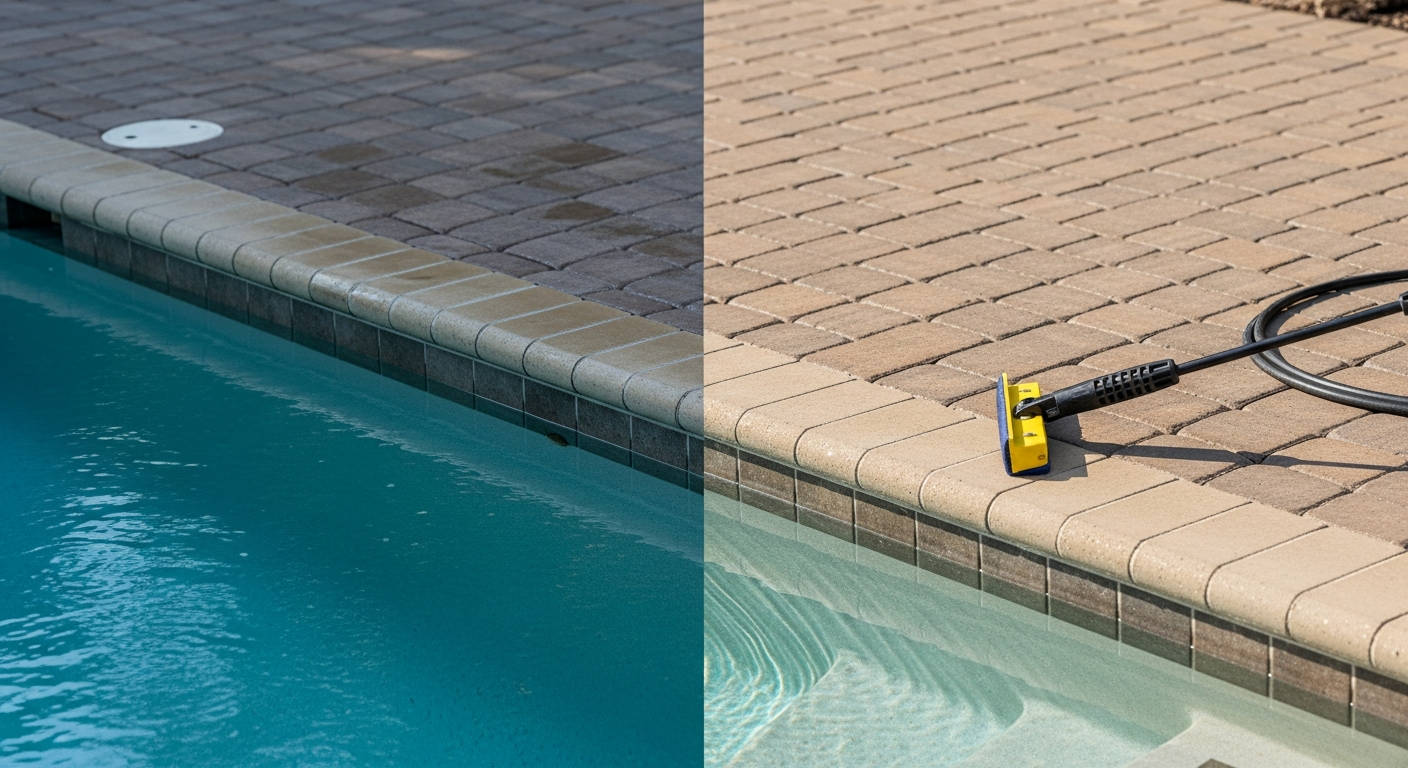
My process is methodical because every step builds on the last. Skipping or rushing a phase guarantees failure, a lesson I learned the hard way on an early commercial project. Here is the exact implementation framework:- Phase 1: Surface Decontamination. This is not just pressure washing. I use a low-pressure, high-volume cleaning process with a buffered, alkalinity-based degreaser. This removes oil and organic stains without etching the paver surface, which is a common error that increases porosity and leads to sealant over-absorption. The surface must be a neutral pH before proceeding.
- Phase 2: Joint Stabilization. I evacuate all old, contaminated sand from the joints. Then, I install a high-grade polymeric sand. The critical step here is the curing. I insist on a full 48-hour cure time with no foot traffic, far beyond the 24 hours many installers recommend. This ensures the sand fully hardens, creating a rigid, weed-proof, and insect-proof barrier.
- Phase 3: The MVT-Lock Primer. This is my proprietary step. I apply a water-based, penetrating epoxy primer with extremely low viscosity. This primer soaks deep into the paver and the top layer of the polymeric sand, chemically reacting with the minerals and moisture to form a breathable, yet water-resistant, sub-surface barrier. It drastically reduces MVT.
- Phase 4: Final Topcoat Application. Only after the primer has fully cured do I apply the final topcoat. I use an airless sprayer to ensure a thin, even, and consistent coat. Two thin coats are always superior to one thick coat. I perform this only when the ambient temperature is between 60-85°F and humidity is below 50% to guarantee proper cross-linking of the polymer.
Post-Application QC: The 72-Hour Cure Test and Sheen Calibration
My job isn't finished when the last coat is applied. I have a strict quality control checklist. The most important is my 72-hour water bead test. I return to the site three days later and place a few drops of water on various sections of the sealed area. The water should bead up perfectly, like on a freshly waxed car, with no absorption into the paver. This confirms the hydrophobic barrier is fully established. Additionally, I perform a sheen calibration during the application. Many homeowners in Seminole County prefer a subtle, natural luster over a high-gloss, "wet" look. By adjusting the application technique and solids content of the final coat, I can precisely control the level of sheen to match the aesthetic of the property. Has your current paver sealer been tested for its performance against Seminole County's specific dew point and MVT rates, or was it just a generic topcoat?Written by

Tags
concrete pavers sealer
porcelain paver sealer
driveway paver sealing near me
professional paver sealer
paver patio cleaning and sealing near me