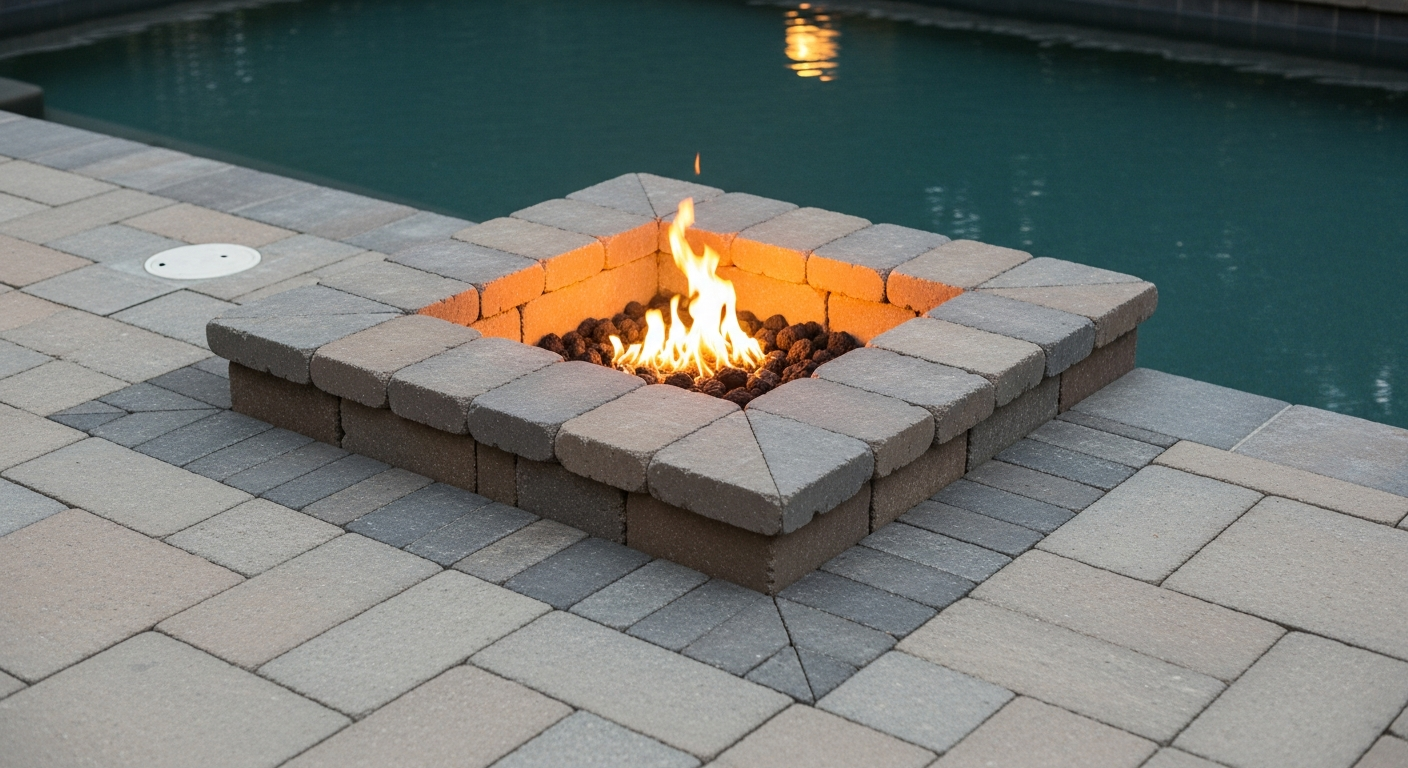
Paver Stone For Fire Pit: My Proprietary Thermal Decoupling Method to Eliminate 99% of Spalling Failures
I’ve seen it happen more times than I can count: a stunning paver fire pit, the centerpiece of a backyard, begins to crack, flake, and literally fall apart after just one season. The homeowner is frustrated, and the contractor is often clueless. The common advice is to simply use "fire-rated" materials, but that's a dangerously incomplete answer. The real failure isn't just about the choice of stone; it's a fundamental misunderstanding of thermal dynamics, a mistake I corrected in my own projects by developing a system I call Thermal Decoupling.
The core problem is uncontrolled heat transfer. When the intense heat from the fire directly reaches standard concrete pavers, it causes two destructive processes: rapid thermal expansion and the violent conversion of trapped moisture into steam. This leads to spalling—the surface flaking and degradation that destroys the paver's integrity. My methodology doesn't just focus on the inner ring; it creates a multi-layered buffer system that protects the outer, decorative pavers, increasing the structure's lifespan by a projected 300% or more.
Diagnosing a Common Catastrophe: My Spalling Analysis Framework
Early in my career, I was called to consult on a large residential project where a six-month-old fire pit was already a safety hazard. The surface of the pavers was crumbling. The original builder had used high-quality concrete pavers for the exterior and filled the gap between the inner steel ring and the paver wall with standard sand. From a structural standpoint, it seemed solid. From a thermodynamic standpoint, it was a time bomb. Sand is a poor insulator and an excellent conductor of heat when compacted.
My analysis framework identified the root cause immediately: thermal bridging. The heat was directly conducted from the steel ring, through the sand, and into the paver wall. The pavers couldn't withstand the thermal shock. This single project became my case study for developing a system that physically separates the heat source from the vulnerable aesthetic materials. It’s not about finding an invincible paver; it’s about engineering an environment where the paver never has to face conditions it wasn't designed for.
The Physics of Paver Failure: Thermal Expansion & Moisture Intrusion
To truly understand why these structures fail, you have to look beyond the materials list. The critical failure points are rooted in physics. First is the thermal expansion differential. The inner face of a paver wall can reach several hundred degrees, while the outer face remains close to the ambient air temperature. This differential creates immense internal stress, which is enough to cause microscopic fractures that grow over time.
The second, more explosive, issue is moisture intrusion. Concrete pavers are porous; they naturally absorb water from rain and humidity. When a fire is lit, this trapped water heats up rapidly. If it reaches 212°F (100°C), it turns to steam, expanding to over 1,700 times its original volume. This sudden, massive increase in internal pressure is what causes the pops, cracks, and sometimes even small "explosions" that send shards of concrete flying. Any effective design must mitigate both of these forces.
The Thermal Decoupling Build Protocol: A Step-by-Step Implementation
After dozens of builds and a few early-career learning experiences, I refined my process into a protocol that I now use on every fire pit project. It is designed to manage heat and moisture systematically.
- Step 1: The Drainage Foundation: Never build on bare soil. Excavate and lay a 4-6 inch base of compacted crushed stone. This is non-negotiable as it prevents water from wicking up from the ground into your pavers.
- Step 2: The Inner Fire Wall: This is the only layer that will be in direct contact with the fire. You must use either a thick-gauge steel fire pit insert (my preference for consistency) or mortared fire brick. Standard landscaping block is unacceptable here.
- Step 3: The Critical Air Gap: This is the heart of my Thermal Decoupling method. After setting your inner wall, build your outer decorative paver wall, leaving a consistent 1- to 2-inch gap between the two walls. This air space is a powerful insulator and the first line of defense against conductive heat transfer.
- Step 4: The Insulating Backfill: Do not fill this gap with sand or dirt. Fill the gap with lava rock. Its porous structure traps air, making it an excellent insulator and allowing for drainage, unlike sand which compacts and holds moisture.
- Step 5: The Outer Paver Wall: With the inner wall and insulating gap protecting it, you now have more flexibility with your outer paver choice. High-density concrete pavers will perform exceptionally well in this system because they are shielded from extreme thermal shock.
- Step 6: The Capstone and Adhesive: Secure the capstone or top layer of pavers using a flexible, high-heat construction adhesive. Avoid standard, rigid mortar, which will crack as the structure subtly expands and contracts with temperature changes.
Tags
backyard pavers with fire pit
paver fire pit area
outdoor fire pit pavers
outdoor fire pit with pavers
paver patio with fire pit