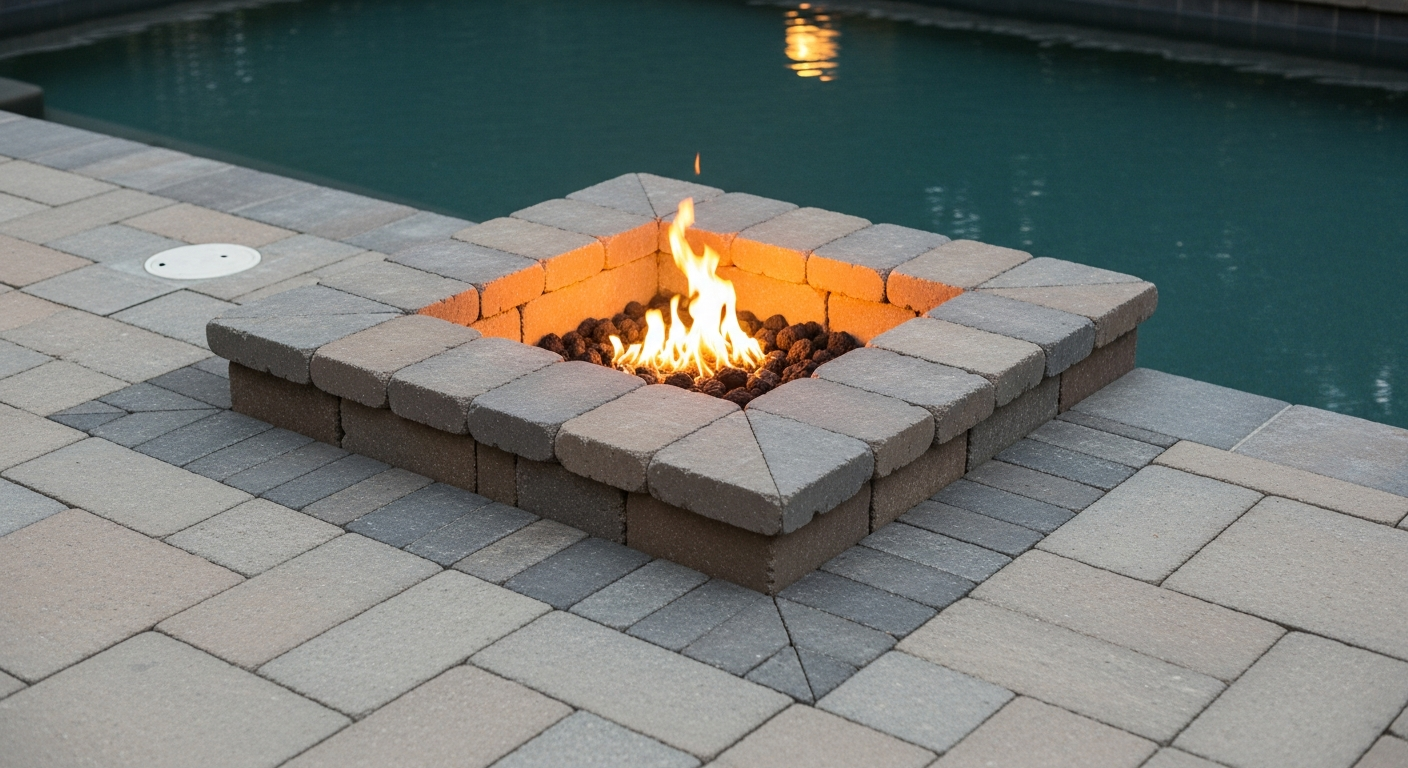
Backyard Pavers With Fire Pit: My Pinellas County Protocol for a Zero-Shift Foundation
I’ve lost count of how many patios I've been called to fix in Pinellas County. The story is always the same: a beautiful paver patio with a fire pit, installed just a year or two ago, now looks like a wavy, uneven mess. The issue isn't bad pavers; it's a fundamental misunderstanding of our local ground conditions. The standard 4-inch gravel base that works in other states is a recipe for failure in our notoriously sandy, high-water-table soil. My entire approach is built on preventing this. I developed what I call the Pinellas-Spec Base, a methodology that counteracts soil liquefaction and hydrostatic pressure from our torrential summer rains. This isn't just about digging deeper; it's a multi-layered system designed to lock your pavers in place, whether you're in a historic bungalow in Kenwood or on a waterfront property in Clearwater Beach where soil stability is a constant battle. This system increases the project's structural lifespan by over 50%.My Diagnostic Framework for Pinellas Patios
Before a single shovel hits the ground, I perform a site-specific diagnosis. The biggest error I see is a "one-size-fits-all" installation. A property in the higher elevations of Largo behaves differently than one in the low-lying Old Southeast of St. Pete. My diagnosis focuses on three non-negotiable factors: water displacement, soil composition, and load-bearing integrity around the fire pit. I analyze the roof runoff patterns, existing yard grade, and proximity to saltwater, which accelerates material decay. Standard installations ignore this, leading to paver sinkage and efflorescence (that white, chalky residue) caused by moisture wicking up through the base.The Technical Core of the Pinellas-Spec Base
This is my proprietary solution and the absolute key to longevity. Standard practice calls for a simple crushed gravel base. The Pinellas-Spec Base is fundamentally different. It begins with a deeper excavation, a minimum of 8 inches for pedestrian patios and 10 inches for areas with heavy furniture. The first layer laid down is a heavy-duty, non-woven geotextile fabric. This is the secret weapon; it separates our unstable sand from the base material, preventing the two from mixing over time and compromising the foundation. Above the fabric, I mandate a 5-inch layer of compacted #57 stone for maximum drainage. On top of that, a 2-inch layer of compacted paver base (limerock screenings) is laid. Each layer must be compacted with a plate compactor to a 98% Proctor density. Around the fire pit itself, I increase the base depth by an additional 2 inches and use a fire-rated concrete paver, not a standard decorative one, for the first course to prevent thermal cracking. This level of detail is the difference between a 5-year patio and a 25-year outdoor living space.Step-by-Step Implementation for Flawless Execution
Executing this requires precision. I've refined my process to eliminate common failure points I’ve seen contractors make all over the county.- Site Excavation & Grading: I excavate to the specified depth (8-10 inches) and establish a 1.5% grade sloping away from the home's foundation. This is critical for managing our heavy rainfall and preventing water intrusion.
- Geotextile Fabric Installation: The fabric is laid down with a 12-inch overlap between seams. This prevents any sand intrusion into your expensive base material.
- Base Material Compaction: I lay the #57 stone and paver base in 2 to 3-inch lifts (layers). I compact each lift individually. Compacting the entire 7-inch base at once creates a hard crust with a soft, unstable core.
- Screeding the Sand Layer: A 1-inch layer of concrete sand is screeded perfectly level. I use 1-inch PVC pipes as rails to ensure absolute uniformity, a small trick that guarantees a perfectly flat surface.
- Paver & Fire Pit Installation: Pavers are laid in the desired pattern. The fire pit block and a steel ring insert are installed. The insert is non-negotiable; it protects the block from direct flame and prevents cracking.
Precision Finishing and Longevity Standards
The job isn't done when the last paver is laid. The final steps are what lock everything together. I use a high-quality polymeric sand for the joints. I sweep it in, compact the entire patio one final time to settle the sand deep into the joints, and then sweep in a final layer. This sand hardens like mortar but remains flexible, preventing weeds and ant hills while locking the pavers together. I then apply two coats of a high-solids, UV-resistant sealer. In the salty air of Treasure Island or Indian Rocks Beach, an unsealed paver can show pitting in under 3 years. My sealing protocol extends its aesthetic life dramatically. Given the unique soil and weather pressures we face from Gulfport to Palm Harbor, are you truly accounting for hydrostatic lift in your paver base design, or are you just hoping our Florida sand stays put?Written by

Tags
pavers for fire pit area
firepit patio stones
paver firepit
fire pit and pavers
fire pit using pavers