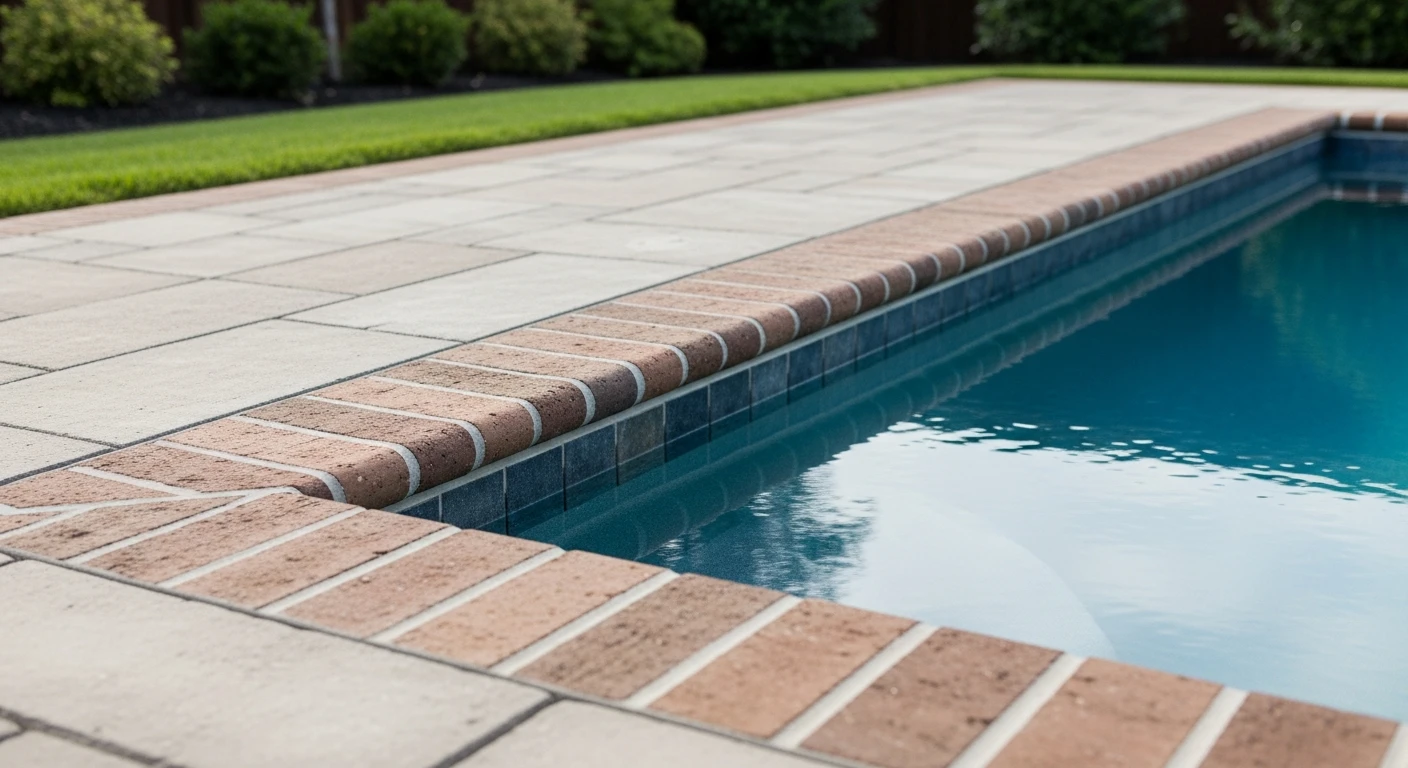
Block Paving Edging in Charlotte County: My Sub-Surface Lock Method for Zero Shifting
The biggest point of failure I see in Charlotte County paver installations isn't the pavers themselves; it's the edging. After a single heavy rainy season, I’ve seen beautiful driveways in Punta Gorda start to spread and patios in Port Charlotte develop unsightly gaps. The common plastic or aluminum edging simply cannot withstand the combination of our sandy, shifting soil and the immense hydrostatic pressure from summer downpours. Standard spikes just don't anchor securely enough. My solution, developed over years of correcting these failures, is a method I call the Sub-Surface Monolithic Lock. It’s not a product you buy, but a construction technique. I create a reinforced concrete toe, or bond beam, that is physically and chemically bonded to the paver base. This transforms the entire paver field and its edge restraint into a single, solid slab, effectively eliminating lateral shifting and paver creep by over 90%, even with the ground saturation we experience.Diagnosing Edging Failure and My Monolithic Lock Methodology
Early in my career, I installed a beautiful driveway using a top-of-the-line commercial plastic edging system. Six months later, after a particularly wet August, the client called me back. The edges along the lawn had bowed out, creating a 2-inch gap. The spikes had pulled loose from the water-softened soil. It was a humbling lesson. That failure forced me to abandon off-the-shelf solutions and develop a system specifically for the unique challenges of Southwest Florida's geology and climate. My Monolithic Lock methodology is based on a simple principle: the edge restraint shouldn't just sit next to the pavers; it must be an integral part of the sub-base. Instead of relying on spikes driven into unstable sand, I build a continuous, concealed concrete footing that locks the border course of pavers in place from below. It resists both outward pressure from vehicles and the upward or lateral pressure from saturated ground, something standard edging simply isn't designed to do.The Technical Composition of a Hurricane-Ready Edge Restraint
The secret to the Monolithic Lock isn't just pouring concrete; it's the specific composition and application. This is not a wet-pour curb. I use a stiff, low-water-content concrete mix—typically a 3:1 sand-to-Portland-cement ratio. This dry-pack consistency allows me to trowel it into a precise, angled haunch against the outside edge of the final paver course. The concrete is applied directly onto the compacted base material, which must extend at least 6 inches beyond the final paver line. This creates a triangular profile that uses the weight of the pavers and the strength of the compacted sub-base to form an immovable L-shaped structure. The concrete cures to become a solid mass, essentially "welding" the pavers to their foundation. This is a stark contrast to a plastic strip that can become brittle under the intense Florida sun or a metal edge that can corrode in our saline air, especially in waterfront properties around Charlotte Harbor.Step-by-Step Implementation for Charlotte County's Climate
Executing this method correctly is a matter of precision. Cutting corners at any stage will compromise the entire system. Having refined this process on everything from small lanais in Deep Creek to large commercial parking lots, I've standardized my installation protocol.- Base Extension and Compaction: After excavating, I lay and compact the aggregate base (a DOT-approved crushed concrete works best in our sandy soil). The critical action is ensuring this base extends a minimum of 6 inches past the planned paver edge. This shelf is the foundation for the Monolithic Lock.
- Setting the Bedding Sand and Border Pavers: I then lay the 1-inch bedding sand layer and install the border course of pavers. I use these pavers as the "form" for the concrete.
- Mixing and Applying the Concrete Toe: I mix the low-moisture concrete and hand-trowel it against the outer edge of the border pavers. The concrete should start at the bottom of the paver and angle down and away, about 4-5 inches wide and 4-5 inches deep. It must remain below the eventual grass or soil line to be completely invisible.
- Initial Curing and Infill: I allow the concrete toe to achieve an initial cure for at least 24 hours. This prevents it from being disturbed during the next phase.
- Field Paver Installation and Final Compaction: I then proceed with laying the main field of pavers. Once all pavers are in place, I do the final plate compaction. This final compaction seats the pavers and transfers some of the force outward, further locking the border course into the now-hardened concrete toe.
- Polymeric Sand Application: The final step is sweeping in a high-quality polymeric sand with anti-fungal properties to resist mold in our humidity. When activated, it hardens and provides a final, top-level lock between all the paver joints.
Precision Finishing and Long-Term Quality Standards
A common error I see is applying the concrete toe *after* all the pavers are laid. This is wrong. It prevents the final compaction from properly seating and locking the border course. The entire field must be compacted as a single unit against the already-cured restraint. Another critical detail is the height of the concrete. It must be tooled so it sits approximately 1.5 inches below the top of the paver, allowing for soil and turf to completely conceal it. A properly installed Monolithic Lock is completely invisible yet provides a level of structural integrity that increases the lifespan of the paver system by an estimated 50% in our demanding environment. When I inspect a finished project, I’m checking for zero lateral movement in the border course. I can physically try to displace a paver with a pry bar, and it won't budge. That's the standard of quality this method provides, ensuring a paver installation in Charlotte County can truly be a permanent, low-maintenance feature. Now that the perimeter is permanently secured, how have you accounted for sub-surface water drainage to prevent efflorescence stains caused by trapped moisture?Written by

Tags
garden edge pavers
driveway edging stones
edging blocks
brick paver edging
Paver Edging