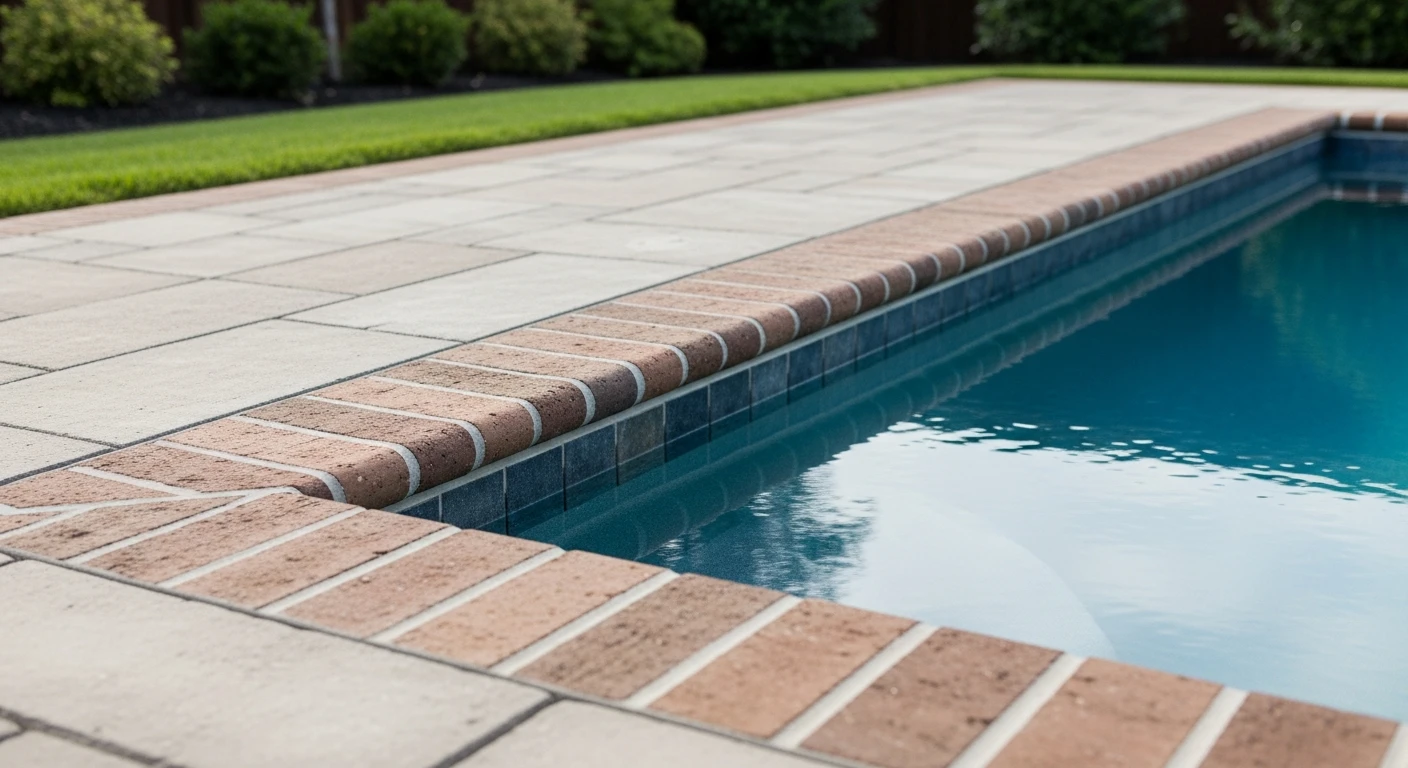
Block Paving Edging in Collier County: My Protocol for Preventing Subgrade Failure and Paver Creep
My experience installing and repairing block paving across Collier County, from luxury driveways in Port Royal to patios in Golden Gate, has revealed a critical failure point that most contractors overlook: improper edging selection and installation for our unique sandy subgrade. Standard plastic restraints, often sufficient in other regions, simply fail under the combination of intense solar radiation, high humidity, and torrential summer rains. This failure leads to paver creep, joint separation, and eventual subgrade erosion, cutting the lifespan of a premium installation by up to 50%. The core issue I’ve identified is a fundamental misunderstanding of soil mechanics in our coastal environment. The sandy, porous soil here in Naples and Marco Island doesn't provide the lateral resistance needed for conventional spiked edging. After a heavy downpour, the saturated subgrade loses its structural integrity, allowing the spikes to shift. My entire methodology is built around creating a monolithic, rigid perimeter that functions independently of the subgrade's temporary condition, ensuring long-term stability.Diagnosing Edging Failure: The Coastal Lock-In Methodology
Before I even touch a paver, my process begins with a **subgrade stability assessment**. I’ve seen countless projects in developments around Naples Park where beautiful pavers are wavy and uneven after just one hurricane season. The cause was almost always an edge restraint that was specified without considering the soil's low cohesion. My proprietary **Coastal Lock-In Method** directly addresses this by treating the edging not as a simple border, but as a structural concrete beam designed to contain the immense lateral pressure of the interlocked paver field.Technical Deep Dive: Geotextiles and Reinforced Concrete Toeing
The foundation of my method rests on two key technical components. First is the use of a **non-woven geotextile fabric** that extends a minimum of 12 inches beyond the paver field, underneath the edging. This fabric acts as a separation layer, preventing the #57 stone base from migrating into the sandy subgrade. This single step prevents the slow, subtle base erosion that causes most long-term settling. Second, I abandoned spike-based systems entirely for driveways and high-traffic areas. Instead, I specify a **poured-in-place, reinforced concrete toe beam**. This isn't just a bead of concrete; it’s a 4-inch by 8-inch beam with a specific 3,000 PSI mix design, often reinforced with fiber mesh. This creates a rigid frame that locks the entire system together, completely independent of the soil’s shear strength.Implementation Protocol: From Subgrade to Final Lock-in
Executing this requires precision. In a large-scale HOA project in the Pelican Bay area, I had to correct an installation where the previous contractor simply laid plastic edging on top of the compacted base. It failed in six months. My team follows a strict, non-negotiable sequence to guarantee performance.- Excavation and Geotextile Placement: The trench for the paver system is excavated to the required depth, plus an additional 4 inches for the concrete toe beam. The **geotextile fabric** is laid down first, ensuring no potential for base aggregate and subgrade mixing.
- Base Compaction and Screeding: We lay and compact the **FDOT-approved #57 stone** in 2-inch lifts to achieve a minimum of 98% Proctor density. The final sand setting bed is then screeded to a precise height.
- Concrete Toe Beam Installation: With the paver field laid, we form and pour the **reinforced concrete toe beam** directly against the outer course of pavers. This physical bond is critical; it ensures the edging and the paver field act as a single, unified slab.
- Joint Sanding and Sealing: The final lock-in comes from the jointing sand. We exclusively use **ASTM C144 polymeric sand**, which, when activated, hardens to create a semi-flexible mortar. This prevents sand washout from pressure washing or heavy rain and inhibits weed growth.
Precision Adjustments for Collier County's Climate
Quality control is what separates a 5-year job from a 25-year installation. My final inspection focuses on metrics that matter in our environment. I check for a **maximum 1/8-inch deviation in surface level over a 10-foot span** to ensure proper drainage and prevent puddling, which is a major issue during our wet season. The concrete edging is also water-cured for a minimum of 48 hours, often under burlap, to prevent cracking from the intense Florida sun. This slow curing process is essential for the concrete to reach its designed compressive strength and provide decades of reliable restraint. Now that you understand the critical role of a structural concrete base for edging, how are you ensuring your jointing sand has a minimum compressive strength of 2,500 PSI after curing to truly lock the system together against water erosion?Written by

Tags
garden edge pavers
driveway edging stones
edging blocks
brick paver edging
Paver Edging