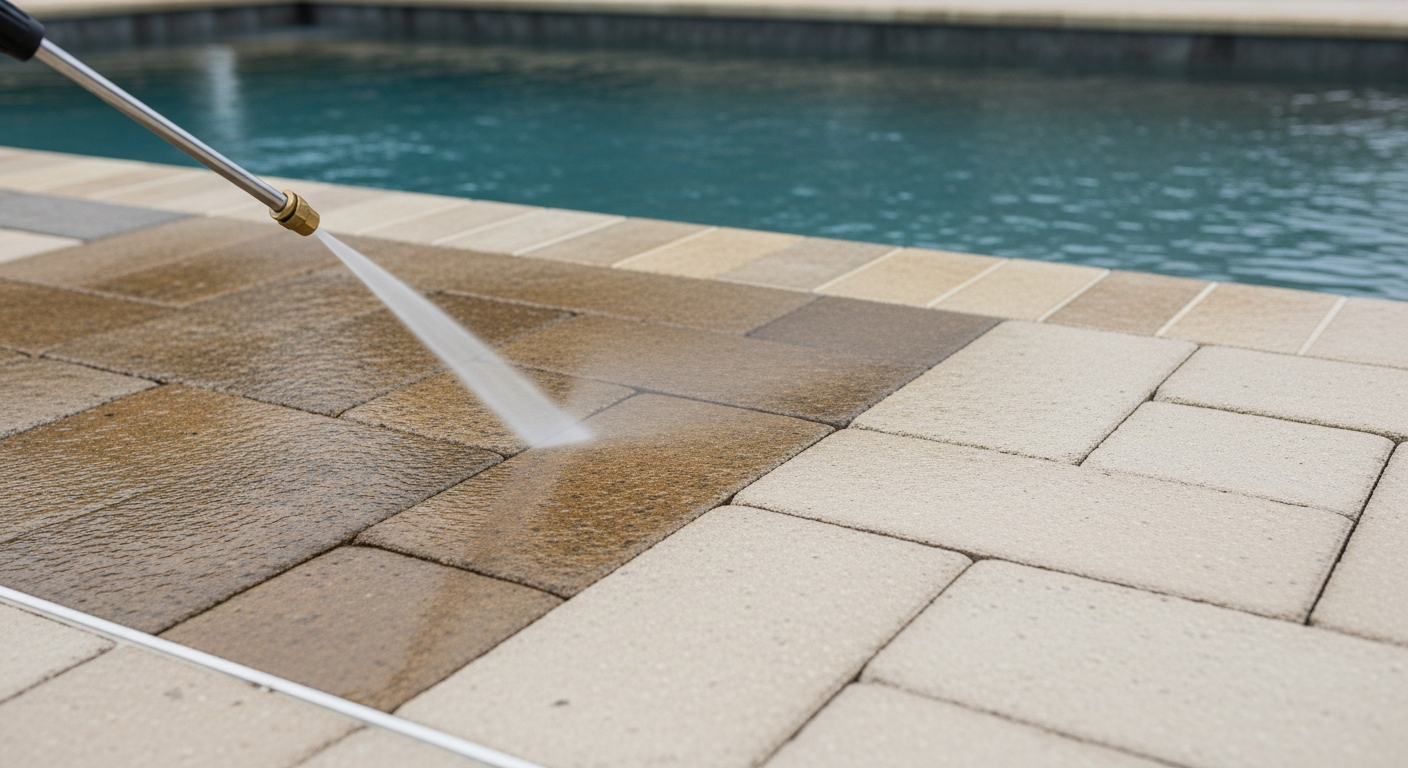
Cleaning Pool Deck Pavers: My Osceola County Method for Preventing Etching and Algae Recurrence
In Osceola County, the combination of intense sun, high humidity, and frequent rain creates a perfect breeding ground for black algae and stubborn mildew on pool deck pavers. I’ve seen countless homeowners in communities from Kissimmee to Harmony inadvertently damage their investment by using overly aggressive pressure washing, which leads to surface etching and joint sand loss. My approach focuses on a low-pressure chemical lift technique that eradicates organic growth at its root without compromising the paver's structural integrity, effectively increasing the time between necessary cleanings by up to 60%. This isn't about blasting away the top layer. It's a systematic process of diagnosing the specific paver material and type of stain to apply a calibrated treatment. For the common concrete pavers I see in St. Cloud, this means avoiding acidic cleaners that can cause permanent discoloration. Instead, I utilize a specific pH-balanced solution that preserves both the color and the crucial polymeric sand in the joints, preventing future weed growth and paver shifting.My Surface Integrity Diagnostic for Osceola County Pavers
Before a single drop of water is sprayed, I perform a mandatory three-point diagnostic. This methodology was born from a project I was called in to fix in a high-end Celebration property where a previous contractor had used a turbo nozzle on soft travertine, causing irreversible pitting across the entire deck. The homeowner was facing a five-figure replacement cost. My diagnostic prevents this by assessing the real-world conditions specific to our local environment. First, I identify the paver substrate: is it porous concrete, delicate travertine, or classic brick? Each reacts differently to pressure and chemicals. Second, I analyze the stain profile. The slick, black film common after our summer rains is an algae colony, which requires a different treatment than the chalky white haze of efflorescence (salt deposits) that can appear during drier spells. Third, and most critically, I inspect the joint integrity. Are the joints filled with loose sand or failing polymeric sand? Blasting this out is the single most common mistake, leading to wobbly pavers.The Chemical & Pressure Calibration Matrix
Here’s where the technical precision comes in. I never exceed 1500 PSI on residential pavers, and even that is rare. My workhorse is a wide-angle 40-degree fan tip, which cleans without gouging the surface. Aggressive, zero-degree nozzles are strictly forbidden in my process. For chemical application, my matrix is simple:- Organic Stains (Algae, Mildew): I use a buffered sodium hypochlorite solution. Unlike off-the-shelf bleach, this is stabilized to provide a longer dwell time without damaging surrounding plants or affecting the pool's pH balance when rinsed. The key is allowing it to lift the growth, not just bleach the surface color.
- Mineral Stains (Efflorescence, Rust): This requires a specific acid-based paver cleaner, applied carefully and neutralized completely. Using this on organic stains is ineffective and can etch the pavers. This is a targeted application, never a broad spray.
The 4-Stage Paver Restoration Process
Executing the cleaning is a meticulous, four-stage operation. Rushing any step will compromise the final result and its longevity. This is the exact process I use on every project, whether it's a small lanai or a sprawling community pool deck.- Stage 1: Surface Decontamination & Dwell Time. After a light pre-rinse, I apply the appropriate chemical solution with a low-pressure applicator. I let it dwell for 10-15 minutes—this is when the solution does the actual work, breaking down the algae's bond with the paver surface.
- Stage 2: Low-Pressure Agitation & Rinse. This is not pressure washing; it's a high-volume, low-pressure rinse. The goal is to gently guide the lifted contaminants and dead algae off the surface and away from the pool. I work from the highest point to the lowest, ensuring controlled drainage.
- Stage 3: Joint Stabilization. After the deck is completely dry—which can take a full day in our humid climate—I sweep new polymeric sand into every joint. This is a non-negotiable step. It locks the pavers together and forms a durable, weed-proof barrier.
- Stage 4: Penetrating Sealer Application. The final step is applying two coats of a high-quality, non-slip silicate-based penetrating sealer. This doesn't create a slippery film; it absorbs into the paver, hardening it from within and making it hydrophobic. This is what prevents the algae from taking root again quickly.
Post-Sealing Quality Control and Cure Times
The job isn't done when the equipment is packed up. The sealer's curing period is critical, especially with Osceola's unpredictable afternoon thunderstorms. I insist on a strict 24-hour no-foot-traffic rule and a 72-hour period before any furniture is placed back on the deck. A single downpour on a freshly sealed deck can create a milky, blotchy finish that is difficult to correct. I actively schedule my sealing applications for mornings with a clear forecast to mitigate this risk, a small detail that makes a huge difference in the final quality and durability of the protection. Are you confident your current cleaning method isn't creating micro-fissures in your pavers, accelerating their deterioration and setting you up for a costly replacement in the near future?Written by

Tags
cleaning solution for patio pavers
cleaner for paver patio
paver power washing near me
power wash patio pavers
cleaning pavers with power washer