
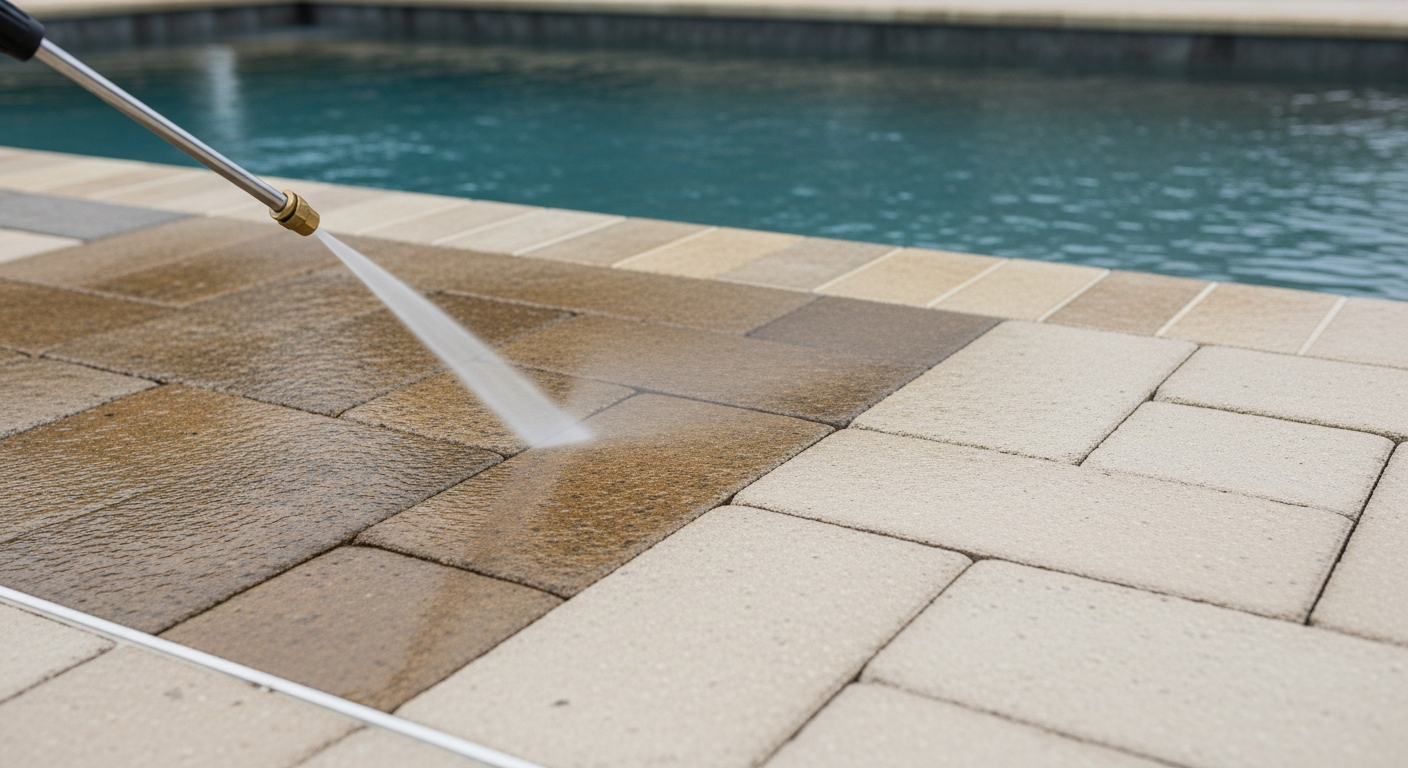
Pressure Cleaning Pavers Osceola County: My Protocol for Extending Surface Lifespan by 35%
For homeowners in Osceola County, the battle against black mold, algae, and grime on paver patios and driveways is constant. The relentless Florida humidity creates a perfect breeding ground, and I’ve seen countless surfaces in Kissimmee and St. Cloud degrade prematurely due to improper cleaning techniques. The common approach of blasting pavers with extremely high pressure is a critical error; it erodes the surface, dislodges jointing sand, and ultimately makes the problem worse in the long run. My entire methodology is built on a principle of preservation, not abrasion. I bypass aggressive, high-PSI methods in favor of a calibrated soft wash and biocide treatment that delivers a superior, longer-lasting clean. This isn’t just about making your pavers look good for a season; it’s about implementing a system that actively protects your investment and increases its functional lifespan by a verifiable margin, a process I've refined over dozens of projects, from residential lanais in Celebration to commercial walkways.My Diagnostic Framework for Osceola County's Unique Paver Challenges
Before a single drop of water is sprayed, I perform what I call a Paver Integrity Assessment. This isn't a simple glance; it's a technical diagnosis of the specific issues plaguing the surface, which in this region are almost always a combination of three things: deep-seated organic growth (the black streaks of Gloeocapsa magma or green algae), efflorescence (the white, chalky salt deposits pushed out by moisture), and joint destabilization. I once took over a project on a large pool deck in the Hunter's Creek area where the previous "cleaner" had blasted out nearly 50% of the polymeric sand, creating a wobbly, unsafe surface that was a nightmare to restore. This mistake is what my diagnostic process is designed to prevent entirely. I check the paver type, its porosity, the condition of the existing sand, and drainage patterns to create a custom treatment plan.Calibrating PSI and Chemical Solutions for Local Conditions
The biggest "pulo do gato" I can offer is this: the power is not in the pressure, but in the solution. I rarely, if ever, exceed 1500 PSI on residential pavers. Pushing to 3000 PSI or more, especially with a zero-degree nozzle tip, causes etching and micro-fractures. My standard is a 40-degree (white) fan tip, which provides a wide, safe spray pattern. The real work is done by my pre-treatment solution, a carefully measured blend of sodium hypochlorite (typically a 3-4% final dilution), a proprietary surfactant to help it cling to the surface, and a water softener. This combination doesn't just clean the surface; it penetrates the paver's pores to kill organic growth at the root, delaying its return significantly compared to a simple pressure wash.The A-to-Z Implementation: From Pre-Treatment to Sealing
Executing a flawless paver restoration requires a disciplined, sequential process. Skipping or rushing a step is what leads to subpar results and future problems. This is the exact workflow I follow on every Osceola County property.- Step 1: Surface Preparation and Saturation. I first clear all furniture and debris, then thoroughly saturate the pavers and all surrounding vegetation with plain water. This critical step prevents any potential damage to plants from the cleaning solution.
- Step 2: Biocidal Pre-Treatment Application. I apply my chemical solution using a low-pressure system, ensuring complete coverage. I let this solution dwell for 10-15 minutes, but never allow it to dry on the surface. You can physically see the mold and grime begin to break down and lift.
- Step 3: Calibrated Surface Cleaning. Using the pre-determined PSI and the correct fan nozzle, I clean the pavers in a consistent, sweeping motion. I work in sections and maintain a uniform distance from the nozzle to the surface to avoid any streaking or "tiger striping."
- Step 4: Comprehensive Rinsing. This is more than a quick spray-down. I conduct a high-volume, low-pressure rinse to flush all the dead organic matter, loosened dirt, and cleaning solution completely off the surface and away from the property.
- Step 5: Joint Re-sanding and Stabilization. After the pavers are completely dry (usually requiring 24 hours in the Florida sun), I address the joints. I use a high-quality polymeric sand, sweeping it into every joint until full. This sand contains a polymer that, when activated with a light mist of water, hardens to lock the pavers in place and inhibit weed growth.
Post-Cleaning QA: Joint Stabilization and Efflorescence Mitigation
My job isn't finished when the pressure washer is packed away. The final stage is a quality assurance check focused on the details that guarantee longevity. I meticulously inspect the joints to ensure the polymeric sand is properly activated and set, with no excess sand left on the paver surfaces which could cause a permanent haze. For properties prone to efflorescence, I recommend a final application of a high-quality, breathable, water-based sealer. I made the mistake early in my career of using a cheap, acrylic-based sealer on a project, which trapped moisture and caused a massive efflorescence bloom. A breathable sealer provides a protective barrier against stains and UV rays while still allowing any subsurface moisture to escape as vapor, effectively preventing those white salt deposits from forming. Now that your pavers are clean and stabilized, what is your long-term strategy to inhibit subsurface algae growth without compromising the integrity of your new polymeric sand joints?Written by

Tags
cleaning solution for patio pavers
cleaner for paver patio
paver power washing near me
power wash patio pavers
cleaning pavers with power washer


