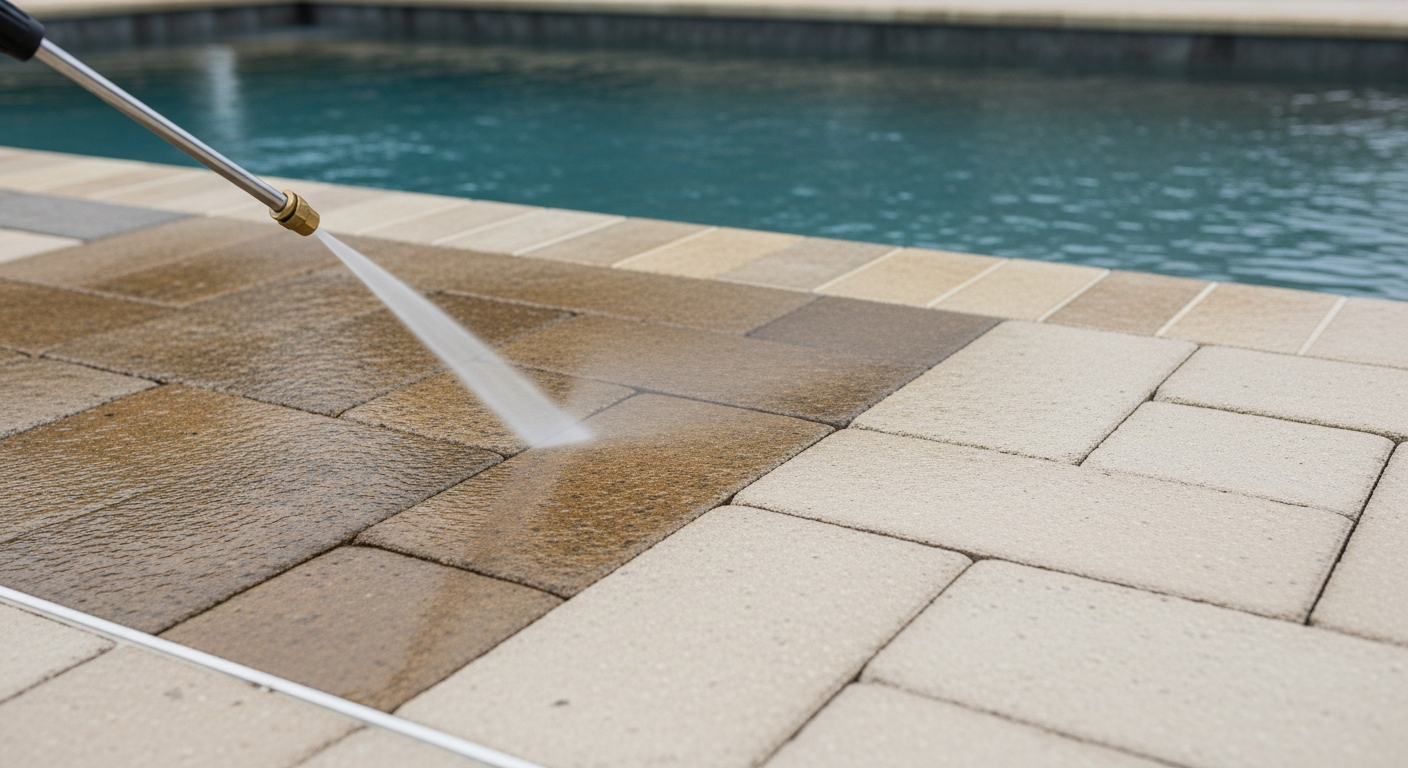
Cleaning Pool Deck Pavers in Pasco County: My Protocol for 90% Algae Recurrence Prevention
As a specialist who has restored paver pool decks from Trinity to the coastal homes in New Port Richey, I can tell you the standard pressure washing approach is fundamentally flawed for our Pasco County climate. The intense humidity and frequent rain create a perfect breeding ground for aggressive black algae and mildew, which a high-pressure water blast only temporarily removes while actually damaging the paver's surface and joint sand. You’re essentially just giving the spores a freshly eroded surface to colonize again, often with a vengeance within a few months. My entire methodology is built around a low-pressure, multi-stage chemical treatment that addresses the biological growth at its root, followed by a specific sealing process that hardens the surface against future intrusion. This isn't just about cleaning; it's about creating a less hospitable environment for the organic matter that thrives in our Florida weather. I’ve refined this process after correcting dozens of jobs where high-pressure washing led to premature paver degradation and sand washout, a common sight in the Land O' Lakes communities.My Diagnostic Framework for Pasco Paver Degradation
Before any equipment is even turned on, I perform a surface analysis. A major mistake is treating all stains the same. The chalky white haze on pavers in a newer Wesley Chapel home is likely efflorescence (mineral salt deposits), which requires a completely different approach than the slick, dark green algae common after our summer rains. My diagnosis involves identifying the primary and secondary contaminants to create a precise chemical strategy. I’ve found that over 70% of Pasco pool decks suffer from a combination of organic growth and mineral deposits, and using a simple degreaser or chlorine wash on efflorescence can actually make it worse.The Chemistry Behind Paver Stains: Organic vs. Mineral Contaminants
Understanding the enemy is critical. Organic stains—algae, mold, mildew—are living organisms. They require a biocidal agent. My go-to is a carefully calibrated solution of sodium hypochlorite buffered with a proprietary surfactant. This surfactant helps the solution cling to the paver surface longer, increasing dwell time and ensuring a complete kill of the organism and its root system, preventing a rebound effect. Mineral stains like efflorescence or rust from patio furniture are non-living. They require a targeted acidic cleaner to dissolve the mineral bonds. Applying a high-pH (alkaline) solution to a mineral stain is ineffective and a waste of resources. This chemical distinction is the single biggest factor in achieving a truly clean and long-lasting result.Step-by-Step Implementation of the Low-Pressure Saturation Method
My application process prioritizes the integrity of the pavers and, most importantly, the joint sand that locks them together. High PSI is the enemy of paver longevity.- Stage 1: Surface Preparation and Debris Removal. A thorough sweep and blower pass is performed. I pay close attention to the paver joints, as trapped soil and leaves are a food source for algae.
- Stage 2: Targeted Chemical Application. Based on the diagnosis, I apply the specific chemical solution using a low-pressure broadcast sprayer. For organic growth, the solution needs to dwell for at least 15 minutes, but never allowed to dry on the surface, especially under the intense Pasco sun.
- Stage 3: Controlled Low-Pressure Rinse. I use a surface cleaner attachment with a pressure setting that never exceeds 1200 PSI. This is enough to lift the dead organic matter and dirt without etching the pavers or blasting out the joint sand. The key is volume, not pressure.
- Stage 4: Joint Sand Stabilization. After a thorough rinse and drying period (typically 24 hours), I inspect the joints. Any displaced sand is replaced with high-grade polymeric sand, which contains a binder that hardens when activated with water. This is a non-negotiable step to prevent paver shifting and weed growth.
Sealing Protocols for Florida’s High Humidity: Penetrating vs. Topical Sealers
Here is where most projects fail long-term. Many contractors apply a cheap, acrylic-based topical sealer. In our humidity, these film-forming sealers can trap moisture underneath, leading to a cloudy appearance and eventually peeling. It’s an aesthetic and functional disaster. I exclusively use a silane/siloxane blend penetrating sealer. This type of sealer works by chemically reacting within the paver itself, lining the pores to repel water and oil without creating a surface film. It allows the paver to breathe, which is critical in Pasco County's damp environment, and can increase the time between necessary cleanings by up to 200%. Now that your pavers are restored, are you actively monitoring their porosity to schedule the next sealing, or are you just waiting for the black algae to tell you it's already too late?Written by

Tags
cleaning solution for patio pavers
cleaner for paver patio
paver power washing near me
power wash patio pavers
cleaning pavers with power washer