Lee County Garden Paving: My Method for Preventing Sub-Tropical Degradation
After a decade of designing and troubleshooting outdoor spaces in Lee County, I can state with certainty that most garden paving failures aren't due to the paver itself, but to a fundamental misunderstanding of our unique sub-tropical ground conditions. The combination of sandy, shifting soil and torrential summer downpours creates a hostile environment for standard installation practices. The most common mistake I encounter, from projects in historic Fort Myers to new builds in Cape Coral, is an inadequate sub-base that guarantees sinking and weed intrusion within 24 months. My entire approach is built on a principle I call **'Hydro-Static Base Engineering.'** This isn't about just laying pretty stones; it's about creating a permeable, yet incredibly stable, foundation that works *with* Florida's water-saturated environment, not against it. This method focuses on water displacement and load distribution, effectively increasing the paver's functional lifespan by an estimated 40% and drastically reducing long-term maintenance costs associated with re-leveling and weed control.The Sub-Base Catastrophe: My Diagnostic Framework for Lee County Soil
The first thing I do on-site, whether it's a small walkway in a Lehigh Acres property or a sprawling lanai extension on Sanibel Island, is a soil assessment. Standard practice often calls for a generic 4-inch crushed stone base. In my experience, this is the primary point of failure in Lee County. Our fine, sandy soil offers very poor natural compaction and becomes fluid during heavy rain. The generic base simply sinks into the saturated sand over time, creating the dips and uneven surfaces homeowners despise. My proprietary diagnostic involves two key steps. First, a **percolation test** to understand how quickly water moves through the specific site's soil. Second, I analyze the proximity to canals or the coast, as the water table in areas like Matlacha heavily influences the necessary sub-base depth. Ignoring the high water table is a critical error I've seen compromise otherwise expensive travertine installations. The solution is a multi-layered base system that starts with a high-tensile **geotextile fabric** to prevent soil migration into the aggregate.Material Selection Beyond Aesthetics: Heat & Humidity Coefficients
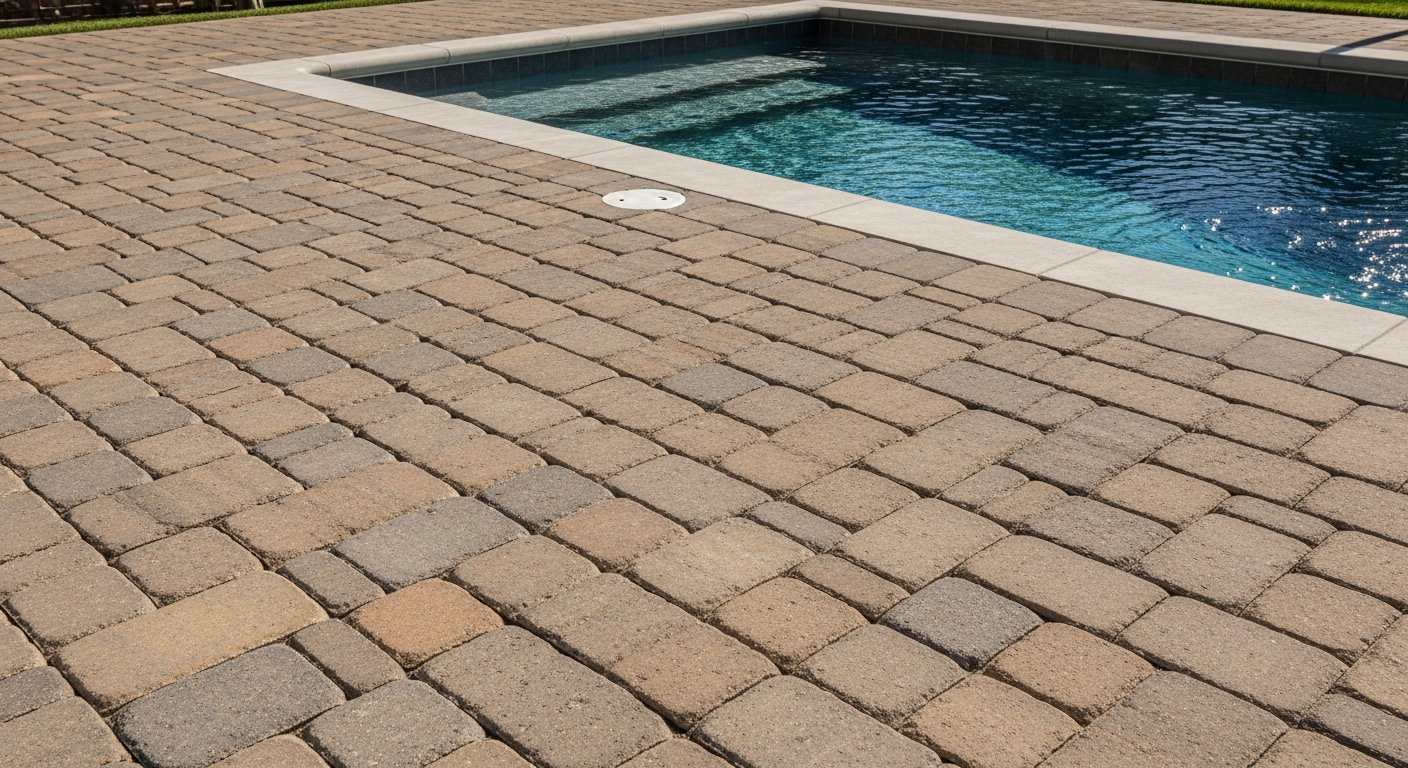
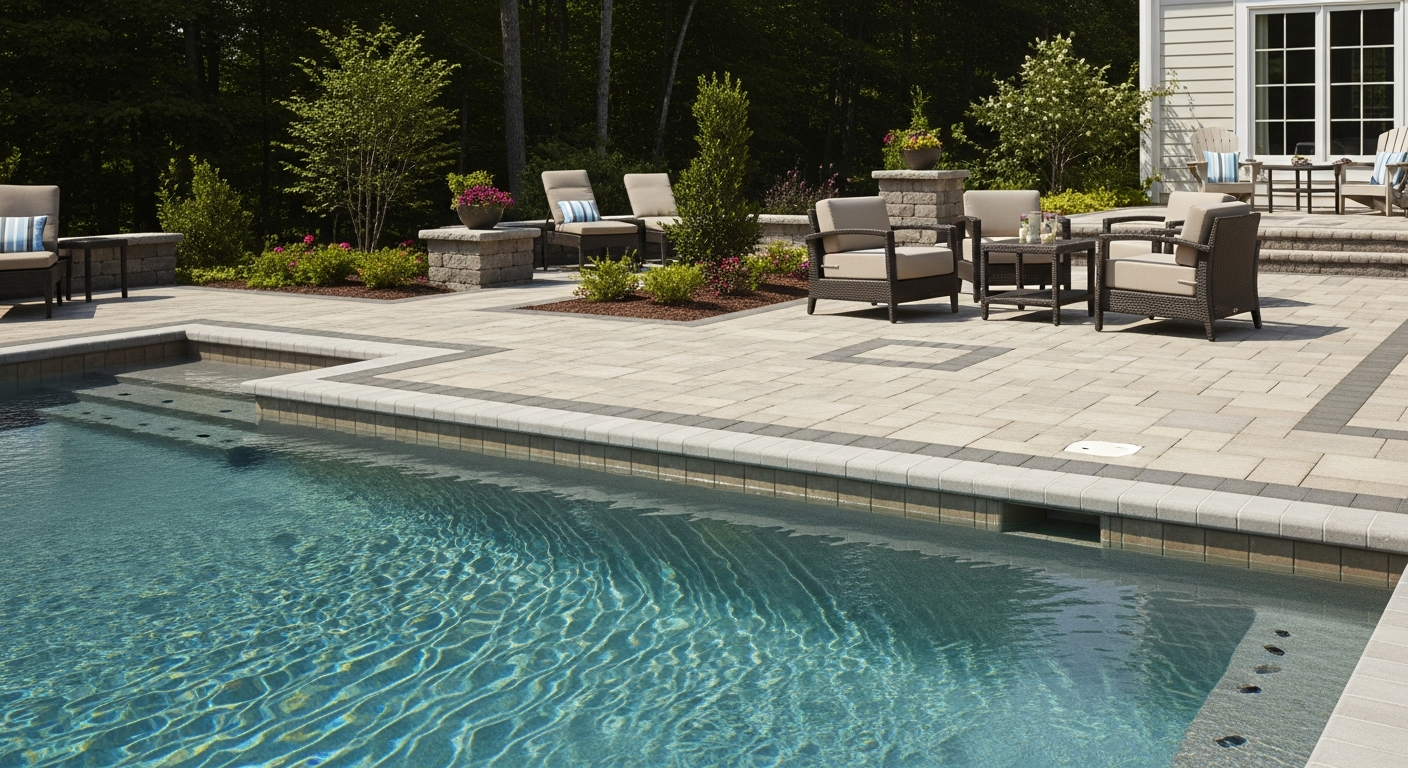
Choosing a paver in Southwest Florida is less about color and more about its thermal properties and porosity. The intense sun can make dark-colored concrete pavers dangerously hot, rendering a patio unusable for much of the day. My material analysis focuses on two metrics most suppliers won't discuss: the **Solar Reflectance Index (SRI)** and the material's resistance to algae and mildew growth, a constant battle in our humidity. For instance, I frequently recommend light-colored **travertine** for pool decks not just for its look, but because its higher SRI value keeps the surface temperature up to 20% cooler than dark concrete pavers. For driveways or areas with heavy runoff, I specify **permeable interlocking concrete pavers (PICPs)**. These are non-negotiable in certain low-lying areas of Fort Myers Beach to help manage stormwater and prevent standing water, a major contributor to foundation issues and a breeding ground for mosquitos. I advise clients to budget for a high-quality sealer from day one, as it's the only effective defense against the efflorescence (white, salty deposits) that plagues standard pavers in our humid climate.Executing the Lee County Paver Installation: A Step-by-Step Breakdown
Once the diagnostics and material selection are complete, the execution must be flawless. A single shortcut here can undo all the careful planning. My methodology is rigid and follows a sequence designed for maximum stability in our challenging environment.- Excavation and Grading: I mandate a minimum excavation depth of 8-10 inches for pedestrian areas, far exceeding the standard 6 inches. This extra depth is for our engineered sub-base. The area must be graded with a minimum **2% slope** away from any structures to ensure positive drainage.
- Geotextile and Sub-Base Compaction: The **geotextile separation fabric** is laid down first. Then, a 6- to 8-inch layer of clean, angular crushed stone (FDOT #57 stone is my preference) is installed and compacted in 2-inch lifts using a **heavy-duty plate compactor**. Each lift must be compacted to 98% Proctor density. This is the most critical and labor-intensive step.
- Bedding Sand and Screeding: A 1-inch layer of clean, coarse sand is screeded to create a perfectly level bed for the pavers. I've found that using washed concrete sand minimizes dust and shifting.
- Paver Laying and Jointing: Pavers are laid in the desired pattern, with precise spacing. After setting, the single most important finishing step is the jointing. I exclusively use **high-grade polymeric sand**. It's more expensive, but it hardens to lock the pavers in place, creating a formidable barrier against both weeds and the persistent ant hills common in Lee County yards.
Post-Installation Audits: Ensuring Peak Performance and Longevity
My job isn't done when the last paver is laid. I perform a post-installation audit 48 hours after the polymeric sand has been activated and cured. This involves a water test to confirm proper drainage and identify any potential pooling areas. I check joint consistency and ensure there's no paver wobble or movement underfoot. Finally, a breathable, UV-resistant **silane-siloxane sealer** is applied. This specialized sealer penetrates the paver to protect it from within, preventing moisture absorption and mildew growth without creating a slippery film on the surface, a crucial safety factor for poolside applications. This final step is what guarantees the installation will look just as good in five years as it does on day one. Given that the stability of your entire paved surface depends on how it manages massive, sudden water loads, have you calculated the displacement capacity of your sub-base design against a typical Lee County summer thunderstorm event?Written by

Tags
black concrete pavers
brick patio patterns
herringbone pavers
paver patterns
modern pavers