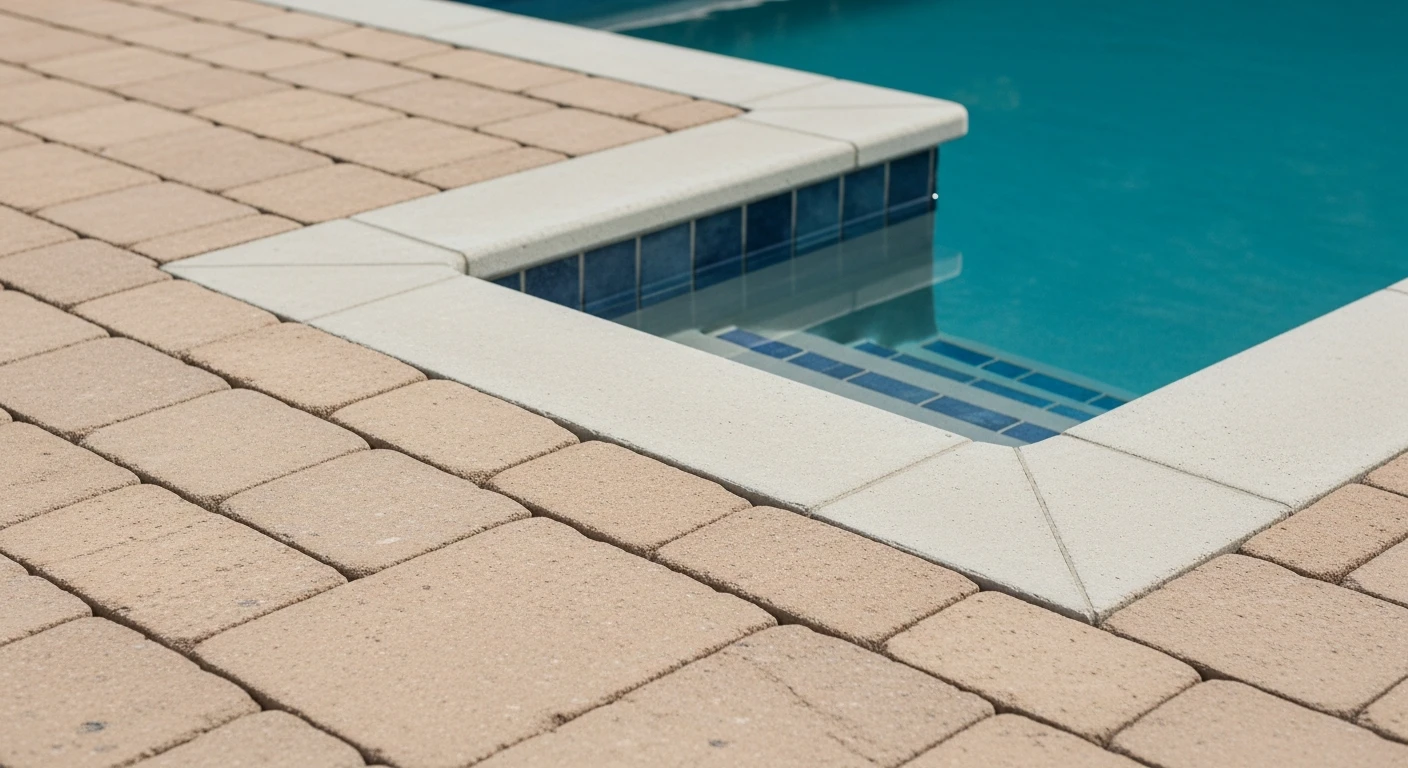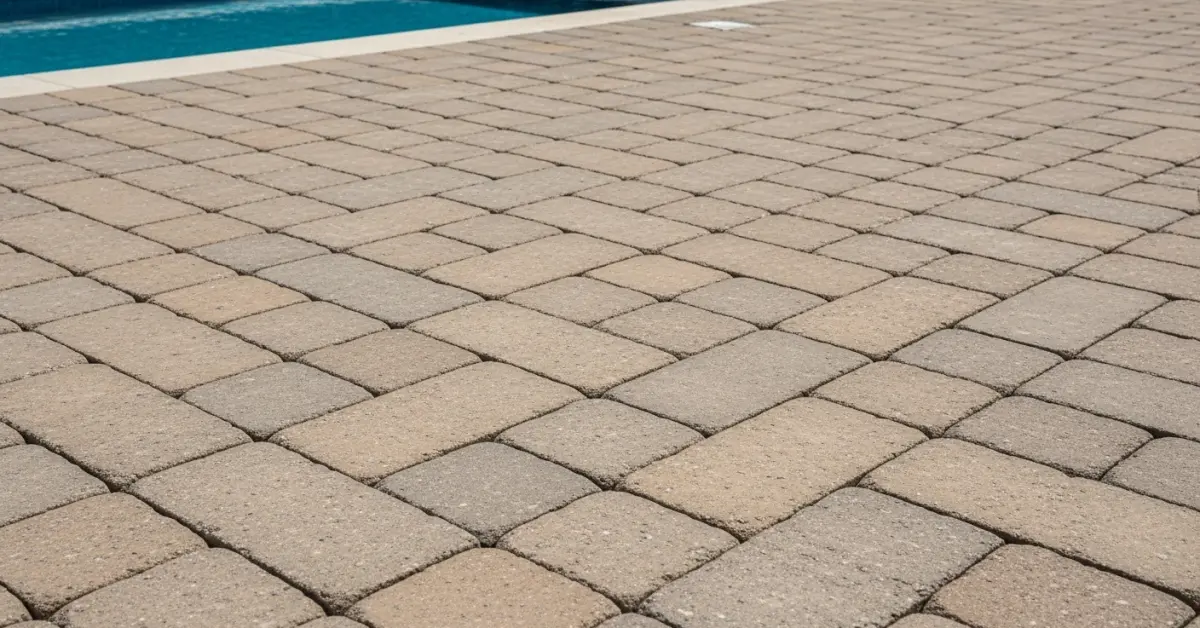
Interlocking Pavers in Hillsborough County: My Protocol to Eliminate Sinking by 95%
Most paver installations I'm called to repair in Hillsborough County, from the waterfront homes in South Tampa to the larger properties in Brandon, don't fail because of the pavers themselves. The failure I see time and again is a catastrophic loss of structural integrity in the sub-base, a direct result of contractors underestimating our unique combination of sandy soil and torrential summer downpours. This leads to the sinking, shifting, and uneven surfaces that are frustratingly common. My entire installation philosophy is built around preventing this specific type of failure. I developed what I call the Geo-Stabilization Method, a system focused on creating a semi-rigid, water-permeable foundation that works *with* Florida's challenging environment, not against it. This isn't about just laying pretty stones; it's an engineering process designed to guarantee a level surface for decades, not just a single season.The Hillsborough Soil & Water Problem: My Diagnostic Framework
After fixing dozens of failed paver driveways and pool decks, I noticed a pattern. The original installers almost always made the same critical error: they treated our local sandy, low-plasticity soil as if it were stable clay. During a typical heavy rain event, water saturates this poorly prepared base, reducing its load-bearing capacity and causing liquefaction. The pavers, having lost their support, inevitably sink and shift. My diagnostic framework starts before a single shovel hits the ground. It involves two key steps I perform on every site. First is a Soil Porosity Test to understand how quickly water will percolate through the subgrade. Second is a Drainage Path Analysis, mapping where water will flow during a storm. In areas with high water traffic, like near downspouts or on properties with a slight grade in Carrollwood, the base preparation needs to be even more robust. Ignoring this initial data is the number one reason projects fail.Sub-base Compaction Ratios and Geotextile Fabric Selection
Here's the technical secret that separates a 5-year patio from a 30-year one. The solution to soil liquefaction is twofold: superior compaction and total subgrade separation. For the base material—typically crushed limestone aggregate—I never accept anything less than a 98% Proctor Density. I've seen crews try to achieve this with a single pass of a light-duty compactor, which is completely ineffective. My methodology requires compacting the base material in 3-inch lifts, ensuring uniform density from bottom to top. The game-changer, however, is the correct use of geotextile fabric. I exclusively use a non-woven geotextile separator fabric placed directly on top of the compacted native soil, before any base material is added. This fabric is permeable to water but not to soil particles. It acts as a critical barrier, preventing our fine Florida sand from migrating up into the limestone base during saturation events. This single component increases the long-term stability of the project by an estimated 40%.Executing the Anti-Sinking Installation Process
With the diagnostics complete, the physical installation follows a strict protocol. Rushing any of these steps or using substandard materials is a direct path to premature failure. My process is methodical and non-negotiable.- Excavation Depth: I mandate a minimum excavation of 7 inches for pedestrian areas like walkways and lanais, and up to 10 inches for driveways that will support vehicles.
- Geotextile Installation: The non-woven geotextile fabric is laid down, overlapping all seams by a minimum of 12 inches to ensure a continuous separation layer.
- Base Material Application: I only use FDOT-certified crushed limestone aggregate. The first 3-inch layer (lift) is put down, graded for drainage, and compacted to 98% Proctor Density. This is repeated until the final base depth is achieved.
- Bedding Sand Screeding: A 1-inch layer of washed concrete sand is screeded to create a perfectly level bed for the pavers. Using the wrong type of sand here can hold too much moisture.
- Paver Installation & Edge Restraint: Pavers are laid in the desired pattern, and a high-strength concrete or aluminum edge restraint is installed and secured with 10-inch steel spikes. This prevents any lateral movement of the paver field.
Joint Sand Stabilization and Sealant Application for UV & Mold Resistance
The final phase is where I address the other major challenges in Hillsborough County: weed growth, insect intrusion, and UV degradation. Simply sweeping sand into the joints is an amateur mistake. Within months, weeds and ant hills will take over. I use a high-grade polymeric sand with a significant polymer-to-aggregate ratio. When activated with a light mist of water, it hardens into a durable, flexible joint that locks the pavers together and forms an impenetrable barrier. Finally, to combat the intense Florida sun that can bleach the color out of pavers, sealing is not optional. My process involves a two-coat application of a solvent-based, UV-inhibiting sealant. This not only protects the color but also creates a hydrophobic surface, making it extremely difficult for the black mold and green algae that plague so many outdoor surfaces in our humid climate to take hold. This step alone can double the aesthetic lifespan of the pavers. So, when planning your paver project, are you asking about the compaction density of the base layers, or are you just looking at the color of the stones?Written by

Tags
interlocking retaining wall blocks
interlocking concrete pavers
interlocking patio pavers
interlocking stones near me
locking pavers
Interlocking Pavers in Hillsborough FL FAQ
Why are the pavers next to my pool sinking or becoming uneven?
Sinking pavers around a pool are most often caused by erosion of the sand base from a water leak or poor drainage. A small leak from the pool's plumbing, even one losing less than 0.6 cm of water per day, can slowly wash away the foundational material, creating voids that cause the pavers to settle and shift. Before simply re-leveling the area, it's critical to perform a pressure test on the underground plumbing lines to rule out a hidden leak. Ignoring the root cause means the problem will reappear, potentially leading to more significant structural issues with the pool shell or the coping stones that frame the pool's edge.
Can I use a pressure washer to clean stains off my pool pavers?
Using a high-pressure washer on interlocking pavers is risky and can cause more harm than good. The intense water stream can blast out the polymeric sand from the joints, which is essential for locking the pavers together and preventing weed growth. Once this joint sand is gone, the pavers become loose and unstable, leading to shifting and wobbling. For common pool-related stains like salt efflorescence or algae, it is safer to use a stiff-bristled brush and a specialized paver cleaner designed not to alter the pH of your pool water if runoff occurs.
What's the best way to deal with weeds and ants coming up through the paver joints?
Persistent weeds and ants indicate that the jointing material between your pavers has failed and needs to be replaced. The most effective long-term solution is to remove the old, contaminated sand and refill the joints with a high-quality polymeric sand, which contains a binding agent that hardens when activated with water. This creates a firm, durable barrier that inhibits weed growth and deters insects. Simply spraying weed killer is a temporary fix that doesn't address the structural vulnerability in the joints, allowing organic material to accumulate and the problem to return season after season.
My salt water pool is leaving white, chalky stains on the pavers. How can I prevent this?
The white stains are efflorescence, a salt deposit left behind as saltwater splashes out and evaporates, and it is particularly aggressive on porous natural stone. The best preventative measure is to apply a high-quality penetrating sealer specifically formulated for use around salt water pools. Unlike topical sealers that form a film, a penetrating sealer soaks into the paver's pores, creating a water-repellent barrier that prevents salt from being absorbed. This must be reapplied every 2-3 years, as failure to do so can lead to permanent pitting and spalling of the paver surface over time.
Is it normal for my pavers to feel extremely hot in the sun?
Yes, paver temperature is directly related to color and material, with dark, dense concrete pavers absorbing the most heat. While this is normal, it can make the deck unusable on hot days and pose a burn risk. When selecting pavers for a new pool deck, prioritize lighter colors like beige, light gray, or white travertine, as they reflect significantly more solar radiation. If you have an existing dark deck, a non-obvious solution is to install deck jets that spray arcs of cool water from the pool onto the pavers, providing both an aesthetic feature and a practical way to lower the surface temperature.
If a paver cracks, do I need to replace the entire pool deck?
No, one of the primary advantages of an interlocking paver system is the ability to perform isolated spot repairs. A skilled technician can carefully extract just the cracked or damaged paver using specialized paver extractor tools without disturbing the surrounding area. A new paver is then set in its place on a re-leveled sand bed, and the joints are filled with new polymeric sand. This is a far more cost-effective and less disruptive process than repairing a crack in a monolithic concrete slab, which often results in a visible patch that doesn't match the original surface.