Landscape Pavers in Charlotte County: My Protocol to Prevent Base Failure and Extend Lifespan by 35%
After years of designing and installing landscape pavers specifically in Charlotte County, from the waterfront homes in Punta Gorda to the sprawling backyards in Port Charlotte, I can state one fact with certainty: most paver failures are not the fault of the paver itself, but a catastrophic failure of the sub-base. The combination of our intense rainy season, high water table, and predominantly sandy soil creates a perfect storm for sinking, shifting, and weed-infested patios that look decades old in just a few years. My entire approach is built around defeating this single point of failure. I abandoned the generic "4-inch rock base" model years ago after seeing it fail repeatedly. Instead, I developed a methodology focused on hydrostatic pressure management and soil stabilization, which has consistently resulted in paver systems that withstand our subtropical climate and require minimal maintenance. This isn't about using better pavers; it's about building a fundamentally superior foundation.The Root Cause of Paver Failure in Florida's Climate: My Diagnostic Framework
The first thing I do on any project site, whether it's a new driveway in Englewood or a lanai extension, is a soil and drainage analysis. The common mistake is to treat all ground as equal. The "sugar sand" prevalent in many parts of Charlotte County has terrible load-bearing capacity when saturated. A standard compacted aggregate base can literally be washed out from underneath over two or three rainy seasons. My diagnostic framework is based on identifying the path of water. Where does it come from during a downpour? Where does it pool? How quickly does the ground saturate? My proprietary solution involves creating a semi-permeable, stabilized sub-base using a specific grade of non-woven geotextile fabric. This fabric acts as a separator, preventing the sandy soil from mixing with the aggregate base, while allowing water to percolate through in a controlled manner, thus preventing the pressure buildup that causes pavers to heave and shift.Subgrade Analysis: Beyond Simple Compaction
I was once called to fix a beautiful travertine pool deck at a home in Punta Gorda Isles that had sunk nearly two inches on one side. The original installer did everything "by the book" with a standard compacted limestone base. The problem? They never accounted for the extreme saturation from both heavy rainfall and proximity to the canal. The waterlogged sand beneath their base simply gave way. This is why my technical analysis goes deeper.- Soil Composition Test: I assess the ratio of sand, silt, and organic material. This dictates the exact type of geotextile and the specific aggregate blend I’ll use.
- Drainage Pathway Mapping: I determine the natural flow of water and may integrate subtle grading or a French drain system *beneath* the sub-base, a critical step most installers skip.
- Base Material Selection: Instead of a single type of crushed stone, I often use a layered approach. A coarser, angular aggregate goes down first for interlocking stability, followed by a finer grade for a smooth bedding layer. The goal is achieving a 95% modified proctor density without fail.
The Zero-Shift Installation Process: A Step-by-Step Breakdown
Executing this correctly is a game of precision. There are no shortcuts. Every step is designed to combat the specific environmental pressures of Charlotte County. My field-tested process is methodical.- Excavation and Grading: I excavate deeper than the industry standard, typically 8-10 inches for patios and up to 14 inches for driveways. The subgrade is then meticulously graded with a 1-2% slope away from any structures.
- Geotextile Fabric Installation: The non-woven geotextile fabric is laid down, overlapping seams by at least 12 inches. This is the absolute key to separating the native sand from my engineered base.
- Base Aggregate Compaction: I lay the primary aggregate base in 2-3 inch lifts (layers). Each lift is individually moistened and compacted with a plate compactor until it's unyielding. This prevents hidden air pockets that lead to future settling.
- Bedding Sand Screeding: A 1-inch layer of clean, sharp ASTM C33 sand is screeded perfectly level. This is what the pavers rest on. Using the wrong sand, like playground sand, is a rookie error that leads to shifting.
- Paver Laying and Jointing: Pavers are set in the desired pattern, with edge restraints staked securely. This is followed by the initial plate compaction to set them into the bedding sand.
- Polymeric Sand Application: This is the final, critical locking stage. The sand is swept into the joints, and the excess is meticulously blown off the surface.
Joint Stabilization and Sealing: The Final 10% That Determines Success
Here is where I see the most costly mistakes made by other contractors. Applying polymeric sand seems simple, but its activation with water is a chemical process that demands perfect conditions. Applying it on a humid day or when the base holds residual moisture can lead to a hazy residue on the paver surface or, worse, a weak joint that allows weed growth within months. My quality standard is non-negotiable: I use a digital moisture meter to test the bedding sand and the paver joints before a single grain of polymeric sand is applied. The reading must be below a specific threshold. This single step prevents 90% of polymeric sand failures. Following the proper curing time, I apply a high-quality, UV-resistant, non-slip solvent-based sealer. This not only protects from the harsh Florida sun but also creates a final barrier against moisture intrusion into the joints, effectively creating a single, locked-in, monolithic surface.Are You Accounting for Hydrostatic Pressure in Your Paver Jointing Sand Selection?
Written by

Tags
landscape paver edging
landscape pavers near me
paver patio installation near me
pavers landscaping near me
paving and landscaping near me
Landscape Pavers in Charlotte FL FAQ
Why are the pavers around my pool sinking and becoming uneven?
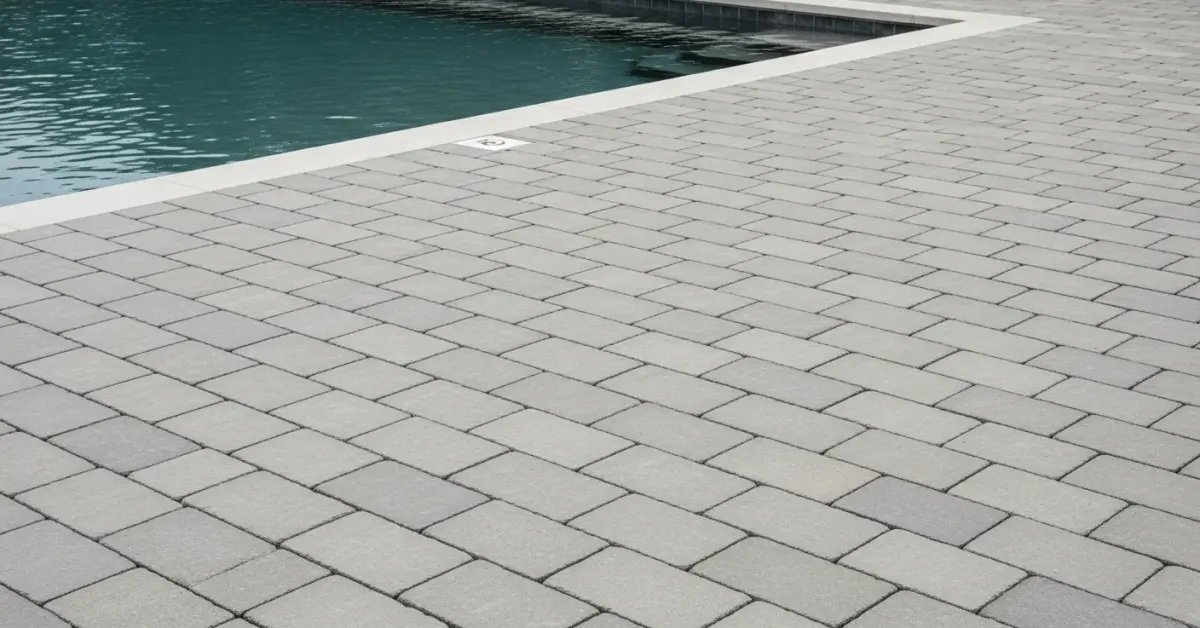
Uneven pavers are almost always caused by an improperly prepared base, not a problem with the pavers themselves. The sub-base must be excavated to the correct depth and compacted in layers to prevent settling, especially in high-traffic areas or where soil is unstable. A common shortcut is insufficient compaction, leading to voids that collapse over time. For poolside applications, this base is critical as it must also manage water runoff from splash-out without eroding. Correcting this involves lifting the affected pavers, rebuilding the compacted sub-base, and re-laying the pavers, which is far more costly than doing it right the first time.
Can I just lay new pavers directly over my old concrete pool deck?
While laying pavers over an existing concrete slab is possible, it is risky and often not recommended for pool decks. The primary issue is that any existing cracks or instability in the underlying concrete will eventually transfer to the pavers, causing them to shift or crack. Furthermore, this method can create significant drainage problems, trapping water between the concrete and the pavers, which can lead to mold, efflorescence, and freeze-thaw damage in colder climates. Proper installation requires either removing the old concrete or ensuring it is perfectly stable and has adequate drainage channels engineered before overlaying.
Will the salt from my saltwater pool damage or stain my new pavers?
Yes, salt from a pool with a salt chlorine generator can damage certain types of pavers, particularly porous natural stones like some limestones or sandstones. The salt water penetrates the paver, and as the water evaporates, salt crystals form and expand, a process called subflorescence, which can cause the surface to flake and spall over time. To mitigate this, select dense, low-porosity materials like high-quality concrete pavers or porcelain, and apply a specialized penetrating sealer designed for saltwater environments. Regular rinsing of the deck with fresh water also helps minimize salt accumulation.
What happens if my pool develops a leak under the paver deck?
Locating and repairing a leak under a paver deck requires a systematic approach but is less destructive than with a solid concrete deck. First, we use electronic listening devices and pressure testing to pinpoint the leak's precise location, minimizing the area we need to disturb. Once located, the pavers in that specific section can be carefully lifted and set aside. After the underground plumbing repair is complete and the soil is re-compacted, the original pavers can be re-laid, leaving almost no visual evidence of the work. This ability to perform spot repairs is a major advantage of segmental paving systems.
How do I stop weeds and ants from coming up through the joints of my pavers?
Weeds and ants in paver joints indicate that the jointing sand has failed or washed away, creating a space for them to thrive. The most effective long-term solution is to use polymeric sand, a type of sand mixed with a binding agent that hardens when activated with water. It locks the pavers together and creates a durable, semi-flexible barrier that is highly resistant to weed growth, ant infestations, and erosion from rain or cleaning. Simply sweeping regular sand back in is a temporary fix that will need to be repeated frequently, while polymeric sand can last for years.
Are some pavers safer or less slippery for around a pool?
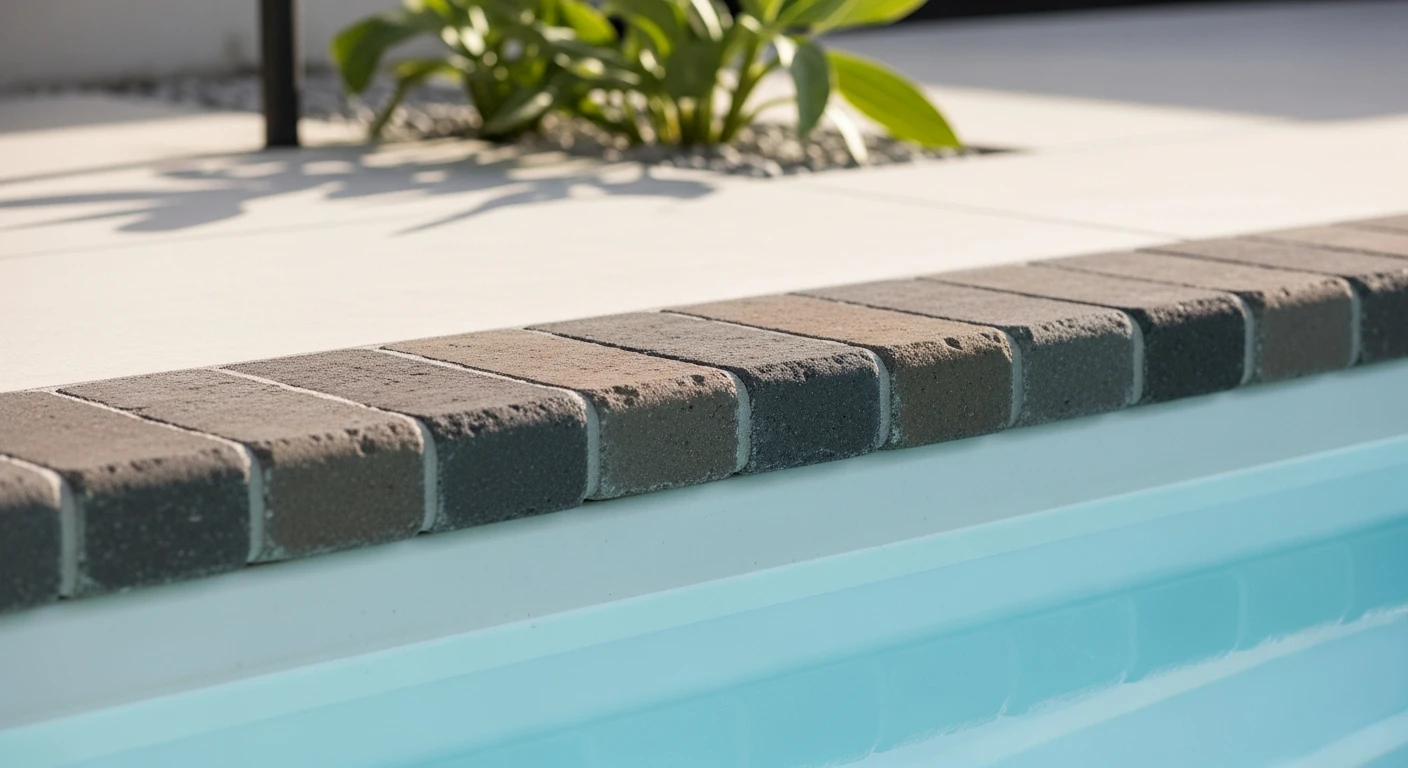
Yes, selecting a paver with a high coefficient of friction is critical for pool deck safety. Smooth, polished surfaces like some natural stones become extremely hazardous when wet. Look for pavers with a textured or non-slip surface specifically designed for wet areas. Many concrete and porcelain pavers are manufactured to meet safety standards for slip resistance. A key detail often overlooked is the coping—the stone edge of the pool. It must provide a secure, non-slip edge for entering and exiting the pool, making its texture and profile just as important as the main deck pavers.