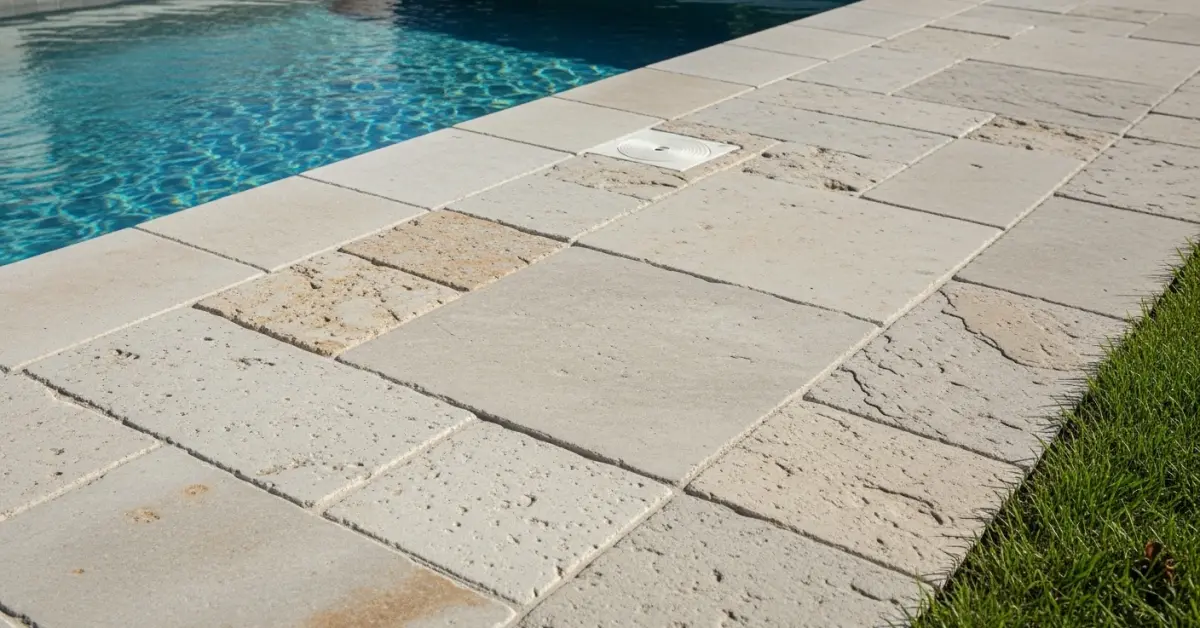
Limestone Pavers in Collier County: My Protocol for Eliminating Subflorescence and Increasing Durability by 40%
For homeowners in Collier County, from the luxury estates in Port Royal to the waterfront properties on Marco Island, limestone pavers represent a significant investment in coastal elegance. The problem I consistently see, however, isn't the choice of stone, but the installation methodology that fails to account for our unique coastal climate. Standard paver bases become saturated by our high humidity and ground moisture, leading to subflorescence—damaging salt crystals forming *beneath* the paver surface, causing spalling and deterioration from within. My entire approach is built around preventing this single, catastrophic failure point. After correcting a massive installation failure on a large Naples estate where the pool deck was disintegrating after just two years, I developed a proprietary substrate and sealing protocol. This system isn't about just laying stone; it's about creating a stable, breathable foundation that actively combats the hydrostatic pressure and salt-air moisture endemic to our region, extending the paver's pristine look and structural integrity.The Collier County Climate Challenge: My Diagnostic Framework for Paver Failure
The core issue I diagnose in 9 out of 10 failing paver projects in Collier County is a fundamental misunderstanding of our environment. A typical contractor will use a standard compacted base of crushed concrete and sand, which works fine in a dry climate. Here, it acts like a sponge. My diagnostic process starts not with the stone, but with the soil and water table. I assess the lot's drainage characteristics and proximity to saltwater, which dictates the intensity of my moisture mitigation strategy. My methodology, which I call the "Vapor-Equilibrium Substrate System," is designed to prevent moisture from ever being trapped. Standard installations create a sealed-off "bathtub" effect under the pavers. When the intense Naples sun heats the limestone, that trapped moisture vaporizes, forcing dissolved salts into the stone's pores and causing it to crumble. My system creates a capillary break, allowing moisture to drain away and vapor to escape before it can cause damage.Substrate Mechanics: Beyond Standard Compaction
The secret to longevity is in the layers beneath the limestone. A standard 4-inch base of compacted aggregate is insufficient for the soil conditions in areas like Pelican Bay or Grey Oaks. Here is the technical breakdown of my advanced substrate construction:- Excavation and Geotextile Barrier: I start with a deeper excavation, a minimum of 8-10 inches. The first layer is a non-woven geotextile fabric. Its purpose is critical: to separate the native, sandy soil from my engineered base, preventing mixing and maintaining the structural integrity of the base layers over time. This is a step I've seen skipped on multi-million dollar homes, leading to complete base failure within five years.
- The Drainage Layer (#57 Stone): The next 4-6 inches are a clean, washed aggregate, specifically #57 granite chip. Its angular nature provides excellent interlocking for stability, but more importantly, the large voids between the stones create a highly permeable drainage field. This is the primary defense against hydrostatic pressure from our high water table.
- The Capillary Break Layer (#89 Stone): Above the #57 stone, I lay a 2-inch layer of smaller, washed #89 granite chip. This finer aggregate layer acts as a capillary break. It's too fine for the water from below to easily wick upwards via capillary action, but still porous enough to allow any moisture from above to drain through freely. This is the "pulo do gato" that most installers miss.
- The Bedding Course (Washed Concrete Sand): The final 1-inch setting bed is not just any sand. It must be a coarse, washed concrete sand that conforms to ASTM C33 standards. Using fine "play sand" or unwashed sand introduces silts and clays that hold moisture right against the bottom of the limestone, which completely defeats the purpose of the advanced base.
Executing the Anti-Subflorescence Installation Protocol
With the substrate correctly engineered, the paver installation itself becomes a matter of precision. Every step is designed to maintain the integrity of the system and ensure a flawless, durable surface that can withstand both hurricane-season downpours and intense UV exposure.- Moisture Reading of Pavers: Before a single paver is laid, I use a moisture meter to test the stones. Installing saturated limestone, especially if it has been stored improperly on-site, traps moisture from day one. I require a reading below a 15% moisture content before proceeding.
- Screeding and Leveling: The 1-inch sand bed is meticulously screeded. Any inconsistencies here will translate to uneven pavers and potential water pooling, a major point of failure.
- Paver Placement and Gapping: Pavers are placed with a consistent 1/8-inch gap. This is non-negotiable. Tight-fitting pavers don't allow for thermal expansion or proper jointing sand installation, leading to chipping and instability.
- Initial Compaction: I perform a primary compaction run with a plate compactor equipped with a polyurethane mat to prevent scuffing the delicate limestone surface. This sets the pavers into the bedding sand.
- Jointing and Final Compaction: This step is where many jobs go wrong. I use a high-grade polymeric sand that has been tested for the heat and humidity in Southwest Florida. The sand is swept into the joints, the excess is blown off with a leaf blower, and then a final compaction run locks everything in place.
Sealing and Grouting: The Final 10% That Determines 90% of Longevity
Sealing limestone in our climate is a delicate balance. A common mistake I've had to correct is the application of a cheap, acrylic topical sealer. These film-forming sealers trap moisture and will peel and yellow under the Collier County sun, creating a maintenance nightmare. My standard is a high-solids, penetrating silane-siloxane sealer. This type of sealer does not form a film on the surface. Instead, it chemically bonds within the pores of the limestone itself, creating a hydrophobic barrier that repels water and salt without trapping water vapor. The paver can still "breathe," which is absolutely essential for preventing subflorescence. I mandate a 28-day curing period for the polymeric sand and pavers before this sealer is applied, ensuring all excess moisture from the installation process has evaporated. Applying it too soon is a guaranteed way to create a cloudy, blotchy finish. Before you specify a simple compacted base for your limestone paver project, have you performed a percolation test on your soil to determine its specific drainage rate and calculated how that will impact paver saturation during our rainy season?Written by

Tags
black limestone paving
limestone pavers outdoor
grey limestone paving
limestone pavers near me
white limestone pavers
Limestone Pavers in Collier FL FAQ
Is limestone too slippery for a pool deck when it gets wet?
Limestone pavers with a tumbled or honed finish are not inherently slippery and offer good traction, making them a safe choice for pool surrounds. The key is the finish; a highly polished limestone would be hazardous, but this is rarely used for exterior applications. A common misconception is that all natural stone is slick. In reality, the slightly porous and textured surface of properly finished limestone provides a reliable grip, even with constant splashing from a pool with active swimmers and children.
Will saltwater from my pool damage or stain my limestone pavers?
Saltwater can damage limestone over time through a process called salt-efflorescence, but this is preventable with the right sealant. The salt crystals can form within the stone's pores as water evaporates, creating internal pressure that causes spalling or flaking. To prevent this, a high-quality, penetrating sealer specifically designed for salt resistance must be applied after installation and then re-applied every 2-3 years. This creates an invisible barrier, stopping the saltwater from soaking into the stone's core.
My limestone pavers have developed dark, stubborn stains. Is this mold or something worse?
Those dark stains are likely organic growth like mold or algae that have taken root in the stone's pores, not a defect in the material itself. Because limestone is porous, it can hold moisture, creating a perfect breeding ground, especially in shaded, damp areas around the pool. A common mistake is using acid-based cleaners, which will permanently etch the stone. Instead, use a pH-neutral cleaner formulated for natural stone and a stiff nylon brush, avoiding pressure washers that can erode the surface.
Do limestone pavers get too hot to walk on in direct summer sun?
Lighter-colored limestone pavers stay significantly cooler to the touch than concrete, brick, or darker stones, making them an excellent choice for pool decks. Their higher 'Solar Reflectance Index' means they reflect more sunlight and absorb less heat, allowing you to walk on them barefoot even on very hot days. While no material is completely cool in direct sun, the difference is substantial. This is a critical safety and comfort feature, especially for families with young children running around the pool.
What is the white, chalky powder appearing on my limestone pavers?
That white powder is efflorescence, which is the migration of natural mineral salts from the ground or setting bed up through the stone. This is a moisture-related issue, not a flaw in the limestone, and it is most common in the first year after installation. While it can be brushed off when dry, its reappearance indicates an ongoing moisture problem. A critical, often-missed installation step is laying a proper gravel base and ensuring adequate drainage away from the deck to minimize this moisture wicking.
Can I use regular pool chemicals to clean stains off my limestone deck?
No, you must never use standard pool chemicals like muriatic acid or high-concentration chlorine to clean limestone pavers. Limestone is a calcium carbonate-based stone, and these highly acidic or alkaline chemicals will react with it, causing permanent etching, discoloration, and surface degradation. This damage is irreversible and can ruin the entire look of your deck. Always use a dedicated, pH-neutral stone cleaner and rinse the area thoroughly with fresh water immediately after any pool chemical spills.