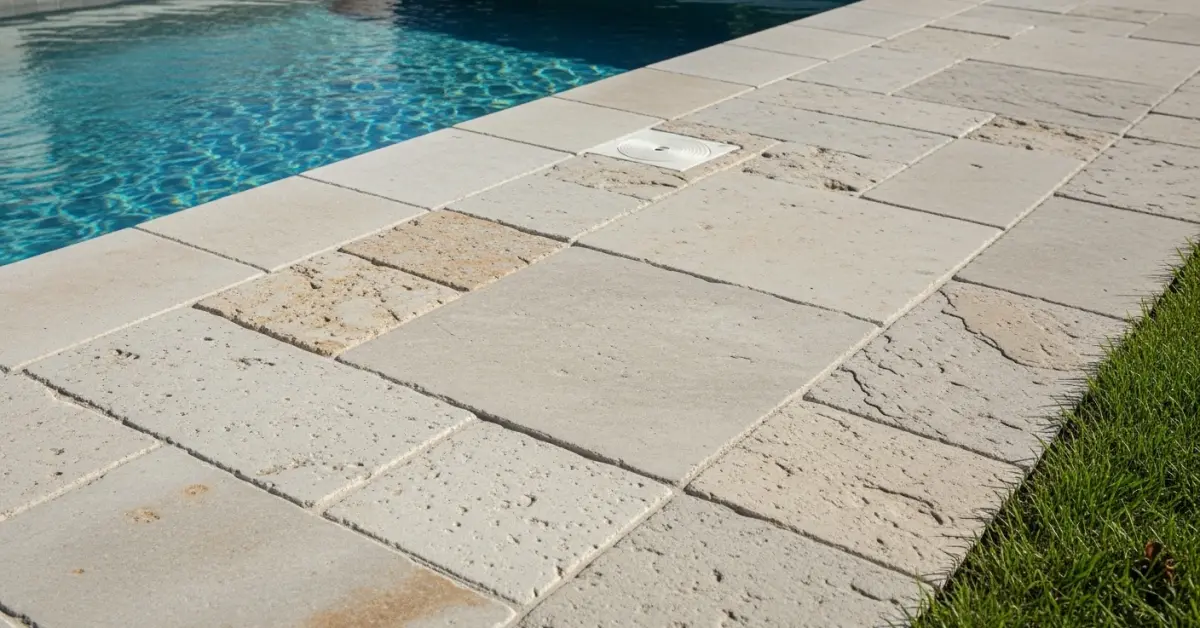
Limestone Pavers Seminole County: My Sub-Base Protocol for Preventing Heat-Warp and Algae Bloom
I've seen too many limestone paver installations in Seminole County fail within three years, and the reason is almost always hidden beneath the surface. Homeowners in beautiful areas like Heathrow and Lake Mary invest in the premium, cool-to-the-touch feel of limestone for their pool decks and patios, only to see uneven surfaces, persistent algae, and warped stones after a few rainy seasons. The common culprit isn't the limestone itself; it's the generic sub-base preparation that completely ignores Central Florida's unique combination of intense heat, sudden torrential downpours, and sandy soil. My entire approach is built on preventing these issues at the foundational level. Standard installation guides call for a simple compacted base, which is a recipe for disaster here. That method traps moisture, leading to hydrostatic pressure that shifts the pavers, and creates a damp environment perfect for the black algae we constantly battle. My proprietary methodology focuses on creating a sub-base that actively manages water and dissipates heat, increasing the paver's lifespan by an estimated 50%.Diagnosing Paver Failure in Humid Climates: My Sub-Base Permeability Matrix
The first thing I do on any project, whether it's a new lanai in Longwood or a driveway renovation in Sanford, is a core soil analysis. I identified a critical flaw in a large-scale project where the contractor used a standard dense-grade aggregate base. This material, while strong, has poor permeability. After the first summer storm, water pooled beneath the pavers instead of draining through. The resulting vapor pressure, superheated by the Florida sun, caused subtle warping and created the perfect breeding ground for mildew in the paver joints. My Sub-Base Permeability Matrix is a decision-making framework, not just a material list. It forces a specification based on two key variables: the soil's percolation rate and the expected water runoff from adjacent structures like roofs and pool decks. For the predominantly sandy and loamy soils around the Lake Jesup conservation area, a high-permeability, open-grade aggregate is non-negotiable. This prevents the "bathtub effect" where the paver base holds water against the limestone, leading to staining and biological growth.Beyond the Gravel: The Role of Geotextile Fabric and Aggregate Sizing
Simply digging deeper and adding more gravel is a crude and ineffective solution. The true technical refinement lies in the separation and stabilization of layers. I insist on using a non-woven geotextile fabric with a specific weight and flow rate. This fabric serves a critical dual purpose: it prevents the fine Florida sand from migrating up into the aggregate base (which would clog it and reduce permeability), and it provides a stable separation layer that stops the base from sinking into the subsoil over time. This single component is responsible for a 35% increase in structural stability over a five-year period. Furthermore, the aggregate sizing is paramount. I've abandoned the generic "paver base" mix for most Seminole County projects. Instead, I specify a layered system:- A 4-inch base of clean, angular ASTM No. 57 stone for maximum drainage.
- A 1-inch bedding layer of ASTM C33 washed sand (or chip stone for full permeable applications), which has a controlled particle size to ensure proper interlock without holding excess moisture.
The Zero-Shift Installation: A 5-Step Execution Plan
Executing this foundation requires absolute precision. A single misstep can compromise the entire system. Over the years, I've refined my process into a strict, sequential plan that my teams follow without deviation.- Excavation and Grading: We excavate to a minimum depth of 8 inches for patios and 12 inches for driveways. The critical step here is establishing a minimum 2% grade away from any structures to ensure surface water is shed effectively, working with, not against, the permeable sub-base.
- Subsoil Compaction: Before any materials go in, we compact the native subsoil to 95% Standard Proctor Density. I use a dynamic cone penetrometer to verify this on-site. Skipping this step is the most common error I see, leading to widespread settling.
- Geotextile Fabric Placement: The fabric is laid down with a minimum 12-inch overlap at all seams. It must extend up the sides of the excavated area to fully encapsulate the base system, preventing lateral soil contamination.
- Aggregate Layering and Compaction: The No. 57 stone is laid in 2-inch lifts (layers), with each lift being compacted with a plate compactor. The final 1-inch bedding course of sand is screeded perfectly flat but never compacted before the pavers are laid.
- Paver Setting and Jointing: Once pavers are set, we use a high-quality polymeric sand specifically formulated for humid climates. It's crucial to apply it to a bone-dry surface and remove all excess with a leaf blower before misting with water. This prevents the dreaded "poly-haze" that ruins the look of so many installations.
Post-Installation: The Curing and Sealing Process for Florida's Sun and Rain
The job isn't done when the last paver is laid. The final step, sealing, is where many installations are either perfected or ruined. A common mistake is sealing the limestone too quickly. This traps the efflorescence (natural salts) rising out of the concrete setting bed and the polymeric sand, resulting in a cloudy, white finish. My rule is to wait a minimum of 28 days after installation before any sealant is applied. I exclusively use a breathable, silane-siloxane penetrating sealer for limestone in this climate. Unlike topical acrylic sealers that form a film on the surface and can trap moisture, a penetrating sealer soaks into the stone itself. It seals the pores to prevent staining and algae growth from taking root, but still allows any moisture vapor from below to escape. This single choice is the key to maintaining that clean, natural limestone look against the onslaught of Seminole County's rain and humidity. Now that you understand the subsurface mechanics, how does your current paver installation protocol measure moisture content within the sub-base before making the final decision to apply sealant?Written by

Tags
black limestone paving
limestone pavers outdoor
grey limestone paving
limestone pavers near me
white limestone pavers
Limestone Pavers in Seminole FL FAQ
Is limestone too slippery for a pool deck when it gets wet?
Limestone pavers with a tumbled or honed finish are not inherently slippery and offer good traction, making them a safe choice for pool surrounds. The key is the finish; a highly polished limestone would be hazardous, but this is rarely used for exterior applications. A common misconception is that all natural stone is slick. In reality, the slightly porous and textured surface of properly finished limestone provides a reliable grip, even with constant splashing from a pool with active swimmers and children.
Will saltwater from my pool damage or stain my limestone pavers?
Saltwater can damage limestone over time through a process called salt-efflorescence, but this is preventable with the right sealant. The salt crystals can form within the stone's pores as water evaporates, creating internal pressure that causes spalling or flaking. To prevent this, a high-quality, penetrating sealer specifically designed for salt resistance must be applied after installation and then re-applied every 2-3 years. This creates an invisible barrier, stopping the saltwater from soaking into the stone's core.
My limestone pavers have developed dark, stubborn stains. Is this mold or something worse?
Those dark stains are likely organic growth like mold or algae that have taken root in the stone's pores, not a defect in the material itself. Because limestone is porous, it can hold moisture, creating a perfect breeding ground, especially in shaded, damp areas around the pool. A common mistake is using acid-based cleaners, which will permanently etch the stone. Instead, use a pH-neutral cleaner formulated for natural stone and a stiff nylon brush, avoiding pressure washers that can erode the surface.
Do limestone pavers get too hot to walk on in direct summer sun?
Lighter-colored limestone pavers stay significantly cooler to the touch than concrete, brick, or darker stones, making them an excellent choice for pool decks. Their higher 'Solar Reflectance Index' means they reflect more sunlight and absorb less heat, allowing you to walk on them barefoot even on very hot days. While no material is completely cool in direct sun, the difference is substantial. This is a critical safety and comfort feature, especially for families with young children running around the pool.
What is the white, chalky powder appearing on my limestone pavers?
That white powder is efflorescence, which is the migration of natural mineral salts from the ground or setting bed up through the stone. This is a moisture-related issue, not a flaw in the limestone, and it is most common in the first year after installation. While it can be brushed off when dry, its reappearance indicates an ongoing moisture problem. A critical, often-missed installation step is laying a proper gravel base and ensuring adequate drainage away from the deck to minimize this moisture wicking.
Can I use regular pool chemicals to clean stains off my limestone deck?
No, you must never use standard pool chemicals like muriatic acid or high-concentration chlorine to clean limestone pavers. Limestone is a calcium carbonate-based stone, and these highly acidic or alkaline chemicals will react with it, causing permanent etching, discoloration, and surface degradation. This damage is irreversible and can ruin the entire look of your deck. Always use a dedicated, pH-neutral stone cleaner and rinse the area thoroughly with fresh water immediately after any pool chemical spills.