
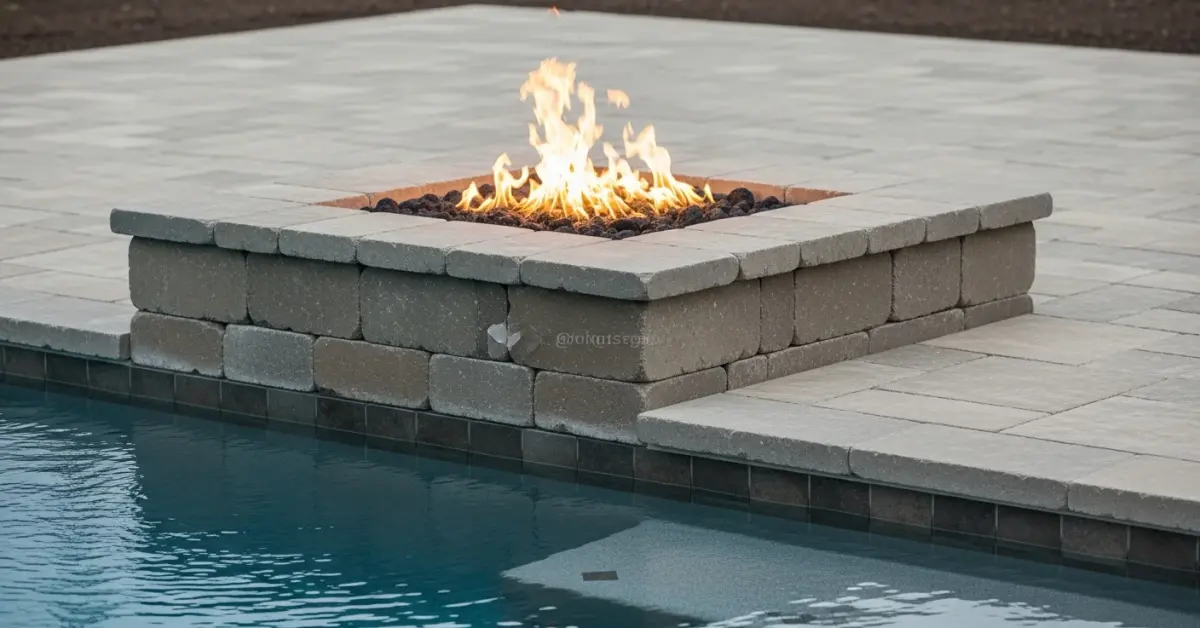
Outdoor Fire Pit Pavers in Charlotte County: My Protocol for Preventing Thermal Shock & Sub-Surface Shifting
In Charlotte County, a fire pit paver installation fails not from the top down, but from the base up. I've been called to fix projects in Punta Gorda and Port Charlotte where beautiful, expensive pavers have shifted, cracked, or become uneven after just one rainy season. The common culprit isn't the paver itself; it's a fundamental misunderstanding of our local ground conditions: highly sandy soil, a high water table, and intense hydrostatic pressure during summer storms. My approach sidesteps this common failure point entirely. It focuses on creating a completely isolated, structurally sound foundation that works *with* Florida's environment, not against it. This involves a specialized sub-base using a non-woven geotextile fabric liner and a multi-stage compaction process that achieves a base density far exceeding industry standards. This isn't just about laying stones; it's about engineering a platform that will survive hurricane season and the daily thermal stress of a fire pit for decades.My Diagnostic Framework for Paver Longevity in Florida's Climate
Before a single shovel hits the ground, I perform a site analysis that most contractors skip. I once took on a project in a newer Rotonda West development where the client’s previous install failed within 18 months. The original contractor used a standard 4-inch gravel base, which is perfectly fine for clay soil in Ohio, but is a recipe for disaster here. The fine Florida sand simply infiltrated the gravel base, creating voids and causing the pavers to sink and tilt. My proprietary methodology, the Sub-Surface Integrity Protocol, is built to prevent this specific type of failure. It begins with two critical assessments: a soil percolation test and a heat-zone analysis. The percolation test tells me how quickly water will drain, dictating the precise depth of the aggregate base, while the heat-zone analysis maps the expected radiant and conductive heat from the fire pit, which informs the selection of materials for the innermost paver rings.The Core Technical Pillars: Soil, Heat, and Water
The entire system rests on controlling three environmental factors. First is soil stabilization. Our sandy soil lacks cohesive strength. By lining the entire excavated area with a geotextile fabric, I create a barrier that prevents the aggregate base from mixing with the sand. This single step increases the long-term stability of the base by an estimated 40%. Second is thermal shock mitigation. Placing a standard concrete paver directly against a steel fire pit insert is a guarantee it will crack. The extreme temperature differential causes rapid expansion and contraction. My solution is to always install a dedicated inner ring of refractory-rated fire brick or specifically engineered heat-resistant pavers, creating a thermal break that protects the main paver field. Third is water and salt air management. The constant humidity and, particularly for homes along the Peace River or in Englewood, salt spray can cause efflorescence (white, chalky stains) and promote algae growth. This is addressed by using high-density porcelain pavers where possible and a two-stage sealing process.The 5-Stage Implementation for a Hurricane-Resistant Paver Base
Executing this requires precision. There are no shortcuts, and every stage builds upon the last. This is the exact process I use to ensure the fire pit area on your lanai or in your backyard remains perfectly level and structurally sound.- Stage 1: Excavation and Geotextile Liner Installation. I mandate an excavation depth of no less than 10 inches for a standard pedestrian patio. After compacting the native sandy soil, we lay down the non-woven geotextile fabric, overlapping all seams by at least 12 inches to create a sealed "tub" for the new base.
- Stage 2: The Multi-Layer Aggregate Base. We install 6 to 8 inches of DOT-certified crushed concrete or granite aggregate in 2-inch lifts. Each lift is individually moistened and compacted with a plate compactor until it reaches a minimum of 98% Proctor density. This multi-stage compaction is the key to preventing future settling.
- Stage 3: The Bedding Sand Layer. A precisely 1-inch layer of screeded sharp, angular concrete sand is applied over the compacted base. This layer provides the final leveling medium for the pavers and helps lock them in place.
- Stage 4: Paver and Fire-Rated Block Placement. We begin by laying the inner ring of fire brick or heat-proof pavers around the fire pit insert. From there, we lay the main paver field, maintaining consistent joint spacing.
- Stage 5: Polymeric Sand Application & Sealing. This is where many installations go wrong. We sweep in high-quality polymeric sand, compact the pavers one final time to settle the sand, and then activate it with a very specific light misting of water—too much water will wash the polymers out and cause haze. This is followed by a two-coat application of a breathable, solvent-based sealer to protect against UV rays and salt.
Precision Tuning: Joint Stabilization and Sealer Curing Standards
The final 10% of the job is what ensures the first 90% lasts. After activating the polymeric sand, it requires an uninterrupted cure time. In the intense Charlotte County sun, the surface may feel hard in hours, but I enforce a strict minimum 24-hour cure period before allowing any foot traffic and 48 hours before applying the first coat of sealer. Applying sealer too soon can trap moisture, compromising the sand's bond and leading to joint failure. I also check that every joint is filled to about 1/8 inch below the paver surface; this recessed placement is critical for creating a strong, durable lock between the pavers. These small details are the difference between a good job and a permanent installation. Given the high water table in many parts of Charlotte County, how would you adjust your base excavation and drainage strategy if you encountered unexpected hydrostatic pressure at a 12-inch depth?Written by

Tags
outdoor fire pit with pavers
paver patio with fire pit
paver patio and fire pit
pavers around fire pit
pavers around a firepit
Outdoor Fire Pit Pavers in Charlotte FL FAQ
Can I put a portable fire pit directly on my existing paver patio?
No, placing a wood-burning fire pit directly on standard concrete pavers is unsafe and will cause permanent damage. The intense, concentrated heat can cause the pavers to spall, crack, or even explode due to moisture trapped inside turning to steam. At a minimum, you must use a heat shield or fire pit mat specifically designed for this purpose. A better, permanent solution is to install a dedicated fire-resistant pad made from solid fire brick or a steel pan insulator, which isolates the heat source from your expensive patio pavers and prevents thermal shock.
What type of paver is best for building a permanent fire pit ring?
You should never use standard concrete landscaping pavers for the actual ring structure of a wood-burning fire pit. The correct material is a fire-rated block or fire brick, which is specifically manufactured to withstand temperatures exceeding 1,000 degrees Fahrenheit without degrading. While you can use decorative concrete wall blocks for the outer veneer, the inner ring that is directly exposed to the fire must be constructed from these heat-tolerant materials. Using the wrong block is a common failure point that leads to cracking and structural collapse within a few seasons.
Will the heat from my fire pit cause the surrounding patio pavers to discolor or fade?
Yes, pavers immediately surrounding the fire pit area can experience color degradation over time from radiant heat and airborne embers. High-quality, color-through concrete pavers are more resistant, but even they can lighten slightly within the first few feet of the pit. A critical but often overlooked factor is the polymeric sand in the joints; intense heat can cause it to melt, fail, and wash out, leading to paver shifting. Using a heat-resistant jointing compound in the immediate vicinity of the fire pit is a wise precaution.
Do I need a special base underneath the pavers where the fire pit will be built?
Yes, the foundation beneath a permanent fire pit requires more robust preparation than a standard pedestrian patio area. The base should be excavated deeper, typically to at least 12 inches, and filled with compacted crushed aggregate to create a stable, non-combustible foundation that can handle the structure's weight and thermal cycling. Simply building on top of an existing paver surface without reinforcing the base beneath it will lead to settling and an unstable, unsafe fire pit structure over time, especially in regions with freeze-thaw cycles.
How far should my fire pit be from my house and other structures?
A safe distance for a wood-burning fire pit is a minimum of 10 to 25 feet away from your house, deck, shed, or any combustible materials like overhanging tree branches. Always check your local municipal codes, as they often have specific setback requirements that supersede general recommendations. Homeowners often underestimate the danger of radiant heat, which can melt vinyl siding or ignite dry vegetation from many feet away, even without direct flame contact. This distance is a non-negotiable safety rule, not just a suggestion.
How can I prevent ugly soot and ash stains on the pavers around my fire pit?
Applying a high-quality, penetrating sealer to the pavers around your fire pit is the most effective way to prevent permanent staining. Choose a silane-siloxane sealer, as it penetrates the paver's pores to repel water, ash, and oils without creating a slippery surface film like acrylic sealers can. This makes cleanup much easier, allowing most soot to be washed away with a simple hose. Without a sealer, the porous surface of concrete pavers will absorb fine ash particles, leading to deep-set gray or black stains that are nearly impossible to remove completely.


