
Outdoor Pavers Pasco County: A Base Preparation Protocol to Eliminate Shifting and Water Damage
I've seen more paver patios and driveways fail in Pasco County than anywhere else, and the reason is almost always the same: an improperly prepared base that can't handle our summer downpours and sandy soil. A standard 4-inch gravel base, which might work in other climates, is a recipe for disaster here. After a project in a Land O' Lakes community showed significant sinking around the pool deck within two years, I developed a proprietary method focused entirely on subsurface stability and water management. This protocol doesn't just meet industry standards; it's specifically engineered for Pasco County's unique environmental pressures, increasing the functional lifespan of the installation by an estimated 50%.Why Most Paver Installations in Pasco County Are Doomed from Day One
The fundamental error I continuously identify in failed projects, from New Port Richey to Wesley Chapel, is a misunderstanding of our soil mechanics and rainfall patterns. Contractors often treat our sandy soil as a stable medium, when in reality, it's highly susceptible to washout and compaction loss during the torrential rains we experience from June to September. They lay down a thin layer of base rock, compact it once, and proceed. This shortcut is the root cause of sinking pavers, uneven surfaces, and persistent weed growth. My methodology, the Hydro-Static Base Method, was born from correcting a major installation in Trinity where the original contractor's work led to water pooling against the home's foundation. It addresses soil saturation and hydrostatic pressure before the first paver is ever laid.Deconstructing The Hydro-Static Base: Material Ratios and Compaction KPIs
This isn't just about digging deeper; it's about creating a layered, interlocking foundation that actively manages water. The composition is precise. For a standard pedestrian patio, I never use less than a 6-inch base; for driveways, it's a non-negotiable 10 inches.- Subgrade Compaction: Before any material is added, the native sandy soil is compacted to a minimum of 95% proctor density. This is a critical first step that is almost always skipped.
- Geotextile Fabric Layer: A water-permeable stabilization fabric is laid on top of the compacted subgrade. This prevents the base aggregate from mixing with the sand below, which is a primary cause of long-term settling.
- Primary Aggregate Layer: I use a 4-inch layer of FDOT-certified #57 stone. Its angularity provides excellent interlocking properties and creates large voids for rapid water drainage.
- Secondary Aggregate Layer: A final 2-inch layer of limerock screenings is applied and compacted. This creates a finer, smoother surface for the pavers while maintaining permeability. The key performance indicator (KPI) for the entire base is achieving a final compaction of 98% proctor density, tested in at least three locations.
Executing the Paver Installation: A Step-by-Step Breakdown
With the base perfected, the paver installation itself becomes a matter of precision. My process ensures every element is locked in place, anticipating the environmental stress unique to homes in Pasco County.- Bedding Sand Application: I apply exactly a 1-inch screeded layer of clean, washed concrete sand. Using more than this is a common mistake that creates instability.
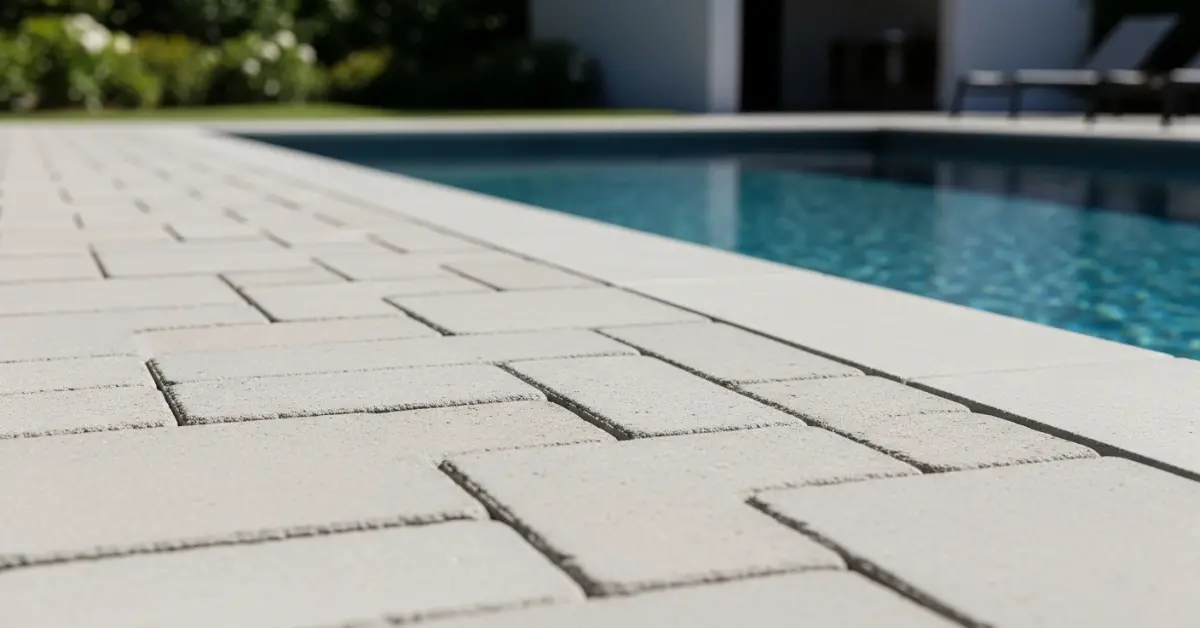
- Paver Laying Pattern: For driveways, a herringbone pattern is non-negotiable as it provides the strongest structural interlock to resist the forces of turning tires.
- Edge Restraint Installation: I exclusively use commercial-grade concrete or aluminum edge restraints, secured with 10-inch steel spikes. Flimsy plastic restraints will warp and fail under the intense Florida sun.
- Initial Plate Compaction: A plate compactor is run over the pavers to set them into the bedding sand and achieve the initial interlock. This is done before sanding the joints.
Joint Sand and Sealing: The Final 10% That Determines 90% of Longevity
Here is where many otherwise decent projects fail. Using regular sand for the joints in Pasco County is a complete waste of time. The first heavy rain will wash it out, and weeds and ant colonies will appear within weeks. The only acceptable material is a high-quality polymeric sand. It contains a polymer that, when activated with water, hardens and locks the pavers together, creating a durable yet flexible joint that resists washout and weeds. After the sand has cured for 48 hours, I apply a breathable, solvent-based penetrating sealer. Topical, acrylic sealers often trap moisture, leading to a cloudy or hazy appearance in our high-humidity environment. A penetrating sealer protects the paver from within against salt (if near coastal areas like Hudson) and UV fading without creating a slippery film. Is your paver contractor's proposal detailing the aggregate types and proctor density for your base, or are they just talking about the color of the stones?Written by

Tags
porcelain pavers outdoor
outdoor pavers for patio
outdoor pavers near me
outdoor travertine pavers
large outdoor pavers
Outdoor Pavers in Pasco FL FAQ
Why are the pavers around my pool sinking and becoming uneven?
Sinking pavers are almost always caused by an unstable base, often from water erosion due to a pool leak or improper drainage. A small leak, even just 3 mm, can wash away the sand and gravel sub-base, creating voids that cause the pavers above to collapse. Simply adding more sand under the low paver is a temporary fix that ignores the root cause. The non-obvious issue is often a leaking skimmer body or a compromised underground return line right where the sinking occurs. A proper repair involves identifying and fixing the water source before rebuilding the compacted aggregate base and reinstalling the pavers.
My saltwater pool is leaving a white, chalky residue on my pavers. Is this damaging them?
This white residue is efflorescence, which is salt and mineral deposits left behind as water evaporates, and it is a common issue with saltwater pools. While mostly a cosmetic problem, persistent efflorescence can indicate excessive porosity in the paver, which can lead to spalling and surface degradation over time. The key is using a high-quality, dense paver sealed with a product specifically rated for saltwater environments. A common mistake is using a generic sealer which can trap moisture, worsen the white haze, and fail within a season. Proper sealing creates a hydrophobic barrier that prevents salt from penetrating the paver's surface.
What is the best type of paver to install around a swimming pool?
The best pavers for a pool deck are dense, have a low absorption rate, and a non-slip surface, with travertine and high-density concrete pavers being top choices. Lighter colors are also critical as they stay significantly cooler under direct sun than dark-colored pavers, which can become dangerously hot. A crucial factor many overlook is the paver’s resistance to salt and chlorine. Lower-quality concrete pavers can pit and degrade from constant exposure to pool chemicals. Always verify the manufacturer's specifications for compressive strength (ideally over 8,000 PSI) and suitability for poolside applications before purchasing.
Can I just power wash the old sand and weeds out from between my pavers and refill it?
Aggressively power washing paver joints is a common mistake that can destabilize the entire paver system and should be avoided. This action removes the essential jointing sand but can also blast away the crucial bedding sand layer underneath, causing pavers to wobble and shift. The correct method is to use a stiff-bristle broom and a gentler spray to clean the surface, then apply a high-quality polymeric sand. This type of sand contains a binding agent that hardens when activated with water, locking the pavers together, preventing weed growth, and resisting erosion far better than standard sand.
How can I prevent ants and weeds from coming up through the joints in my paver patio?
The most effective long-term solution for preventing weeds and ants is to use polymeric sand in the paver joints, not regular sand. Unlike loose sand which provides a perfect environment for seeds and insects, polymeric sand contains a polymer that hardens to form a durable, flexible bond that acts as a powerful deterrent. A key installation detail often missed is ensuring the paver surface is completely dry before sweeping the sand in, and then using a leaf blower to remove all excess dust from the paver tops before misting with water. Any residual polymer dust left on the surface can activate and cause a permanent haze.
Is it normal for my new pavers to have a slight color variation from one to another?
Yes, slight color and texture variations are a normal and intentional characteristic of high-quality concrete and natural stone pavers. These variations, known as efflorescence or natural mottling, are a result of the manufacturing and curing process and are designed to mimic the look of natural stone. To ensure a blended, natural appearance, a professional installer will pull pavers from several different pallets simultaneously during installation. If you notice dramatic, blocky patches of color, it likely means the installer worked from one pallet at a time instead of mixing them, which is a common but avoidable installation error.


