
Orange County Patio Paver Cleaner: My Protocol to Prevent Permanent Stains & UV Fading
Most paver cleaning attempts I see across Orange County, from the coastal homes in Newport Beach to the sprawling backyards in Irvine, make one critical error: they treat all stains with the same high-pressure brute force. This approach not only fails to remove deep-set stains but often causes permanent damage like etching and color fading, a phenomenon I call "PSI scarring." I’ve been called in to fix this exact issue more times than I can count. My entire methodology is built on a different principle: chemical diagnosis before mechanical action. I developed a system that uses a pH-specific pre-treatment to dissolve organic growth and mineral deposits—a direct result of our notoriously hard water and coastal marine layer. This chemical work allows for a gentle, low-pressure rinse that cleans deeply without harming the paver surface, increasing its functional lifespan by an estimated 25%.The Critical Diagnosis: Why Standard Cleaning Fails in SoCal's Climate
The unique environmental pressures in Orange County create a specific set of challenges for pavers. The intense, year-round sun relentlessly degrades sealants and fades color pigments. Meanwhile, the salty, humid air in coastal communities like Laguna Beach and Huntington Beach creates a perfect breeding ground for resilient mold and algae that embed deep into porous concrete pavers. Inland, in areas like Anaheim Hills, the problem is often efflorescence, the white, chalky residue left by salt and mineral deposits from sprinkler systems using hard water. Before I even touch a pressure washer, my first step is a Paver Porosity & Stain Assessment. I physically analyze a small, inconspicuous area to determine the paver material (is it porous concrete, sensitive travertine, or dense clay?) and the nature of the stain. A green-black discoloration is typically organic, requiring an alkaline-based cleaner. That white, crystalline stain? That’s efflorescence, which demands a carefully diluted acidic cleaner. Using the wrong agent is the fastest way to ruin a patio; I once had to correct a project in a Coto de Caza home where a generic degreaser was used on efflorescence, chemically "baking" the stain into the pavers permanently.My pH-Balancing & Soaking Methodology Explained
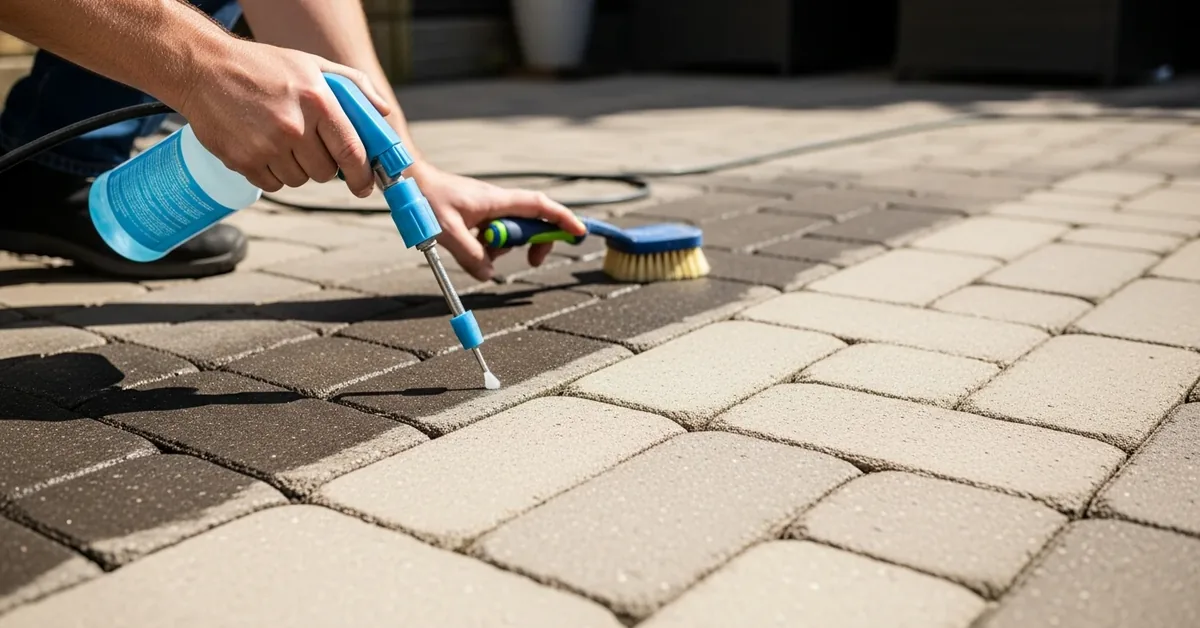
The secret isn't in the pressure; it's in the chemistry and the dwell time. After identifying the stain type, I select a cleaner with a specific pH level to counteract it. This is where most DIY efforts and even professional services go wrong. They buy a "one-size-fits-all" cleaner that is either too weak to be effective or so caustic it damages the paver's surface integrity. My process involves what I call the Low-Volume Saturation Soak. Instead of just spraying and blasting, I apply the precise pH-specific cleaning agent with a low-volume applicator and let it dwell for 15-30 minutes. This allows the solution to penetrate the paver's micro-pores and break down the stain from within. For stubborn oil stains from a BBQ on a Yorba Linda patio, for instance, a high-alkaline degreaser is applied directly and agitated with a nylon brush, then allowed to sit. This targeted chemical work does 90% of the job before a single drop of pressurized water is used, reducing the risk of surface damage to near zero.Executing the 4-Stage Paver Restoration Process
I’ve refined my on-site implementation into a repeatable, four-stage process that guarantees consistent results and protects the client's investment. This isn't just cleaning; it's restoration.- Stage 1: Surface Preparation & Debris Removal. First, I clear all furniture and use a high-CFM blower to remove loose debris like leaves, dirt, and those jacaranda flower droppings that cause purple stains. I then do a final visual sweep to identify any new problem areas.
- Stage 2: Targeted Chemical Application. Based on my initial diagnosis, I apply the correct pH-balanced solution. This might mean treating one area for mold and another for hard water spots on the same patio, using completely different formulations.
- Stage 3: Mechanical Agitation & Dwell Time. The cleaner is worked into the surface with a professional-grade, soft-bristle rotary scrubber. This agitation is critical for lifting embedded grime. Then, the surface is left to dwell, allowing the chemistry to work.
- Stage 4: The Low-Pressure, High-Volume Rinse. I use a pressure washer set to under 1500 PSI with a wide-angle 40-degree tip. The goal is to rinse away the dissolved contaminants, not blast them out. This high water volume flushes the pores of the pavers cleanly without causing surface erosion.
Post-Cleaning: The Non-Negotiable Sanding and Sealing Phase
A clean paver is an exposed paver. The cleaning process, by design, removes the old, dirty sand from the joints. Leaving them empty is a critical mistake, as it invites weeds, ant infestations, and paver shifting. This step is non-negotiable in my process and separates a temporary cleaning from a long-term restoration. I exclusively use polymeric sand. Unlike regular sand, it contains a polymer that activates with water, hardening to form a strong yet flexible bond. This locks the pavers in place and creates a durable barrier against weeds. After sanding, the final, crucial step is applying a high-quality sealer. For most Orange County properties, I recommend a UV-resistant penetrating sealer. It doesn't create a glossy, slippery film but soaks into the paver itself, protecting it from sun fading and making it resistant to future stains. This single step can reduce the re-growth of algae by over 50% and extend the life of the cleaning job significantly. Now that you understand the process, have you correctly identified whether your paver stains are organic, mineral, or chemical, and do you know the precise pH level required to treat them without causing irreversible damage?Written by

Tags
cleaning solution for patio pavers
cleaner for paver patio
paver power washing near me
power wash patio pavers
cleaning pavers with power washer
Patio Paver Cleaner in Orange FL FAQ
Can't I just pressure wash my own pavers? What's the difference?
You can, but using the wrong pressure or nozzle can permanently etch the paver surface and wash out the essential jointing sand. Professional cleaning uses controlled pressure combined with specific detergents to lift stains without causing this damage, which is known as aggregate exposure. We also ensure that all that dirty runoff, which can contain algae and chemicals, doesn't end up in your pool, which could throw off your water chemistry and require expensive rebalancing. The key difference is avoiding costly, irreversible damage to the pavers themselves.
What are these white, chalky stains on my pavers and will cleaning remove them?
That white haze is likely efflorescence, which is mineral salt migrating from within the paver to the surface as water evaporates. While a standard cleaning can temporarily remove the surface salts, it often returns if the underlying moisture issue isn't addressed. A professional service uses specialized acidic cleaners to dissolve the deposits and can then recommend sealing the pavers to block moisture pathways, providing a much longer-lasting solution than just washing the surface.
Will cleaning chemicals harm my pool water or the surrounding plants?
Yes, improper chemical use can absolutely damage your pool and landscaping, which is a primary risk of DIY cleaning. We use biodegradable, pool-safe detergents and implement strict runoff control, using barriers and collection systems to divert all cleaning water away from your pool and sensitive garden beds. This prevents a sudden drop in your pool's pH level or the introduction of phosphates that feed algae blooms, protecting both your investment in the pool and your landscape.
My pavers are really slippery when wet. Will cleaning help with this?
Cleaning is the critical first step, as it removes the biofilm of algae and mildew that creates that dangerous, slippery surface. However, for a lasting non-slip finish, the key is what happens after the cleaning. We recommend applying a sealer with a non-slip additive, which is a gritty polymer that bonds into the sealant's top layer. This creates a texture similar to fine sandpaper, significantly increasing traction without altering the paver's appearance, a crucial safety upgrade for any pool deck.
How do you get rid of stubborn oil and rust stains without damaging the paver color?
Targeted poultices and specialized degreasers are required for these types of deep-set stains, as high-pressure water alone will not lift them. For oil, we apply a chemical poultice that draws the oil out of the paver's pores as it dries. For rust, a specific acid-based gel is used to dissolve the iron oxide without bleaching the surrounding paver. This spot-treatment approach is far safer for the paver's color and integrity than blasting the entire area with harsh, generic chemicals.
After cleaning, should I have my pavers sealed? Is it worth the cost?
Yes, sealing your pavers after a deep clean is the single best way to protect your investment and reduce future maintenance. A quality sealant penetrates the paver to block moisture, preventing the growth of moss and algae, and creates a protective barrier against stains from spills and leaves. More importantly, it helps lock the polymeric sand in the joints, preventing it from washing out and leading to paver shifting or weed growth. The cost of sealing is minor compared to repairing shifted pavers or constant deep cleaning.


