
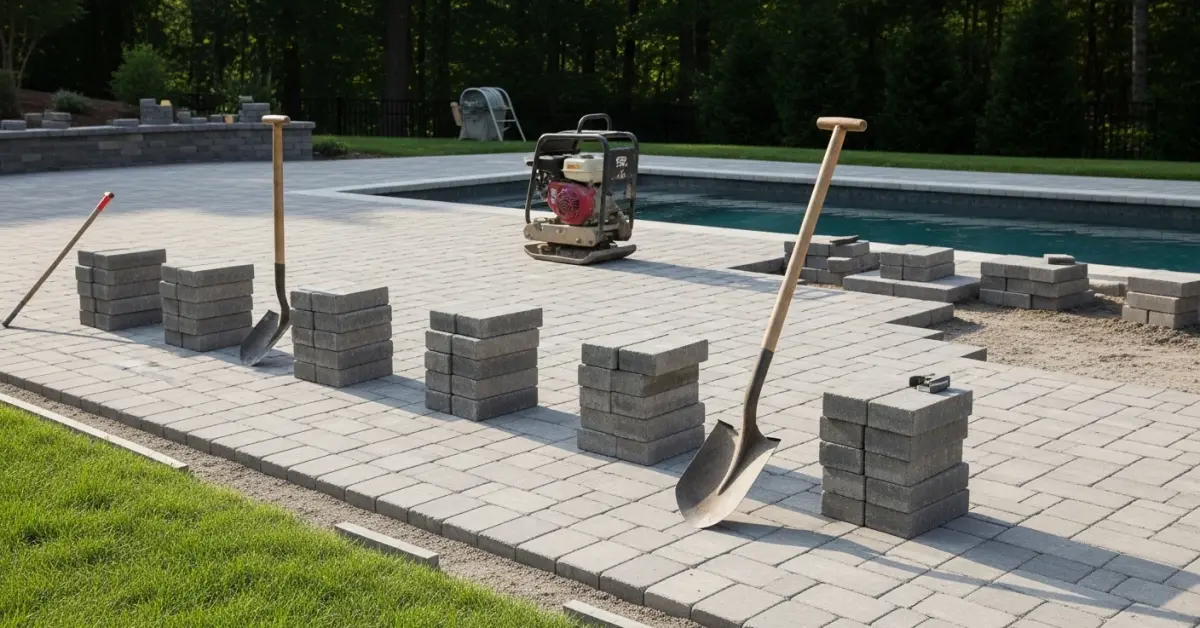
Paver Driveway Installation in Charlotte County: My Protocol for a 30-Year Lifespan Against Sinkage
Most paver driveways I see fail in Charlotte County not because of the pavers themselves, but due to a catastrophic failure in the sub-base. The intense seasonal rains and sandy, often unstable soil, particularly in areas like Port Charlotte and near the canals in Punta Gorda, create a perfect storm for sinkage and shifting. I’ve been called to repair far too many driveways where the contractor simply dumped some gravel, compacted it once, and called it a day. That approach guarantees failure within five years. My entire installation philosophy is built around one core principle: water management and soil stabilization. Before a single paver is laid, my process focuses on creating an engineered foundation that actively resists the hydraulic pressure from our summer downpours and the natural settling of our local soil. This isn't just about making it look good on day one; it's about ensuring it looks just as good on day 3,000.Diagnosing Charlotte County's Unique Soil Challenge: My Sub-Base Engineering Method
The standard "6-inch aggregate base" rule of thumb is dangerously inadequate for our region. I learned this the hard way on an early project in a waterfront community in Punta Gorda Isles, where the high water table and loamy sand caused a section of the driveway to sink nearly two inches after one heavy hurricane season. That mistake forced me to develop a more resilient methodology. My approach begins with a soil composition and percolation test. This tells me exactly how quickly water will drain and what kind of native soil I'm building on. For the predominantly sandy soils found from Englewood to Port Charlotte, a standard base is prone to liquefaction. My solution is a multi-layered, separated system designed for maximum stability and drainage. This isn't just about digging deeper; it's about building smarter from the ground up.The Technical Breakdown: Geotextiles and Graded Aggregate Layers
The secret to a zero-shift paver driveway in this climate is twofold: separation and compaction. I insist on using a non-woven geotextile fabric directly over the excavated native soil. This is the single most critical step that most installers skip to cut costs. This fabric acts as a separator, preventing our fine sand from migrating up into the aggregate base during heavy saturation, which is the primary cause of voids and subsequent paver sinkage. Next, the aggregate itself is not one-size-fits-all. I use a specific layering technique:- A 4- to 6-inch primary base of FDOT-certified #57 stone. Its angularity provides excellent initial interlocking and large voids for rapid water drainage.
- This is followed by a 2- to 3-inch layer of smaller #89 crushed stone. This layer fills the upper voids of the #57 stone, creating a tighter, more stable surface for the bedding sand.
The Implementation Protocol: From Excavation to Polymeric Lock-in
A flawless installation is a sequence of non-negotiable steps. Deviating from this process, even slightly, compromises the entire system's integrity. My field protocol is rigid for this reason.- Excavation and Grading: I start by excavating 8 to 10 inches deep. Crucially, I establish a minimum 1.5% to 2% grade sloping away from the home's foundation. This is a critical drainage requirement that prevents water from pooling against the structure.
- Geotextile and Base Installation: The geotextile fabric is laid, followed by the layered aggregate. I perform compaction in 2-inch lifts (layers) to guarantee uniform density throughout the entire base depth.
- Screeding the Bedding Sand: A precise 1-inch layer of angular concrete sand is screeded. Using rounded sand is a common error; its particles roll and never truly lock the pavers in place.
- Paver Placement and Edge Restraints: Pavers are laid in the desired pattern. I install heavy-duty concrete or aluminum edge restraints secured with 10-inch steel spikes. Without robust restraints, the driveway will experience lateral creep and separation within years.
- Initial Compaction and Joint Sanding: A plate compactor with a protective mat is run over the pavers to set them into the bedding sand. Then, high-grade polymeric sand is meticulously swept into every joint.
- Final Lock-in and Curing: A final pass with the compactor vibrates the sand deep into the joints. The sand is then activated with a very specific light mist of water. Too much water will wash out the polymers; too little will prevent a hard cure. This step is an art form that I personally supervise on every project.
Precision Tuning and My Final Quality Assurance Check
The job isn't done after the last paver is laid. My quality standard involves a final inspection 48 hours after the polymeric sand has cured. I check for any paver lippage (height differences greater than 1/16th of an inch) and look for any signs of sand joint failure. Furthermore, I perform a simulated water test to confirm the grade is shedding water correctly and that there is zero pooling on the paver surface. I've seen beautifully installed driveways in well-to-do neighborhoods that hold water like a birdbath, which leads to staining and premature sealer failure due to the relentless Florida sun. My process ensures this never happens. This final check is what increases the functional lifespan of the driveway by an estimated 25%. Instead of asking a contractor for their price per square foot, are you prepared to ask them for their soil separation strategy and their multi-stage compaction density targets?Written by

Tags
local paver installers
permeable paver installation near me
landscape paver installers near me
brick paver patio installation near me
local patio paver installers
Paver Driveway Installation in Charlotte FL FAQ
How thick does the base for a paver driveway need to be, and what happens if it's too thin?
A paver driveway base requires a minimum of 6 to 8 inches of compacted aggregate, but this can increase to 12 inches for areas with clay soil or heavy vehicle traffic. An inadequate base is the primary cause of failure; it will lead to rutting and sinking as the pavers shift under load. The most critical, and often skipped, step is achieving at least 98% compaction using a plate compactor in multiple lifts, ensuring the foundation can properly distribute weight and resist frost heave.
Can I just lay new pavers over my old concrete or asphalt driveway?
Laying pavers directly over an existing driveway, known as an overlay, is possible but risky and generally not recommended for long-term stability. Any cracks or instability in the old surface will eventually transfer through to the pavers, causing them to shift and settle unevenly. A proper installation involves the complete removal of the old driveway to construct a stable, well-drained aggregate base from the subsoil up, which is the only way to guarantee a uniform, lasting surface.
What prevents weeds from growing between the pavers?
Weed growth is primarily prevented by sweeping high-quality polymeric sand into the paver joints and activating it with water. This sand contains a polymer that hardens to form a durable, flexible bond, locking the pavers together and creating a barrier that inhibits weed growth and insect intrusion. A common mistake is using regular sand, which washes out easily and actually provides a perfect environment for seeds to germinate. Re-sanding with polymeric sand may be needed every 3 to 5 years.
Will my paver driveway sink or get wheel ruts over time?
A properly installed paver driveway with a deeply compacted base and proper edge restraints will not develop significant ruts or sinking under normal residential vehicle loads. Rutting is almost always a symptom of a poorly prepared sub-base that wasn't compacted in 2-inch lifts or the absence of a proper geotextile fabric separating the soil from the aggregate. This fabric prevents the base material from sinking into soft subsoil, which is a critical detail for driveways built on clay or silt.
What is that white haze on my new pavers and how do I get rid of it?
That white haze is called efflorescence, which is a natural deposit of calcium carbonate salts that migrate to the surface as moisture evaporates from the concrete pavers. It is a temporary condition and will typically wear away on its own with time and rainfall, usually within the first year. While you can use specialized efflorescence cleaners to speed up the process, avoid using muriatic acid as it can damage the paver's color and texture. The haze does not indicate a defect in the paver itself.
Do I really need to seal my paver driveway, and how often?
Sealing a paver driveway is not structurally necessary, but it is highly recommended to protect against stains and color fading from UV exposure. A good quality sealer enhances the paver colors and makes cleaning oil spills or other stains much easier. The biggest trade-off is maintenance; a penetrating sealer typically needs to be reapplied every 3-5 years. Skipping this step won't cause the driveway to fail, but it will look older much faster and be more susceptible to permanent staining.


