
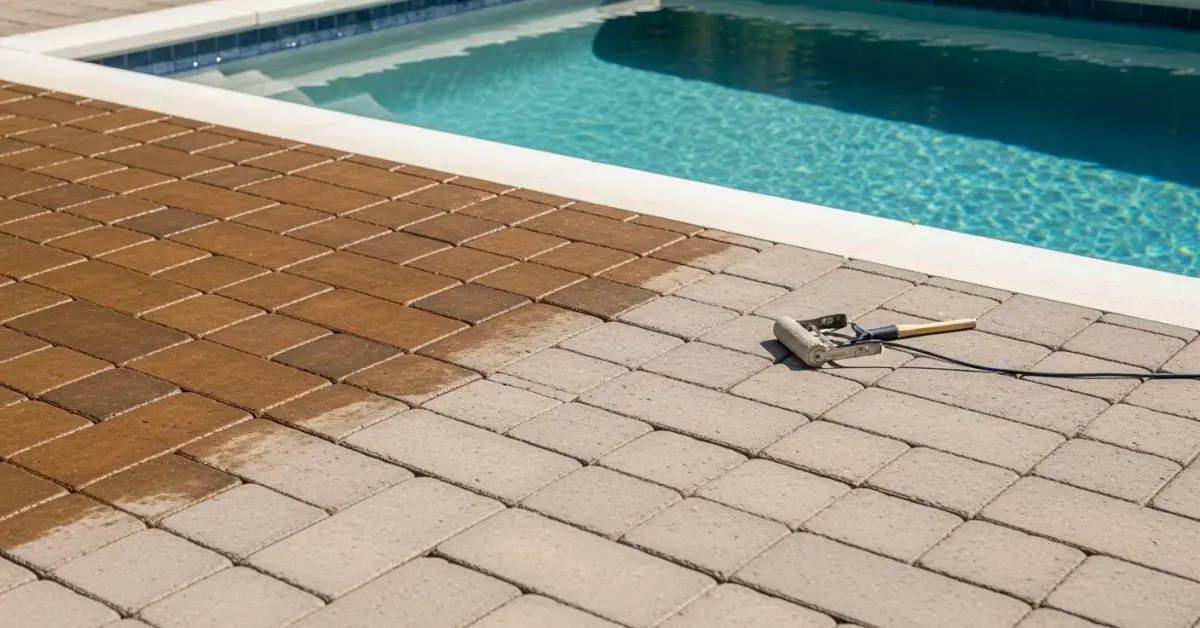
Paver Driveway Sealing in Pasco County: My Protocol for Eliminating Efflorescence and UV Fading
For homeowners in Pasco County, from the newer developments in Trinity to the established neighborhoods of New Port Richey, a paver driveway is a significant investment. The problem I consistently diagnose, however, is that standard sealing methods fail within 12-18 months under our specific climate pressure. The combination of intense subtropical sun, high humidity, and torrential summer rains creates a perfect storm for paver degradation, specifically UV color fade and chronic efflorescence—that chalky white residue that ruins curb appeal. My entire approach is built on a single premise: a sealer is not just a top coat; it's a sub-surface fortification system. A generic application that ignores the high water table and intense solar radiation in areas like Land O' Lakes is a guaranteed failure. I’ve seen it firsthand on a large residential project where a competitor's work had to be chemically stripped and redone in under a year. My protocol focuses on achieving a molecular bond within the paver's pores, not just a film on top, to increase its functional lifespan by at least 40%.My Diagnostic Framework: The Pasco Climate-Adaptive Sealing Protocol
Before a single drop of sealer is applied, I perform a diagnostic that accounts for local Pasco County variables. Most contractors grab a pressure washer and a generic sealer, but this overlooks the root causes of failure. My methodology is different and centers on two critical, often-ignored factors: substrate moisture content and the specific type of paver porosity. The dense, machine-pressed pavers common in Wesley Chapel communities behave vastly differently from the more porous, rustic-style pavers found in older homes.Technical Deep Dive: Efflorescence, UV Burn, and Joint Stabilization
The core of my technical advantage lies in solving three distinct problems. First is efflorescence. This is the migration of natural salts and minerals to the paver's surface, pulled by evaporating water. In Pasco's humid environment, this process is relentless. My solution involves a pre-treatment with a specialized, acid-free efflorescence remover that neutralizes the salts at a deeper level than a simple surface wash. Second is UV burn. The Florida sun bombards pavers with radiation, breaking down the color pigments. I exclusively use a non-yellowing, two-part aliphatic urethane-modified acrylic sealer with a high solids content and dual UV inhibitors. This formula is more expensive but provides a measurable increase in color retention. Finally, I focus on joint sand stabilization. Unsecured sand is an invitation for weeds and ant hills. My process uses a specific type of polymeric sand and a flood coat application of the sealer to lock the joints into a solid yet flexible state, effectively creating a single, monolithic surface that resists weed growth and paver shifting.Implementation: The Step-by-Step Sealing Process
Executing a lasting paver seal requires a disciplined, multi-stage approach. Rushing any one of these steps compromises the final bond and longevity of the treatment. This is the exact process I follow on every Pasco County driveway.- Surface Decontamination: I begin with a low-pressure, high-volume wash using a specialized rotating surface cleaner, not a high-pressure wand that can etch the pavers. This is followed by a degreaser application to remove tire marks and oil stains, which are common points of sealer failure.
- Efflorescence and Algae Treatment: I then apply the efflorescence remover and a mild, eco-friendly algaecide to kill any mold or mildew spores hiding in the paver pores. This is a critical step many skip.
- Polymeric Re-sanding: After the pavers are completely dry, I sweep high-grade polymeric sand into every joint, ensuring they are filled to just below the paver's chamfered edge. I then use a plate compactor to vibrate the sand deep into the joints for maximum density.
- Sealer Application: I apply the sealer using a low-pressure, high-volume sprayer to achieve an even, saturating coat. I always apply a minimum of two coats. The first is a "flood coat" to saturate the joints and the paver itself, followed by a lighter, final top coat to create a uniform, protective sheen.
Precision Adjustments for Pasco County Conditions
The difference between a good job and a truly professional one lies in the details. I never seal a driveway without first taking a reading with a concrete moisture meter. The substrate moisture must be below 15% to prevent the sealer from trapping water, which causes that cloudy, hazy look. Furthermore, I constantly monitor ambient temperature and humidity. I will not apply sealer if the ground temperature is above 90°F or if the relative humidity is over 80%, common conditions during a Pasco summer afternoon. Managing the curing window is paramount; I advise clients to avoid all foot traffic for at least 4 hours and vehicle traffic for a full 48 hours to allow for a complete chemical cure, ensuring the driveway's resilience against the next downpour. Is your current driveway sealer actively repelling our high-humidity environment, or is it simply trapping moisture that will lead to premature failure and costly repairs?Written by

Tags
driveway paver sealing near me
paver sealing near me
paver patio cleaning and sealing near me
patio paver cleaning and sealing near me
patio paver cleaning and sealing
Paver Driveway Sealing in Pasco FL FAQ
My new paver driveway is only a year old. Do I really need to seal it already?
Yes, sealing your paver driveway within the first year of installation is the best practice for long-term protection. While the pavers themselves are durable, the crucial element you are protecting is the polymeric sand in the joints, which prevents weed growth and shifting. Sealing locks this sand in place and provides a barrier against oil stains, salt damage, and color fading from UV rays. Waiting until you see visible wear, such as weeds or loose pavers, means you are already addressing a problem rather than preventing it, which often requires more extensive joint restoration before sealing can even begin.
Will sealing my driveway make the pavers slippery, especially when it rains?
No, a professionally applied sealer should not make your pavers dangerously slippery if the correct product and technique are used. The key is to avoid over-application, which can create a thick, glossy film on the surface. We use sealers with a non-slip additive, a fine aggregate mixed into the sealant, which creates a textured, high-traction finish that maintains grip even in wet conditions. This is especially critical on sloped driveways where water runoff and ice can pose a significant hazard. DIY applications often fail here, creating a slick surface that's difficult and costly to strip and correct.
Can I just power wash my driveway and apply a sealer from a big-box store myself?
While it seems straightforward, improper surface preparation is the number one cause of sealer failure, leading to a hazy, white appearance called efflorescence bloom. A professional cleaning involves more than just a power wash; it requires specific cleaners to remove ground-in dirt, oil, and any existing, failing sealer. More importantly, the pavers must be completely dry before sealing, which can take 24-48 hours. Sealing over even slight dampness traps moisture, which will turn the acrylic sealer cloudy and require a full chemical stripping to fix, costing far more than a professional job.
What's the difference between a water-based and a solvent-based sealer for my driveway?
The primary difference is in appearance and environmental impact, with solvent-based sealers offering a richer, 'wet look' enhancement and water-based ones providing a more natural, matte finish. Solvent-based sealers penetrate deeper into the paver pores, providing excellent color enhancement and stain protection, but they have a strong odor during application due to higher volatile organic compounds. Water-based sealers are low-odor, eco-friendlier, and still offer great protection, making them a popular choice. The right one depends on your desired aesthetic and local regulations.
How often do I need to reseal my paver driveway, and what are the signs it's time?
Typically, a high-quality paver driveway sealing will last between 3 to 5 years, depending on traffic and weather exposure. The most reliable sign that it's time to reseal is when water no longer beads up on the surface and instead soaks in quickly, darkening the pavers. You may also notice the color of the pavers beginning to fade or the joint sand starting to wash out during heavy rain. Waiting until you see significant weed growth between the pavers is a clear indicator that the protective barrier has completely failed and immediate attention is needed to prevent shifting.
My driveway has some white, chalky stains. Can you just seal over them?
No, sealing over those white stains will permanently trap them, making them impossible to remove later. That chalky substance is called efflorescence, which is a natural salt deposit that migrates out of the concrete pavers as moisture evaporates. Before any sealing can occur, these deposits must be completely removed with a specialized efflorescence cleaner and a light acid wash. Sealing a driveway without properly treating this issue is a common mistake that results in a cloudy, blotchy finish that magnifies the original problem.


