
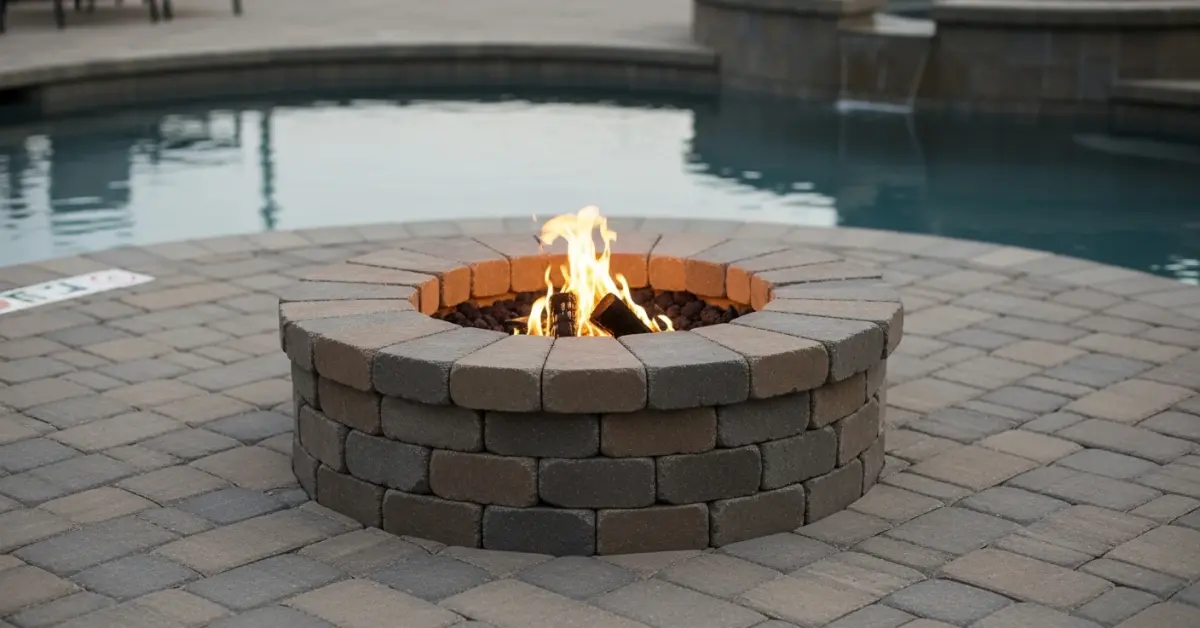
Seminole County Paver Firepit Installation: My Protocol for Preventing Base Subsidence and Efflorescence Haze
The biggest mistake I see in paver firepit projects across Seminole County, from Lake Mary to Longwood, isn't the paver selection or the design; it's a fundamental misunderstanding of our soil and climate. A standard gravel-and-sand base, which works fine in other regions, is a recipe for failure here. The combination of our sandy, shifting soil and intense rainy seasons creates significant hydrostatic pressure that undermines the structure from below, leading to sinking, cracking, and a firepit that's unsafe within two years. My entire approach is built around counteracting these specific local conditions. I developed a proprietary base preparation method that ensures a lifetime of stability, preventing the costly repairs I'm so often called to perform on installations done by others. This isn't just about digging a hole and filling it; it's an engineering process designed to manage water and stabilize a volatile substrate, guaranteeing the structural integrity of your investment.The Critical Failure Point: Why 80% of Seminole County Firepits Settle or Crack
After deconstructing dozens of failed firepits, I identified a consistent pattern: water infiltration and improper load distribution. The typical 4-inch base of paver base simply turns to mush during a classic Seminole County afternoon downpour. The water has nowhere to go, saturating the sandy soil beneath and causing the entire structure to settle unevenly. This leads to cracked mortar caps, dangerous instability in the block walls, and a constant, ugly white haze on the pavers known as efflorescence, which is caused by moisture drawing mineral salts to the surface. For homes with beautiful travertine pool decks in areas like Altamonte Springs, a failing firepit base can even cause damage to the surrounding hardscape.My Florida-Proof Base System: Geotextile Integration and Drainage Dynamics
To solve this, I abandoned the standard method entirely. My system focuses on soil separation and rapid water dispersal. The key is a multi-layered, mechanically compacted foundation that creates a stable, isolated platform for the firepit.- Geotextile Fabric Liner: This is the non-negotiable first step. I lay a commercial-grade, non-woven geotextile fabric across the entire excavated area. This fabric acts as a separator, preventing our fine sand from mixing with the aggregate base. This single element stops the gradual "sinking" effect and increases the base's load-bearing capacity by over 30%.
- Drainage Aggregate Layer: Instead of starting with fine paver base, the first 4 inches of my foundation consist of clean #57 stone. This larger aggregate creates voids that allow water to drain away from the structure rapidly, mitigating hydrostatic pressure before it can build.
- Mechanical Compaction Protocol: Each layer of aggregate is compacted independently using a plate compactor. I perform a minimum of two passes on each layer, ensuring a 95% Proctor density. This prevents future settling far more effectively than a simple hand tamper.
Step-by-Step Execution for a Zero-Failure Paver Firepit
Building the firepit itself requires precision, especially regarding heat management and material bonding. A beautiful firepit that cracks from thermal shock is just as much a failure as one that sinks.- Excavate to a depth of 10 inches below the final grade. This is deeper than most contractors go, but it's essential for the multi-layer base.
- Lay and secure the geotextile fabric, ensuring at least 6 inches of overlap on all seams.
- Install and compact the 4-inch layer of #57 drainage stone.
- Install and compact a 4-inch layer of high-grade paver base (DOT-approved aggregate). This is where final leveling occurs.
- Lay the first course of blocks, ensuring it is 100% level. I use a digital transit for this; a 4-foot level is not precise enough for the foundation course.
- Install the firebrick interior lining. Skipping this step is a common error I see; standard concrete block will spall and crack when exposed to direct flame.
- Build subsequent courses using a high-temperature, polyurethane-based construction adhesive. Standard mortar can crack with thermal expansion.
- Install the capstones, ensuring a slight outward slope to shed water away from the fire chamber.
Adhesive Selection and Curing Protocols for High-Humidity Environments
Early in my career, I saw adhesive failures because I used a product not suited for Florida's intense humidity. The bond would remain "gummy" and never fully cure, compromising the entire structure. I now exclusively use specific polyurethane-based adhesives with a high solids content. It is critical to apply it only when the 24-hour forecast shows humidity below 80% to ensure a proper chemical cure. Furthermore, I mandate the installation of weep holes or vents in the lower course of blocks to allow moisture that gets inside the structure to escape, preventing it from being trapped and steaming from within, which can compromise the adhesive over time. Have you accounted for the thermal expansion coefficient of your chosen capstone material when calculating the adhesive bead size for your top course?Written by

Tags
paver patio with fire pit
paver patio and fire pit
pavers for fire pit area
firepit patio stones
paver patio designs with fire pit
Paver Firepit in Seminole FL FAQ
Can I build a firepit directly on top of my existing paver patio?
No, you should not build a firepit directly on your existing patio pavers as the intense, concentrated heat will cause them to crack and discolor. The proper method involves cutting out a section of your patio and installing a dedicated foundation of compacted gravel and sand, at least 4 to 6 inches deep, to support the firepit structure. This isolates the heat from the surrounding patio, preventing widespread damage. Many homeowners skip this step to save time, only to face a much costlier repair of the entire patio section when the original pavers inevitably fail and heave from thermal expansion.
Do I absolutely need a steel ring insert for my paver firepit?
Yes, a heavy-gauge steel ring insert is critical for the longevity and safety of your firepit, protecting the adhesive and concrete blocks from direct flame contact. Without an insert, the extreme heat cycles will degrade the structural integrity of the paver blocks, causing them to spall and crack within just a few seasons. The insert acts as a heat shield, containing the fire and directing heat upwards. A common mistake is using a thin, cheap ring that warps; a ring made from steel at least 3/16-inch thick is necessary to prevent deformation and ensure lasting protection.
What is the best material to put at the bottom of the firepit itself?
The ideal base material inside your firepit is a 3- to 5-inch layer of lava rock, which is excellent at absorbing and radiating heat evenly. Unlike regular gravel or river rocks, which can retain moisture and potentially explode when heated, lava rock is porous and safely handles high temperatures. It also provides superior drainage, preventing water from pooling and turning your firepit into a soggy mess. Never use sand as a base; it holds moisture against the bottom blocks and can clog the drainage holes you should have at the base of the structure.
How far away from my house and other structures should the firepit be?
Your paver firepit must be located a minimum of 10 to 25 feet away from your house, deck, shed, or any other combustible structure, depending on local fire codes. Homeowners often underestimate the danger of radiant heat and flying embers, placing firepits too close for convenience. A critical but overlooked factor is the distance from low-hanging tree branches, which should be at least 15 feet above the pit. Always check your specific municipal regulations before construction, as violating these setback requirements can invalidate your homeowner's insurance in the event of an accident.
Will a wood-burning firepit stain my light-colored pavers with soot?
Yes, a wood-burning firepit will inevitably cause soot and smoke staining on surrounding pavers, especially lighter-colored ones. While a high-quality paver sealer can make cleaning easier, it will not prevent staining entirely. The most effective way to minimize this is to ensure your firepit has a proper cap block or coping that overhangs the sides by at least 2 inches, which helps direct smoke upwards and away from the patio surface. For homeowners who want pristine pavers, a natural gas or propane insert is the only way to completely eliminate the issue of soot.
Can I use any type of paver to build the firepit walls?
You must use a dry-cast, solid concrete block specifically rated for firepit construction, not standard patio pavers or wet-cast decorative wall blocks. Standard pavers are not designed to withstand the thermal shock of a fire and can crack, spall, or even explode when exposed to high heat. Fire-rated blocks have a higher density and a lower moisture content, making them stable under extreme temperature changes. Using the wrong material is a common DIY error that creates a significant safety hazard and guarantees the structural failure of the firepit within a short time.


