Charlotte County Paver Pressure Washing: My Method for Preventing Mold Recurrence for Over 18 Months
After years of restoring pavers across Charlotte County, I’ve seen the same story play out. A homeowner in Punta Gorda Isles invests in a beautiful lanai, only to watch it turn dark and slippery with black mold within a single rainy season. The typical response is to blast it with a high-PSI pressure washer, which looks good for a month before the problem returns, often worse. This approach doesn't just fail to solve the root issue; it actively damages the paver surface and joint sand, leading to premature aging and costly repairs. My entire process is built on a different philosophy. I don’t just clean pavers; I remediate the underlying biological growth and fortify the surface against our uniquely humid, salt-laden coastal environment. The goal isn't a temporary clean but a measurable extension of the paver's lifespan and aesthetic appeal, saving you from a cycle of repeated, damaging cleanings. This isn't just pressure washing; it's a targeted surface restoration protocol.My Diagnostic Framework: Why Standard Pressure Washing Fails in Port Charlotte
Before I even start a machine, I perform a surface diagnosis. The black streaks common on driveways in Port Charlotte aren't dirt; they are colonies of Gloeocapsa magma, a resilient algae that high-pressure water alone cannot kill at the root. Simply blasting the surface spreads the spores and etches the paver's cream layer, making it more porous and a better host for future growth. My initial assessment on any property, whether it's a pool deck in Englewood or a walkway in Rotonda West, involves three critical checks:- Stain Identification: Is it organic (algae, mold), mineral (efflorescence), or chemical (oil, rust)? Each requires a completely different treatment solution. Using a degreaser on algae is as ineffective as using a biocide on an oil stain. -
- Joint Sand Integrity: I check if the existing joint sand is washed out, compacted, or infested with weeds. Cleaning without addressing the joints is a job half-done. Most pressure washing jobs blast this critical sand away, compromising the interlock system. -
- Sealant Condition: I test a small area to see if a previous sealant is still present. Applying a new sealer over a failing, delaminating one is a critical error I've been hired to fix countless times. It creates a cloudy, flaking mess.
The Chemistry of Clean: Calibrating PSI and Pre-Treatment Solutions
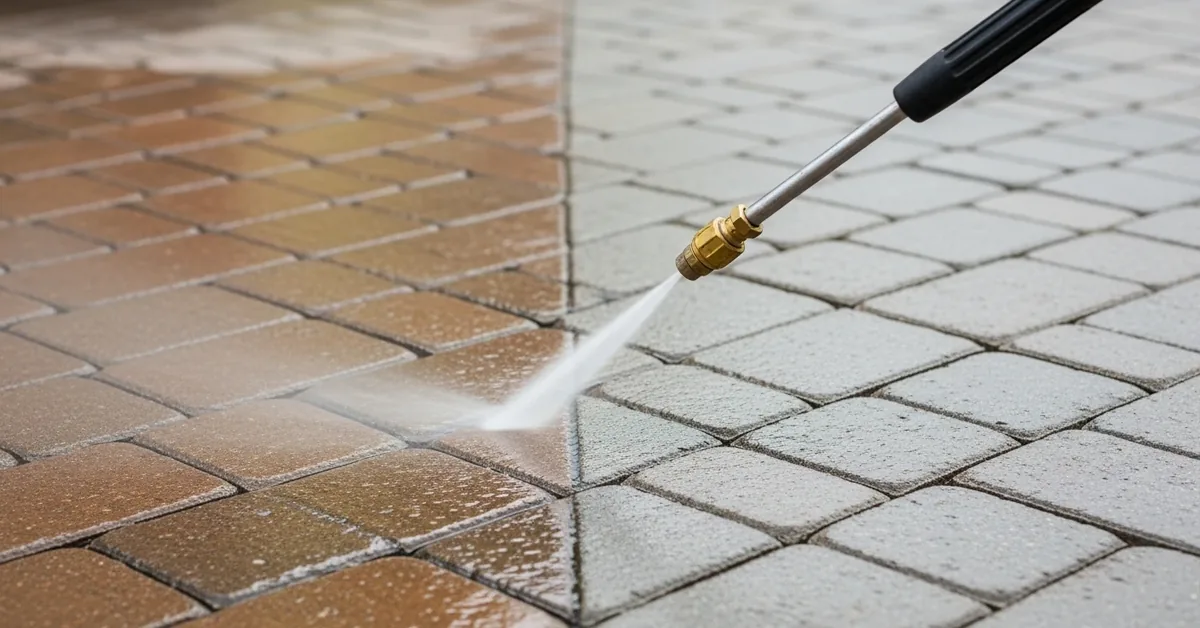
The biggest mistake I see is the obsession with high pressure. My methodology prioritizes chemical pre-treatment to do the heavy lifting, allowing for a much gentler, lower-pressure rinse. For the persistent mold and algae fueled by Charlotte County's humidity, I've developed a specific pre-treatment solution. It’s a buffered 4% sodium hypochlorite mixture combined with a proprietary surfactant that helps it cling to the surface and penetrate the paver's pores. This chemical solution requires a specific dwell time of 15-20 minutes—out of direct sunlight—to effectively kill all organic matter at a cellular level. Only after this biological neutralization do I use the pressure washer. I rarely exceed 2,200 PSI on pavers, and I exclusively use a 25-degree or 40-degree fan tip, never a zero-degree or turbo nozzle. This maintains a safe distance and angle to clean effectively without causing surface damage or "striping."The Coastal Resilience Paver Treatment: A Step-by-Step Execution
Once the diagnosis and chemical strategy are set, the physical execution follows a strict sequence. Deviating from this order is what leads to subpar results and damage.- Step 1: Controlled Pre-Treatment Saturation. I apply my cleaning solution using a low-pressure chemical applicator, ensuring even coverage without oversaturating nearby plants (which are pre-rinsed with fresh water for protection).
- Step 2: The Low-PSI Surface Clean. After the required dwell time, I clean the entire surface systematically, working from the highest point downwards to manage water runoff. My focus is on rinsing away the now-dead organic material, not blasting it off.
- Step 3: Joint Cleaning and Preparation. I carefully clean out the paver joints, removing old sand, weeds, and debris. This is a meticulous but non-negotiable step before re-sanding.
- Step 4: The 24-Hour Drying Period. This is critical. Attempting to sand or seal wet pavers will trap moisture, leading to a permanent cloudy haze in the sealer. The pavers must be 100% bone dry.
- Step 5: Polymeric Sand Installation. I only use high-quality polymeric sand. Unlike regular sand, it contains a polymer that hardens when activated with water. I sweep it into the joints, compact it, and then blow off all excess from the paver surfaces before a light misting to activate it. This locks the pavers together and prevents weed growth for years.
Post-Wash Quality Control: Re-sanding and Sealing Protocols
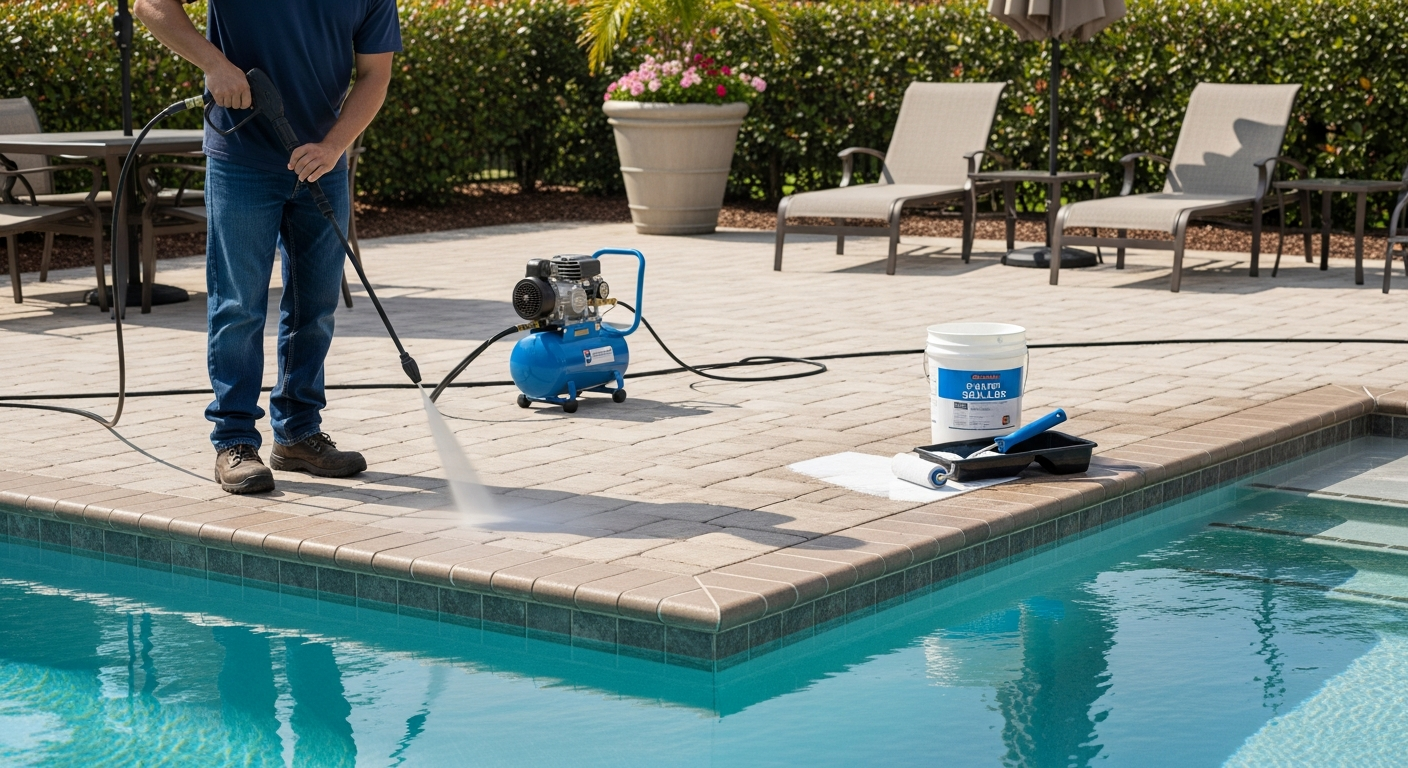
The job isn't finished after the sand is in. Sealing is what provides the long-term protection. After another 24-hour curing period for the sand, I apply a high-quality, water-based acrylic sealer with a high UV inhibitor. In our intense Florida sun, a cheap solvent-based sealer can yellow and fail in under a year. My application technique is also precise. I use a battery-powered sprayer for a perfectly even coat, followed immediately by back-rolling with a foam roller to eliminate any lines or drips. I apply two thin coats, allowing for proper curing time in between. This two-coat, cross-hatch pattern ensures every millimeter of the paver and sand is encapsulated, providing a protective barrier that results in a 75% reduction in organic growth over the next 18-24 months compared to unsealed pavers. What is the single biggest mistake homeowners make when choosing a paver sealer for the intense Florida sun, and how does it compromise the paver's structural integrity within the first year?Written by

Tags
paver cleaner for pressure washer
wash and seal pavers
power wash and seal pavers
pressure wash and seal pavers
paver pressure washing and sealing
Paver Pressure Washing in Charlotte FL FAQ
Can pressure washing my pool deck pavers cause damage or leave ugly lines?
Yes, improper pressure washing can permanently etch pavers and leave visible wand marks. Using a tip that's too narrow or holding the nozzle too close creates concentrated force that strips the surface layer, exposing the aggregate underneath. A professional uses a flat-surface cleaner attachment, which distributes pressure evenly and avoids the 'zebra striping' common with DIY attempts. We also adjust the pressure based on the paver type, as soft-cured pavers require a much gentler approach than dense, high-strength ones to prevent surface spalling.
Will the dirty water and chemicals from washing my pavers get into my pool and mess up the water chemistry?
Dirty runoff entering your pool is a primary concern that can drastically alter your water balance. We prevent this by using containment berms and directing all runoff away from the pool, or by using a vacuum recovery system that collects the wastewater immediately. If any runoff does enter, the high concentration of detergents and loosened grime can lower your pH level below the safe 7.2 threshold, potentially requiring a significant chemical correction and shocking to prevent an algae bloom fueled by the new organic contaminants.
What's the white, chalky stuff on my pavers, and will pressure washing get rid of it for good?
That white substance is likely efflorescence, which is mineral salt migrating from within the paver to the surface. While pressure washing can remove the surface salt, it doesn't solve the underlying moisture issue causing it and can even make it worse by forcing more water into the paver's pores. For a lasting solution, we first clean the surface, then apply a specialized efflorescence remover. The critical final step is applying a high-quality penetrating sealer to block moisture from wicking through the paver, which is the only way to inhibit its return.
I have dark, slippery spots on my pavers. Is this just dirt or something worse?
Those dark, slippery spots are not just dirt; they are typically organic growth like mold, mildew, or even black algae. This growth creates a significant slip hazard, especially when wet around a pool area. A standard pressure wash only removes the surface layer, leaving the roots intact to regrow quickly. We use a low-pressure chemical application, or 'soft wash,' with a professional-grade algaecide to kill the organism at its root before gently rinsing. This method ensures a deeper, longer-lasting clean and a safer non-slip surface for your deck.
Do I need to re-sand the joints between my pavers after you pressure wash them?
Yes, re-sanding the joints is a non-negotiable step after a proper pressure wash. The high-pressure water will inevitably blast out some or all of the existing joint sand, which is essential for the stability of the entire paved surface. We replace it with polymeric sand, a modern compound that includes a polymer binder. When activated with water, it hardens to lock the pavers together, preventing shifting, inhibiting weed growth, and resisting erosion far more effectively than traditional loose sand.
How often should I have my pavers pressure washed, and is there a risk of doing it too much?
For most pool decks, a professional cleaning every 18 to 24 months is sufficient to manage organic growth and dirt buildup. Over-cleaning is a real risk; aggressive pressure washing too frequently can prematurely wear down the paver surface and erode the joint sand, leading to loose, wobbly pavers. The key is maintenance, not repeated deep cleaning. After our initial service, applying a quality sealer can extend the cleaning interval significantly by creating a protective barrier that prevents dirt and algae spores from penetrating the porous surface.