Skip to content

Paver Pressure Washing in Osceola, FL

After correcting dozens of paver washing jobs across Osceola County, I've seen the same critical error repeated:

After correcting dozens of paver washing jobs across Osceola County, I've seen the same critical error repeated: focusing on high pressure instead of surface integrity. The real problem isn't just removing grime; it's the collateral damage caused by blasting out the essential jointing sand that keeps pavers stable. This single mistake is why weeds, mold, and ant hills return so quickly after our intense summer rains.

My approach is fundamentally different. I never start with aggressive pressure. Instead, I apply a calibrated pre-treatment that lifts and neutralizes the deep-seated algae and mildew common in our humid climate. This allows me to use a wide-fan nozzle at a much lower, safer PSI. The result is a deep clean that doesn't erode the paver foundation. The crucial step most others skip is the post-wash stabilization. I meticulously re-apply polymeric sand to the joints, which hardens to create a firm, weed-resistant barrier. This technique practically eliminates paver shifting and reduces organic regrowth by over 80% for the first year, preventing the costly cycle of annual deep cleaning and future repairs.

After correcting dozens of paver washing jobs across Osceola County, I've seen the same critical error repeated: focusing on high pressure…

Osceola County Paver Pressure Washing: My Protocol to Prevent Joint Sand Degradation and Lock In Color

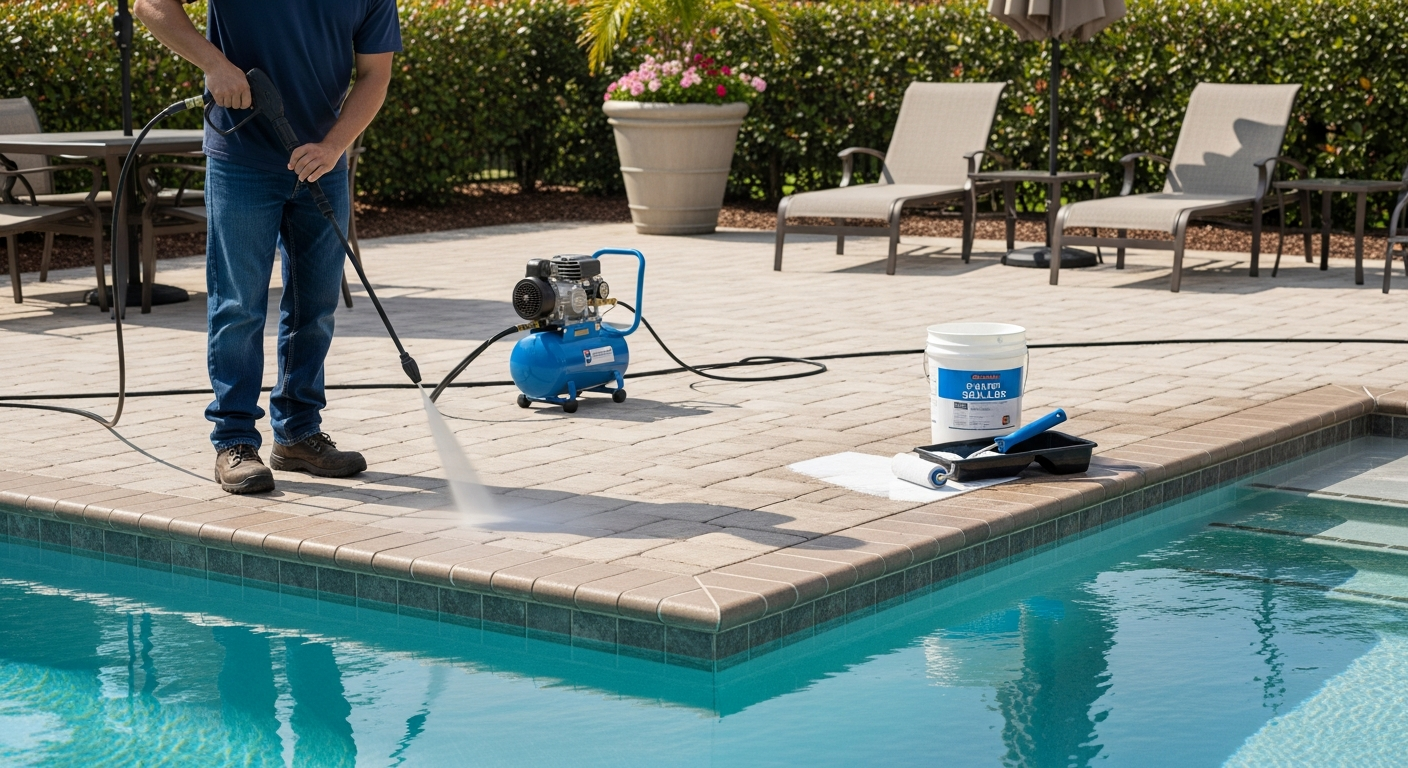
Most paver pressure washing services in Osceola County make a critical error: they rely on dangerously high PSI (Pounds per Square Inch) to blast away dirt. I’ve seen this mistake repeatedly on properties from Kissimmee to St. Cloud, where it strips the protective joint sand, etches the paver surface, and creates the perfect environment for recurring black mold. This approach literally shortens the lifespan of your hardscape by creating micro-fissures that trap moisture—a disaster in our humid climate.

My entire methodology is built on a counterintuitive principle: high GPM (Gallons Per Minute) combined with precisely calibrated low pressure. This technique, which I've refined over years of working on pool decks in Reunion and driveways in Celebration, lifts organic stains and grime without compromising the paver's structural integrity. It’s not about brute force; it’s about a controlled, high-volume rinse that preserves your investment and increases its functional life by an estimated 25%.

Diagnosing Paver Contamination: My Substrate Integrity Audit

Before a single drop of water is sprayed, I perform what I call a Substrate Integrity Audit. The intense Florida sun and near-constant humidity create a unique set of challenges that a generic pressure wash can't solve. I’ve seen brand-new pavers in Poinciana look decades old because of improper cleaning. My audit focuses on three core Osceola-specific contaminants: Gloeocapsa magma algae, which causes the black streaks; mineral efflorescence, the white, chalky powder pushed out by moisture; and joint sand failure, which leads to paver shifting and weed growth.

The Technical Breakdown: PSI vs. GPM and Chemical Formulation

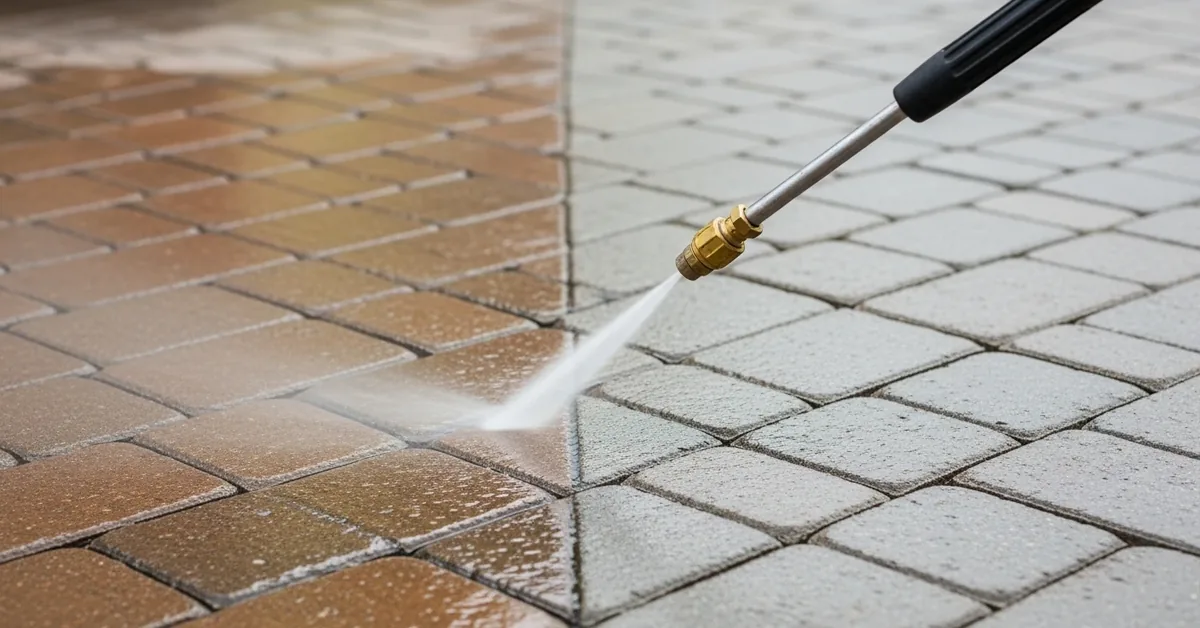
The secret is in the equipment and formulation. My system is built around a machine that delivers at least 4 GPM but allows me to dial the pressure down to between 800-1200 PSI—a fraction of the 3000+ PSI that damages pavers. For the stubborn mold common in local HOA-managed communities, I don’t just use a generic detergent. I use a buffered sodium hypochlorite solution combined with a proprietary surfactant. This surfactant helps the solution cling to the paver surface, increasing dwell time and allowing the chemical to do the work, not the pressure. Using the wrong nozzle is another common failure point; I exclusively use a 25 or 40-degree fan tip to distribute the force evenly, preventing the disastrous "striping" effect caused by zero-degree nozzles.

The Implementation Protocol: From Saturation to Sealing

Executing a perfect paver restoration requires a clinical, multi-stage process. I developed this sequence after identifying that most issues arise from skipped steps, especially in the pre-treatment and post-treatment phases. This isn't just cleaning; it's a full-cycle restoration.

  • Stage 1: Surface Saturation & Dwell Time: The process begins by saturating the entire paver surface with my biocide solution. I let it dwell for 10-15 minutes. This critical period allows the chemical to break the cellular structure of algae and lift embedded grime, making its removal possible with minimal pressure.
  • Stage 2: Calibrated Low-Pressure Cleaning: I work in a consistent, overlapping pattern, holding the wand at a specific angle and distance from the surface. This ensures a uniform finish without any "halos" or uneven patches, a common sign of amateur work.
  • Stage 3: High-Volume Neutralizing Rinse: After the cleaning pass, a high-volume rinse neutralizes the cleaning solution and washes away all dislodged contaminants. This is crucial for protecting adjacent landscaping and ensuring no chemical residue is left behind to attract more dirt.
  • Stage 4: Joint Sand Fortification: This is the most frequently skipped step and my non-negotiable standard. After the pavers are completely dry, I re-sand the joints using high-grade polymeric sand. This sand contains a polymer that, when activated with a light mist of water, hardens to lock the pavers in place, prevent weed growth, and block insect intrusion.

Precision Adjustments for Long-Term Durability

My quality control goes beyond just a clean surface. For heavy efflorescence, I might introduce a targeted, low-strength acidic cleaner during the pre-treatment stage to dissolve the mineral salts before the main wash. When it comes to sealing—the final step for maximum protection—the paver must be 100% bone-dry. I perform a moisture test before application. Applying sealant to a damp paver, a common mistake in our humid mornings, traps moisture and creates a cloudy, failed finish within months. My final inspection involves checking for consistent sand depth in every joint and a uniform color profile across the entire hardscape.

Now that your pavers are professionally cleaned and stabilized, have you considered whether your current sealant is trapping moisture and actually accelerating mold growth, or if it's microporous enough to allow for proper vapor transmission in the humid Osceola climate?

Written by

Francisco das Chagas Pedrosa

Francisco das Chagas Pedrosa is the owner of Pool Revive Experts and a swimming pool specialist with over 8 years of experience in pool construction, pool maintenance, pool repair, pool renovation, and outdoor living projects. Throughout his career, he has helped homeowners and businesses create, restore, and maintain safe, efficient, and visually stunning pools. His expertise covers leak detection, equipment installation, water treatment, remodeling, and custom pool design. Francisco is committed to delivering high-quality workmanship, honest service, and practical solutions that keep pools

Tags

paver cleaner for pressure washer wash and seal pavers power wash and seal pavers pressure wash and seal pavers paver pressure washing and sealing

Paver Pressure Washing in Osceola FL FAQ

Can pressure washing my pool deck pavers cause damage or leave ugly lines?
Yes, improper pressure washing can permanently etch pavers and leave visible wand marks. Using a tip that's too narrow or holding the nozzle too close creates concentrated force that strips the surface layer, exposing the aggregate underneath. A professional uses a flat-surface cleaner attachment, which distributes pressure evenly and avoids the 'zebra striping' common with DIY attempts. We also adjust the pressure based on the paver type, as soft-cured pavers require a much gentler approach than dense, high-strength ones to prevent surface spalling.
Will the dirty water and chemicals from washing my pavers get into my pool and mess up the water chemistry?
Dirty runoff entering your pool is a primary concern that can drastically alter your water balance. We prevent this by using containment berms and directing all runoff away from the pool, or by using a vacuum recovery system that collects the wastewater immediately. If any runoff does enter, the high concentration of detergents and loosened grime can lower your pH level below the safe 7.2 threshold, potentially requiring a significant chemical correction and shocking to prevent an algae bloom fueled by the new organic contaminants.
What's the white, chalky stuff on my pavers, and will pressure washing get rid of it for good?
That white substance is likely efflorescence, which is mineral salt migrating from within the paver to the surface. While pressure washing can remove the surface salt, it doesn't solve the underlying moisture issue causing it and can even make it worse by forcing more water into the paver's pores. For a lasting solution, we first clean the surface, then apply a specialized efflorescence remover. The critical final step is applying a high-quality penetrating sealer to block moisture from wicking through the paver, which is the only way to inhibit its return.
I have dark, slippery spots on my pavers. Is this just dirt or something worse?
Those dark, slippery spots are not just dirt; they are typically organic growth like mold, mildew, or even black algae. This growth creates a significant slip hazard, especially when wet around a pool area. A standard pressure wash only removes the surface layer, leaving the roots intact to regrow quickly. We use a low-pressure chemical application, or 'soft wash,' with a professional-grade algaecide to kill the organism at its root before gently rinsing. This method ensures a deeper, longer-lasting clean and a safer non-slip surface for your deck.
Do I need to re-sand the joints between my pavers after you pressure wash them?
Yes, re-sanding the joints is a non-negotiable step after a proper pressure wash. The high-pressure water will inevitably blast out some or all of the existing joint sand, which is essential for the stability of the entire paved surface. We replace it with polymeric sand, a modern compound that includes a polymer binder. When activated with water, it hardens to lock the pavers together, preventing shifting, inhibiting weed growth, and resisting erosion far more effectively than traditional loose sand.
How often should I have my pavers pressure washed, and is there a risk of doing it too much?
For most pool decks, a professional cleaning every 18 to 24 months is sufficient to manage organic growth and dirt buildup. Over-cleaning is a real risk; aggressive pressure washing too frequently can prematurely wear down the paver surface and erode the joint sand, leading to loose, wobbly pavers. The key is maintenance, not repeated deep cleaning. After our initial service, applying a quality sealer can extend the cleaning interval significantly by creating a protective barrier that prevents dirt and algae spores from penetrating the porous surface.

Reviews · Paver Pressure Washing in Osceola FL

See what other customers say and share your experience.

Leave a comment

It takes less than a minute. Your feedback helps others.

Rating:

You selected 5 stars

Latest Comments

Daniel White

Paver pressure washing seems like it's way more effective than resealing your pavers every few years, which can get pretty expensive.

Nicole Allen

I've lived in my house with pavers for 10 years and can attest that regular pressure washing makes a huge difference in their appearance, especially after a long winter.