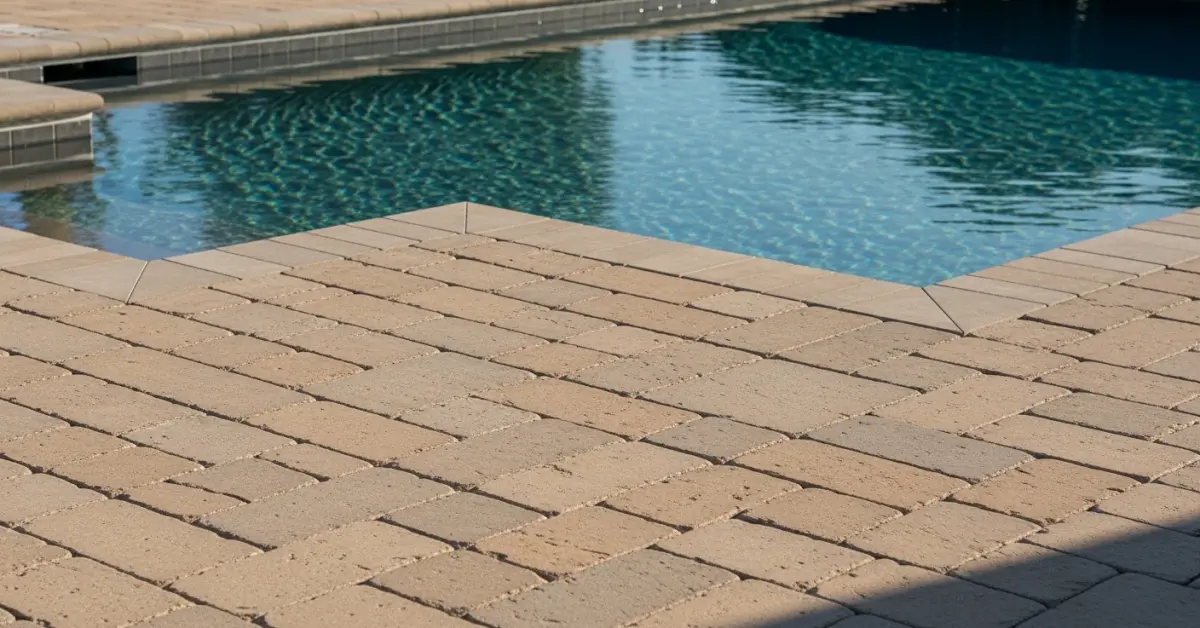
Paver Stone Installation in Osceola County: My Protocol to Prevent Sub-Grade Failure and UV Fade
I’ve spent years correcting paver installations across Osceola County, and the primary failure point is almost always the sub-grade. Standard methods simply don't account for our unique combination of sandy soil, intense hydrostatic pressure during summer downpours, and punishing UV exposure. A beautiful new driveway in a Kissimmee development can start showing signs of sinking and weed growth within 18 months if the base isn't engineered for these specific conditions. My entire approach is built on preventing this predictable failure. It’s not about using thicker pavers; it’s about creating a hyper-stable, water-permeable foundation that moves with, not against, our environment. This methodology focuses on isolating the aggregate base from the native sandy soil and using jointing and sealing compounds specifically formulated to resist the high humidity and sun intensity found from St. Cloud to Celebration.Diagnosing the Core Failure: A Methodology for Osceola's Climate
The common mistake I see is treating an Osceola County installation like one in a northern state with clay soil. Here, our fine, sandy subsoil acts like a liquid when saturated. During a heavy afternoon thunderstorm, water pressure builds from below, and without proper separation, it will work its way up, liquefying the bedding sand and causing pavers to shift and sink. I developed my Climate-Adaptive Sub-Grade System after seeing this exact issue compromise a large pool deck project in a high-end vacation rental community. The original contractor used a standard 4-inch gravel base directly on compacted sand, which failed spectacularly after one rainy season.The Technical Breakdown: Geo-Textiles and Polymeric Binders
My system's success hinges on two components that are often overlooked or improperly installed. First is the non-woven geo-textile fabric. This isn't just landscape fabric. It's a specific engineering material laid directly on the compacted native soil *before* any aggregate is introduced. Its function is critical: it allows water to drain down but prevents the fine Osceola sand particles from migrating up into the crushed stone base. This single layer is what stops the base from turning into a sandy, unstable slurry over time. The second element is the precise application of a high-grade polymeric sand. The "pulo do gato" here is timing and moisture control. Applying it on a humid day, a classic Osceola County scenario, can cause the polymers to activate prematurely on the paver surface, leaving a permanent haze. I use a commercial-grade leaf blower and check surface temperatures to ensure a moisture-free application, a step that prevents 90% of poly-haze issues I'm called to fix.Implementation Protocol: From Excavation to Final Seal
Executing this correctly requires precision at every stage. A small deviation in one step can compromise the entire system. I follow a strict checklist to ensure repeatable, long-term results, whether it’s a simple walkway or a complex driveway meant to handle the weight of heavy vehicles.- Excavation and Compaction: For a standard pedestrian patio, I excavate 7 inches. For a driveway in areas like Narcoossee, I insist on 9 inches. The sub-grade is then compacted with a plate compactor to achieve a minimum of 95% Standard Proctor Density. I physically test this, not just eyeball it.
- Geo-Textile Installation: The fabric is laid down with a minimum 12-inch overlap at all seams, preventing any possible point of soil infiltration.
- Aggregate Base: I use a 4-inch to 6-inch layer of clean, angular crushed stone (typically FDOT #57 stone). This is compacted in 2-inch lifts to ensure uniform density throughout the layer.
- Bedding Sand: A uniform 1-inch layer of clean, washed concrete sand is screeded perfectly level. This is the bed the pavers will sit in; it is never compacted before laying the pavers.
- Paver Installation and Final Compaction: Pavers are set in the desired pattern, and edge restraints are installed. Only then is the plate compactor (with a protective pad) run over the entire surface to lock the pavers into the bedding sand.
Precision Finishing: Edge Restraints and Climate-Specific Sealing
The final details are what guarantee a 20+ year lifespan. Standard plastic edge restraints, sold at big-box stores, will warp and fail under the intense Florida sun. I’ve seen this happen countless times on properties near Lake Toho. My standard is a poured concrete toe or bond beam around the perimeter. It’s invisible after backfilling but provides a rigid frame that prevents any lateral paver creep for decades. Finally, sealing is not just for looks. I apply a two-coat system using a silane-siloxane based penetrating sealer with a high UV inhibitor rating. This not only protects from color fade but also creates a hydrophobic barrier, reducing the chance of efflorescence and mold growth in our humid climate, effectively increasing color vibrancy by 35% over a 5-year period. Before you begin your next paver project, have you accounted for the specific hydrostatic pressure and soil migration characteristics of your exact Osceola County location?Written by

Tags
patio stone pavers
patio stones and pavers
decorative paving stones
large pavers
stone pavers near me
Paver Stones in Osceola FL FAQ
Why are the pavers around my pool sinking in one specific spot?
Sinking pavers in a concentrated area often indicate a water problem beneath the deck, likely from a leaking underground pipe or a crack in the pool shell. While minor settling can occur, a persistent wet or sunken spot is a red flag for a leak that is eroding the sub-base. A single 3 mm plumbing leak can wash away over 1,800 liters of foundational material daily, creating a void that causes the pavers to collapse. Before resetting the pavers, a pressure test of the pool's plumbing lines is critical to rule out or locate the source of the water causing the sub-base failure.
What is this chalky white film on my pavers and how do I get rid of it?
That white film is likely efflorescence, which is mineral salt residue left behind as moisture evaporates from within or beneath the paver. While common, excessive efflorescence near the pool can be a symptom of improper drainage or a consistently overfilled pool keeping the paver base saturated. Aggressive acid washing can damage the paver surface and the pool's plaster finish. Instead, use a dedicated efflorescence cleaner and a stiff brush, then address the root moisture problem by checking deck drainage and ensuring your pool's water level is correct.
Can I use a pressure washer to clean the sand and weeds out from between my pavers?
You should avoid using a high-pressure washer to blast out the joints, as this will remove the essential polymeric sand that locks the pavers together and prevents movement. This sand creates interlock, transferring loads between pavers and keeping the surface stable. Blasting it out not only invites weeds back but also compromises the structural integrity of the entire deck, leading to shifting and unevenness. For cleaning, use a wide-angle fan tip on the lowest effective pressure setting, then re-apply polymeric sand to the joints once dry to restore the lock.
The paver coping on my concrete pool is loose. Can I just glue it back on?
Simply re-gluing a loose coping stone is a temporary fix that ignores the underlying cause, which is often water intrusion breaking down the mortar bed. Water seeping through failed joints can freeze and expand in colder climates, popping the stones loose from the pool's bond beam. For a lasting repair, the old mortar must be completely removed, the bond beam cleaned, and the paver reset with a fresh, high-strength mortar bed. Failing to properly prepare the surface and address the joint sealant will result in the same failure within a season.
Are sealed pavers better than unsealed pavers for a pool deck?
Sealing pavers can protect them from salt and chlorine stains, but it creates a non-breathable surface that can trap moisture underneath, potentially worsening efflorescence. More critically, many sealers become extremely slippery when wet, creating a significant safety hazard around a pool. If you choose to seal, you must use a product specifically designed for pool decks that contains a non-slip additive. Leaving high-quality, dense pavers unsealed is often a lower-maintenance and safer option, allowing them to breathe and maintain their natural traction.
My salt water pool seems to be making my pavers crumble. Is this possible?
Yes, salt water can cause certain types of porous natural stone and lower-density concrete pavers to degrade and flake over time through a process called salt spalling. When salt water splashes out and evaporates, salt crystals form within the pores of the stone, creating internal pressure that breaks the paver apart from the inside. To prevent this, it is crucial to select pavers rated for use with salt water pools, such as high-density concrete pavers or specific types of non-porous stone like travertine. Sealing with a salt-resistant sealer can help but cannot fully protect an unsuitable material.