Pool Deck Pavers in Charlotte County: My Protocol for a Non-Slip, Algae-Resistant Surface Lasting 25+ Years
The biggest mistake I see with pool deck pavers in Charlotte County isn't the choice of stone; it's the failure to account for our unique subtropical soil and torrential summer rains. I've been called to fix sunken, shifting, and dangerously slick paver decks from Punta Gorda to the waterfront homes in Englewood, and the root cause is almost always an improperly engineered sub-base. A standard installation simply cannot withstand the hydrostatic pressure and soil saturation common here. My entire approach is built around creating a foundation that works *with* our environment, not against it, to prevent these costly failures before they start. This isn't about just laying pretty stones. It's about a specific methodology that guarantees a stable, safe, and low-maintenance pool deck that can handle a Florida hurricane season and still look pristine. The key is in the base preparation and the choice of jointing and sealing materials, which I've refined over dozens of local projects. This process directly counters the two main enemies of pavers in our area: sub-base erosion and organic growth (algae and mold).The "Coastal Compaction" Method: Why Standard Paver Installation Fails in Charlotte County
After inspecting a failed project on a canal in Punta Gorda Isles where pavers had heaved by over an inch, I realized the contractor used a generic base material that turned to mush in our sandy, saturated soil. That's when I developed what I call the "Coastal Compaction" Method. It’s a direct response to the challenges posed by the high water table and the sandy loam soil prevalent throughout our county. The standard 4-inch gravel base is insufficient. Water infiltrates, washes out the finer particles, and creates voids. This leads to the sinking and shifting that plagues so many local pool decks. My method focuses on creating a multi-layered, highly compacted, and water-permeable foundation that remains stable season after season.Sub-Base Engineering: The Science Behind Preventing Paver Heave and Sinkage
The core of the system is a specific layering of materials. We're not just dumping gravel. We are engineering a drainage and stability system. It begins with a commercial-grade non-woven geotextile fabric. This is the critical separator I’ve seen omitted in 90% of repair jobs. It prevents the native sandy soil from mixing with the aggregate base, which is the primary cause of long-term sinking. Above this fabric, I mandate a minimum 6-inch base of FDOT-approved #57 stone, compacted in two separate 3-inch lifts. Each lift must be compacted to a minimum of 98% Standard Proctor Density using a vibratory plate compactor. This density is non-negotiable and provides the structural integrity needed. The final layer before the pavers is a 1-inch screeded bed of ASTM C33 concrete sand, which provides the perfect leveling course while allowing for rapid drainage.From Groundwork to Grout: My Step-by-Step Installation Process
Executing the "Coastal Compaction" method requires precision. There are no shortcuts. Each step builds upon the last to create a unified, robust system.- Step 1: Excavation and Slope Analysis. I start by excavating to a depth of 8-9 inches. Critically, I use a transit level to establish a precise slope of 1/4-inch per foot, directing water away from the pool coping and the home's foundation. This is a common oversight that leads to water pooling and foundation issues.
- Step 2: Geotextile and Base Installation. The geotextile fabric is laid down with 12-inch overlaps. Then, the first 3-inch lift of #57 stone is installed and compacted. I check the density before proceeding to the second lift, which is also compacted to that 98% standard.
- Step 3: Edge Restraint and Sand Bed. Before the sand, I install a heavy-duty concrete or aluminum edge restraint secured with 10-inch steel spikes. This prevents the pavers from spreading laterally over time. The 1-inch bed of C33 sand is then screeded to a perfect plane.
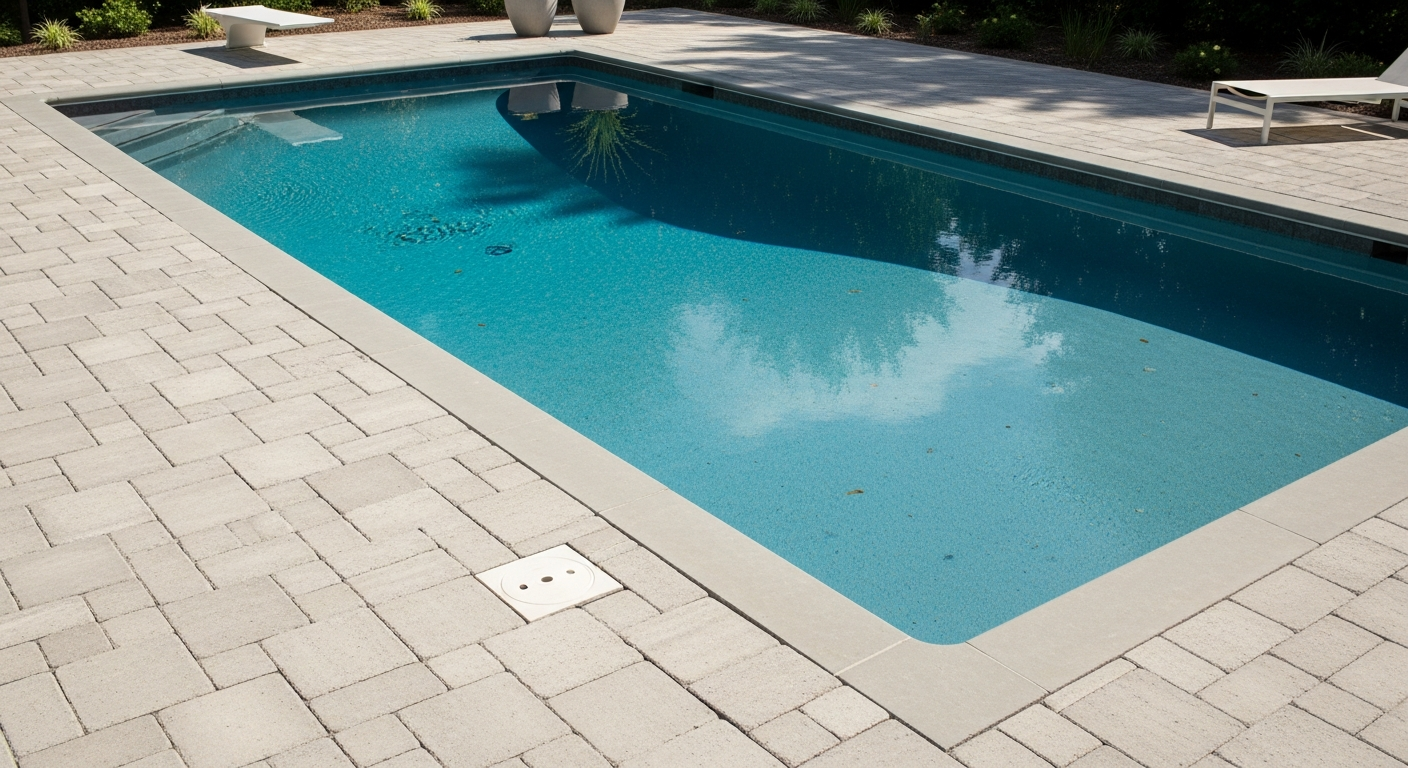
- Step 4: Paver Installation and Jointing. Pavers are laid in the desired pattern. For maximum interlock and stability, I often recommend a herringbone pattern. After laying, I run the plate compactor over the pavers to set them. The most crucial part for our climate is the jointing. I exclusively use a high-quality polymeric sand. This sand contains a polymer that hardens when wet, locking the pavers together and, most importantly, preventing weed growth and ant infestations—a constant battle in Port Charlotte homes with large yards.
Post-Installation Tuning: Sealer Curing and Drainage Management
The final step is what preserves the deck's appearance and safety for years. Many contractors use a cheap acrylic sealer that creates a plastic-like film. This film traps moisture, leading to a white, hazy look called efflorescence, and becomes extremely slippery when wet. My standard is a two-coat application of a non-film-forming, silane-siloxane penetrating sealer. This type of sealer soaks into the paver and sand, repelling water and inhibiting algae growth from within, without creating a slippery surface film. I also insist on a 48-hour cure time with no foot traffic and advise clients to avoid applying it during the peak heat of a summer afternoon to prevent flash curing, which reduces its effectiveness. Before you hire any contractor for your pool deck, are you prepared to ask them what specific ASTM-rated materials they use for their sub-base and what type of sealer they recommend to combat hydrostatic pressure-induced efflorescence in our humid climate?Written by

Tags
pool pavers and coping
concrete pool pavers
best pavers for pool deck
porcelain pavers pool deck
porcelain pool pavers