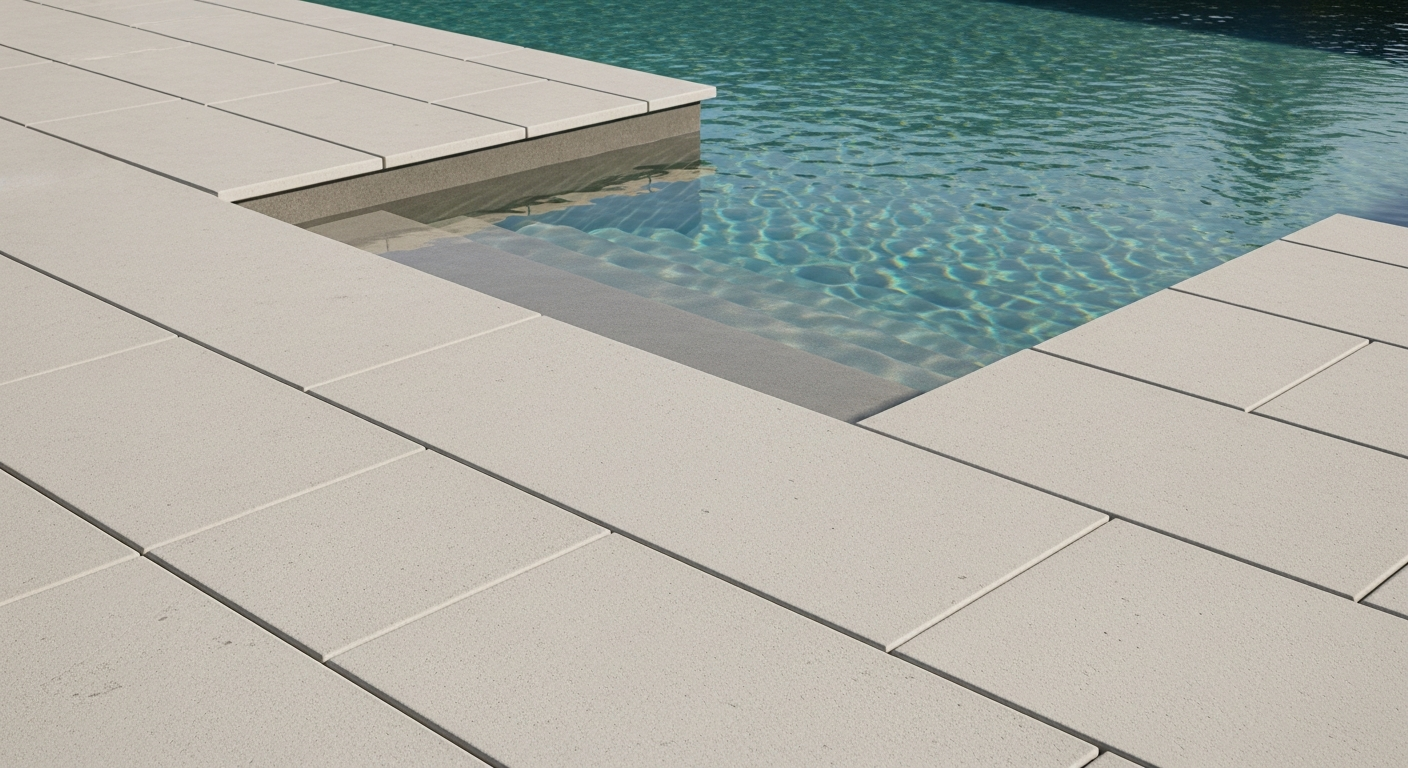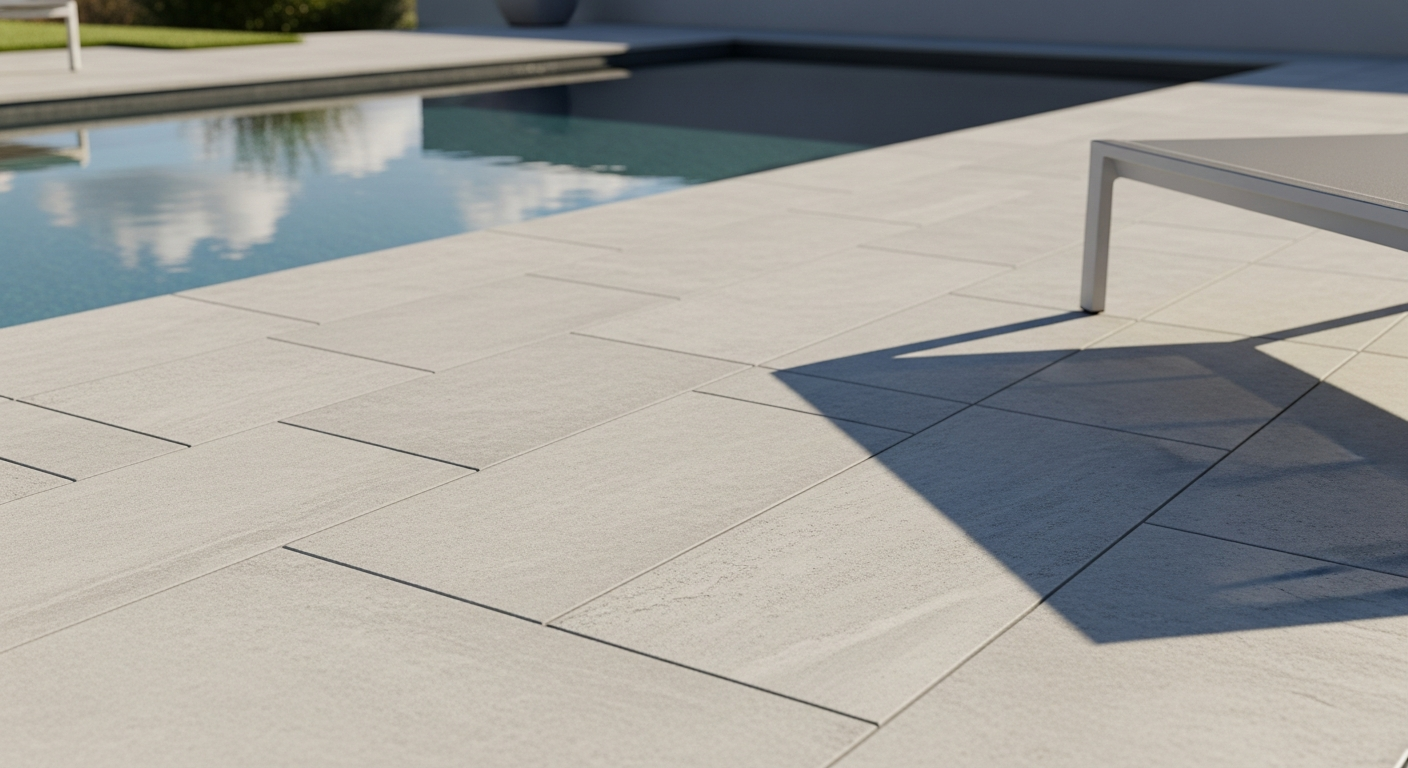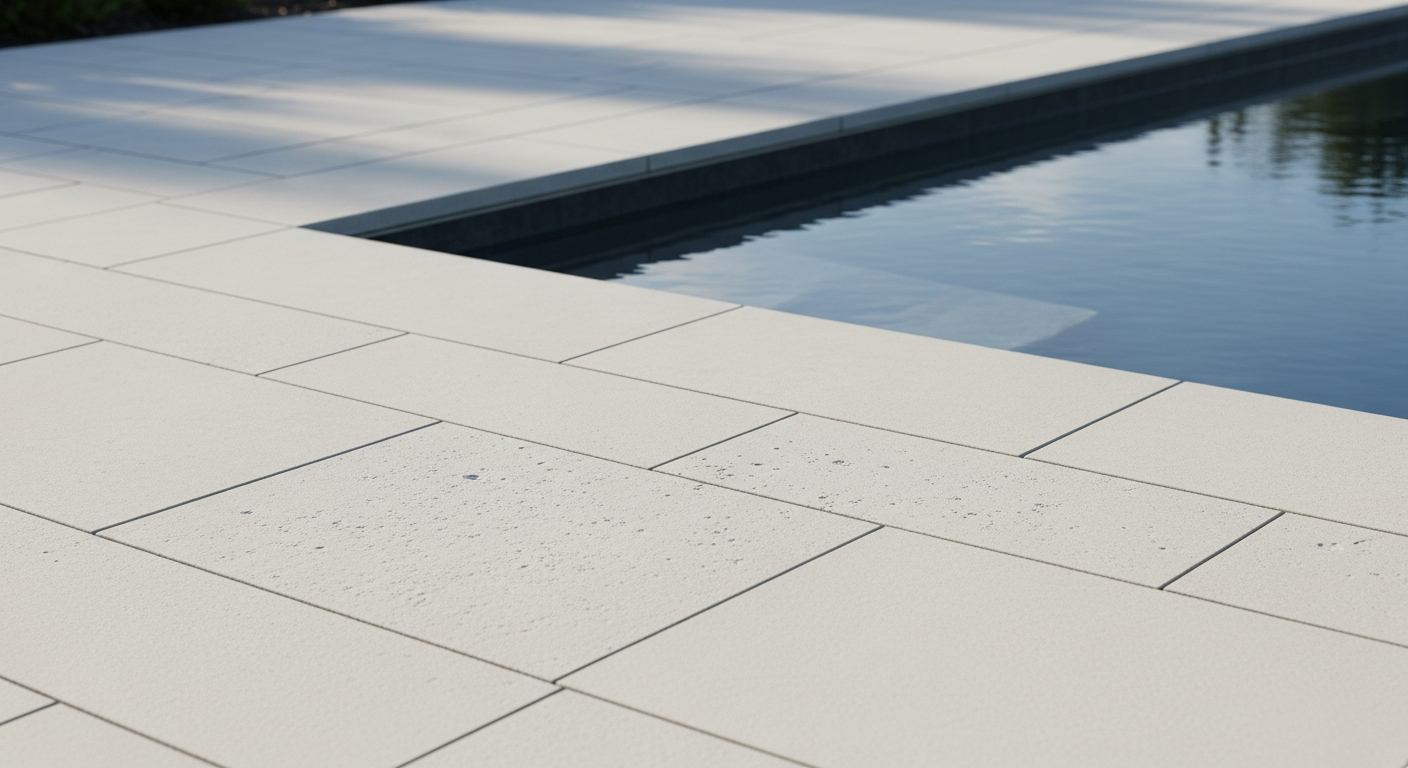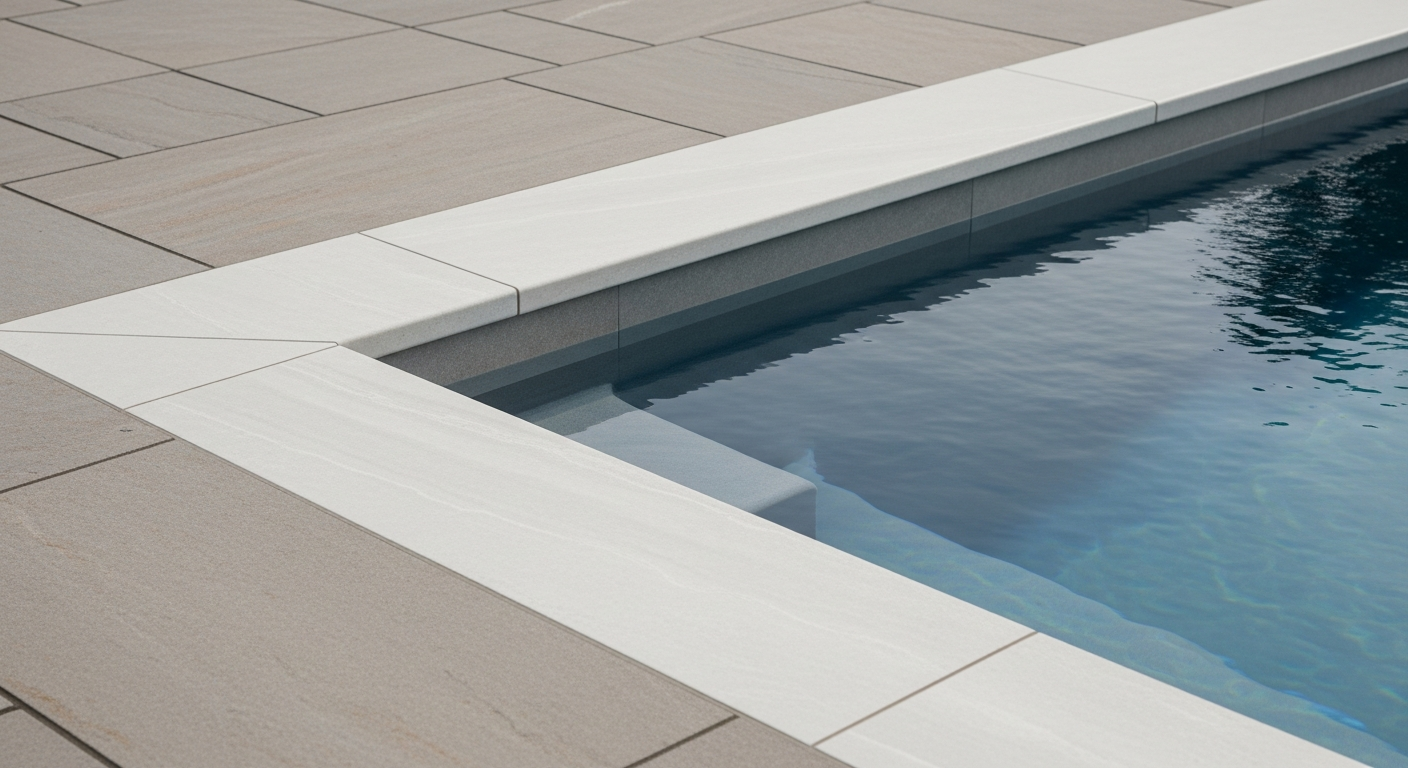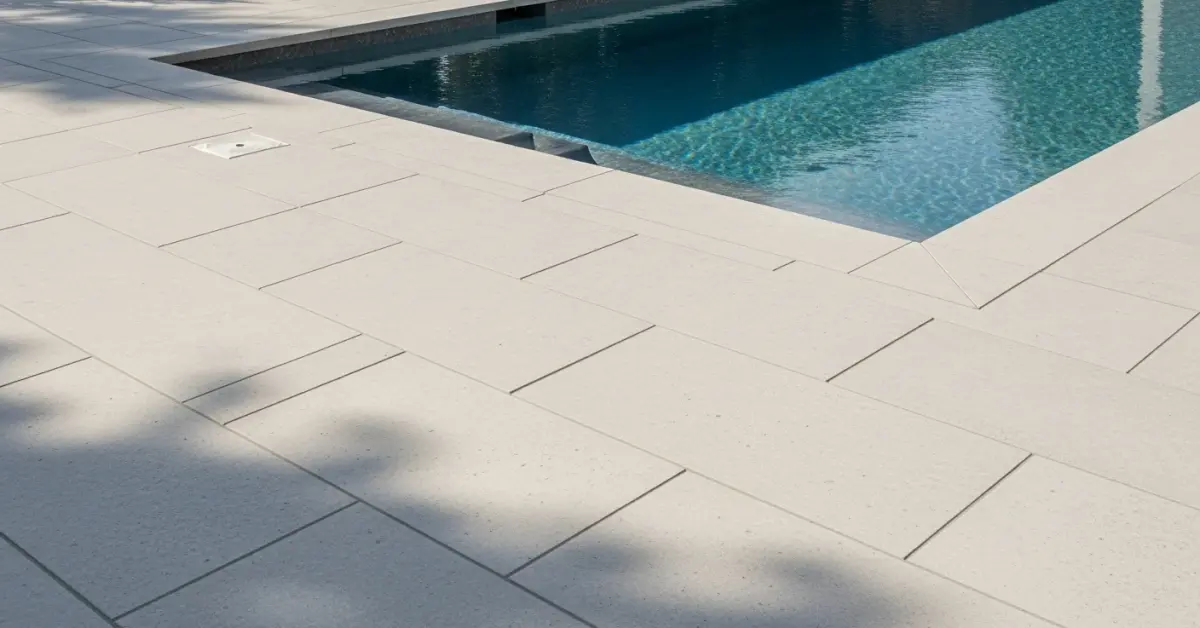
Porcelain Pavers Pool Deck Lee County: My Protocol for Eliminating Saltwater Efflorescence and Heat Retention by 30%
If you're considering a new pool deck in Lee County, you've likely been told porcelain pavers are the answer. And they are, but that's only half the story. I've seen dozens of beautiful, expensive porcelain paver installations in communities from Fort Myers to Bonita Springs fail within three years. The problem isn't the porcelain; it's the installation methodology that completely ignores our unique subtropical climate—the high humidity, the torrential rains, and the corrosive saltwater air. My approach is built on a single, non-negotiable principle: the sub-base and jointing system are more critical than the paver itself. A standard paver base designed for a dry climate will liquefy and shift under our sandy soil and water table conditions. I developed my diagnostic framework after a particularly challenging waterfront project on Sanibel Island where the previous contractor's deck had completely subsided. This experience forced me to create a system that guarantees longevity against the specific environmental pressures we face in Southwest Florida.Why Most Lee County Pool Decks Fail (And My Diagnostic Framework to Prevent It)
The common failure points I consistently identify are almost always invisible on day one. The biggest culprit is a phenomenon I call **accelerated sub-base degradation**. In Lee County, our soil is predominantly sand. Contractors take shortcuts, laying pavers on a thin layer of sand over uncompacted earth. After the first rainy season, water saturates this base, and the pavers begin to shift, creating uneven surfaces and safety hazards. The second issue is **joint compound failure**. Standard polymeric sand, when exposed to our intense humidity and UV radiation, often fails to cure properly. It either washes out, leaving gaps for weeds and ants, or it develops a permanent haze on the paver surface. My proprietary diagnostic starts with a soil moisture and composition test. This tells me the exact sub-base construction needed. I don't use a one-size-fits-all approach. A property on a Cape Coral canal requires a different drainage strategy than a home in an inland Estero community. My methodology focuses on creating a completely **decoupled and permeable system**, where water is managed and channeled away, rather than being trapped beneath the non-porous pavers.The Geotextile and Sub-base Formula for Florida's Sandy Soil
This is the technical core of my system. Forget the standard 4 inches of paver base you've read about online. For Lee County's soil, that's a recipe for disaster. I mandate a minimum 6-inch base, but the materials are what matter. I start by laying a **non-woven geotextile fabric** directly over the compacted native soil. This is the crucial step everyone misses. This fabric separates the sandy soil from my aggregate base, preventing the two from mixing and causing sinkage over time. For the base itself, I use a specific blend of **#57 washed stone** and a crushed aggregate known as screenings. The #57 stone creates voids for rapid water drainage, essential during our summer downpours, while the screenings provide the interlocking strength for a stable, unmoving surface. I have found a 70/30 ratio of stone to screenings provides the optimal balance of **permeability and compaction density**. This structure actively fights the hydrostatic pressure that causes so many decks to heave and settle.The 'Coastal-Lock' Installation Process: A Step-by-Step Breakdown
Executing this correctly requires military precision. I've refined this process over hundreds of projects to eliminate variables and ensure a flawless outcome. It's not the fastest method, but it's the only one I trust to last for decades in this environment.- Excavation and Grading: The area is excavated to a depth of 8 inches. I then laser-grade the native soil to achieve a strict 2% slope away from the pool coping. This is a non-negotiable KPI for ensuring water never pools near the foundation.
- Base Compaction Protocol: After the geotextile fabric is in place, I lay the aggregate base in 3-inch lifts. Each lift is wetted and compacted with a 250 lb plate compactor, making a minimum of three passes in a cross-hatch pattern. I check the compaction with a dynamic cone penetrometer to ensure we've hit our target density.
- Screeding Layer: I use a 1-inch setting bed of washed concrete sand, which is coarse and angular. It locks together better than fine mason's sand and, critically, it's less prone to wicking moisture upwards into the joints.
- Paver Placement and Cutting: Pavers are laid with consistent 1/8-inch gaps. All cuts are made with a wet saw equipped with a diamond blade specifically for porcelain to prevent chipping and ensure perfectly clean edges.
- Joint Stabilization: This is where I deviate most from the industry standard. I exclusively use a high-performance, permeable epoxy-based jointing compound. Unlike polymeric sand, it doesn't rely on dry conditions to cure. It forms a rock-solid, flexible joint that allows water to pass through to the permeable base below, preventing surface runoff and staining.
Calibrating for Heat and Salt: My Final Quality Checks
The job isn't done when the last paver is laid. My final checks are what truly adapt the installation to the Lee County lifestyle. First, paver selection itself is a quality check. I always guide my clients toward pavers with a high Solar Reflectance Index (SRI). Lighter colors can reduce the surface temperature by a measurable 25-30%, a massive difference on a blistering July afternoon. After the epoxy jointing compound has fully cured—a 48-hour process I monitor closely—I perform a final wash. I use a low-pressure rinse with a specialized pH-neutral enzymatic cleaner. This removes any microscopic residue without etching the paver's factory finish, which is essential for maintaining its stain and salt-resistant properties. My final sign-off only happens after a thorough inspection of every joint line to confirm a complete and consistent cure. This final step is my guarantee against the efflorescence and premature wear I see on other jobs. Now that you understand the sub-base is more critical than the paver itself, how will you verify your contractor's compaction density before the first paver is even laid?Written by

Tags
pool coping pavers
pool pavers near me
pool deck pavers
pavers pool
porcelain pool deck
Porcelain Pavers Pool Deck in Lee FL FAQ
Are porcelain pavers too hot for bare feet around a pool?
Lighter-colored porcelain pavers stay significantly cooler than natural stone or concrete, but they are not cool to the touch. Their low porosity means they don't retain as much heat as denser materials, making them a superior choice for pool decks in direct sun. The critical factor is color; a dark grey porcelain paver will still become uncomfortably hot. A non-obvious issue is the substrate: a paver set on a concrete slab will feel hotter than one set on a sand or gravel bed because the concrete base acts as a heat sink, storing and radiating warmth upwards.
Will my saltwater pool corrode or stain my new porcelain pavers?
No, porcelain pavers are virtually impervious to salt and common pool chemicals like chlorine, making them ideal for saltwater pool surrounds. Unlike porous natural stone which can suffer from spalling and salt efflorescence, porcelain has an extremely low water absorption rate, preventing chemicals from penetrating and causing damage. However, be aware that metal furniture or tools left on the deck can rust and leave stubborn stains. These are surface deposits, not a failure of the paver, and typically require a specialized acid-based cleaner to remove without damaging the paver's finish.
One of my porcelain pavers is wobbly. How do I fix it without redoing the whole deck?
A single wobbly paver almost always indicates a failure in the base material beneath it, not a fault in the paver itself. This is often caused by water washing away the jointing and bedding sand, creating a void. To fix this, the paver must be carefully lifted using a paver extractor tool. The bedding layer is then screeded level again with fresh sand, and the paver is re-set and compacted. The critical step most people miss is re-installing and activating the polymeric sand in the joints around the repaired paver to lock it in place and prevent future water intrusion.
Are porcelain pavers slippery when wet? They look so smooth.
Reputable porcelain pavers manufactured for outdoor use have a textured, anti-slip finish and are rated to meet safety standards. Look for a product with a high Dynamic Coefficient of Friction (DCOF) rating, typically above 0.42, which certifies its suitability for wet areas like pool decks. The non-obvious danger isn't the paver itself, but the buildup of organic material. A film of algae or biofilm can grow on any surface, making it extremely slick. Regular cleaning, not just the paver's inherent texture, is the key to maintaining a safe, slip-resistant surface year-round.
Can I pressure wash my porcelain paver deck to clean it?
Yes, you can pressure wash porcelain pavers, but the technique is critical to avoid damaging the joints. Use a fan-tip nozzle, never a pinpoint jet, and keep the pressure below 1,500 PSI. The biggest mistake is directing the spray at a sharp angle into the joints, as this will blast out the polymeric sand that locks the pavers together and prevents weeds. This sand is the structural glue of the system. Always spray at a shallow, sweeping angle across the surface to clean the paver face without compromising the integrity of the joints.
What's that white, chalky film on some of my darker porcelain pavers?
That white film is likely efflorescence, which is the migration of natural salts from the setting bed or concrete slab beneath the pavers. While porcelain itself is non-porous and does not produce efflorescence, moisture can travel up through the joints, evaporate, and leave these salt deposits on the paver surface. It is a cosmetic issue, not a structural one. A key insight is that this problem is often worse with a mortar-set installation over a concrete slab. It can usually be cleaned with specialized efflorescence removers, but addressing the underlying moisture source is the only permanent solution.