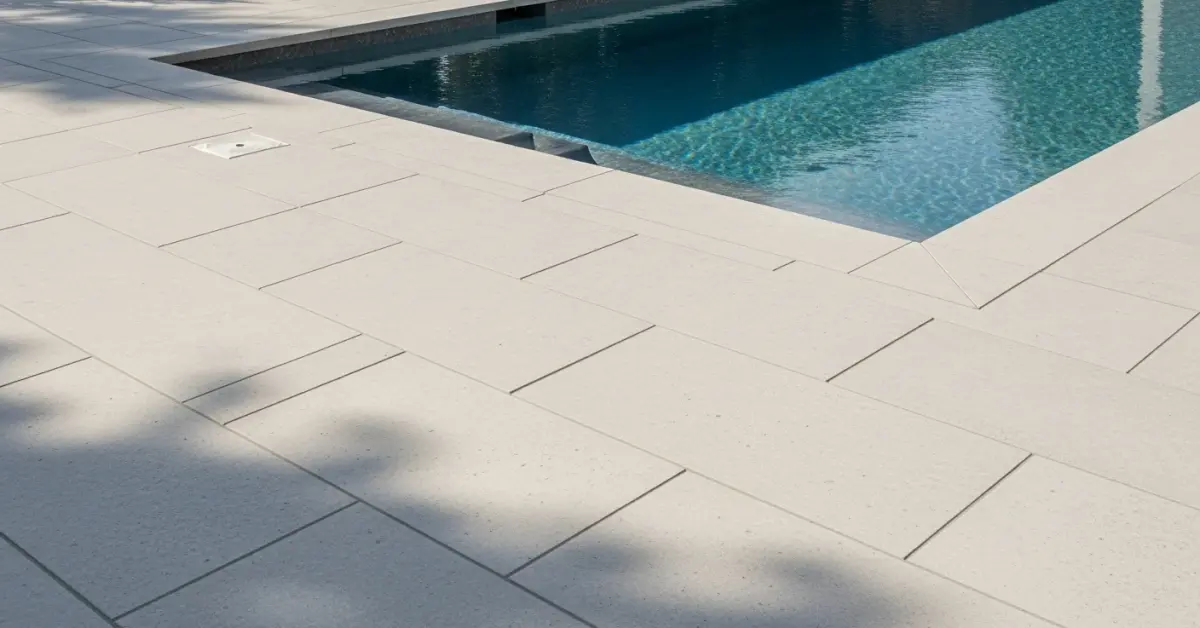
Porcelain Pavers Pool Deck Pasco County: My Protocol for Mitigating Heat and Preventing Substrate Failure
For years, I've seen homeowners in Pasco County, from the newer developments in Land O' Lakes to the established communities in Trinity, invest in beautiful pool decks only to see them fail. The primary culprit isn't the paver material itself, but a fundamental misunderstanding of our unique ground conditions: porous, sandy soil combined with a high water table and intense, prolonged humidity. This combination is a recipe for substrate instability and efflorescence, the chalky white residue that ruins the look of darker pavers. My entire installation philosophy is built around defeating these specific local challenges from the ground up. My approach focuses on creating a completely isolated, ultra-stable base that treats the porcelain pavers as the final, aesthetic layer, not the structural one. I developed this after a project in Wesley Chapel where a standard installation on a compacted sand base began showing uneven settling in less than 18 months. I discovered that seasonal rains were waterlogging the sand base, causing liquefaction and shifting. This led to my **Pasco-Proof Substrate System**, a multi-layered methodology designed for zero-shift performance and a projected 30% increase in deck lifespan compared to conventional methods.The Core Flaw in Standard Pool Deck Installations
The typical paver installation I'm called in to repair in areas like New Port Richey involves a simple process: excavate, add a layer of crushed stone, compact it, add a sand bed, and lay the pavers. This works fine in drier, more stable soil conditions. In Pasco County, it’s a ticking clock. The problem I consistently identify is the direct contact between the sand setting bed and the native Florida soil, even with a layer of aggregate in between. Over time, hydrostatic pressure and capillary action force moisture upward, saturating the sand and compromising the entire system.Deconstructing the Failure: Moisture Migration and Soil Mechanics
The failure mechanism is twofold. First, our fine sand soil acts like a sponge. During the rainy season, it becomes saturated. This moisture carries dissolved mineral salts. As it wicks up into the paver base and then evaporates through the joints in the hot sun, it leaves behind the salt deposits we see as efflorescence. Second, the constant cycle of saturation and drying, combined with the non-cohesive nature of our local soil, causes the aggregate base to slowly "sink" or mix with the subgrade. This creates subtle dips and uneven surfaces that are not just unsightly but can become tripping hazards around a pool. My system directly targets these two failure points by creating an impenetrable barrier and a superior drainage plane.Executing the Pasco-Proof Substrate System: A Step-by-Step Breakdown
After refining this process on dozens of pool decks, I've standardized it into a clear, repeatable protocol. Skipping any of these steps, particularly the first two, invalidates the entire system. It’s an all-or-nothing approach to guarantee stability.- Excavation and Subgrade Compaction: I mandate an excavation of at least 8 inches below the final paver height. We then compact the native sandy soil subgrade with a plate compactor to achieve maximum density. The critical action here is establishing the correct grade—a minimum 1/4 inch drop per linear foot sloping away from the pool and the home's foundation.
- Geotextile Separator Fabric Installation: This is the single most important step I see other installers omit. We lay down a commercial-grade, non-woven geotextile fabric over the entire compacted subgrade, overlapping all seams by at least 12 inches. This fabric acts as a separator, preventing the aggregate base from mixing with the soil below while still allowing water to pass through.
- The Aggregate Base Layer: On top of the fabric, I specify a 4-inch minimum layer of clean, angular #57 stone. We lay this in 2-inch lifts, compacting each one independently. This creates a highly stable, load-bearing foundation that facilitates rapid drainage.
- The Dual-Layer Setting Bed: Instead of a single layer of sand, I use two. First, a 1-inch screeded layer of coarse, washed sand (#89 granite screenings). Second, a final 1/2-inch layer of finer, washed concrete sand. This dual-layer approach provides a rock-solid, perfectly level surface for the pavers while optimizing drainage directly beneath them.
- Porcelain Paver Installation: The porcelain pavers are then set directly onto the prepared bed. We use a dead blow rubber mallet to set each paver, ensuring perfect adhesion to the sand and level surfaces across the entire deck. Spacer tabs are mandatory to maintain consistent 1/8" or 3/16" joint lines.
- Polymeric Sand Jointing: The final step is locking it all together. I only use high-quality polymeric sand. The trick I've learned is to work in small, manageable sections, ensuring the paver surface is bone dry before sweeping the sand in. Any surface moisture can pre-activate the polymers, causing a permanent haze on the pavers—a costly and difficult mistake to fix. We make two passes with the plate compactor (on top of a protective mat) to vibrate the sand deep into the joints before the final water activation.
Precision Adjustments for Pasco County's Climate
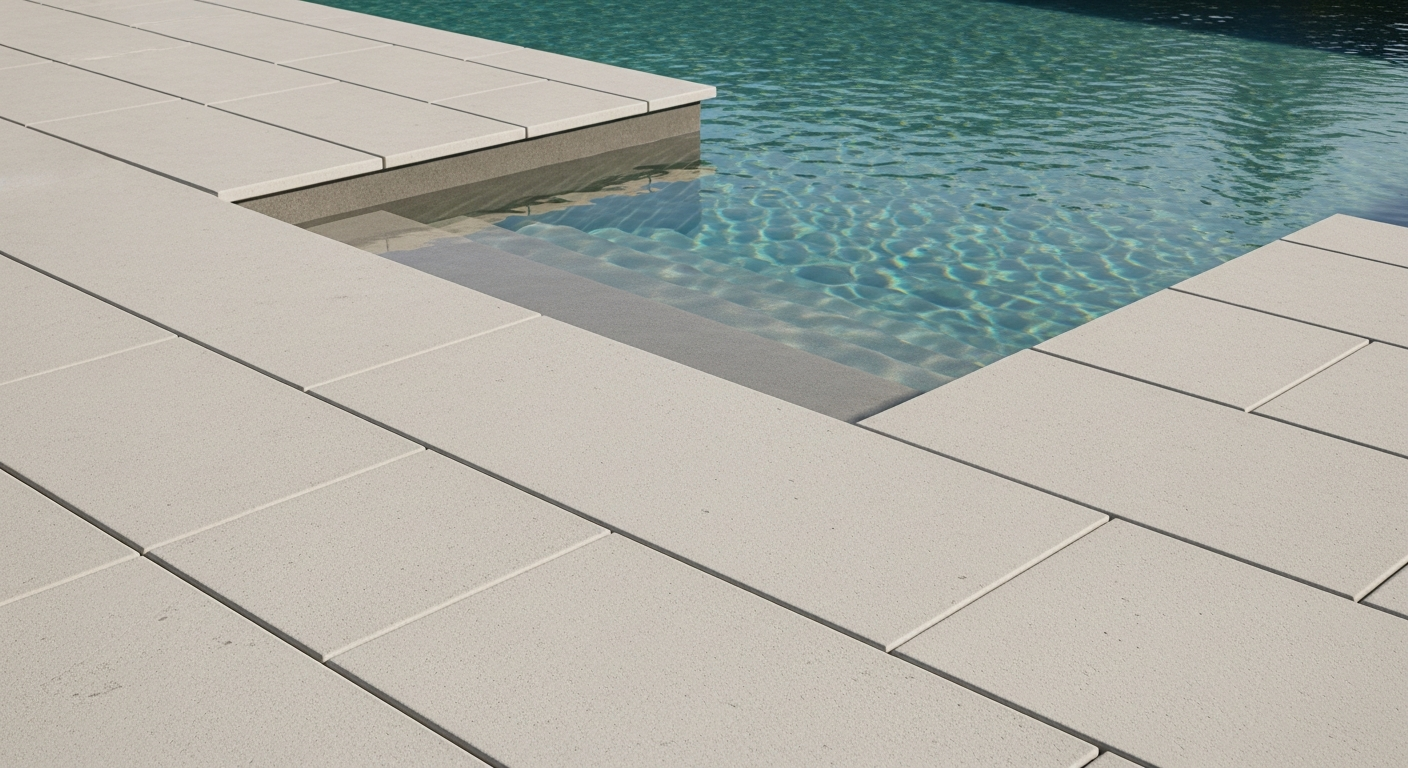
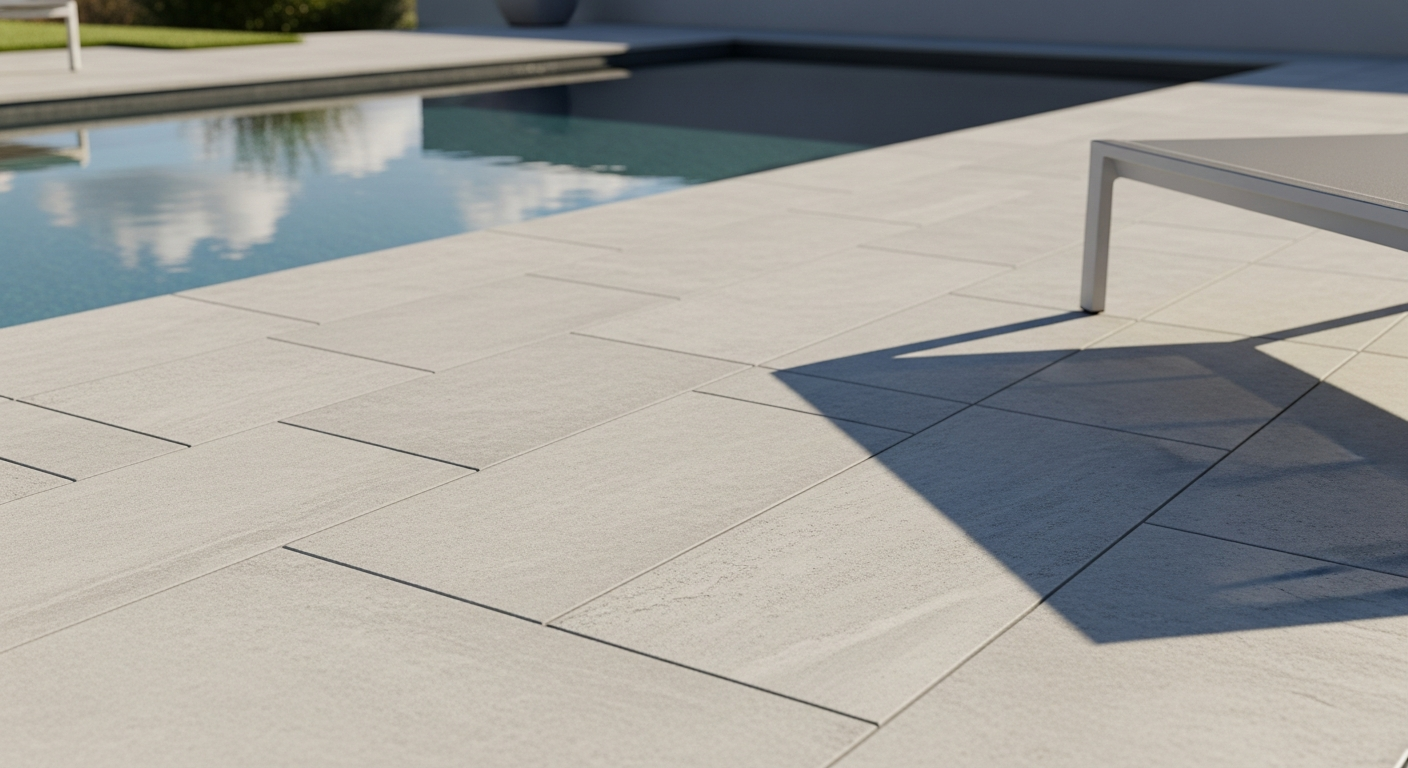
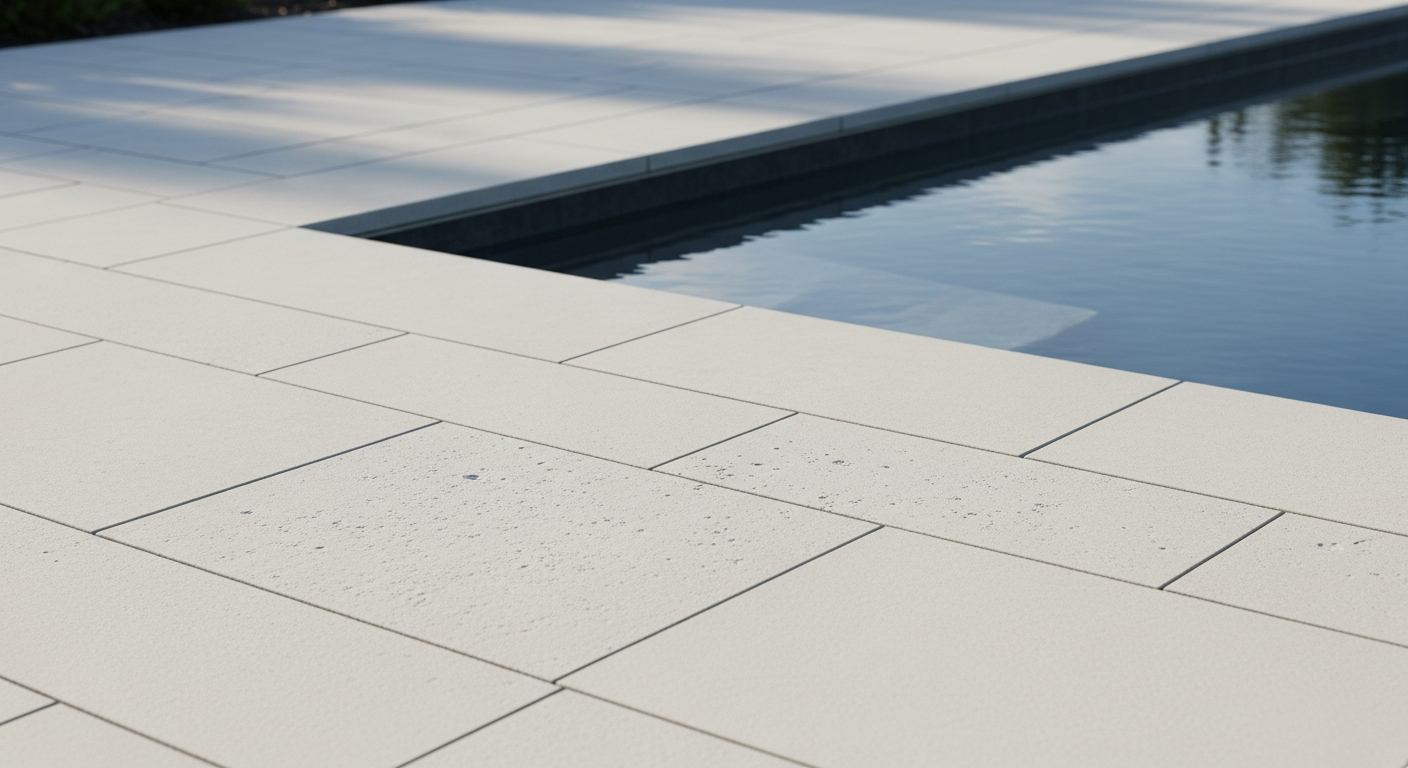
Beyond the base, material selection is key. While many clients are drawn to dark, dramatic porcelain pavers, I always have a conversation about the **Solar Reflectance Index (SRI)**. In the peak July sun in our area, a low-SRI paver (dark colors) can become uncomfortably hot to the touch. I guide clients toward lighter-colored pavers with a higher SRI value to ensure their pool deck is usable all day long. Furthermore, one of the biggest benefits of high-density porcelain is its non-porous nature. In my professional experience, applying a topical sealer is often unnecessary and can even be detrimental, as it can trap efflorescence-causing moisture if the substrate wasn't built correctly in the first place. A properly installed porcelain deck should require no sealing. My final quality check involves a flood test of the completed deck, ensuring water sheets away from the pool and structures as designed. Have you ever considered how the compaction of your subgrade directly impacts the long-term performance and leveling of your paver joints?Written by

Tags
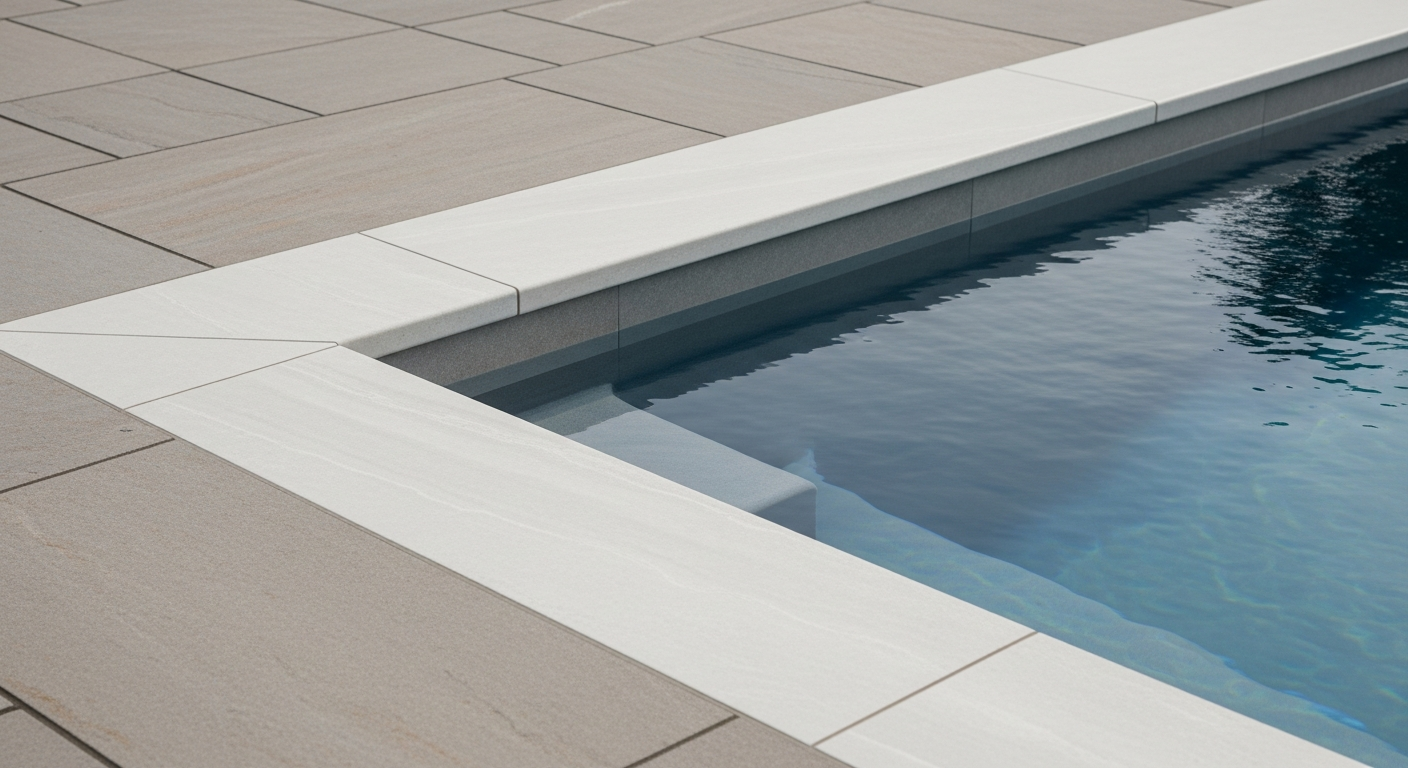
pool coping pavers
pool pavers near me
pool deck pavers
pavers pool
porcelain pool deck
Porcelain Pavers Pool Deck in Pasco FL FAQ
Are porcelain pavers too hot for bare feet around a pool?
Lighter-colored porcelain pavers stay significantly cooler than natural stone or concrete, but they are not cool to the touch. Their low porosity means they don't retain as much heat as denser materials, making them a superior choice for pool decks in direct sun. The critical factor is color; a dark grey porcelain paver will still become uncomfortably hot. A non-obvious issue is the substrate: a paver set on a concrete slab will feel hotter than one set on a sand or gravel bed because the concrete base acts as a heat sink, storing and radiating warmth upwards.
Will my saltwater pool corrode or stain my new porcelain pavers?
No, porcelain pavers are virtually impervious to salt and common pool chemicals like chlorine, making them ideal for saltwater pool surrounds. Unlike porous natural stone which can suffer from spalling and salt efflorescence, porcelain has an extremely low water absorption rate, preventing chemicals from penetrating and causing damage. However, be aware that metal furniture or tools left on the deck can rust and leave stubborn stains. These are surface deposits, not a failure of the paver, and typically require a specialized acid-based cleaner to remove without damaging the paver's finish.
One of my porcelain pavers is wobbly. How do I fix it without redoing the whole deck?
A single wobbly paver almost always indicates a failure in the base material beneath it, not a fault in the paver itself. This is often caused by water washing away the jointing and bedding sand, creating a void. To fix this, the paver must be carefully lifted using a paver extractor tool. The bedding layer is then screeded level again with fresh sand, and the paver is re-set and compacted. The critical step most people miss is re-installing and activating the polymeric sand in the joints around the repaired paver to lock it in place and prevent future water intrusion.
Are porcelain pavers slippery when wet? They look so smooth.
Reputable porcelain pavers manufactured for outdoor use have a textured, anti-slip finish and are rated to meet safety standards. Look for a product with a high Dynamic Coefficient of Friction (DCOF) rating, typically above 0.42, which certifies its suitability for wet areas like pool decks. The non-obvious danger isn't the paver itself, but the buildup of organic material. A film of algae or biofilm can grow on any surface, making it extremely slick. Regular cleaning, not just the paver's inherent texture, is the key to maintaining a safe, slip-resistant surface year-round.
Can I pressure wash my porcelain paver deck to clean it?
Yes, you can pressure wash porcelain pavers, but the technique is critical to avoid damaging the joints. Use a fan-tip nozzle, never a pinpoint jet, and keep the pressure below 1,500 PSI. The biggest mistake is directing the spray at a sharp angle into the joints, as this will blast out the polymeric sand that locks the pavers together and prevents weeds. This sand is the structural glue of the system. Always spray at a shallow, sweeping angle across the surface to clean the paver face without compromising the integrity of the joints.
What's that white, chalky film on some of my darker porcelain pavers?
That white film is likely efflorescence, which is the migration of natural salts from the setting bed or concrete slab beneath the pavers. While porcelain itself is non-porous and does not produce efflorescence, moisture can travel up through the joints, evaporate, and leave these salt deposits on the paver surface. It is a cosmetic issue, not a structural one. A key insight is that this problem is often worse with a mortar-set installation over a concrete slab. It can usually be cleaned with specialized efflorescence removers, but addressing the underlying moisture source is the only permanent solution.