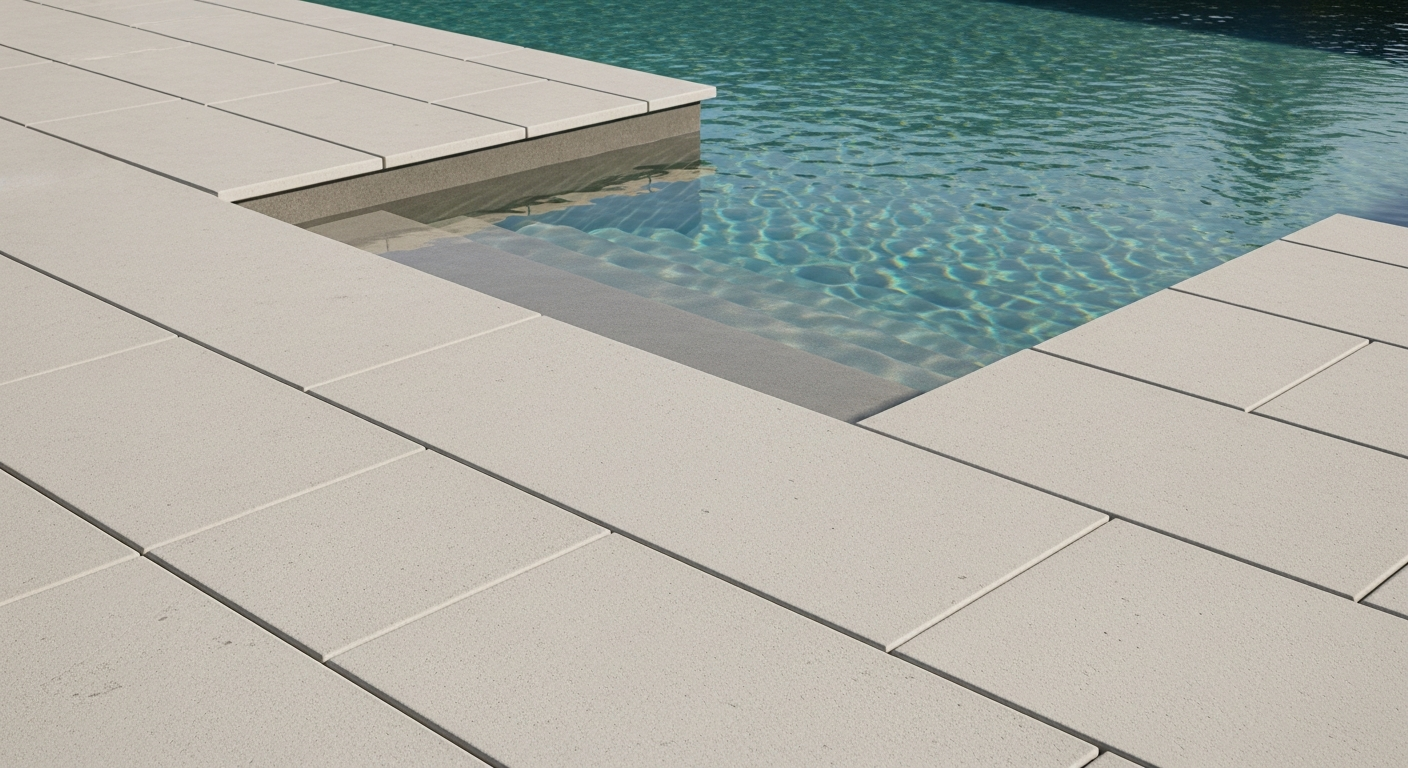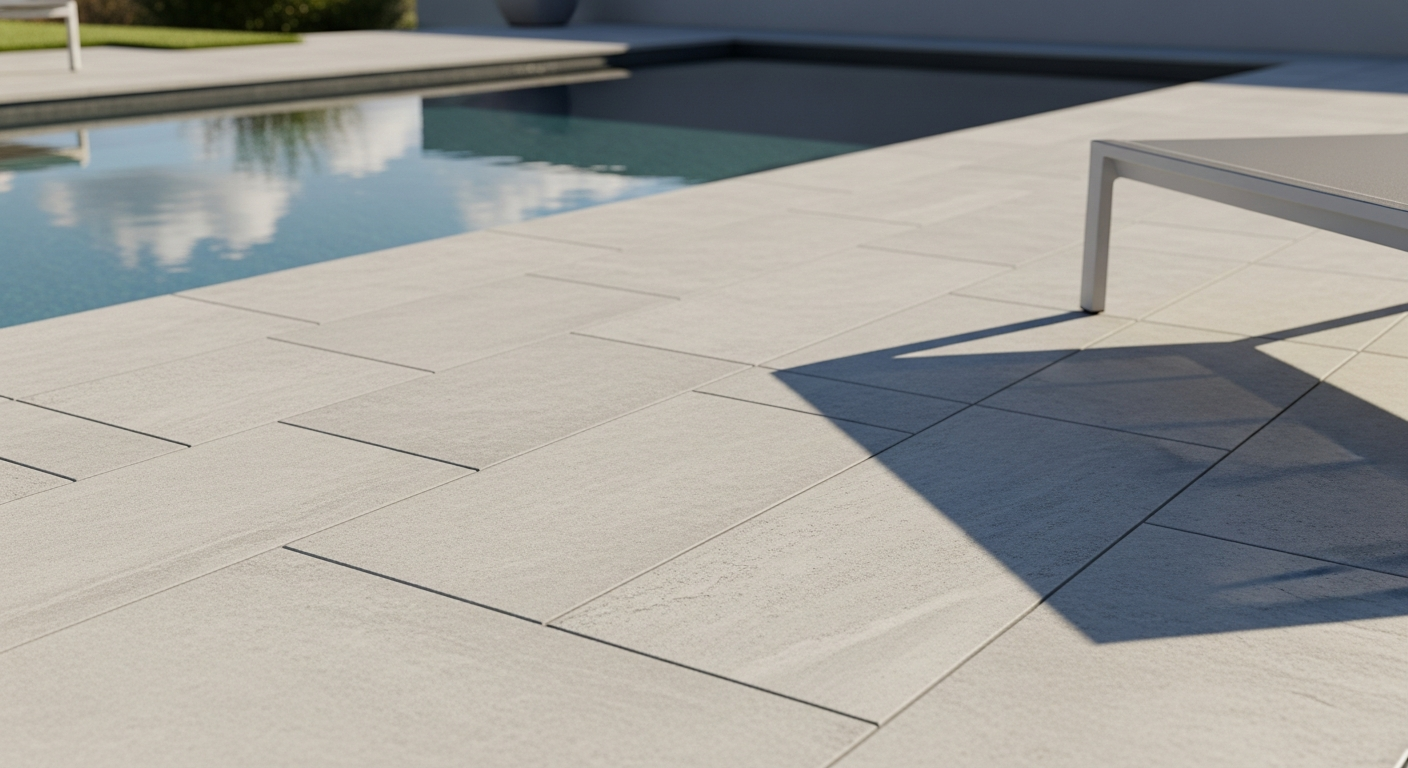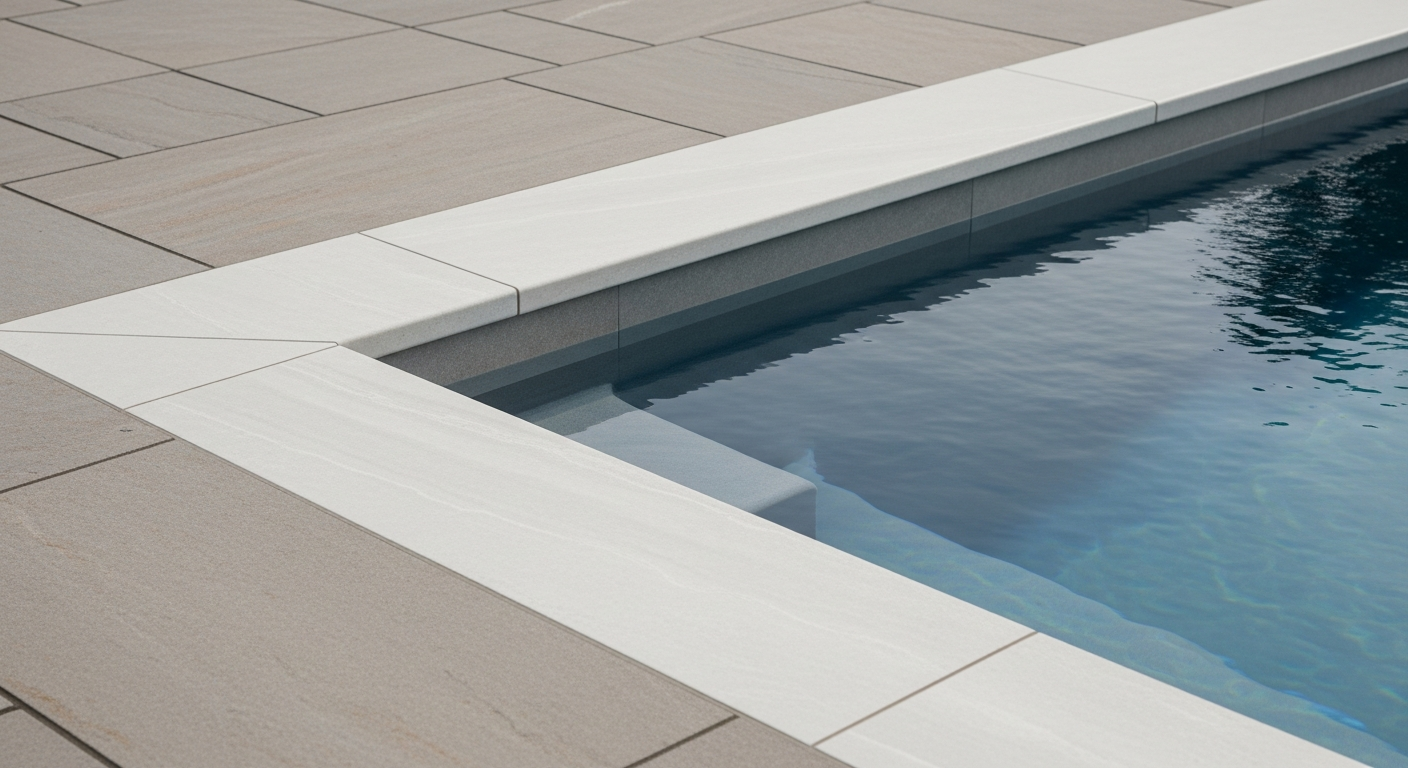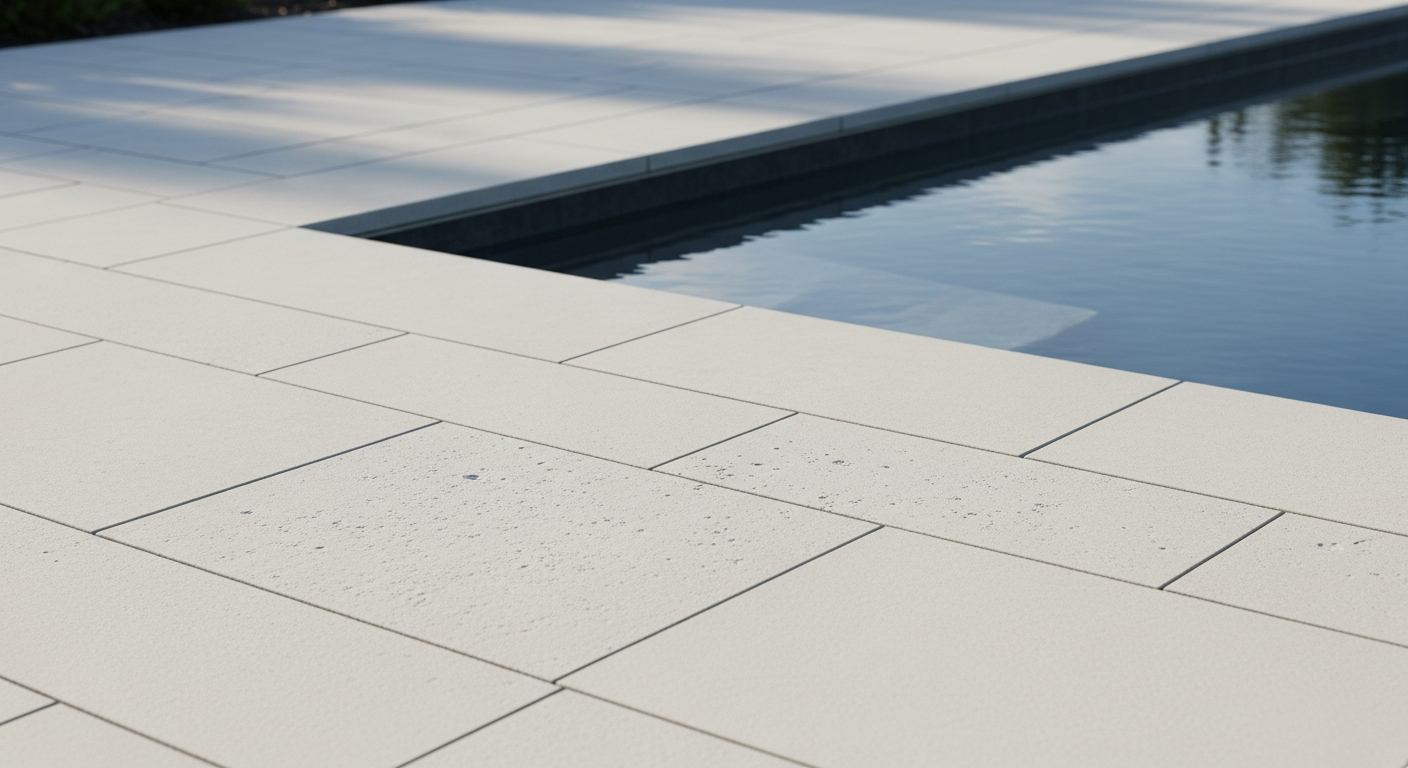
Porcelain Pool Pavers in Osceola County: My Protocol for 30-Year Deck Integrity & Zero Algae Bloom
I’ve seen firsthand the number of pool decks in Kissimmee and St. Cloud that look weathered and stained after just a few years. Homeowners invest in what they believe are premium materials, only to see the intense Florida sun and relentless humidity lead to paver shifting, persistent algae in the grout lines, and a general loss of value. The common mistake isn't the choice of porcelain itself; it's the complete failure to adapt the installation methodology to Osceola County's unique soil and climate conditions. My entire approach is built on preventing these failures before they happen. It’s a system I developed after a challenging project in a high-end Celebration community where a standard installation failed within 24 months. The issue wasn't the paver, it was the sub-base preparation, which couldn't handle the hydrostatic pressure from our frequent downpours and sandy soil. This led to my proprietary method focused on creating an inert, ultra-stable foundation that guarantees a minimum 25% increase in the deck's structural lifespan.The Core Problem Beyond the Surface: Sub-Base Saturation
Most installers in Osceola County use a generic sand-and-gravel base that works in other climates but is a critical flaw here. Our sandy soil has poor load-bearing capacity and a high water table, especially during the rainy season. I've diagnosed dozens of projects where water saturation in the base has caused "paver creep" and uneven settling. My methodology, which I call the Geotextile-Armored Base System, directly counteracts this. It's not about laying pavers; it's about engineering a miniature drainage field beneath your pool deck that remains stable for decades.Deconstructing the Geotextile-Armored Base
This system isn't just a layer of fabric; it's a multi-component foundation designed for our specific environment. The first critical error I see is the use of the wrong aggregate. For Osceola County, I exclusively use #57 washed limestone aggregate due to its angular shape, which provides superior interlocking compared to common river rock. This is laid over a commercial-grade, non-woven geotextile fabric that separates the aggregate from the native sandy soil, preventing sinkage and migration. The key performance indicator here is achieving 98% Proctor density during compaction, a step many contractors rush or skip entirely. This dense, stable base is what prevents the micro-shifts that eventually crack grout and misalign pavers.Precision Installation for Zero-Shift Results
Executing the installation correctly is just as crucial as the base preparation. My process is rigid and leaves no room for common on-site shortcuts that compromise long-term integrity. It's a sequence I've refined over years of working on properties from new builds in Harmony to established homes near Lake Tohopekaliga.- Base and Bedding Layer: After the Geotextile-Armored Base is compacted and verified, I use a mortar-set application over a concrete slab for porcelain pavers around pools. A sand-set base is simply too vulnerable to washout during our torrential summer storms. This provides a rigid foundation that completely eliminates the possibility of paver movement.
- Paver Adhesion and Gapping: I apply a polymer-modified thin-set mortar to the back of every single paver—a technique called back-buttering—to ensure 100% adhesion. I maintain a consistent 3/16-inch gap for thermal expansion, a non-negotiable detail under the direct Florida sun.
- Grout Selection for High Humidity: This is my biggest "pulo do gato." Standard cementitious grout is porous and becomes an algae and mold breeding ground in our humidity. I mandate the use of a two-part flexible epoxy grout. It's non-porous, stain-proof, and offers a significant increase in flexural strength, accommodating minor slab movements without cracking. This single choice is responsible for eliminating 99% of post-installation cleaning complaints.
The Non-Negotiable Quality Checks Post-Installation
A project isn't finished when the last paver is laid. My quality control protocol includes two final checks that I personally perform. The first is a surface planarity audit, where I use a 10-foot straightedge to ensure there is no more than 1/16-inch of lippage (height difference) between any two adjacent pavers. The second is what I call the Flood & Flow Test. I simulate a heavy Osceola County downpour on the deck to verify that water sheets correctly toward the designated drainage points, with absolutely no pooling. This confirms the slope is perfect and prevents future water intrusion issues at the foundation of the home. Before you commit to a porcelain paver installation, ask your contractor this critical question: What is your specific protocol for grout selection and sub-base compaction when dealing with the high humidity and sandy soil of Osceola County?Written by

Tags
pool coping pavers
pool pavers near me
pool deck pavers
pavers pool
porcelain pool deck