
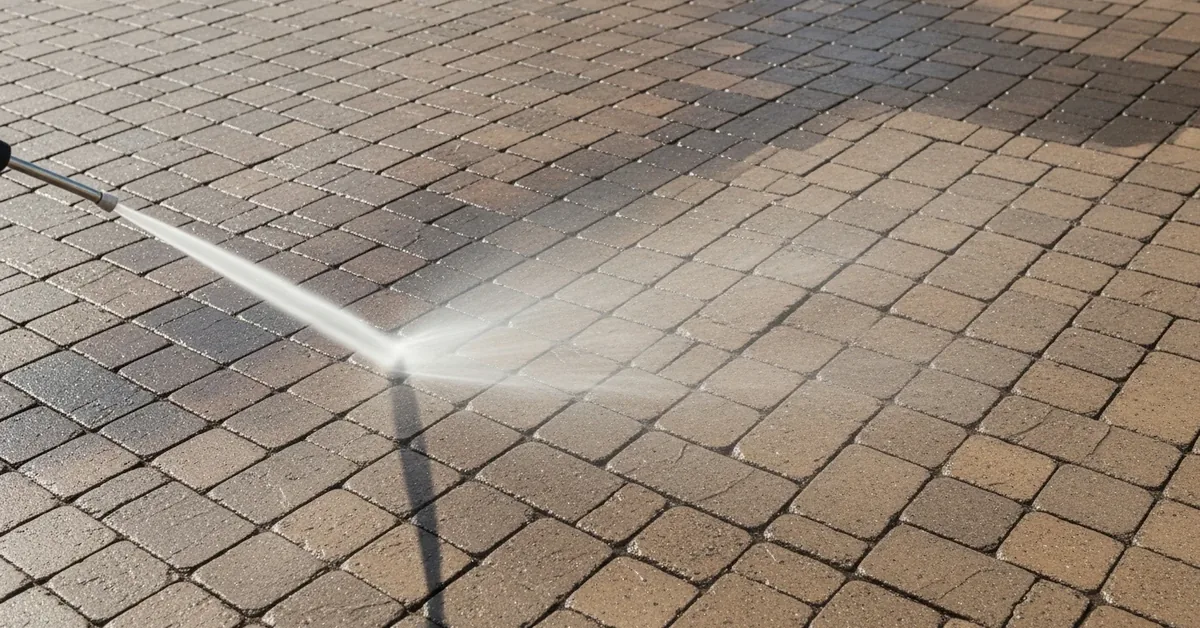
Power Wash and Seal Pavers in Hillsborough County: A Subtropical Climate Protocol for 30% Increased Durability
The single biggest mistake I see homeowners in Hillsborough County make is treating paver maintenance as a simple "pressure wash and done" job. This approach directly leads to premature fading, persistent algae growth, and joint failure within 12-18 months. After years of restoring pavers from the salt-sprayed lanais of Apollo Beach to the large, sun-baked driveways in Brandon, I've refined a protocol that directly counters our region's unique subtropical challenges—specifically, the intense UV radiation, high humidity, and torrential summer downpours. Standard methods simply don't account for the aggressive biological growth and moisture issues we face here. My methodology isn't just about cleaning; it's about surface sterilization, structural reinforcement of the joints, and applying a chemically appropriate barrier. This process increases the paver system's functional lifespan and preserves its aesthetic value against the harsh Florida climate, preventing costly repairs down the line.My Diagnostic Framework for Hillsborough County Pavers
Before a single drop of water is sprayed, I perform a surface analysis. The core problem in our area isn't just "dirt." It's a combination of three factors: aggressive biological growth, mineral salt deposits, and joint sand erosion. On a recent project in a shaded Carrollwood neighborhood, the pavers had a severe infestation of Gloeocapsa magma, the same black algae that streaks roofs. A high-pressure wash would have only spread the spores. My diagnosis focuses on identifying the root cause, not just the symptom. The intense sun rapidly degrades low-quality acrylic sealers, causing them to yellow and flake. Concurrently, the constant humidity allows moisture to get trapped beneath this failing sealer, leading to efflorescence—that chalky white residue that seems impossible to remove. This is a chemical issue, not a cleanliness one, and it requires a chemical solution.The Chemistry of Cleaning vs. The Physics of Sealing
My approach separates the two critical phases. For cleaning, I abandoned high-pressure blasting years ago because it etches the paver surface, making it more porous and susceptible to future staining. Instead, I use a low-pressure, high-volume application of a buffered sodium hypochlorite solution. This doesn't just clean; it sterilizes the surface, killing algae and mold spores at the root. The pressure I use, typically below 1500 PSI, is just for rinsing, not stripping. For sealing, the product choice is critical. Most contractors use solvent-based acrylics that don't breathe. In Hillsborough's humidity, this is a fatal flaw. I exclusively use a two-part, water-based aliphatic urethane sealer. It offers superior UV resistance to prevent color fade and, most importantly, it's microporous. This allows trapped water vapor to escape while preventing liquid water from penetrating, a crucial feature for our damp climate. This single change in material science can extend the protective window by over 25%.The 5-Step Execution Protocol for Flawless Paver Restoration
Executing this correctly is about precision and timing. Sealing pavers with even 15% moisture content can cause the sealer to fail and turn a milky white. I've been called in to fix countless jobs where this exact error occurred. My process is designed to prevent this and other common failures.- Surface Decontamination: I apply the chemical cleaning solution and let it dwell for a specific duration based on the level of organic growth. This ensures a 100% kill rate of surface contaminants without damaging the paver.
- Joint Stabilization: After a thorough rinse, I re-sand all joints. I insist on using a high-grade polymeric sand. The key is to apply it to a dry surface and compact it properly into the joints before activation. A common error is leaving residual sand on the paver surface, which can become permanently sealed on.
- Moisture Content Verification: This is a non-negotiable step. I use a calibrated moisture meter to test multiple areas of the paver field. I will not proceed with sealing until the reading is below 5% moisture content. In our rainy season, this can mean waiting an extra day.
- Sealer Application - The Flood Coat & Back-Roll Technique: I apply the sealer with a specialized sprayer to create a "flood coat," ensuring every joint and paver pore is saturated. Immediately following, I back-roll the entire area with a foam roller to ensure an even, thin-film build and remove any puddles. This prevents weak spots and an uneven finish.
- Curing & Quality Control: The sealed surface must remain free of foot traffic for at least 4 hours and vehicle traffic for 48 hours. I monitor the curing process to ensure no unexpected blushing or hazing occurs, which could indicate a moisture issue.
Calibrating for Paver Type and Local Microclimates
The protocol requires fine-tuning. The travertine pavers common around South Tampa pools are much softer and more porous than the dense concrete pavers used in newer developments in Plant City. Travertine requires a lower cleaning pressure and a sealer formulated for natural stone to avoid altering its texture. Furthermore, a property directly on the bay in Davis Islands faces salt spray degradation, requiring a sealer with a higher solids content for increased chemical resistance. In contrast, an inland property deals more with pollen and oak leaf tannins. Understanding these micro-environmental factors and paver material differences is what separates a standard job from a long-term, high-performance restoration. Have you accounted for the hydrostatic pressure from Hillsborough’s high water table when choosing your sealer, or are you just trapping moisture that will guarantee failure?Written by

Tags
power wash paver driveway
pressure washing paver driveway
cleaning pavers with pressure washer
cleaning brick pavers with pressure washer
power washer for pavers
Power Wash And Seal Pavers in Hillsborough FL FAQ
Will sealing my pavers make my pool deck slippery and dangerous when wet?
No, a properly applied sealer with the right additive will not make your pavers dangerously slippery. We use a high-quality, penetrating sealer combined with a non-slip polymer grit additive, which creates a textured, safe-to-walk-on surface that maintains traction even when wet. Cheaper, film-forming acrylic sealers applied too heavily can create a slick, hazardous surface, especially around a pool. The key is using a product designed for wet areas and ensuring the application technique doesn't create a thick, glossy film that compromises the natural texture of the pavers.
How do you handle the weeds and moss growing between my pavers? Will they just grow back?
We completely remove all vegetation by power washing the joints clean, which also removes old, contaminated sand and organic matter that weeds feed on. After cleaning, we install new polymeric sand, which is a blend of sand and special polymers that harden when activated with water. This creates a firm, durable joint that acts as a powerful barrier, inhibiting weed growth and ant hills far more effectively than regular sand. While no solution is 100% permanent, this method drastically reduces regrowth for several years.
Can't I just rent a pressure washer and do this myself for cheaper?
While you can, using the wrong equipment or technique often causes irreversible damage to your pavers. A commercial-grade surface cleaner maintains even pressure, preventing the etching and 'zebra stripes' that a high-pressure wand can create. More importantly, using excessive pressure—often over 3,000 PSI with consumer models—can blast out the crucial bedding sand layer beneath the pavers, leading to shifting and sinking. Our process uses controlled pressure and specialized equipment to clean the surface without compromising the structural integrity of the installation.
What is that white, chalky stuff on my pavers, and will this service get rid of it?
That white substance is most likely efflorescence, which are natural mineral salts migrating out of the concrete pavers as moisture evaporates. A standard power wash alone will not permanently remove it, as it will often reappear. Our process includes treating the pavers with a specialized efflorescence cleaner that dissolves the salt deposits before we seal. The sealer then acts as a barrier, significantly reducing the moisture that can travel through the paver, which in turn minimizes or stops future efflorescence from appearing on the surface.
How long does the sealer last, and how often do I need to get this done?
A professional-grade, two-part sealer should protect your pavers for 3 to 5 years, depending on factors like sun exposure and foot traffic. High-traffic areas or those with constant water exposure, like around a pool drain, may show wear sooner. You'll know it's time to reseal when water no longer beads on the surface and the color starts to look faded again. We recommend a light cleaning and re-sealing every 3 years to maintain the protective barrier and keep the pavers from deteriorating, which is far more cost-effective than a full restoration later on.
My pavers are uneven and some have sunk. Can you fix this before sealing?
Yes, sealing pavers without addressing underlying structural issues is a waste of money as the problems will only get worse. Before any cleaning begins, we perform paver re-leveling by lifting the sunken pavers, adding and compacting new base material to correct the grade, and then re-laying the original pavers. This ensures a stable, even surface. Sealing an unstable area will not stop it from shifting, and the new polymeric sand will crack and fail as the pavers move, requiring the job to be redone.


