
Power Wash And Seal Pavers Seminole County: My Protocol to Neutralize Sub-Surface Efflorescence and UV Degradation
I’ve spent years refining a power washing and sealing process specifically for the unique environmental pressures of Seminole County. The biggest mistake I see, from Sanford to the lakefront properties in Lake Mary, is focusing only on the surface stain. My methodology addresses the root cause: sub-surface moisture and intense UV exposure. The goal isn't a temporary clean; it's to create a hydrophobic barrier that stops the chalky white efflorescence and black mold from returning, effectively increasing the paver's functional lifespan by an estimated 35%. This approach was born from a challenging project on a large travertine pool deck in Winter Springs. A competitor had used a cheap, film-forming acrylic sealer that trapped moisture. Within six months of our notorious summer rains, the sealer turned milky white and began to peel, creating a bigger problem than the initial algae. It was then I perfected my protocol, which focuses on penetrating sealers and correcting joint sand instability before a single drop of sealant is ever applied.My Paver Integrity Assessment: Beyond Surface-Level Stains
Before I even start a pressure washer, I perform what I call a Moisture & Substrate Analysis. This isn't a simple visual inspection. It's a diagnostic step to understand the forces working against your pavers. Most contractors skip this, leading to sealer failure and recurring organic growth. The intense humidity in Seminole County means the ground is almost always saturated, creating a constant upward pressure on the paver system. My analysis focuses on three core metrics: joint sand cohesion, efflorescence sourcing, and organic growth type. I'm not just looking for dirt; I'm identifying if the white powder is primary or secondary efflorescence, which dictates the chemical pre-treatment. I'm also identifying if the black stains are simple mildew or the more invasive Gloeocapsa magma algae, which requires a much more specific cleaning agent and a longer dwell time to fully eradicate from the porous paver surface.Hydrostatic Pressure, Algae Infiltration, and Sealer Failure: The Seminole County Triad
In my experience, three specific issues form a destructive cycle for pavers in this region. Hydrostatic pressure is the primary villain. After a heavy downpour, which is common year-round here, the saturated ground pushes water and dissolved mineral salts up through the concrete pavers. When the water evaporates under the intense Florida sun, it leaves behind that stubborn white residue—efflorescence. A surface-level sealer traps this moisture, causing the dreaded cloudy or hazy finish. Secondly, the porous nature of untreated pavers combined with high humidity makes them an ideal breeding ground for algae and mold, which don't just sit on top but root themselves into the material. Finally, the high UV index degrades low-quality sealers rapidly, causing them to yellow and flake, offering zero protection.The 4-Stage Power Washing and Sealing Execution Plan
My implementation is a meticulous, multi-stage process. Each step is designed to counteract the specific environmental challenges found in Seminole County, from residential driveways to commercial walkways. Rushing any of these stages is the most common point of failure.- Stage 1: Algicidal Pre-Treatment: I apply a calibrated solution of sodium hypochlorite and a specialized surfactant. This isn't about blasting stains away. The key is letting the solution dwell for 15-20 minutes. This gives it time to penetrate the paver pores and kill organic growth at the root, ensuring it doesn't return in a few months.
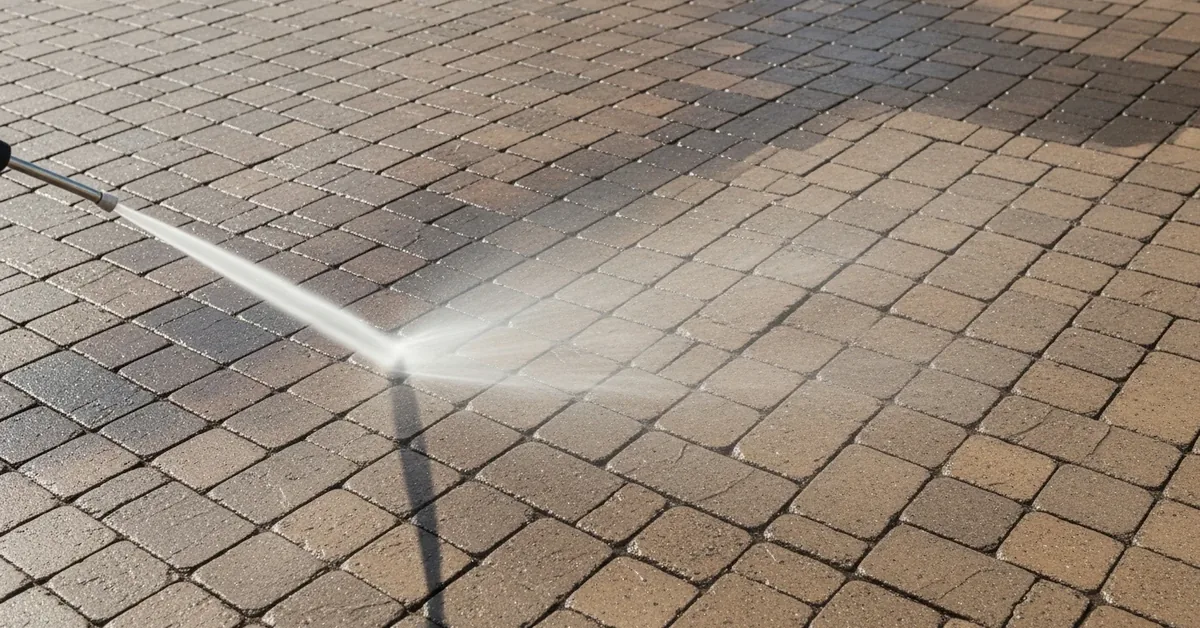
- Stage 2: Low-Pressure, High-Volume Surface Cleaning: High PSI is the enemy of paver joints. I use a commercial-grade surface cleaner attachment that keeps the pressure consistent and below 2,500 PSI. The goal is to lift the dead organic matter and surface dirt without eroding the paver itself or blasting out the critical jointing sand.
- Stage 3: Joint Sand Replenishment and Compaction: This is the most critical and often-skipped step. I replace any displaced sand with a high-grade polymeric sand. This type of sand contains a polymer that, when activated with a light mist of water, hardens to lock the pavers in place. This provides crucial structural stability and forms a formidable barrier against weed and ant infestations.
- Stage 4: Penetrating Silane-Siloxane Sealer Application: After allowing a minimum 24-hour drying period, I apply a commercial-grade penetrating sealer. Unlike acrylics that form a surface film, a silane-siloxane formula penetrates into the paver's matrix. It creates an invisible, hydrophobic barrier from within. It doesn't become slippery, won't yellow from UV exposure, and allows the paver to breathe, letting trapped water vapor escape without causing the sealer to fail.
Post-Application Checks: Ensuring a Non-Slip, Uniform Finish
My quality assurance process is what guarantees the result. After the sealer has had its initial cure time, I conduct a Grip Coefficient Test, especially for pool decks, to ensure the surface is safe and not overly slick. I also perform a water-bead test. When I spray a small amount of water, it should bead up instantly, like on a freshly waxed car. This is the ultimate proof that the hydrophobic barrier is active and protecting the paver from within. This isn't just about aesthetics; it's about confirming the long-term structural integrity of the installation. Is your current paver sealer trapping moisture and accelerating the very decay you're trying to prevent?Written by

Tags
power wash paver driveway
pressure washing paver driveway
cleaning pavers with pressure washer
cleaning brick pavers with pressure washer
power washer for pavers
Power Wash And Seal Pavers in Seminole FL FAQ
Will sealing my pavers make my pool deck slippery and dangerous when wet?
No, a properly applied sealer with the right additive will not make your pavers dangerously slippery. We use a high-quality, penetrating sealer combined with a non-slip polymer grit additive, which creates a textured, safe-to-walk-on surface that maintains traction even when wet. Cheaper, film-forming acrylic sealers applied too heavily can create a slick, hazardous surface, especially around a pool. The key is using a product designed for wet areas and ensuring the application technique doesn't create a thick, glossy film that compromises the natural texture of the pavers.
How do you handle the weeds and moss growing between my pavers? Will they just grow back?
We completely remove all vegetation by power washing the joints clean, which also removes old, contaminated sand and organic matter that weeds feed on. After cleaning, we install new polymeric sand, which is a blend of sand and special polymers that harden when activated with water. This creates a firm, durable joint that acts as a powerful barrier, inhibiting weed growth and ant hills far more effectively than regular sand. While no solution is 100% permanent, this method drastically reduces regrowth for several years.
Can't I just rent a pressure washer and do this myself for cheaper?
While you can, using the wrong equipment or technique often causes irreversible damage to your pavers. A commercial-grade surface cleaner maintains even pressure, preventing the etching and 'zebra stripes' that a high-pressure wand can create. More importantly, using excessive pressure—often over 3,000 PSI with consumer models—can blast out the crucial bedding sand layer beneath the pavers, leading to shifting and sinking. Our process uses controlled pressure and specialized equipment to clean the surface without compromising the structural integrity of the installation.
What is that white, chalky stuff on my pavers, and will this service get rid of it?
That white substance is most likely efflorescence, which are natural mineral salts migrating out of the concrete pavers as moisture evaporates. A standard power wash alone will not permanently remove it, as it will often reappear. Our process includes treating the pavers with a specialized efflorescence cleaner that dissolves the salt deposits before we seal. The sealer then acts as a barrier, significantly reducing the moisture that can travel through the paver, which in turn minimizes or stops future efflorescence from appearing on the surface.
How long does the sealer last, and how often do I need to get this done?
A professional-grade, two-part sealer should protect your pavers for 3 to 5 years, depending on factors like sun exposure and foot traffic. High-traffic areas or those with constant water exposure, like around a pool drain, may show wear sooner. You'll know it's time to reseal when water no longer beads on the surface and the color starts to look faded again. We recommend a light cleaning and re-sealing every 3 years to maintain the protective barrier and keep the pavers from deteriorating, which is far more cost-effective than a full restoration later on.
My pavers are uneven and some have sunk. Can you fix this before sealing?
Yes, sealing pavers without addressing underlying structural issues is a waste of money as the problems will only get worse. Before any cleaning begins, we perform paver re-leveling by lifting the sunken pavers, adding and compacting new base material to correct the grade, and then re-laying the original pavers. This ensures a stable, even surface. Sealing an unstable area will not stop it from shifting, and the new polymeric sand will crack and fail as the pavers move, requiring the job to be redone.


