Commercial Pools Pinellas County: My Protocol for Extending Asset Lifespan by 35% Against Salt Air Corrosion
I’ve lost count of the number of commercial pool projects I’ve been called to fix in Pinellas County where the primary failure was entirely predictable. From high-rise condos on Clearwater Beach to community HOAs in Palm Harbor, facility managers see premature equipment failure and surface degradation not as a risk, but as an inevitability. This is a costly mistake rooted in a fundamental misunderstanding of our unique coastal environment. The combination of intense UV exposure, high humidity, and, most critically, the pervasive salt air creates a uniquely corrosive environment that standard commercial pool construction practices simply cannot handle. My entire approach is built on proactive mitigation, not reactive repair. After analyzing dozens of failing systems, I developed a proprietary methodology I call the Coastal Integrity Audit. It’s a diagnostic framework that goes far beyond a simple leak check or chemical test. It identifies the specific vulnerabilities a Pinellas County commercial pool will face over its lifespan, allowing us to engineer a system that anticipates and resists the aggressive local climate, often pushing major capital expenditures back by 5 to 7 years.The Coastal Integrity Audit: My Diagnostic Framework for Pinellas Pools
The standard approach is to build to code. My approach is to build to the environment. The Florida Department of Health (DOH) has strict standards for sanitation and safety, but not for long-term material resilience against salt air. I once took over a project for a hotel in the Dunedin area where their 2-year-old heater had completely failed. The technician blamed a faulty unit, but my audit revealed the real culprit: the spec sheet called for a standard copper heat exchanger. In the salt-laden air, galvanic corrosion destroyed it. The fix wasn't another standard heater; it was specifying a unit with a cupronickel heat exchanger, a material designed for marine environments. My audit formalizes this level of granular, environment-specific analysis. It’s based on three core pillars: Material Specification Analysis, Hydraulic Efficiency Mapping, and a Chemical Load Assessment tailored to high bather loads during tourist season.Deconstructing a Failing System: Common Pinellas County Pitfalls
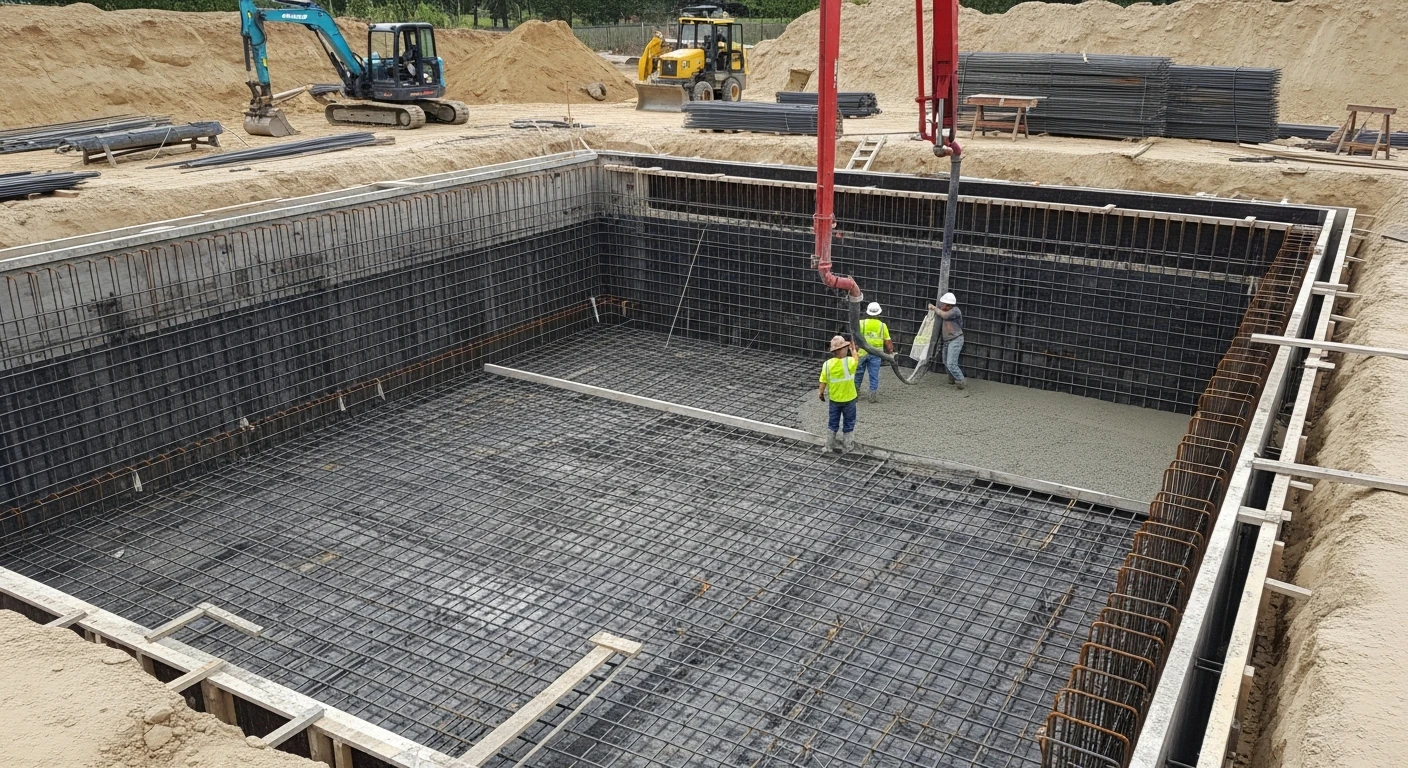
During my audits, I see the same patterns of failure repeatedly. The first and most insidious is accelerated rebar corrosion within the pool shell. Micro-cracks in the plaster or gunite allow salty, humid air and chemically treated water to reach the steel reinforcement. I’ve seen this cause catastrophic spalling on pools in St. Pete Beach that were less than a decade old. This is almost always due to improper waterproofing during the initial build and a failure to use epoxy-based bonding agents. Another frequent error is an undersized filtration system. A pool at a small motel on US-19 has a drastically different bather load than a sprawling resort. Yet, I often find they use similar residential-grade equipment. For a high-traffic pool, I insist on a system calculated for a 6-hour turnover rate or less, often using high-rate sand filters with larger lateral arrays to handle the demand without channeling or clogging.The Implementation Blueprint: From Audit to Action
Once the audit is complete, the implementation is a precise, surgical upgrade of the pool’s critical systems. This isn’t about replacing like for like; it’s about strategic enhancement.- Phase 1: The Mechanical Fortification. This is the heart of the system. We replace any undersized or vulnerable equipment. My non-negotiable standard for Pinellas County includes: Variable Frequency Drive (VFD) pumps to cut energy costs by up to 60%, all external plumbing upgraded to schedule 80 PVC for superior UV resistance and durability, and commercial-grade chemical automation using ORP and pH controllers.
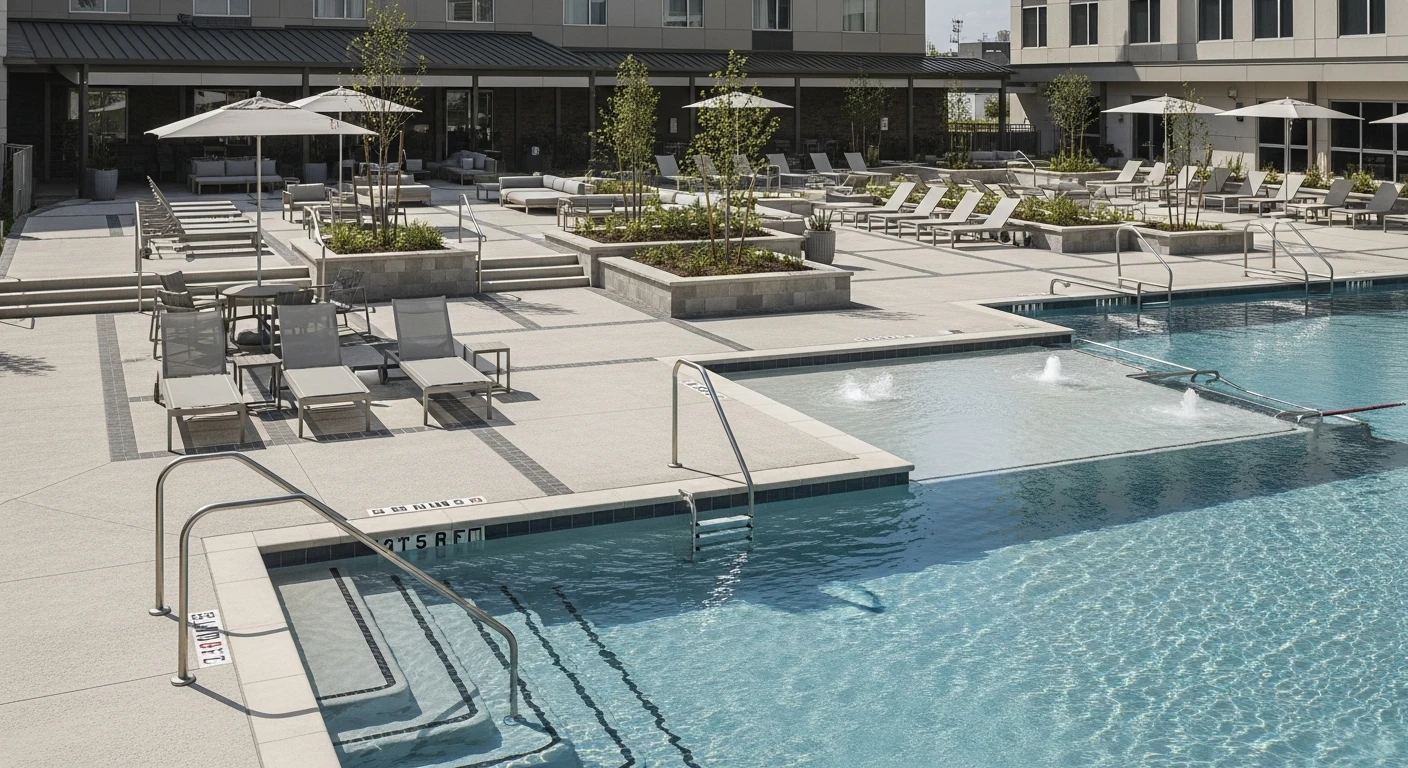
- Phase 2: Surface and Deck Sealing. We address the pool shell itself. This often involves applying a high-build epoxy primer before resurfacing to create an impermeable barrier. For the deck, I specify sealed pavers or professionally coated concrete instead of porous materials that trap salt and chemicals, protecting the substructure.
- Phase 3: Automation and Redundancy. For condo and hotel managers, downtime is unacceptable. We integrate remote monitoring systems that provide real-time alerts for chemical imbalances or pressure drops. I also often recommend a smaller, secondary pump that can maintain basic circulation if the primary VFD pump requires service, ensuring the pool never goes stagnant.
Precision Tuning for Peak Performance & DOH Compliance
The final step is commissioning and balancing, and this is where expertise truly matters. I don't just balance for chlorine and pH. My primary Key Performance Indicator (KPI) is a stable Langelier Saturation Index (LSI) between +0.3 and -0.3. This complex calculation accounts for pH, alkalinity, calcium hardness, temperature, and total dissolved solids (TDS), and it's the single best predictor of whether your water is corrosive or scaling. In Pinellas, where summer water temperatures can exceed 90°F and heavy rains can crash alkalinity, managing the LSI is critical. I use an ultrasonic flow meter to verify the GPM of the system post-install, ensuring it meets the engineered turnover rate and DOH requirements, providing a documented baseline for all future performance assessments. Given the TDS levels in Pinellas County's water supply, how are you adjusting your Langelier Saturation Index calculations to prevent silent scale formation inside your heater, or are you waiting for the failure to tell you?Written by

Tags
commercial swimming pool
swimming pool commercial
commercial cold plunge pool
commercial above ground pool
Commercial Pools in Pinellas FL FAQ
Our health inspection is next month. What are the most common compliance violations you see in commercial pools?
The most frequent violations involve outdated or missing anti-entrapment drain covers and improper chemical automation systems. Inspectors immediately check that all suction outlets are compliant with the Virginia Graeme Baker Act, which requires specific covers to prevent entrapment. They also scrutinize chemical logs and automation; a malfunctioning controller that allows pH to drift below 7.2 can cause immediate closure. A non-obvious failure point is often the emergency shut-off switch, which must be clearly marked, accessible, and functional, yet is frequently overlooked during routine staff checks.
Why does our pool water get cloudy on busy weekends even when the chemicals test fine in the morning?
High bather loads rapidly consume sanitizer and introduce contaminants, overwhelming a system sized for average use. A standard residential-grade pump and filter cannot handle the turnover rate required for dozens of swimmers introducing oils, lotions, and organic waste. The cloudiness is often caused by suspended particles that the filter can't remove fast enough. A critical upgrade for high-traffic pools is a commercial-grade diatomaceous earth (DE) filter, which can trap much smaller particles than sand or cartridge filters, paired with an automated chemical controller that continuously adjusts output based on real-time sensor readings.
We're losing a lot of water but can't find a visible leak. How do we know if it's a real problem?
If your pool is losing more than 0.6 cm (1/4 inch) of water per day, you likely have a leak, not just evaporation. A common hidden culprit in commercial concrete pools is a cracked skimmer throat, where the plastic skimmer body meets the concrete shell. This joint fails from ground shifting and constant water pressure. While a simple bucket test can confirm the water loss rate, locating the source often requires specialized dye testing or electronic leak detection. Ignoring this can lead to water undermining the pool deck, causing dangerous voids and costly structural damage.
Is a salt chlorine generator a good investment for a high-use community pool?
A salt chlorine generator can reduce daily chemical handling but may be insufficient as the sole sanitizer for a high-use commercial pool. These systems produce chlorine at a steady rate, which often cannot keep up with the sudden demand spikes from a high bather load on a hot day. This can lead to a drop in sanitizer levels, creating unsafe water. Many health codes require a secondary or supplemental disinfection system, like a UV sterilizer or an automated liquid chlorine feeder, to work alongside the salt system to ensure consistent and adequate sanitation during peak hours.
We have dark stains on the plaster that our cleaning service can't brush away. What are they?
Persistent dark spots that resist brushing are almost certainly black algae, which embeds roots into the plaster surface. Unlike surface algae, it cannot be eliminated with chemicals alone and requires aggressive mechanical treatment. The process involves partially draining the water, scrubbing the spots with a wire brush, and applying a specialized granular algaecide directly to the colonies. A common mistake is treating only the visible spots; the entire pool surface must be thoroughly brushed and shocked to destroy microscopic spores, otherwise the algae will reappear within weeks.
Our pump is getting extremely loud. Should we repair it or just replace the whole thing?
A loud, high-pitched whining noise from the pump motor typically indicates failing bearings, which is a clear sign the motor is near the end of its life. While the motor can sometimes be replaced, for a pump that is over 8 years old, a full replacement is more cost-effective. A new variable-speed pump will not only be quieter but will also significantly reduce energy costs, often paying for itself within a few seasons. Continuing to run a pump with failing motor bearings risks a complete seizure, which can cause an unplanned shutdown during peak season.