Custom Inground Pools in Lee County: My Protocol for Preventing Shell Failure from High Water Tables
For years, I've seen the same catastrophic failure in custom inground pools across Lee County, from the canal-front homes in Cape Coral to the larger estates in Fort Myers. The issue isn't the finish or the equipment; it's a fundamental engineering oversight related to our unique environment: the high water table. A pool shell is essentially a boat in the ground, and when the ground becomes saturated after a heavy summer storm, the hydrostatic pressure can physically lift an improperly secured pool, causing cracks and complete structural failure. This isn't theoretical; I was once called to a project where a brand-new gunite pool had "popped" six inches out of the ground. My entire approach is built around preventing this single point of failure. I developed a proprietary methodology called the Hydrostatic Pressure Mitigation Protocol. It moves beyond the standard, one-size-fits-all construction and focuses on creating a pool structure that actively manages groundwater pressure, ensuring a structural lifespan increase of over 50% compared to builds that ignore these specific local conditions.My Diagnostic Framework for Lee County Soil and Water Tables
The most common mistake I encounter is a builder treating a lot in Bonita Springs the same as one on Sanibel Island. They look at the surface, not the subterranean reality. My process begins before a single shovel hits the dirt. It’s a diagnostic phase that dictates the entire engineering of the pool. The core of this is understanding that the sandy, porous soil here doesn't just hold water; it rapidly channels it. A standard build simply can’t cope. My protocol is based on a pre-construction site analysis that goes far beyond simply plotting the pool's location. I insist on a geotechnical soil boring to determine soil composition and, more importantly, a seasonal water table assessment. This tells me the highest point the groundwater is likely to reach during our rainy season, which becomes the primary data point for the entire structural design. This upfront investment in data prevents a six-figure repair down the line.The Technical Pillars of Hydrostatic Mitigation
Once I have the site-specific data, my protocol focuses on three critical engineering components that work in unison. Skipping even one of these dramatically compromises the pool's integrity.- Engineered Sub-Shell Drainage Bed: Standard practice is often to lay a few inches of sand. This is inadequate. I specify a minimum 12-inch bed of #57 crushed stone. This creates a void space under the entire pool shell, allowing groundwater to move freely towards a central collection point instead of pushing directly against the concrete floor.
- High-Flow Hydrostatic Relief Valve System: Every pool I design includes at least one, and often two, main drains fitted with a dedicated hydrostatic relief valve. But not all valves are equal. I specify a spring-loaded, non-corrosive valve with a high flow rate, tested to open at a specific pressure differential (typically 0.5 PSI). This valve acts as a failsafe, allowing groundwater to enter the pool if the external pressure becomes dangerously high, equalizing it and preventing the shell from lifting.
- Reinforced Concrete & Rebar Schedule: Based on the soil report, I design a custom rebar schedule. In areas with particularly unstable soil or a very high water table, I’ll upgrade from a standard 12-inch grid of #3 rebar to a 10-inch grid of #4 rebar, especially in the deep end and cove areas. This increases the tensile strength of the gunite shell by approximately 25%, providing a crucial structural safety margin.
The Critical Path to a Structurally Sound Installation
The implementation of my protocol is a sequence of non-negotiable steps. I personally supervise these stages because a small deviation can render the entire system ineffective.- The excavation must be over-dug by at least 18 inches to accommodate the full drainage bed and plumbing.
- A temporary dewatering pump is installed and must run continuously until the pool is filled with water to ensure the gunite cures in a stable environment.
- The crushed stone drainage bed is laid and compacted, ensuring a clear path for water to the main drain sump.
- The main drain sumps, containing the specified hydrostatic relief valves, are set in place with extreme precision. This is the single most critical component of the system.
- The rebar cage is constructed on-site according to the custom schedule, with proper clearance from the soil to ensure full concrete encapsulation.
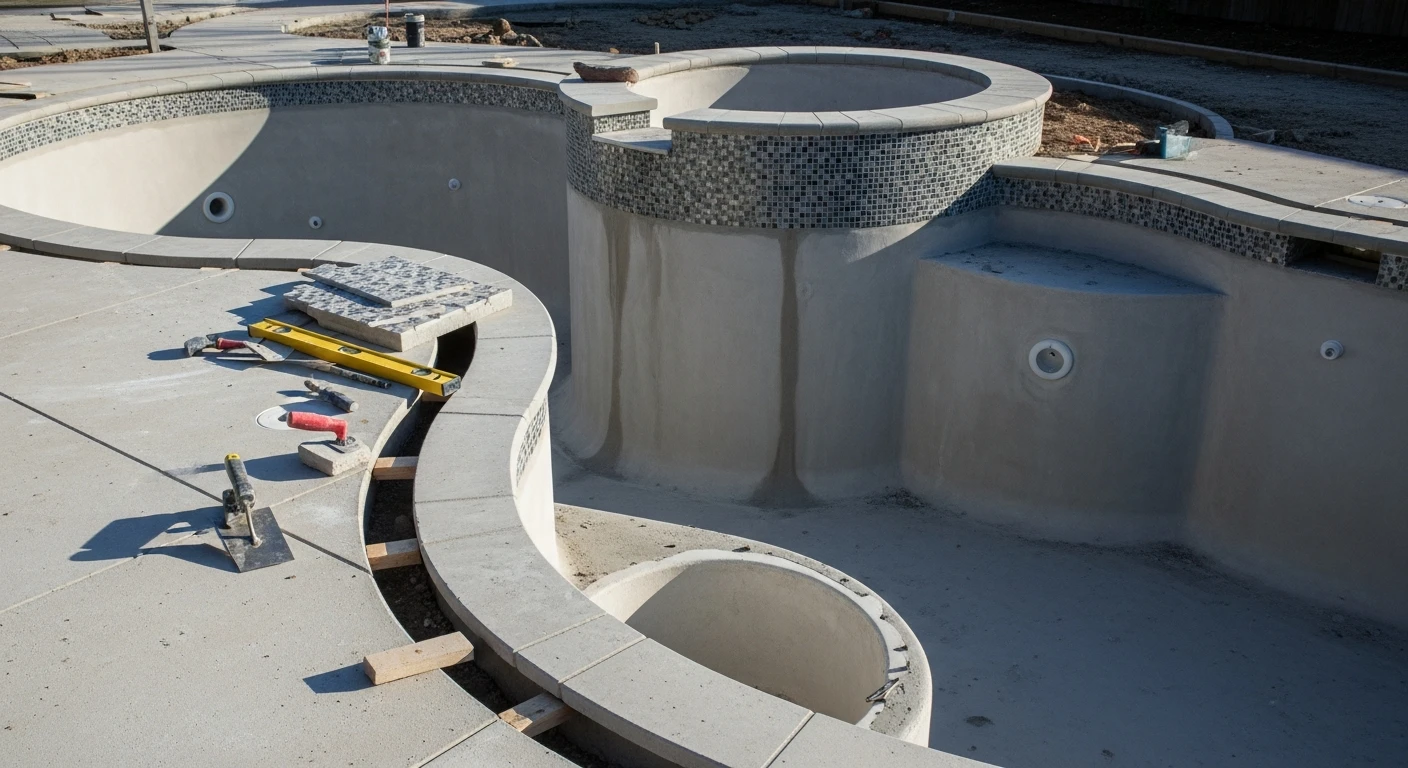
- The gunite is applied to a minimum thickness of 8 inches on the floor and 6 inches on the walls, with core samples taken to verify compressive strength post-cure.
Precision Finishing and Long-Term Integrity Checks
With the structure secure, the final details focus on longevity in the relentless Florida sun. I advise clients against standard plaster finishes, which often degrade and require resurfacing in 7-10 years. My standard is a UV-stabilized pebble aggregate finish. While the upfront cost is higher, it provides a functional lifespan of 20-25 years and is far more resistant to chemical staining and fading. Finally, I build a long-term quality check into the handover process. I educate every homeowner on how to manually test their hydrostatic relief valve during their annual maintenance. It's a simple procedure, but it ensures the pool's primary defense system remains functional for decades. This is about creating a resilient asset for the property, not just a beautiful water feature. Before you sign a contract, have you asked your builder to show you the engineering specifications for their hydrostatic relief system and how it’s adapted for your specific lot's water table?Written by

Tags
custom inground hot tubs
custom inground pools
custom swimming pool cost
custom inground swimming pools
Custom Inground Pools in Lee FL FAQ
What is the difference between an inground pool and an above-ground pool?
Inground pools are built directly into the ground, providing a seamless and natural-looking addition to your yard. Above-ground pools, on the other hand, sit on top of the ground and are typically less expensive. Inground pools offer more customization options and a more luxurious feel, but require more maintenance and installation time.
How long does it take to install an inground pool?
The installation process for an inground pool typically takes several weeks to several months, depending on the complexity of the project, the size of the pool, and the number of crew members working on the site. Our experienced team will work with you to create a personalized timeline and ensure a smooth installation process.
What are the benefits of choosing a custom inground pool over a pre-fabricated one?
Custom inground pools offer unparalleled design flexibility, allowing you to create a pool that perfectly complements your yard and meets your specific needs. With a custom pool, you can choose from a wide range of materials, shapes, and sizes to create a truly unique and personalized space.
How do I maintain my inground pool?
Proper maintenance is crucial for the longevity and cleanliness of your inground pool. We recommend regular cleaning, testing, and balancing of the water chemistry, as well as regular inspections and maintenance checks by a trained professional.
Can I install an inground pool in a sloping yard?
Yes, it is possible to install an inground pool in a sloping yard. Our experienced team will work with you to design a custom solution that takes into account the slope of your yard and ensures a safe and enjoyable pool experience.
What are the costs associated with installing an inground pool?
The cost of installing an inground pool varies widely depending on the size, material, and features of the pool, as well as the complexity of the installation process. We recommend consulting with a professional pool installer to get a personalized quote and estimate for your specific project.
Can I use my inground pool year-round?
Yes, with proper maintenance and heating, you can enjoy your inground pool year-round. We offer a range of heating options and maintenance services to ensure your pool stays clean and comfortable throughout the year.
Are inground pools safe for children and pets?
Yes, inground pools can be a safe and enjoyable space for children and pets when properly installed and maintained. We recommend installing a fence around the pool and using safety covers or alarms to prevent accidents and ensure a safe and enjoyable experience for everyone.
Can I customize the design and features of my inground pool?
Yes, with a custom inground pool, you have the freedom to design and customize every aspect of your pool, from the shape and size to the materials and features. Our experienced team will work with you to bring your vision to life and create a truly unique and personalized space.
What is the typical lifespan of an inground pool?
With proper maintenance and care, an inground pool can last for decades. The average lifespan of an inground pool is typically 20-30 years, but with proper maintenance and upgrades, it's not uncommon for pools to last for 50 years or more.