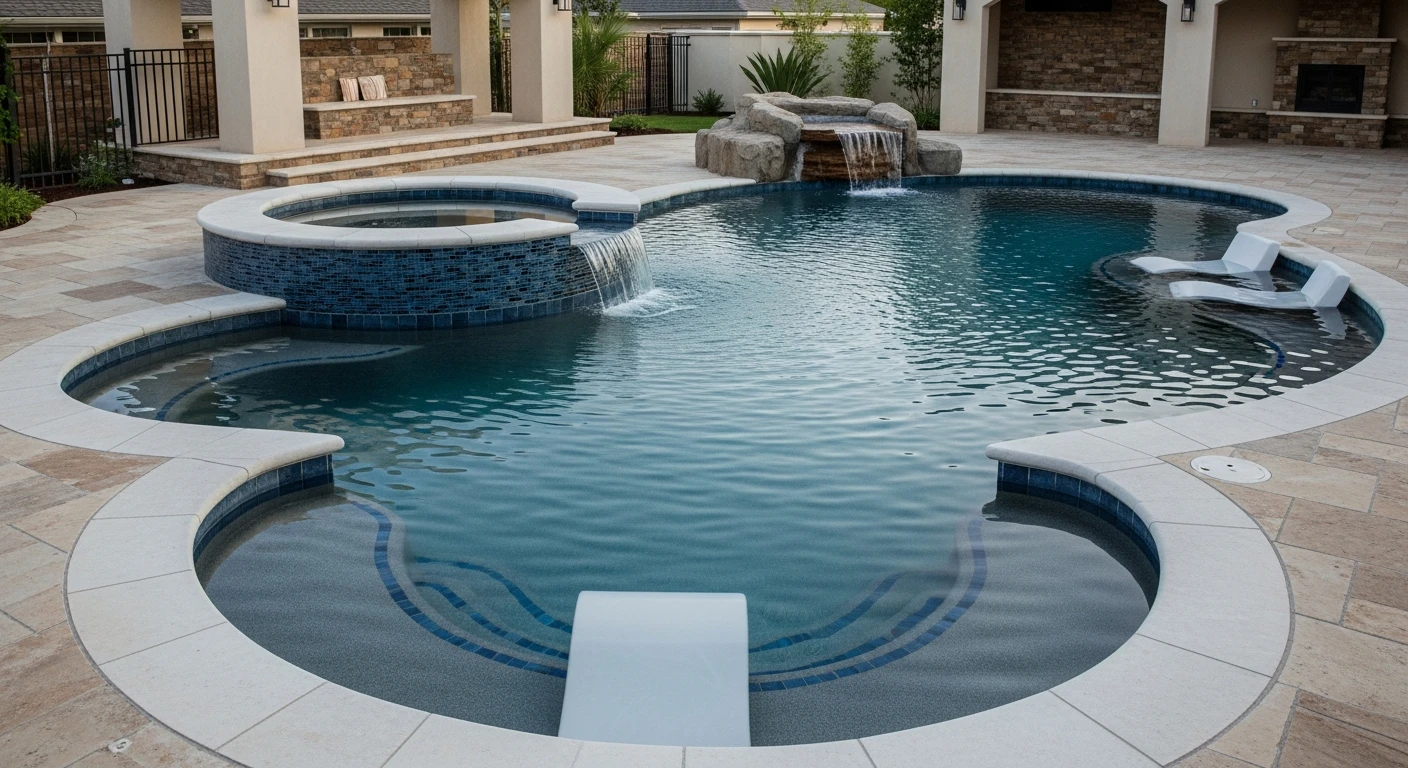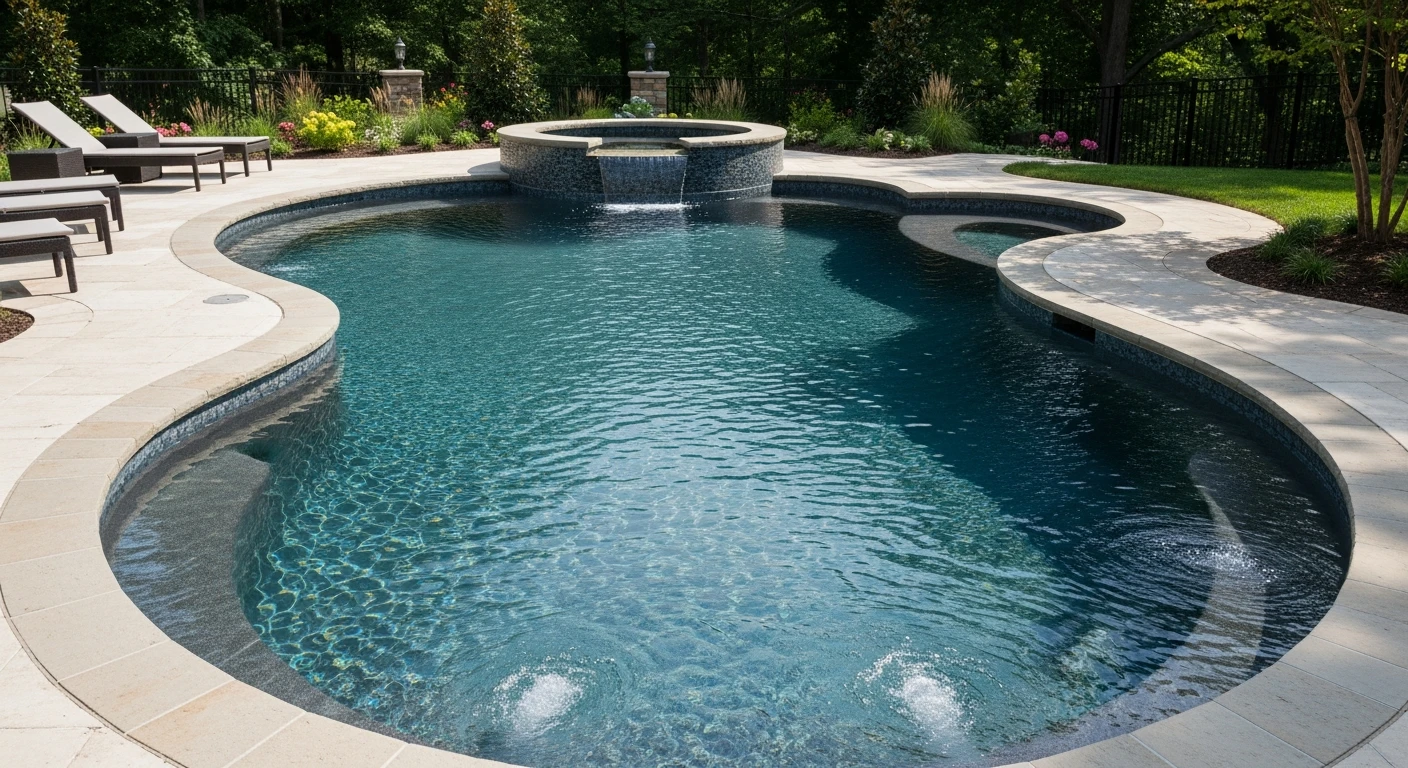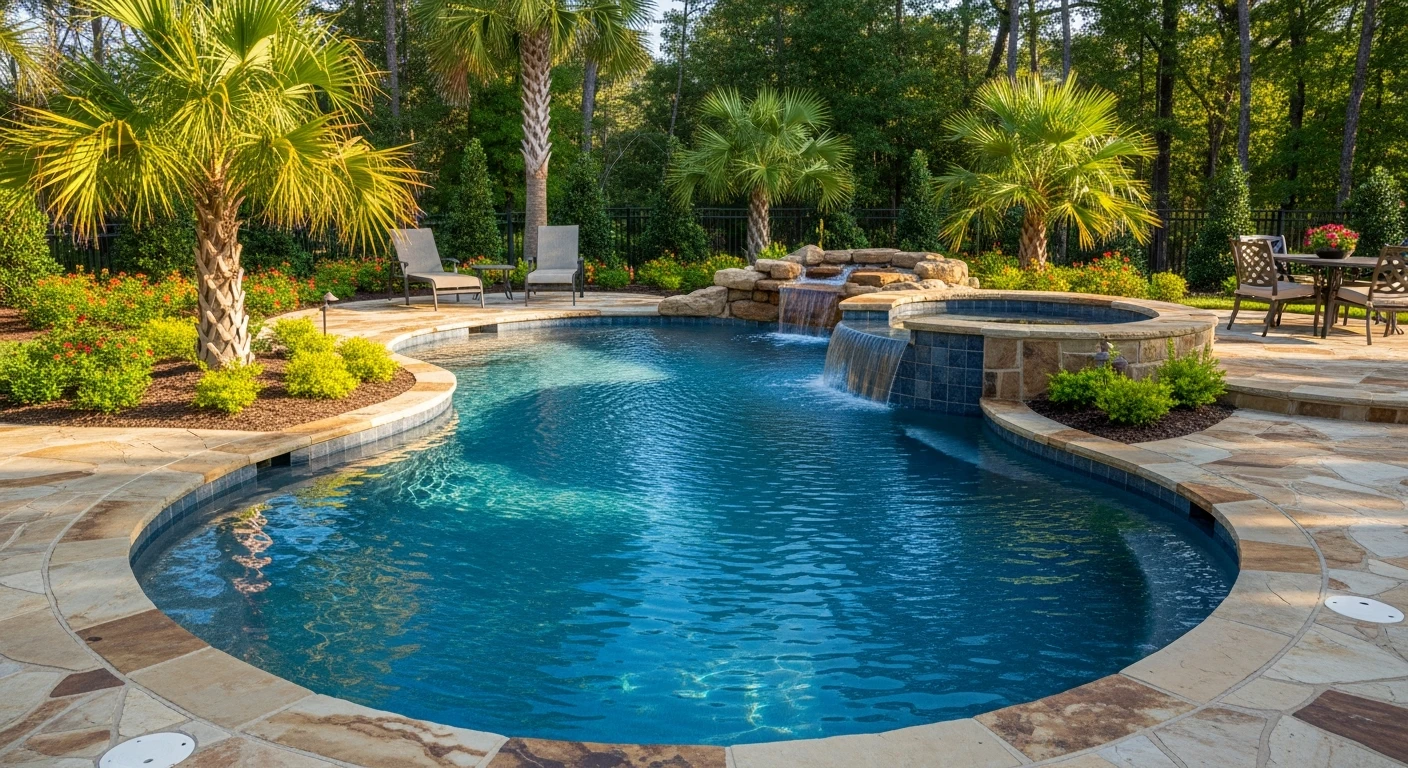
Custom Pool Builders Collier County: My Framework for Mitigating Subtropical Degradation and Achieving a 30-Year Structural Lifespan
As a custom pool builder who has spent years in the trenches of Collier County, I've seen firsthand how our unique environment wages war on pool structures. The standard "one-size-fits-all" approach, often focused solely on aesthetics, is a recipe for premature failure. The combination of a high water table, corrosive salt air along the coast from Naples to Marco Island, and intense UV exposure requires a completely different engineering mindset. My entire process is built around a single, non-negotiable principle: engineering the pool shell and its systems to counteract these specific local stressors from day one. I developed this methodology after being called in to diagnose a catastrophic shell failure on a multi-million dollar property in Port Royal. The builder had used standard-grade rebar and a generic concrete mix, completely ignoring the saline groundwater. The steel corroded and expanded within five years, a process called spalling, cracking the shell from the inside out. It was a costly lesson for the homeowner, and it solidified my commitment to a proactive, site-specific engineering protocol that increases a pool's structural lifespan by an estimated 30-40% compared to conventional methods.My Diagnostic Framework: The Coastal Durability Audit
Before any design sketches are made, I perform what I call the Coastal Durability Audit. This is not a simple site visit; it's a deep-dive geotechnical and environmental analysis of the specific property. I’ve found that the biggest and most expensive mistakes are born from assumptions made at this stage. A property in Golden Gate Estates with its sandy soil and high water table presents a completely different set of engineering challenges than a waterfront lot on Marco Island facing constant salt spray. My audit is centered on two critical data points that most builders overlook. First is the subsurface hydrology analysis. We must know the precise depth of the water table and the soil's percolation rate. A high water table exerts immense hydrostatic pressure on the outside of a pool shell, essentially trying to lift it out of the ground. Ignoring this is the single most common cause of structural cracking I encounter in Collier County. Second is the microclimate material specification. Materials that perform well inland can degrade rapidly when exposed to the saline humidity of our coastal communities. My audit dictates the exact specifications for every component, from the rebar to the tile grout, based on the property’s specific environmental exposure.Technical Deep Dive: Soil Mechanics and Material Science
My audit's findings directly translate into non-negotiable technical specifications. For properties with high hydrostatic pressure, a standard pool shell is insufficient. I mandate an engineered system of geotextile fabric and a dedicated French drain system around the pool shell to actively manage groundwater. Furthermore, every pool I build includes a hydrostatic relief valve at its lowest point—a critical component that acts as a safety valve to prevent the pool from "floating" or cracking during periods of intense groundwater saturation, a common occurrence during our rainy season. On the materials front, my specifications are just as rigid. For any property within two miles of the coast, I forbid the use of standard steel rebar. Instead, I mandate the use of epoxy-coated or fiberglass-reinforced rebar. While the material cost is about 15-20% higher, it completely eliminates the risk of rust-induced spalling, extending the shell's integrity indefinitely. For pool surfaces, I prioritize high-density finishes like PebbleTec or PebbleSheen not just for their look, but for their superior resistance to UV degradation and chemical erosion, which is far more aggressive in pools that see year-round use under the intense Florida sun.Implementation Protocol: From Excavation to Water Chemistry
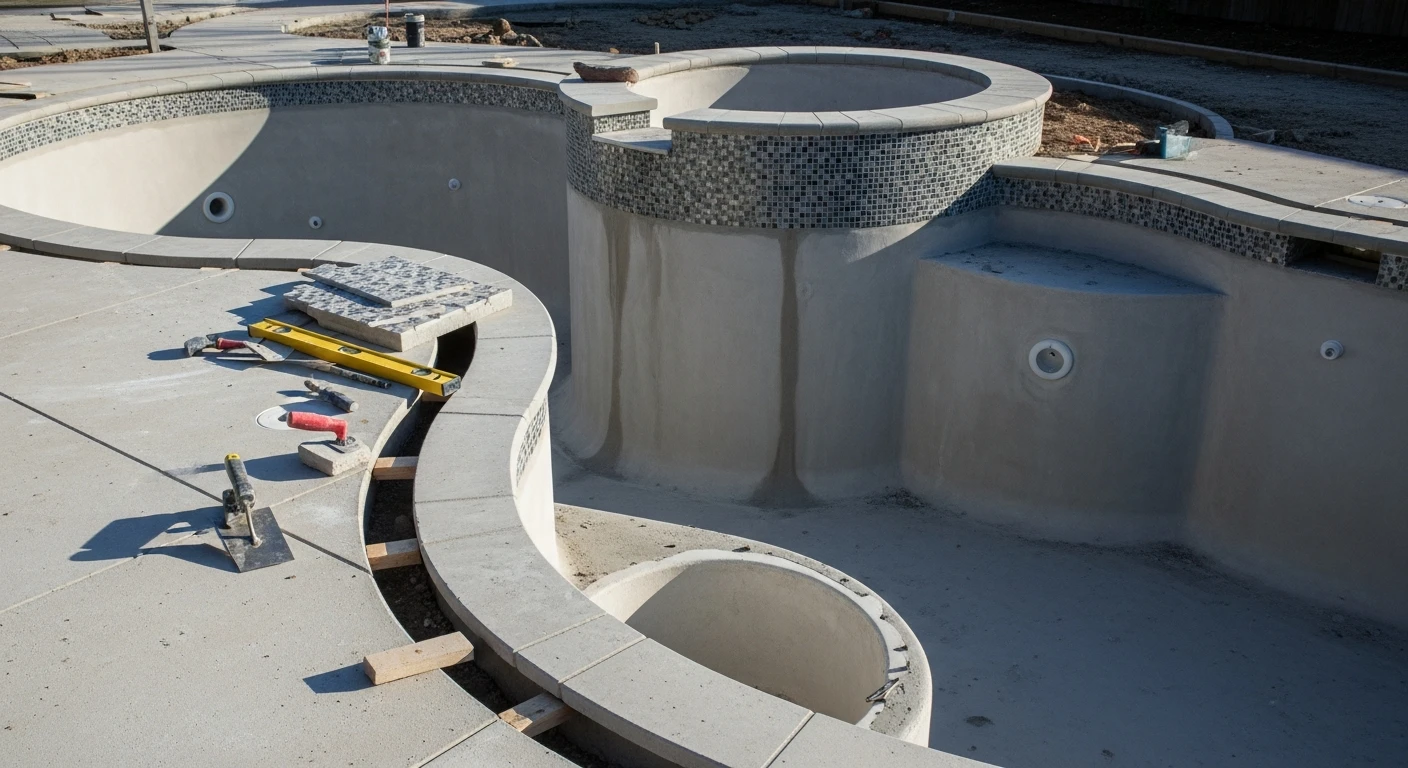
Executing the plan with precision is just as critical as the plan itself. I’ve structured my building process into a series of quality-gated phases, where we do not proceed to the next step until the current one meets a set of stringent engineering benchmarks. This prevents small errors from compounding into major structural flaws.- Site & Soil Validation: We begin with the excavation, but immediately after, we verify the soil conditions against the initial Geotechnical Soil Report. If we find unexpected pockets of muck or rock, we halt and re-engineer the foundation.
- Plumbing and Steel Grid Installation: All plumbing lines are pressure-tested to 35 PSI for 24 hours before any concrete is applied. I personally inspect the rebar grid to ensure proper spacing and clearance from the soil, which is vital for complete concrete encapsulation.
- Shotcrete Application & Density Testing: During the shotcrete (or gunite) application, my team focuses on achieving a uniform density with minimal rebound. We take core samples afterward to send to a lab, verifying the concrete has reached its target compressive strength of at least 4,500 PSI.
- Waterproofing and Surface Curing: A multi-layer cementitious waterproofing agent is applied before the interior finish. The curing process for the finish is then meticulously managed, especially during hot, dry days, to prevent shrinkage cracks.
Precision Tuning and Long-Term Performance Standards
The final 10% of the project is where excellence is truly defined. Once the pool is filled, my work shifts to system calibration and homeowner education. A poorly balanced water chemistry can ruin the most expensive pool surface in a matter of months. I don't just hand over the keys; I perform a full water chemistry calibration, setting initial levels for pH, alkalinity, calcium hardness, and cyanuric acid specifically for our local water supply. My final quality check involves a full hydraulic performance audit. I verify that the pump, filter, and plumbing are all working in harmony, ensuring proper flow rates and efficient filtration turnover. This not only guarantees crystal clear water but also optimizes energy consumption, a significant long-term saving for the homeowner. My handover document isn't just a manual; it's a customized operational guide for that specific pool, built for the specific challenges of its Collier County location. Given the immense hydrostatic pressure from our high water table, have you asked your potential builder how they calculate the required shell thickness and steel reinforcement schedule to prevent long-term stress fractures?Written by

Tags
custom inground pool
custom swimming pool
custom swimming pool design
cost of custom pools
Custom Pool Builders in Collier FL FAQ
What is the process of building a custom pool?
At Custom Pool Builders, we take a personalized approach to building pools. Our process begins with a consultation to discuss your vision, budget, and preferences. We then create a custom design tailored to your unique needs. Our team of experts will guide you through every step of the construction process, ensuring your dream pool becomes a reality.
What types of pools do you offer?
We specialize in building custom in-ground pools, above-ground pools, and fiberglass pools. Our experienced team will help you choose the perfect pool to fit your lifestyle, budget, and backyard space.
Do you offer pool design services?
Yes, our team of experts offers comprehensive pool design services. We'll work with you to create a custom design that complements your outdoor living space, taking into account your landscape, architecture, and personal style.
What is the average cost of a custom pool?
The cost of a custom pool varies depending on the type, size, and features of the pool. Our team will work with you to create a budget-friendly solution that meets your needs and exceeds your expectations. On average, the cost of a custom pool can range from $30,000 to $100,000 or more.
Do you offer pool maintenance services?
Yes, we offer comprehensive pool maintenance services to ensure your pool remains safe, clean, and functional. Our team of certified technicians will provide regular maintenance, repairs, and cleaning to keep your pool in top condition.
What is the average lifespan of a custom pool?
With proper maintenance, a custom pool can last for many years. On average, an in-ground pool can last 20-30 years, while an above-ground pool can last 10-20 years. Regular maintenance and inspections are crucial to extending the lifespan of your pool.
Do you offer pool accessories and equipment?
Yes, we offer a wide range of pool accessories and equipment to enhance your pool experience. From pool covers to lighting systems, we have everything you need to create a safe and enjoyable pool environment.
Can I finance my custom pool?
Yes, we offer financing options to make your dream pool a reality. Our team will work with you to find a financing solution that fits your budget and lifestyle.
What is the warranty on custom pools?
We stand behind the quality of our custom pools and offer a comprehensive warranty that covers materials and labor for a specified period of time. Our warranty provides peace of mind and protects your investment in your custom pool.