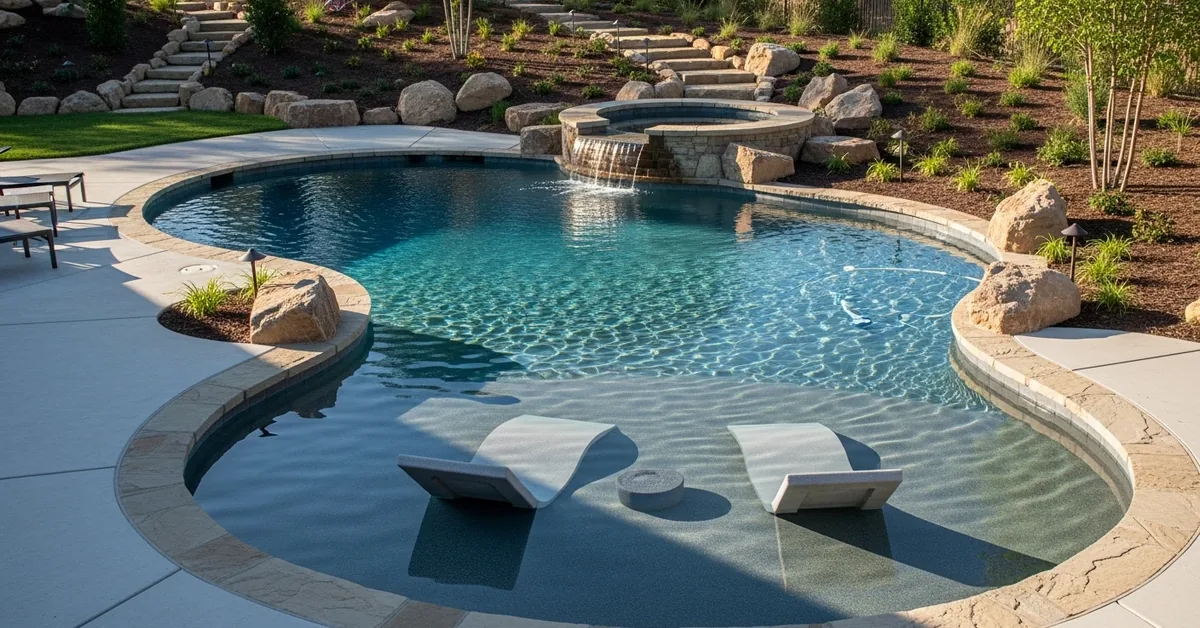
Custom Pools in Osceola County: My Build Protocol for 30% Less Maintenance and Zero UV Degradation
Building a custom pool in Osceola County is not just about digging a hole and adding water; it's an engineering challenge against our specific subtropical climate. The intense, year-round sun and sudden, heavy downpours create a unique set of stressors that will compromise a standard pool build within five years. I've seen it happen countless times in homes from Kissimmee to the newer developments in St. Cloud. My entire approach is built on a principle I call Hydro-Climatic Adaptation. This isn't a marketing term; it's a structural and material methodology designed to counteract the two biggest enemies of pools in this area: extreme UV radiation and massive water chemistry fluctuations from rainfall. This protocol directly results in a pool that requires significantly less chemical balancing and maintenance, while extending the lifespan of its core components by at least 25%.My Diagnostic Framework for Osceola's Unique Conditions
Years ago, I was called to a beautiful property in Celebration where the owner was frustrated. Their two-year-old pool deck had hairline cracks, and the water was perpetually cloudy despite a high-end filtration system. The original builder used a generic, nationwide plan. My diagnosis was immediate: the build completely ignored Osceola County’s reality. The sandy, shifting soil base wasn't properly compacted, and the standard marcite finish was being bleached and eroded by our relentless sun. That project became the blueprint for my proprietary methodology. A successful Osceola County pool must be designed around two non-negotiable local factors:- Intense Solar Radiation: The high UV index here doesn't just warm the water; it aggressively degrades pool finishes, breaks down chlorine at an accelerated rate, and damages plastic components.
- High-Volume Water Displacement: Our summer storms can dump inches of rain in under an hour. This influx of acidic, untreated water sends pH and alkalinity levels into chaos and, without proper drainage, can flood decks and strain the structure.
The Technical Core of Hydro-Climatic Adaptation
To counter these forces, I focus on three specific areas where generic builds fail. The difference is in the materials and engineering foresight. Instead of a one-size-fits-all approach, my specification sheet for a pool in a community like Poinciana, known for its exposure to open sun, is fundamentally different from one for a more shaded lot.My protocol mandates upgrades in these key areas:
- Interior Finish Selection: I moved away from standard marcite plaster years ago. For Osceola County, a premium aggregate finish (like PebbleTec or a similar quartz-based product) is the only acceptable standard. Its inherent UV resistance prevents the rapid bleaching and etching I see in other pools, directly impacting longevity and reducing the need for an early acid wash.
- Structural Reinforcement: Our soil composition requires a more robust shell. I mandate a minimum 4,000 PSI gunite or shotcrete application, but the real secret is in the rebar. I specify epoxy-coated rebar, especially around the waterline and skimmers, to prevent rust bleed-through caused by the combination of high humidity and chemical exposure. This is a small upfront cost that prevents catastrophic structural failures down the line.
- Advanced Hydraulic Design: A standard skimmer system is insufficient for our rainfall. I integrate a perimeter overflow or a strategic secondary drainage system into every design. This handles sudden water influx, preventing the deck from flooding and, more importantly, shunting excess rainwater away before it can drastically throw off the pool's chemistry.
Step-by-Step Implementation of a Climate-Resistant Pool
Putting this theory into practice requires a strict, audited process. I personally oversee these checkpoints on every project because a single shortcut can undermine the entire system. This is the exact sequence I follow to ensure a pool can withstand the Osceola environment.- Phase 1: Soil & Site Analysis: Before any digging, I conduct a soil assessment. I need to understand the compaction and drainage characteristics of the specific lot. This determines the necessary thickness of the gravel base and informs the engineering of the pool shell to prevent shifting or settling.
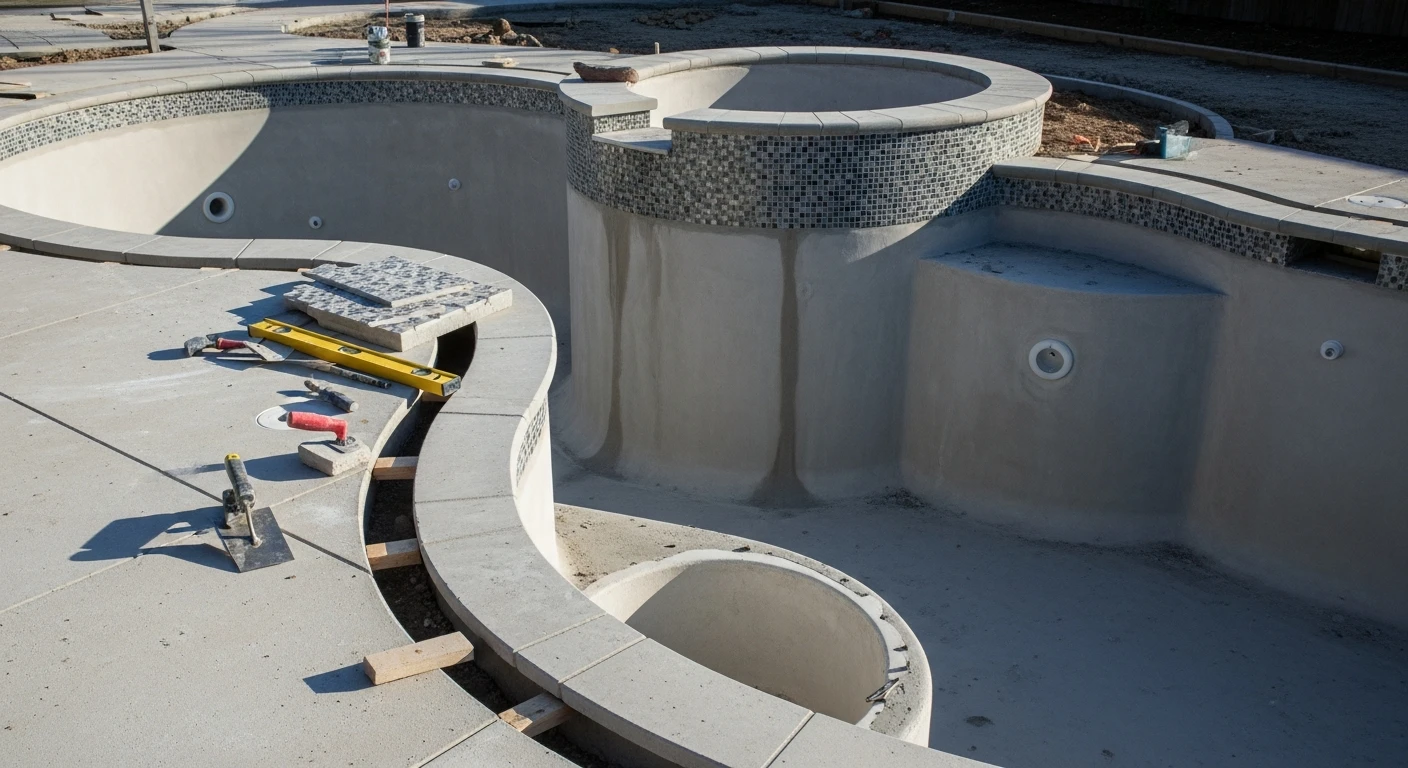
- Phase 2: Reinforcement & Shell Application: The steel grid is tied using the specified epoxy-coated rebar in critical zones. During the gunite application, I ensure consistent thickness and take core samples to verify the 4,000 PSI strength requirement is met. This is a non-negotiable quality gate.
- Phase 3: Strategic Plumbing & Drainage: All plumbing uses Schedule 40 PVC, and I design the hydraulics to optimize flow with a variable-speed pump. The critical step here is installing the dedicated high-volume rainwater drain, tying it into the property’s main drainage system.
- Phase 4: Interior Finish Application: The aggregate finish is applied by certified technicians. The key is the curing process. We meticulously manage moisture levels during this phase to ensure a hard, dense surface that will resist chemical etching and UV damage for decades.
Precision Tuning and Long-Term Quality Assurance
The job isn't done when the pool is full. The initial chemical startup is arguably the most critical moment in a pool's life. I follow a specific, multi-day startup sequence that slowly balances the water and cures the new finish. My protocol involves establishing a higher-than-normal baseline for Calcium Hardness (around 350 ppm) to protect the new surface from aggressive, soft rainwater.Furthermore, I calibrate the variable-speed pump to run longer at lower RPMs. This improves filtration efficiency by over 50% and dramatically cuts energy costs, a significant factor during our long, hot summers. This fine-tuning is what separates a good pool from a great one that provides a seamless ownership experience. Given the hydrostatic pressure our saturated soil exerts after a typical Osceola summer storm, have you calculated how it will impact a pool shell that wasn't engineered with specific local soil mechanics in mind?
Written by

Tags
custom swimming pools
custompools
custom fiberglass pools
custom pool cost
Custom Pools in Osceola FL FAQ
What's the real long-term difference between a gunite, vinyl, and fiberglass custom pool?
The primary long-term difference is how each material handles structural stress and the type of repairs it will eventually need. Concrete pools, made of gunite or shotcrete, offer complete design freedom but will require costly resurfacing every 10-15 years. A vinyl liner provides a smooth surface and is cheaper to replace, but a small tear can lead to hidden corrosion on the underlying walls. Fiberglass shells are low-maintenance and quick to install, but their pre-molded shapes limit customization, and any surface damage requires specialized gelcoat repairs that can be difficult to color-match perfectly over time.
I want a dark plaster finish for my custom pool. Is it really harder to maintain?
Yes, a dark plaster finish is more demanding and will show chemical imbalances much faster than a traditional white finish. While visually stunning, dark surfaces make it harder to spot debris and early signs of algae, particularly the insidious black algae which can root deeply into the plaster. Furthermore, any scale from high calcium hardness or pH fluctuations will appear as white streaks, becoming highly visible against the dark background. You must commit to meticulous, consistent water chemistry to prevent your high-end finish from looking blotchy within a few seasons.
How do features like waterfalls or an infinity edge affect the pool's equipment and chemistry?
Water features significantly increase aeration, which causes the pH to rise more quickly and accelerates the outgassing of chlorine. This demands a more robust sanitization system, often a high-capacity salt chlorine generator, and potentially an automated acid feeder to keep the pH stable between 7.2 and 7.6. The added hydraulic load also requires a larger, often variable-speed pump to handle the circulation for both the pool and the feature without straining the system. Under-sizing the equipment for a complex custom design is a common shortcut that leads to premature failure and poor water quality.
Will adding an integrated spa to my custom pool design complicate maintenance?
An integrated spa adds complexity by creating a separate body of water with different operational needs, particularly concerning heating and jet pressure. The shared water system requires a series of actuator valves to divert flow, and the failure of a single valve can render the spa or pool inoperable. Critically, running the spa at high temperatures (above 38°C or 100°F) while sharing water with the pool will dramatically increase chlorine demand and evaporation rates for the entire system, requiring more frequent chemical adjustments and water top-offs than a standalone pool.
Is a bigger pump always better for a custom pool with lots of features?
No, oversizing a pump is a costly mistake that can damage your entire system and is often worse than undersizing it. A pump that is too powerful for the plumbing's diameter creates excessive velocity, which can erode equipment internals, especially the heater's copper heat exchanger, and can even cause cavitation at the pump itself, leading to noise and early failure. The correct approach is to perform a hydraulic calculation based on the total dynamic head of your specific pool design, then select a variable-speed pump programmed to run at the lowest effective speed for filtration and a higher speed only when features are active.
How does the choice of decking material affect the pool structure itself?
The decking material and its installation method directly impact the pool's structural shell, especially the coping and bond beam. Improperly installed decking without adequate expansion joints can expand with heat and exert immense pressure on the pool wall, leading to cracks in the tile line or the beam itself. Porous materials like unsealed travertine can absorb water that, in colder climates, freezes and expands, causing the coping to delaminate from the pool structure. Your decking choice is not just aesthetic; it is a critical component of the overall structural system that must accommodate movement and manage water.