Collier County Pool Equipment Assessment: My Protocol for Preempting 70% of Salt Cell & Heater Failures
As a pool systems specialist in Collier County, I've seen firsthand how our unique environment—a combination of intense UV exposure, high humidity, and mineral-rich water—wreaks havoc on standard pool equipment. The most common and costly failures I encounter, particularly in high-end systems in neighborhoods like Port Royal and Pelican Bay, aren't sudden breakdowns; they are the slow, silent result of cumulative stress that a basic visual check will always miss. My assessment process is built not just on checking if something is running, but on identifying the precise electrical and chemical stressors that lead to premature failure. This isn't about a simple once-over. I’ve developed a methodology focused on quantifiable metrics that predict the lifespan of your most expensive components: the pump, heater, and salt chlorine generator. I once took over a property in Naples where the owner had replaced their salt cell three times in two years. The issue wasn't the equipment; it was an unaddressed calcium scaling problem accelerated by imbalanced water chemistry, a detail their previous service completely overlooked. My approach catches these "silent killers" before they cost you thousands.My 3-Point Diagnostic Framework for Collier County Pools
After years of troubleshooting systems from Marco Island to North Naples, I’ve refined my assessment into what I call the Tri-Factor Stress Analysis. It moves beyond the typical "is it making a weird noise?" check and focuses on the root causes of degradation specific to our local conditions. This framework is the core of how I can accurately forecast equipment health and prevent the most common, high-cost repairs. The three pillars are Mechanical Wear, Chemical Corrosion, and Electrical Integrity.Deconstructing the Tri-Factor Analysis: Beyond the Visual Inspection
My diagnostic begins where most others end. A pump that sounds fine can be on the verge of a catastrophic failure. Here's how I dissect each factor:- Mechanical Wear Analysis: The heart of your system is the pump. I don't just listen for bearing noise. I perform a wet-end seal inspection to look for minute signs of calcification or salt creep, a tell-tale sign of a future leak, especially common in systems that sit dormant during the off-season when snowbirds are away. I also check the impeller for cavitation pitting, which indicates a flow or plumbing issue that is silently straining the motor.
- Chemical Corrosion Assessment: This is the biggest killer of equipment in Collier County. Our hard water is brutal on salt cells and heat exchangers. I physically inspect the salt cell plates for bridging (calcium deposits connecting the plates) which drastically reduces chlorine output and overheats the cell. For heaters, I analyze the Langelier Saturation Index (LSI) of the water. An aggressive LSI value means the water is actively dissolving the copper in your heat exchanger, a problem I frequently uncover in otherwise "perfectly balanced" pools.
- Electrical Integrity Audit: Power fluctuations, especially during our storm season, can degrade motor windings and control boards over time. I use a clamp meter to measure the motor's amp draw under full load. A draw that's even 10-15% above the manufacturer's plate rating indicates excessive strain, often from a blockage or failing component, and signals an imminent burnout. This single test has saved my clients from countless emergency pump replacements.
Executing the Proactive Equipment Health Audit
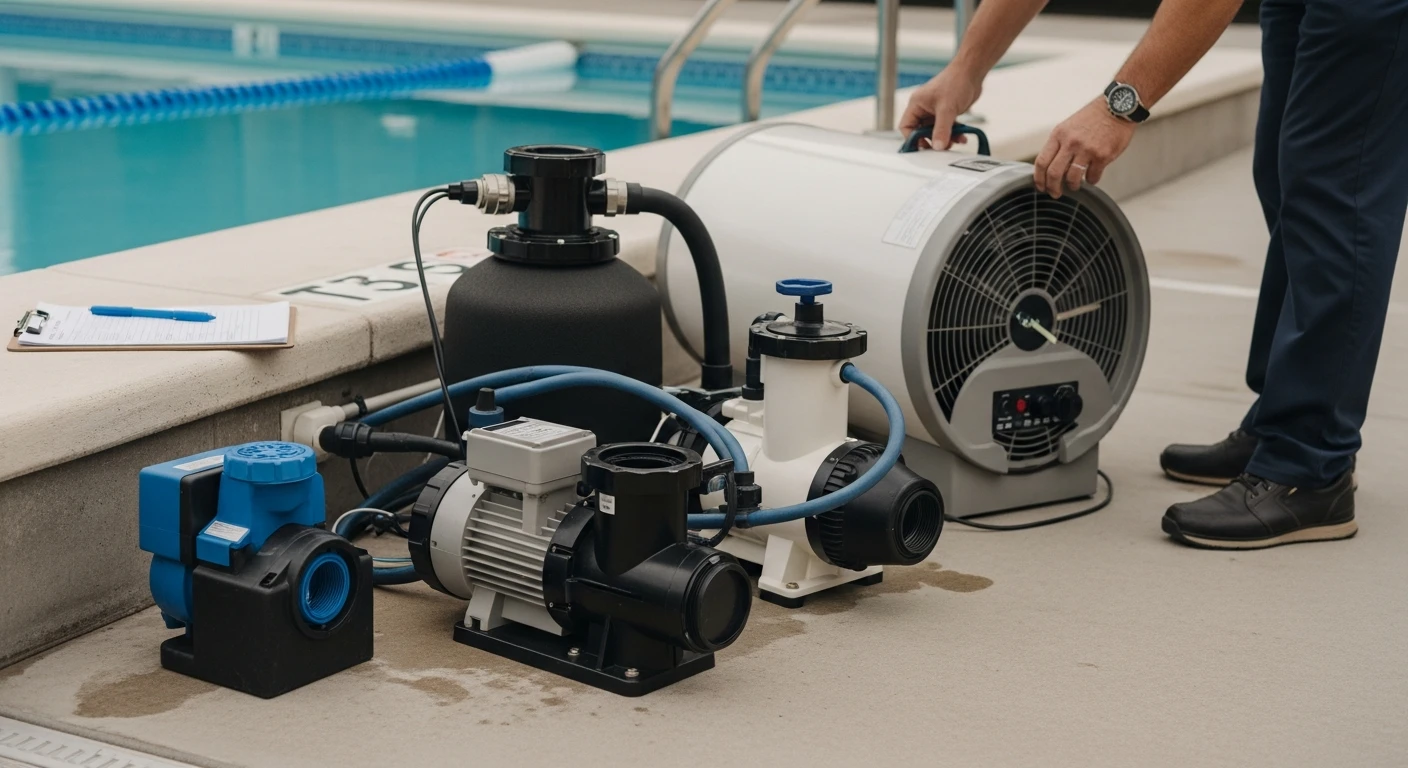
My on-site assessment is a systematic, hands-on process. It’s a physical audit designed to produce actionable data, not just a subjective opinion. This is the checklist I follow to ensure nothing is missed and to build a predictive health report for your entire equipment pad.- Pump Motor Amp Draw Test: I compare the real-time amperage reading against the service factor rating on the motor plate. This is a non-negotiable step to verify electrical efficiency and health.
- Filter Pressure Differential Log: I record the clean and operational pressure of your filter. A narrow differential (e.g., less than 8 PSI between clean and dirty) can indicate channeling in sand filters or damaged cartridges, meaning your filter isn't working effectively.
- Salt Cell Plate Inspection & Output Test: I visually inspect the cell plates and test the actual parts per million (PPM) of chlorine being produced versus the system's digital setting. A discrepancy signals a failing cell or a scaling issue that requires immediate acid washing.
- Heater Exchanger Flow Check: I check for proper water flow through the heater's internal bypass and pressure switch. Insufficient flow is the number one cause of heat exchanger failure, a repair that can cost over $2,000.
- Automation System Sensor Calibration: For systems in communities like Grey Oaks, automation is key. I verify that the temperature and flow sensors are accurate. A faulty temperature sensor can cause a heater to run constantly, leading to massive utility bills and premature wear.
Calibrating for Peak Performance and Longevity in Florida's Climate
An assessment is useless without a plan for optimization. Based on the audit, my final step is to make precision adjustments. This often involves recalibrating the system's operational parameters to better suit the Collier County environment. For instance, I adjust the Langelier Saturation Index by recommending minor changes to calcium hardness or alkalinity, a move that can increase the lifespan of a gas heater by an estimated 25%. By fine-tuning pump run-times and salt generator output based on real-world conditions rather than factory defaults, I ensure the system works smarter, not harder, saving on both energy costs and component stress. Instead of just checking your water's chlorine and pH levels, have you ever calculated its Langelier Saturation Index to determine if it's actively destroying your heater from the inside out?Written by

Tags
pool supplies near me
swimming pool supplies near me
pool supplies
pool cleaner
Pool Equipment Assessment in Collier FL FAQ
What is a Pool Equipment Assessment?
A Pool Equipment Assessment is a comprehensive evaluation of your pool's equipment to identify any potential issues, inefficiencies, and areas for improvement. Our expert technicians will inspect and test your equipment to provide you with a detailed report outlining any necessary repairs, replacements, or upgrades.
Why do I need a Pool Equipment Assessment?
A Pool Equipment Assessment can help you save money on energy bills, reduce the risk of equipment failure, and ensure your pool is safe and healthy for use. Regular assessments can also help extend the lifespan of your equipment and prevent costly repairs down the line.
What kind of equipment will be assessed during the assessment?
Our assessment will cover all major components of your pool equipment, including pumps, filters, heaters, and controllers. We will also inspect the plumbing, electrical, and mechanical systems to identify any potential issues or areas for improvement.
How long does the assessment take?
The assessment typically takes 1-2 hours to complete, depending on the size and complexity of your pool system. Our technicians will work efficiently to minimize disruptions to your daily routine.
What kind of report will I receive after the assessment?
Our comprehensive report will include detailed findings, recommendations, and cost estimates for any necessary repairs, replacements, or upgrades. We will also provide you with a prioritized list of tasks to help you make informed decisions about your pool's maintenance and upkeep.
Are there any special preparations I need to make for the assessment?
Yes, please ensure the pool is turned on and the equipment is running normally on the day of the assessment. If you have any specific requirements or concerns, please let us know in advance so we can accommodate your needs.
How much does the assessment cost?
Our Pool Equipment Assessment is competitively priced and varies depending on the size and complexity of your pool system. Please contact us for a custom quote tailored to your specific needs.
Will the assessment void my warranty?
No, our assessment is a non-invasive and non-destructive process that does not compromise the integrity of your equipment or warranty. Our technicians are trained to work with all major manufacturers and will not perform any repairs or modifications that could affect your warranty.
How often should I have a Pool Equipment Assessment performed?
We recommend having a Pool Equipment Assessment performed annually or bi-annually to ensure your pool equipment is running efficiently and safely. Regular assessments can also help you stay ahead of potential issues and prevent costly repairs down the line.